
A day in Chengdu follows an invisible spine: the pandas' schedule. Giant pandas are liveliest in the morning and sleep off their breakfast after ten, so any one-day plan must start at the base at dawn. The afternoon belongs to the city, Three Kingdoms relics and old lanes, and only at nine at night does hotpot hit its stride.
The transport logic flows too: the base sits north on metro line 3; Wuhou Shrine and Jinli pair up south; Kuanzhai Alleys lie center, right on the way back. Three districts, three clean segments, no friction.
Itinerary at a glance
| 07:30 | Chengdu Panda Base: The First Hour After Opening |
| 11:00 | The Transfer and Lunch: From Pandas to Three Kingdoms |
| 13:00 | Wuhou Shrine: Three Kingdoms Pilgrimage and the Red Wall Lane |
| 15:00 | Jinli: Afternoon Tea Under the Opera Stage |
| 17:00 | Kuanzhai Alleys: Walking Wide to Well |
| 19:30 | The Hotpot Close: Beef-Tallow Broth and Ice Jelly's Final Act |
The route, stop by stop
Chengdu Panda Base: The First Hour After Opening
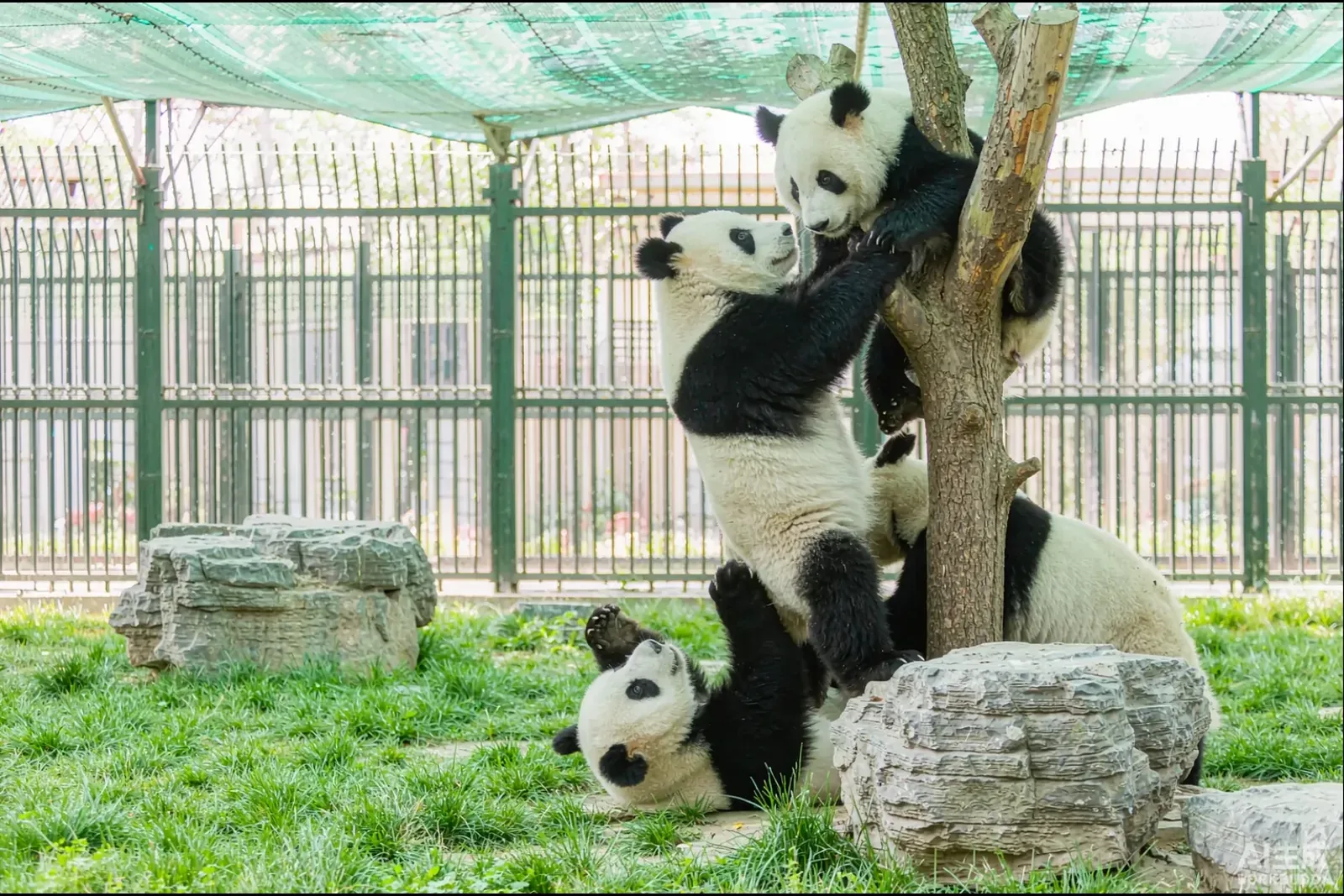
Enter at opening and head straight for the Moon Nursery and the kindergarten. Early morning is panda breakfast time, the only stretch when they sit still: cubs climbing, mothers cradling, adults melting off wooden platforms in different postures. Newborns in the nursery are palm-sized, pink skin just tracing its black-and-white outline through the glass, worth every minute of the early alarm.
The base is big; the core runs on foot, with electric carts at RMB 20 per segment. The right route starts at the far Moon Nursery and works back, moving against the crowd flow the whole way. The adult villas around the Sun Nursery go communal-nap after ten; scan them on the way out.
The Transfer and Lunch: From Pandas to Three Kingdoms
Ride metro line 3 south for about forty minutes toward Provincial Gymnasium or Gaoshengqiao. Lunch happens around Wuhou Shrine, where Sichuan kitchens stack dense and turn tables fast: a bowl of maocai or sweet-water noodles as ballast, keeping the real appetite for evening hotpot.
If lunch should also be a sight, the old-brand snack shops at Jinli's entrance serve Zhang Fei beef and three-cannon rice balls, priced and queued accordingly; a taste each will do.
Wuhou Shrine: Three Kingdoms Pilgrimage and the Red Wall Lane
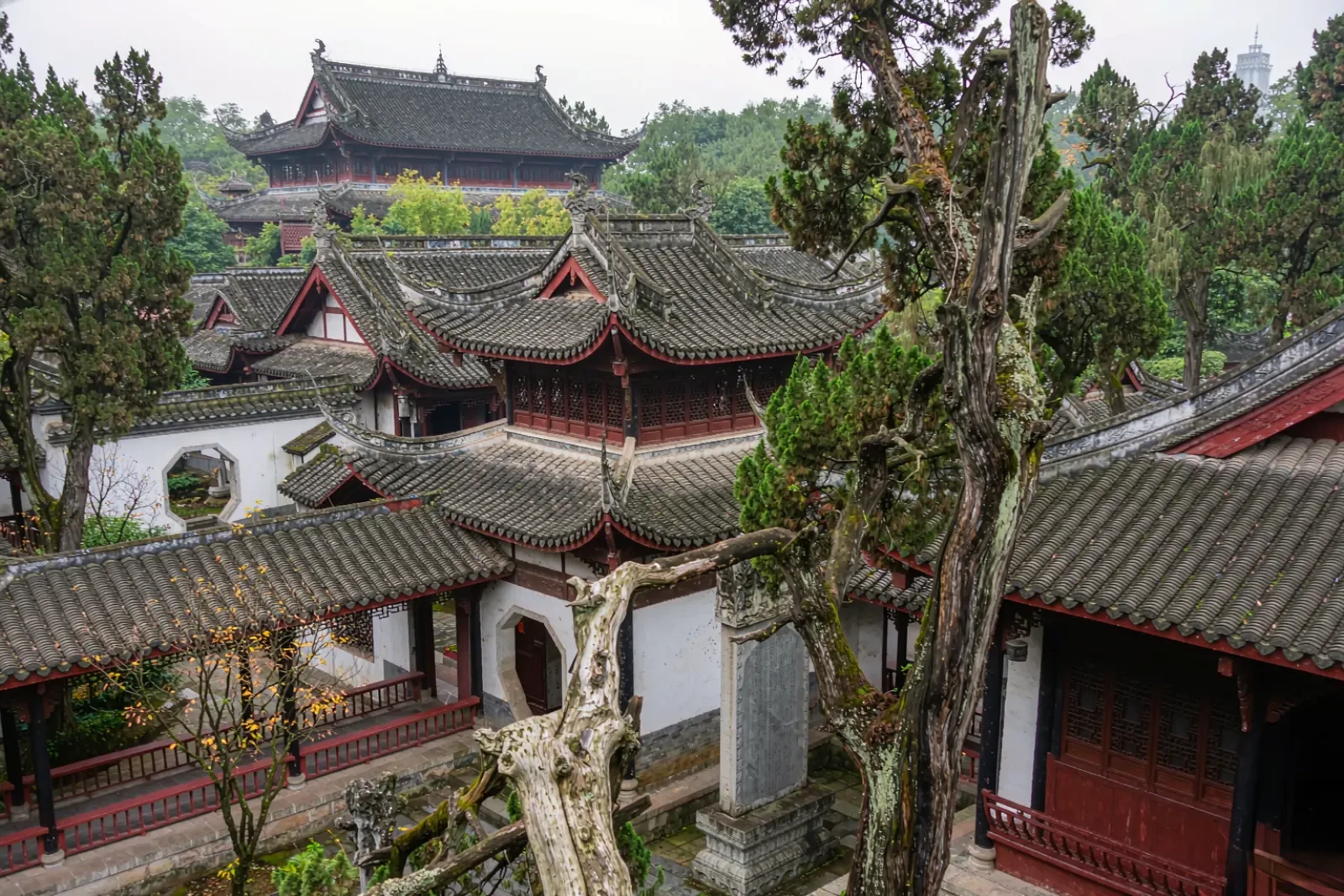
Wuhou Shrine is China's only temple jointly honoring ruler and minister: Liu Bei's Hui Mausoleum and Zhuge Liang's hall share one garden. The Tang stele at the entrance, composed by Pei Du and written by Liu Gongchuo, is the famous Three-Wonders Stele; carved versions of the Chu Shi Biao memorial and twenty-eight Qing clay figures of ministers and generals fixed the Three Kingdoms' faces for good.
The breakout wall stands on the garden's west side: red walls framing a bamboo-lined corridor, the signature Chengdu image on social media. Morning light slants through the bamboo onto the bricks; after three it turns to backlight, whichever window the crowds allow.
Jinli: Afternoon Tea Under the Opera Stage
Jinli is the antique-style street growing out of the shrine's wall, tourist-heavy but holding three genuine things: Sichuan opera excerpts on the stage (free shows for the fun of it), craft stalls for shadow puppets and sugar painting, made on site rather than wholesale, and, after the lamps come on, an entire street of lanterns. The afternoon play is crossing it: east gate in, west gate out, twenty minutes end to end, buying one fresh ice jelly on the way.
The Sanyi Temple end holds the fewest people; sit under the eaves, watch the roof tiles, and wait for the lights.
Kuanzhai Alleys: Walking Wide to Well
Kuanzhai is a trio: Wide Alley is most old-Chengdu, its courtyard teahouse doorways the most photogenic; Narrow Alley is the boutique one, cafes and Western kitchens behind gray brick; Well Alley is shortest and quietest, one brick wall carving the old city's gates and history in relief. Dusk is the golden hour for all three: lamps newly lit, crowds not yet full.
Pick a courtyard teahouse on Wide Alley, order a covered-bowl tea, RMB 30-50, and watch the ear-cleaning master's brass tweezers sway under the lamp. Prices here run high, but the courtyards are genuine Qing buildings; money spent under those eaves is well spent.
The Hotpot Close: Beef-Tallow Broth and Ice Jelly's Final Act
A Chengdu day must end inside a hotpot. The recommended pot district sits on Kuixinglou and Fuqin streets, one stop from Kuanzhai, mixing local chains with old houses: the split broth is a courtesy for out-of-towners, while purists take pure beef tallow and order the holy trinity of tripe, duck intestine and crispy pork. The dip is sesame oil and garlic, nothing else, everything else is ornament.
Budget RMB 100-150 pp. Close with ice jelly or brown-sugar rice cakes against the burn, then metro home; the first Chengdu night sleeps deep.
| Getting around |
|
| Budget | Tickets (Panda Base plus Wuhou Shrine) and meals run about RMB 250-400 pp. |
| Best time | Mar-May and Sep-Nov; pandas peak in the morning, so in summer hit the 7:30 opening without fail. |
FAQs
One day only: Panda Base or Dujiangyan?
The pandas. Three reasons: they sit in the city at a third of the transport cost; the panda is Chengdu's one-of-a-kind calling card while the weir, great as it is, has siblings; and a morning with pandas still saves the afternoon shrine and evening hotpot. Dujiangyan deserves its own half to full day.
When is the best time for the Panda Base?
The first hour after opening is the day's ceiling: pandas breakfast, cubs play, the metro has not yet unloaded the crowd. After ten the adults drop off one by one; by eleven you are watching fur balls. In summer and holidays, arrive before the gate opens, no exceptions.
Is Wuhou Shrine worth entering, or is the red wall enough?
The wall is a photo question, the shrine a reading one. Zero interest in the era? The wall and the facade deliver eighty percent of the picture. The faintest interest, though, and the Three-Wonders stele, carved memorial and Qing figures earn the ticket. It is the kind of museum worth entering to find out.
How does a spice-averse traveler survive this route?
Comfortably: order the split or tomato broth (Chengdu tomato broth is properly simmered), ask for no-chili on maocai, and sweet-water noodles and ice jelly never ran spicy anyway. The three main stops have nothing to do with heat. One suggestion: let a companion order mild and taste one bite of the tallow broth's aroma, that lesson should not be skipped.