
Chengdu is not a city to rush, it is a city to sit in. Leisure here is infrastructure: a century-old teahouse in the park, bamboo chairs on the doorsteps, ear-cleaning and shoe-shining as licensed crafts. This route aims at no landmark; it walks you through how Chengdu actually spends a day, flower tea in the morning, streets in the afternoon, a chair moved down to the river at night.
Walking plus metro totals about six kilometers, but the real distance is covered seated: two hours at Heming, an hour in Taikoo Li, an hour in a riverfront bar, and the walking in between does the digesting.
Itinerary at a glance
| 09:00 | People's Park and Heming Teahouse: Breakfast on Bamboo |
| 11:30 | Citang Street and Xiaonan Street: An Old Block's Renewal, Done Right |
| 13:00 | Lunch: The Noon of a Fly-Restaurant |
| 14:30 | Taikoo Li and Daci Temple: A Tang Temple Under Glass |
| 16:30 | Wangping Street and Xiangxiang Lane: Riverside Afternoon Tea |
| 19:00 | Jiuyanqiao: Drinking the Day to Its End |
The route, stop by stop
People's Park and Heming Teahouse: Breakfast on Bamboo
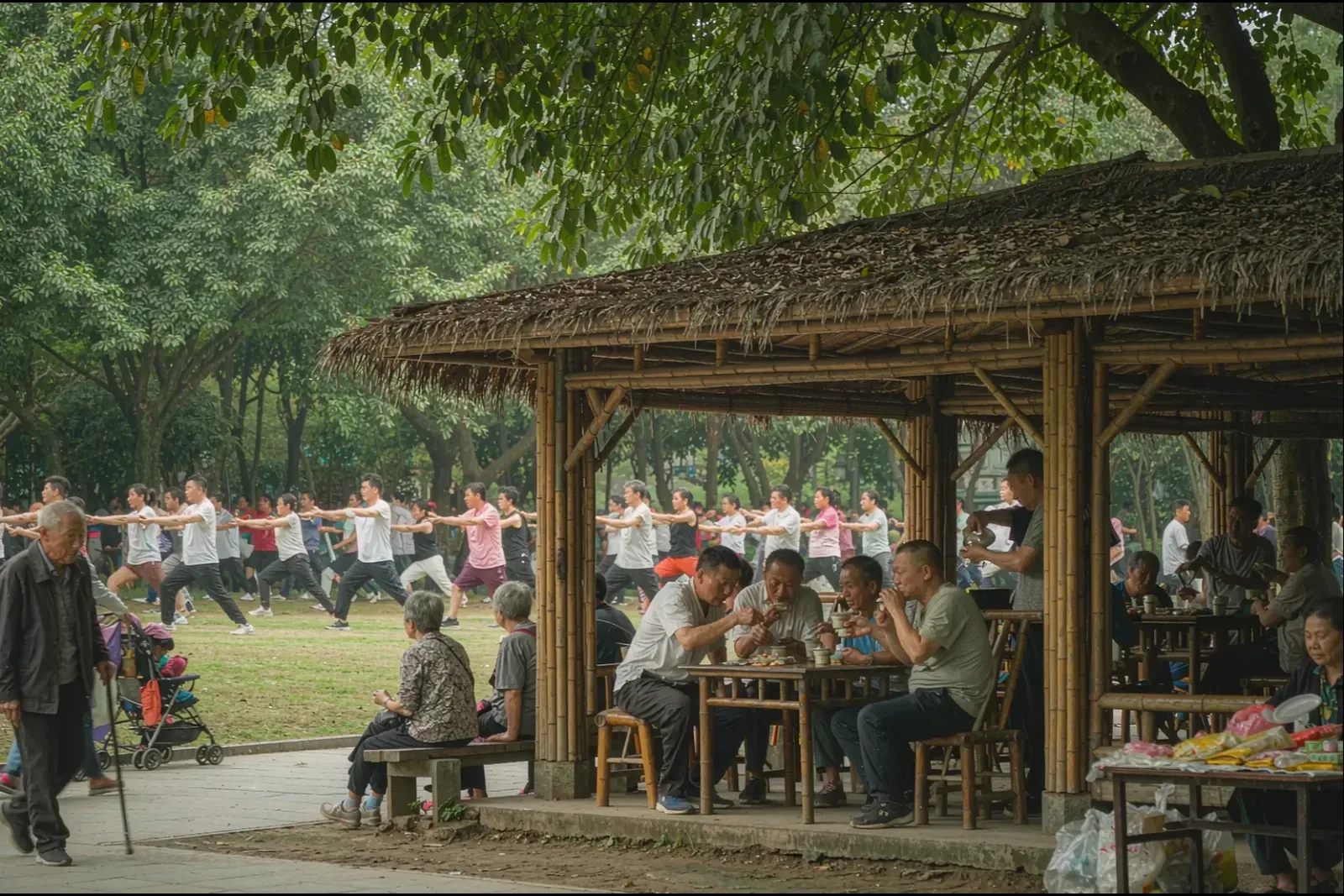
Heming Teahouse sits inside People's Park, a century-old name with hundreds of bamboo chairs ringing the lake. The morning crowd mixes freely: elders with birdcages, joggers dropping in for refills, neighbors at chess who quarrel and reconcile by the game's end. Order sanhua jasmine or Bitan Piaoxue, RMB 20-40, refills unlimited, that is Chengdu's membership plan.
The matchmaking corner peaks on weekend mornings, a thousand marriage notices strung on ropes, an open window onto China's marriage market; the Railway Protection Movement monument anchors the park's history.
Citang Street and Xiaonan Street: An Old Block's Renewal, Done Right
Leave by the park's north gate and walk Citang Street, a block freshly renewed in the repair-as-old school: Republican-era buildings hosting bookshops, galleries and coffee, while the residents' tailor and grocer stay on, coexistence without ugliness. Near the Xiyu Street corner, a few surviving stretches of old city wall foundation remain.
This stretch matters more as passage than destination: take a coffee to go and watch quilts drying over rails share the frame with a steamed-bun shop, the sample card of a living Chengdu.
Lunch: The Noon of a Fly-Restaurant
Chengdu calls its home-cooking joints fly-restaurants, and the only review that matters is whether locals queue at noon. This route points toward Mingting or any stir-fry shop of that species: twice-cooked pork, mapo tofu, one seasonal green, rice by the basin, RMB 40-60 pp to the point of surrender.
Fly-restaurant etiquette: sharing tables is normal, call the boss with an affectionate drawl to order, and never rush the kitchen; Chengdu's wok timing earns the wait.
Taikoo Li and Daci Temple: A Tang Temple Under Glass
Taikoo Li is Chengdu's retail calling card: a low-rise, open-lane design stitching luxury flagships to the gray-tiled pitched roofs of western Sichuan houses, with Daci Temple set in the middle. Founded in the Wei-Jin era, the temple opens free, its incense a wall away from window displays of couture, the bluntest footnote to this city's old-meets-new.
The right way through Taikoo Li is architecture and books: Fangsuo bookstore underground, eight thousand square meters of shelves in a pipe-frame hall; the flagship stores upstairs double as building exhibitions. Shop as needed, photograph freely.
Wangping Street and Xiangxiang Lane: Riverside Afternoon Tea
Cross the Jin River east of Taikoo Li to Wangping Street, the riverfront block of the moment: Xiangxiang Lane packs fifty meters with signboards from every Chinese region and Southeast Asia, and the riverside coffee and craft-beer seats stretch feet toward the bank as four-o'clock light lies flat across the water.
This is the digesting stop: a pour-over or a skewer basket while the bank fishes, sketches and walks dogs, letting Chengdu's afternoon finish itself on the river.
Jiuyanqiao: Drinking the Day to Its End
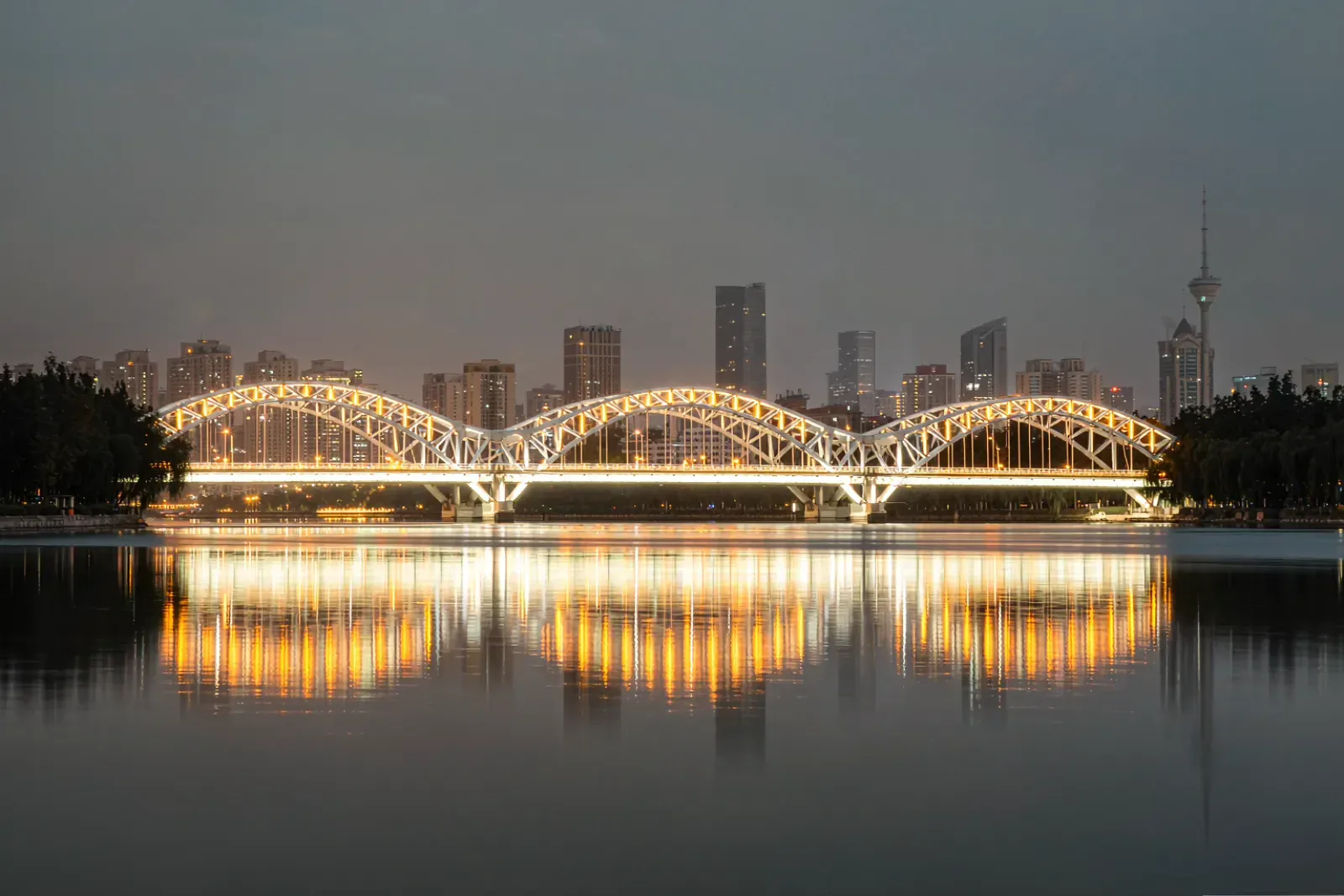
Jiuyanqiao's bar street is the origin point of Chengdu nightlife, a full row along the Jin River from hushed taverns to floor-shaking livehouses. The local sequence: walk the bank to Anshun Bridge for the night view, its lantern-lit replica corridor a regular on Chengdu's cover shots, then pick any riverfront seat for a whiskey or a craft pour.
No taste for bars? The bridge and bank still pay: the lit corridor, night-cruise boats, and the sound of the bar street washing over the embankment, watchable in full from the public stone steps.
| Getting around |
|
| Budget | Mostly tea and coffee money, about RMB 100-250 pp. |
| Best time | Year-round, Chengdu's overcast days being fine walking weather; summer teahouse chairs go fast. |
FAQs
How do I choose between this and the panda route?
By travel phase. Landing day, wanting the calling card, take the panda route; mid-trip, needing rest or having done the headliners, take this slow one. They do not conflict, and trips over three days usually walk both. One rule: never schedule the slow day on a red-eye arrival morning, sleepiness ruins teahouses.
Do two hours in a teahouse drag?
Chengdu teahouses ship with entertainment: ear cleaners, shoe shiners, tofu vendors, mahjong coaches, someone arrives to perform every twenty minutes. Truly restless, the park fields brigade-grade square dancing and chorus circles to watch. The point of a teahouse is taking off your watch; tea has no taste for clock-watchers.
Is Jiuyanqiao safe solo?
Safe, one of the city's best-policed night districts: the street burns bright past midnight and bar density is itself security. Solo drinkers pick the quiet taverns or craft bars, skip anywhere that touts, and women heading home late should ride-hail rather than walk far alone by the river.
Must I spend at Taikoo Li?
No. The design permits zero-spend passage: the lanes are open, the temple free, Fangsuo free to enter (buy or not), even flagship windows doubling as exhibits. It is commerce staged as public landscape, and browsing costs nothing.