
A classic day in Chongqing comes down to three questions: how to cross the river, how to see the train thread through a building, and when to save Hongya Cave for. The answers are the Yangtze cableway, Liziba station on metro line 2, and after sunset. Nail those three anchors, fill in with Ciqikou and Jiefangbei, and the day closes into a loop with no backtracking.
The route deliberately runs west to east: Ciqikou first to dodge the crowds, back to Liziba at midday, then across the river by cableway from Xinhualu station, dinner at Jiefangbei, and a short walk to Hongya Cave. Metro links it all; the hills demand your legs, so spend them wisely.
Itinerary at a glance
| 09:00 | Ciqikou Ancient Town: A Morning on the Old Wharf Streets |
| 11:30 | Liziba: The Train That Exits Through Floor Six |
| 14:00 | The Yangtze Cableway: Four Minutes over the River |
| 17:30 | Jiefangbei and Hongya Cave: The Lit-Up Finale |
The route, stop by stop
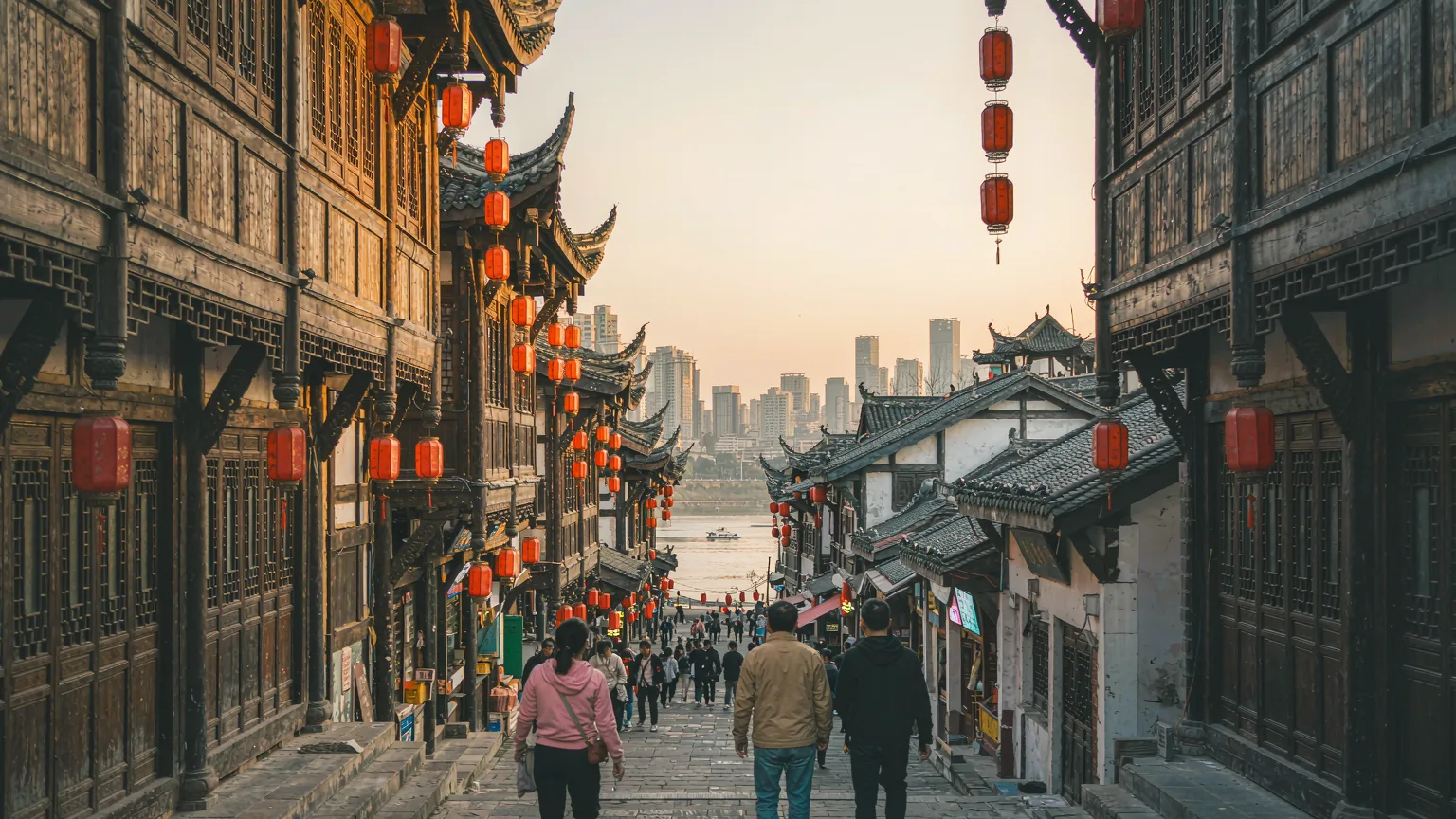
Ciqikou Ancient Town: A Morning on the Old Wharf Streets
Ciqikou is a thousand-year-old river wharf on the Jialing, thriving in Ming and Qing times on the porcelain trade. Main street and side lanes crisscross above bluestone slabs, with the smells of fried dough twists, hot-and-sour noodles and rice cakes trading places. Arrive before nine, when shutters are still coming down and locals sip tea by the river; the town still belongs to its residents.
The right way to walk it is one-way: enter on the main street, duck into the side lanes for the old teahouses, and finish along the riverside path. Baolun Temple sits at the high end, where a few steps of climb buy a view over the Jialing bend.
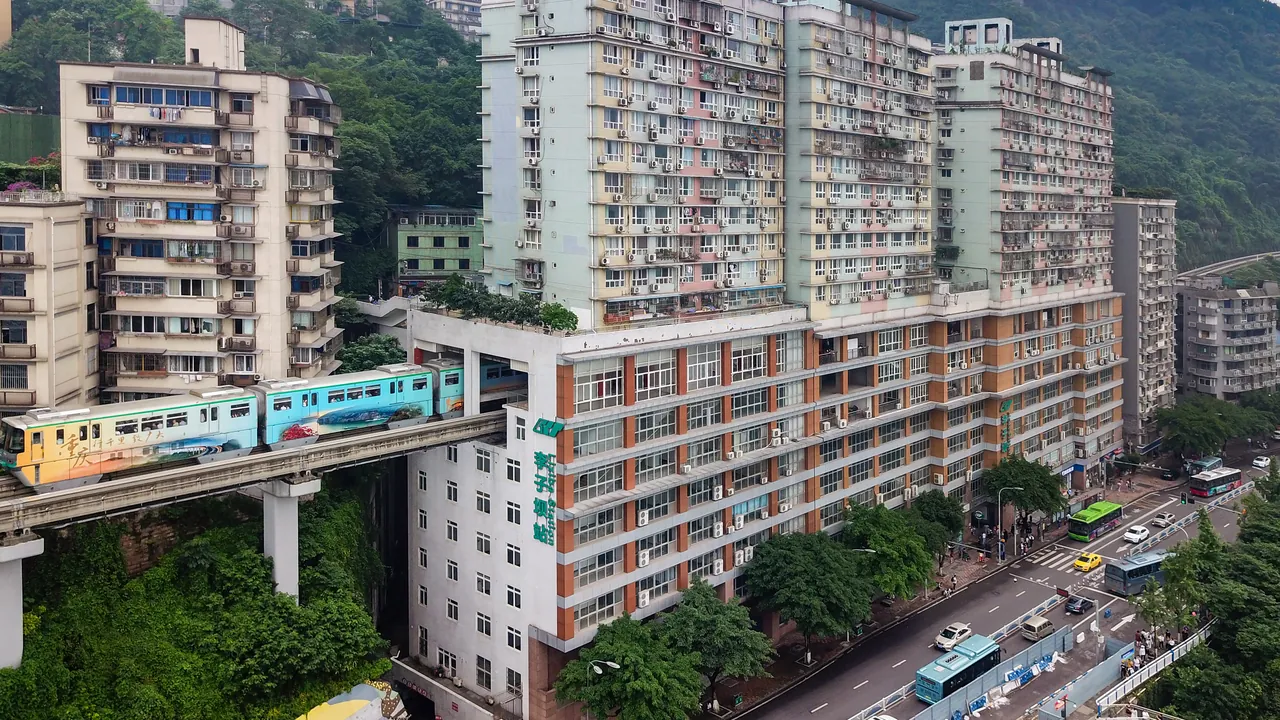
Liziba: The Train That Exits Through Floor Six
Line 2 passes through floors six to eight of a residential tower at Liziba, designed and built together with the building, running without interference for over two decades. The viewing deck sits below, aimed straight up at the moment of entry: one second you brace for a crash, the next the train has vanished through the wall.
Watch a down train and then an up train, as the two angles differ slightly. Boards beside the deck explain the line's engineering; with bridges and tunnels dominating the network, this stop is the beginner's course on Chongqing terrain.
The Yangtze Cableway: Four Minutes over the River
Opened in 1987, the cableway once served as everyday transit for river-crossers and now survives as one of the last urban passenger ropeways in the country. As the car slides off the platform, the Yangtze and the layered hills of the south bank spread below; four minutes give the fullest reading of the city where two rivers meet.
Walk a stretch of the riverside path on the far side and look back at the peninsula, where high-rises perch over slopes and old lanes. If you only want the photos, buy one way, ride north to south, and return by the orbital metro line.
Jiefangbei and Hongya Cave: The Lit-Up Finale
Jiefangbei is the city's geometric center and commercial origin; the monument stands barely twenty-some meters tall, ringed by the densest cluster of towers in the southwest, a compression of old and new found nowhere else. Dinner nearby is quick, from noodles to hot-and-sour noodles along the food lanes.
Fifteen minutes on foot brings you to Hongya Cave, eleven stacked stories of stilted buildings clinging to the cliff, floating like a lantern over the Jialing once lit. For the full view, cross Qiansimen Bridge and look back from mid-span: lit tower, river and cruise boats in one frame, the standard portrait of Chongqing night.
| Getting around |
|
| Budget | Ticket spend is near zero: the cableway runs RMB 20 one way or RMB 30 return, with food and transport adding up to roughly RMB 150-250 pp. |
| Best time | Works all year; summer evening breezes flatter Hongya Cave, and rain actually adds fog-city mood to the Liziba crossing. |
FAQs
Do I need a chartered car for a one-day Chongqing tour?
No. Every stop on this route sits on the metro: Ciqikou and Liziba are direct rides, and the cableway is itself transit. Surface traffic jams and parking is scarce, so taxis often lose to the metro. Only trips toward Nanshan need a car or bus; the classic downtown day never requires chartering.
Should I book Yangtze cableway tickets in advance?
Booking ahead through official channels with a time slot is wise; holiday queues often pass an hour. On weekday afternoons footfall thins and on-site tickets work fine. At RMB 20 one way or RMB 30 return, one-way suffices for photos, and the metro whisks you back from the south side.
How do I trim the route if I only have half a day?
Protect Liziba and Hongya Cave first: the former is a one-of-a-kind urban oddity, the latter the definitive night view, both free. Choose between Ciqikou and the cableway or drop both. If you arrive at dusk, flip the order, cableway then cave, and the route still works with no loss of essentials.
What shoes suit Chongqing's slopes?
Grippy, comfortable sneakers are essential; the straight-looking line from Jiefangbei to Hongya Cave hides a staircase descent of tens of meters. Carry water and sun protection in summer, since the terrain makes distances deceptive and a ten-minute map estimate often includes a climb. Walk slowly, not urgently.