
Chongqing's natural scenery stacks in three layers: rivers and hills in the city, karst beyond it, and the Three Gorges' river gorges. Three days cover each: day one crosses and climbs within the city to see how town and river interlock; day two reaches Wulong, home of the Three Natural Bridges and Fairy Mountain, karst's greatest hits; day three runs east to Fengjie, where White Emperor City and Qutang Gorge open the Three Gorges.
Transport logic differs completely between city and counties: metro downtown, rail or coach to Wulong and Fengjie, so pack light. Either county stands alone, but only walking both finishes the preface the Yangtze wrote for Chongqing.
Itinerary at a glance
| D1 09:00 | Ciqikou Ancient Town: Lesson One on the Jialing |
| D1 14:00 | The Yangtze Cableway: A River in Four Minutes |
| D1 18:00 | Nanshan Spring Water Chicken: Dinner in the Hill Wind |
| D1 20:30 | Haitang Xiaoyue Hot Spring: A Night Soak among the Lights |
| D2 09:30 | Wulong Three Natural Bridges: Three Stone Gates in a Gorge |
| D2 14:30 | Fairy Mountain: Grasslands at Two Thousand Meters |
| D3 10:00 | White Emperor City: The Cover Shot of the Gorges |
| D3 13:00 | Qutang Gorge: Into the Knife-Cut Gallery by Boat |
| D3 20:00 | Hongya Cave: Reading Three Days of Landscape back into a City |
The route, stop by stop
Ciqikou Ancient Town: Lesson One on the Jialing
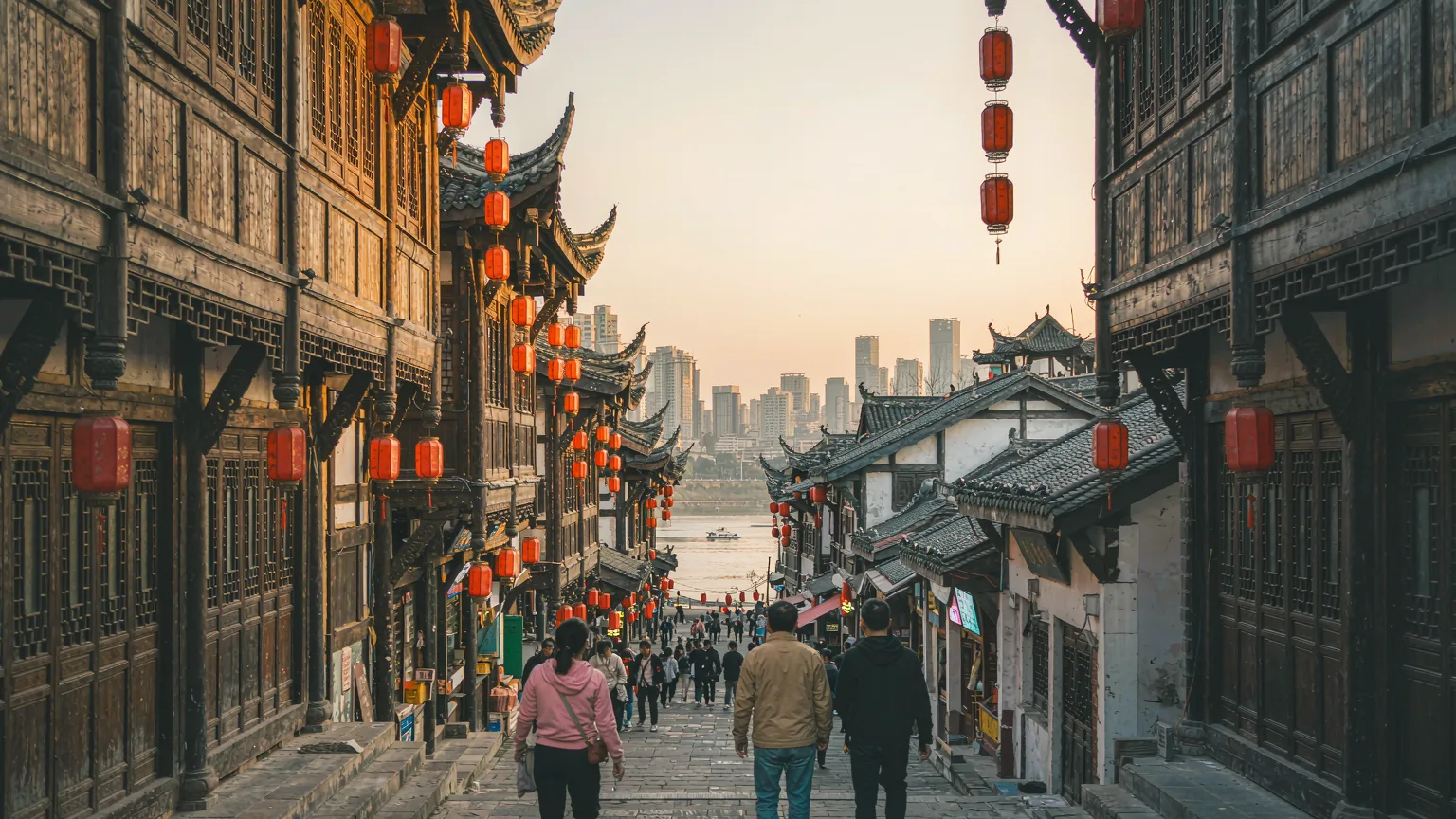
Ciqikou opens the nature route because it reads the Jialing at a glance: the town climbs the bank in terraces, stone steps run down to the water, and the old pattern of barges and ferry points remains legible. Mornings are thin with people, and river wind combs the lanes.
Walk the riverside path upstream past the green belt on the far bank, where wharf-side daily life stacks against the water view. It is lesson one in Chongqing's river system and the hinge to the watery narrative of the next two days.
The Yangtze Cableway: A River in Four Minutes
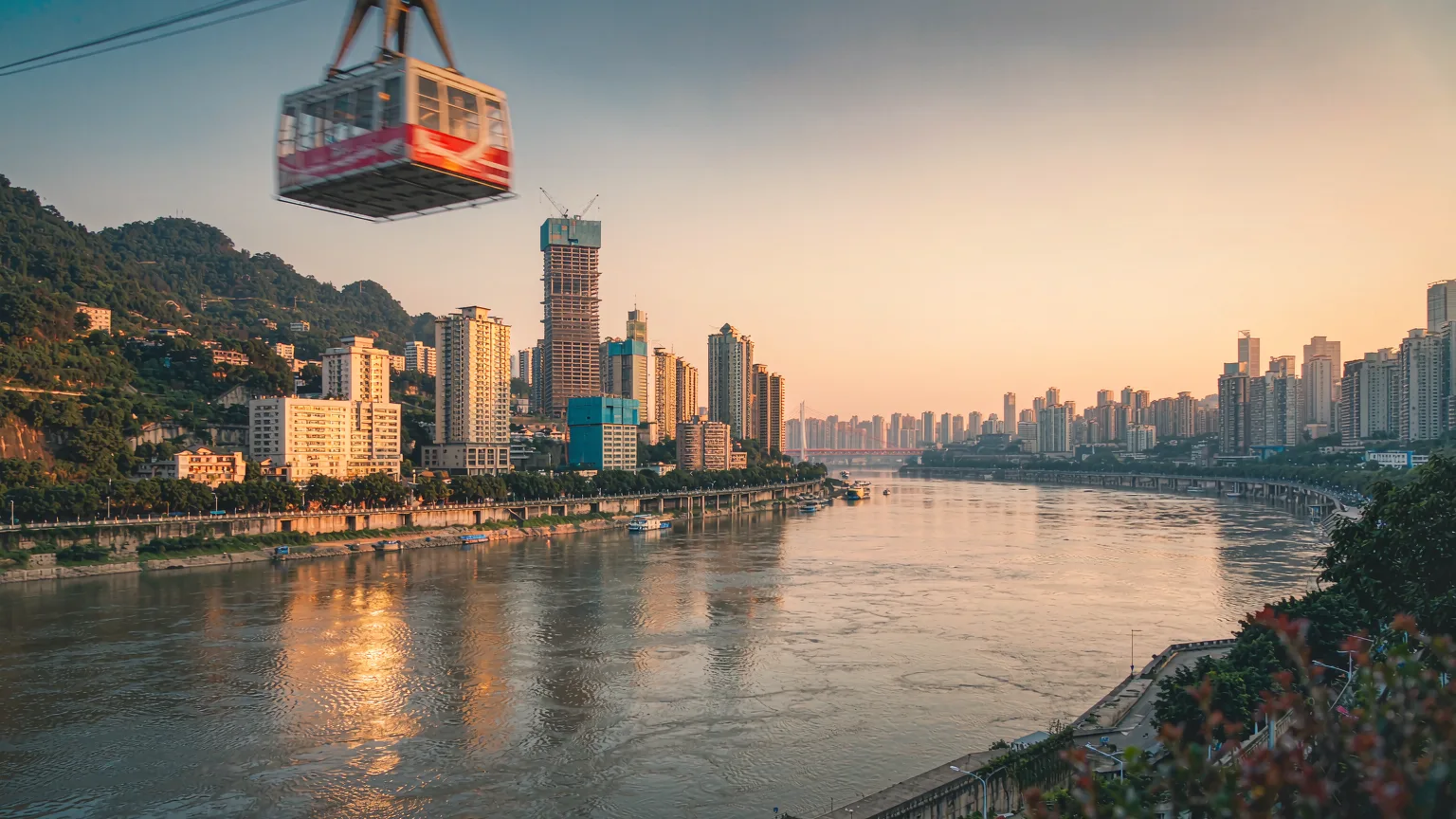
The afternoon reads the river a different way: four minutes in the cableway car pack the Yuzhong peninsula, the south bank's ridges and a bend of the Yangtze into one frame, the least effortful and most complete reading of Chongqing's water any platform can offer.
Don't rush off the south side: walk the riverside path twenty minutes east and look back at the cable line crossing the water, the route's hidden camera angle.
Nanshan Spring Water Chicken: Dinner in the Hill Wind
Head up Nanshan at dusk, eating before strolling. As the chicken street's lights kindle one by one, a pot of pickled-chili stewed bird goes down while the hill breeze presses the day's heat flat.
After dinner walk the hill paths as the peninsula's lights stack up inside the river bend; the two-river night view from Nanshan is day one's curtain call.
Haitang Xiaoyue Hot Spring: A Night Soak among the Lights
Nanshan nights end well in hot water. Haitang Xiaoyue spreads dozens of pools down the hill's north slope; sinking in, the river city's lights carpet the ground below while the day's miles dissolve out of aching calves.
Don't overstay: forty minutes is the sweet spot. Drink warm water after, descend, and sleep, because a harder fight comes tomorrow.
Wulong Three Natural Bridges: Three Stone Gates in a Gorge
Day two pushes southeast early. The Three Natural Bridges chain three limestone arches across a gorge, Tianlong, Qinglong and Heilong in sequence, over deep sinkholes walled by cliffs. From the gorge floor looking up, the bridges span overhead and a person shrinks to a grain of sand.
Walking the bridges takes about two hours on steps and boardwalks, several degrees cooler than the surface even in summer. The old courier-station courtyard at the pit bottom is the gorge's most photogenic building.
Fairy Mountain: Grasslands at Two Thousand Meters
Up from the bridges, Fairy Mountain wears a different face: vast alpine meadows blanket the summit with cattle scattered across them, a summer refuge and, in winter, a rare southern ski field. The little train crosses the grasslands while wind herds the clouds along.
The forest tracks at the meadow's edge suit an easy walk, softest after four. Stay the night in Wulong or ride back to the city; the morning train belongs to Fengjie either way.
White Emperor City: The Cover Shot of the Gorges
Day three runs east to Fengjie. White Emperor City commands the mouth of Qutang Gorge with two highlights, one soft and one hard: the Three Kingdoms tale of the dying lord's entrustment, and the Kuimen gorge mouth printed on the back of the ten-yuan note.
From the ramparts, the Yangtze compresses into a narrow gate between sheer cliffs, water an impossible blue: the cover image of the Gorges, and the high point of three days of landscape.
Qutang Gorge: Into the Knife-Cut Gallery by Boat
Qutang is the shortest and steepest of the Three Gorges, sheer walls pinching the river. The easiest way in is by pleasure boat: gliding through the gorge, you tilt back at knife-cut cliffs while ancient inscriptions file past on the stone.
With spare time, paths at the gorge mouth add a top-down angle, but for a one-day plan the boat wins on density and efficiency; off the water by three leaves room for the rail ride back to Chongqing.
Hongya Cave: Reading Three Days of Landscape back into a City
Back from Fengjie, the finale returns the nature line to the city: Hongya Cave at night, stilted buildings lit along the cliff, the Jialing's river haze softening every bulb.
After sinkholes and gorges, the city folded into landscape reads entirely differently. Take the panorama from Qiansimen Bridge, then duck inside for a late snack; three days close in lamplight.
| Getting around |
|
| Budget | Counting Wulong and Fengjie tickets, transport and lodging, about RMB 1500-2500 pp, excluding long-haul fares. |
| Best time | April-June and September-November run steadiest; Wulong sits ten degrees cooler than downtown in summer, so dodge the gorge boardwalks at noon. |
FAQs
How do I arrange transport to both Wulong and Fengjie?
The standard play: leave for Wulong early on day two, returning downtown or sleeping in Wulong; then rail to Fengjie next morning with an evening return. Both runs take two to three hours; never chain them in one day, and the downtown rest night keeps the pace sustainable.
Do Wulong and White Emperor City tickets need advance purchase?
In peak season book both through official channels ahead; time slots at the Three Bridges sell out often, while Fairy Mountain and White Emperor City stay looser at the gate. Off-peak, on-site purchase works, but Wulong issues entry and shuttle tickets together, so buying online skips the long queue.
If I can only visit one county, which one?
Choose Wulong for grasslands and geology: the bridges and Fairy Mountain fit one day, physically demanding but visually unmatched. Choose Fengjie for the grand river: the gorge-and-city pairing exists nowhere else in Chongqing. With seniors or kids, prefer Wulong, where shuttles cut the walking.
What gear does the mountain leg need?
Grippy shoes come first, as the bridge boardwalks turn slick after rain; summit temperature swings mean a jacket even on summer grasslands; pack rain gear all year. Bring your own swimwear for the hot springs, save offline maps since canyon signal is weak, and never walk the boardwalks alone.