
Chongqing's history lives not in glass cases but among wharves, carved cliffs, factory halls and opera stages. Three days, four acts: from Ciqikou's wharf past to the sound of Sichuan opera; then Dazu, summit of Southern Song stone carving, with a handful of Rongchang clay on the way; finally back in the city to read a century and a half through industrial ruins and Huangjueping's painted walls.
The route's core is one contrast: Song people in the stone, Qing people on the wharf, modern workers in the mills, contemporary youth on the graffiti walls, four generations each writing once on a different material of this city. Read that contrast and you have read Chongqing.
Itinerary at a glance
| D1 09:00 | Ciqikou Ancient Town: A Wharf Heritage Morning |
| D1 14:00 | Chongqing Sichuan Opera Museum: Reading the Five Merged Voices |
| D1 18:30 | Hongya Cave: A Lesson in Stilted Architecture |
| D2 09:30 | Dazu Rock Carvings: A Whole Cliff Telling One Story |
| D2 15:00 | Rongchang Pottery Village: Kiln Fire of a Famous Four |
| D3 09:30 | Chongqing Industrial Museum: Modern History in Rust |
| D3 13:30 | Huangjueping Graffiti Street: Contemporary Heritage in the Making |
| D3 16:00 | Huangjueping Art Museum: From the Wall to the Gallery |
| D3 17:30 | The Yangtze Cableway: An Industrial Relic Still Running |
The route, stop by stop
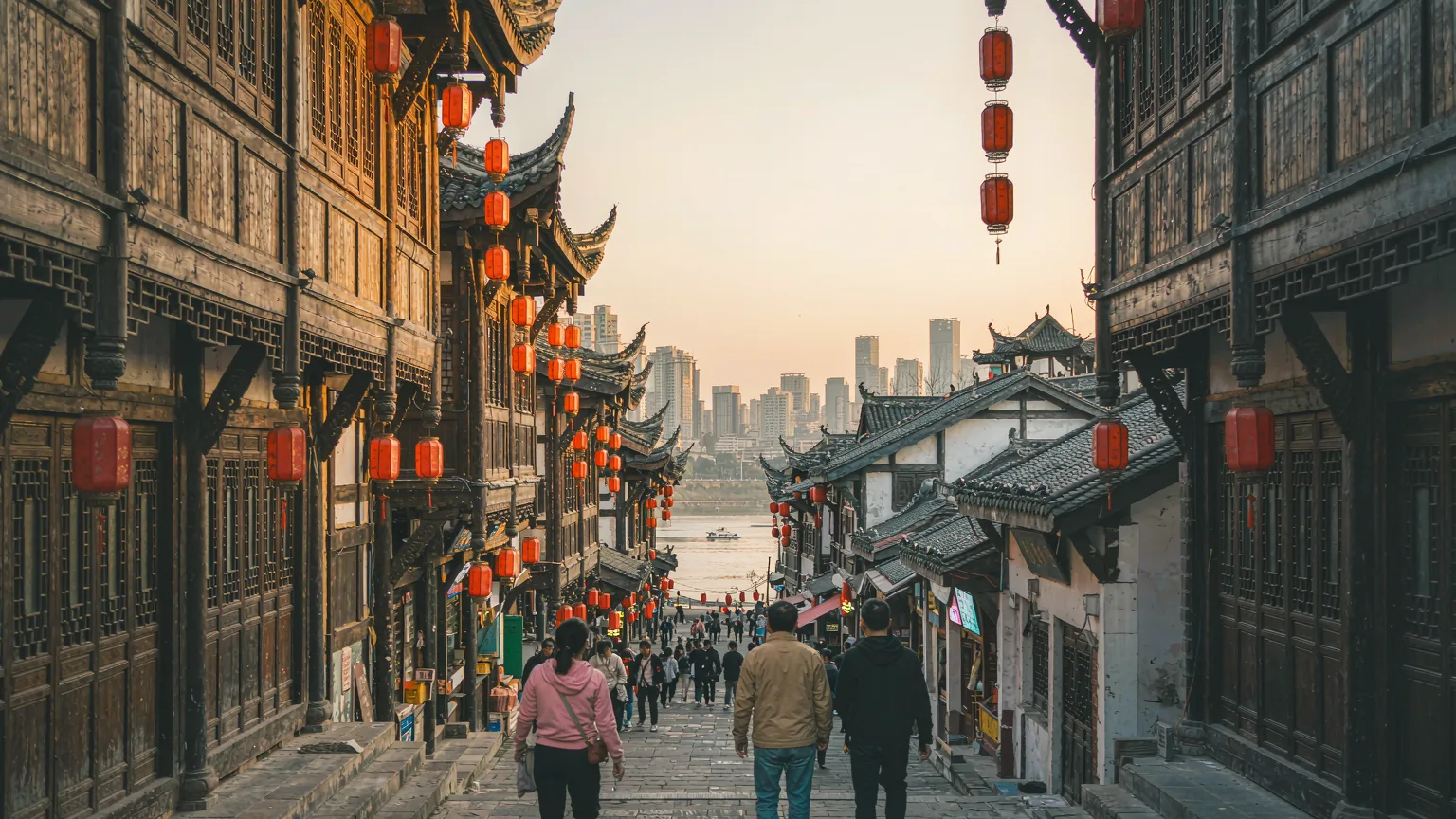
Ciqikou Ancient Town: A Wharf Heritage Morning
Ciqikou's history is wharf history: in Ming and Qing times it ranked as a major porcelain entrepot on the Jialing, immortalized as a thousand hands greeting by day and ten thousand lamps by night. The old houses and guild-hall remnants along the bluestone main street are the water-transport era's inheritance.
Skip the main drag for the side lanes, where teahouse opera singing and bamboo zither are living heritage, closer to the old wharf's soundscape than any souvenir. Morning wind and river mist set the tone for the whole heritage line.
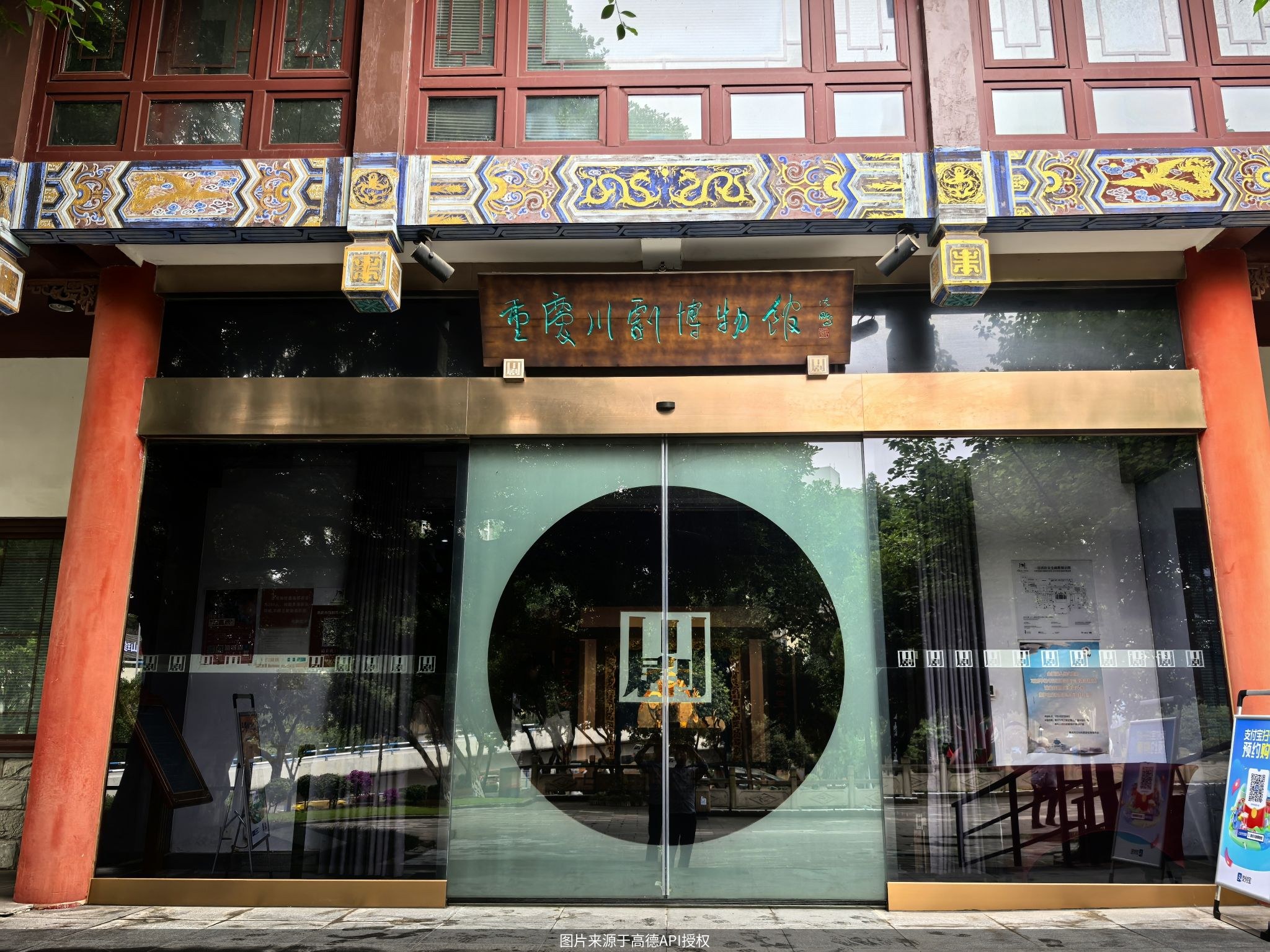
Chongqing Sichuan Opera Museum: Reading the Five Merged Voices
The afternoon inspects the opera's family wealth: costume embroidery, face-pattern systems and old playbills explaining how five vocal schools merged into Sichuan opera. Standing at the cases with an audio guide beats ten performances for a beginner's grounding in the high-tune's chorus style and the Kun tune's grace.
Check the theater's program after the exhibits; with an evening show, pattern study by day meets the real thing by night, and the opera crash course completes in one day.
Hongya Cave: A Lesson in Stilted Architecture
Night returns you to the cliff-hung stilted buildings. The architecture itself is the heritage: post-and-lintel houses riding the cliff face, the hill city's traditional answer to steep ground. Famous now for its lights, the complex still shows bare limestone and old gate remnants among the glow.
Take the top terrace for the Jialing view first, then work down floor by floor, closing the day's first lesson on lamp-lit stilts and stone.
Dazu Rock Carvings: A Whole Cliff Telling One Story
Day two heads west to Dazu. Baodingshan's carvings were built as a ritual precinct under the Song monk Zhao Zhifeng, the Great Buddha Bay unrolling like a scroll, its ox-herding tableaux and filial-piety scenes painting sutras as everyday life, the very specimen of stone art gone fully native.
The genius is narrative: elsewhere you admire single figures, at Dazu one whole cliff tells one continuous story. The Thousand-Hand Guanyin, 830 gilded hands across the face, anchors the visual field; hire a guide, it earns its fee.
Rongchang Pottery Village: Kiln Fire of a Famous Four
From Dazu the route drops south to Rongchang, whose clayware ranks with Yixing's purple stoneware, Yunnan's Jianshui and Guangxi's Qinzhou among China's four famous potteries. In the pottery village workshops line the lanes: watch the full throw-and-glaze process, then throw a piece yourself and have it fired and mailed home.
Cinnabar and yellow glazes carry the highest repute, and the old street still shows kiln remains and pottery shops. The wheel turns this line from watching into making, the loosest hour of the three days.
Chongqing Industrial Museum: Modern History in Rust
Day three reads the modern era back in the city. The museum occupies the old steelworks' section-mill site, rolling machines, locomotives and vast sheds displayed in place, the ordnance-to-steel genealogy laid bare, a rust-red stack standing as the modern history's landmark.
Don't miss the steel-window light in the old halls, morning sun slicing from the east against the rust. This industrial narrative pairs with yesterday's Song carvings as two poles, soft and hard, of the city's bone structure.
Huangjueping Graffiti Street: Contemporary Heritage in the Making
Afternoon reaches Huangjueping. The graffiti street began as a collective work of the art academy's teachers and students, generations of painting layered over the district's walls, old brick, pipework and doorframes all pressed into service as canvas. This is heritage in progress: decades on, these walls will enter the city's art history.
The old teahouse's lidded bowls and the street's noodle stands annotate the walls another way. Yesterday you saw protected heritage; today, heritage still awaiting its verdict, and the contrast is the trip's method.
Huangjueping Art Museum: From the Wall to the Gallery
The street ends at the museum. Its programming leans local and youth-driven, footnoting the painted block outside: after the street's walls, the gallery's curation explains where Chongqing's contemporary art draws its soil.
The museum is compact, one floor in forty-five minutes, a fine rest between transfers, and a quiet punctuation mark for the heritage line.
The Yangtze Cableway: An Industrial Relic Still Running
The heritage line closes on the cableway itself: a relic-grade piece of industrial heritage, opened in 1987 as the country's first self-designed urban river-crossing passenger ropeway, its four minutes stacking old rooftops, new bridges and a century of wharf frontage in one frame.
In dusk light the car is a slow time capsule, three days of history unrolled as a river beneath your feet. Step off on the south bank and head straight home, saving your legs for the next city.
| Getting around |
|
| Budget | With Dazu and Rongchang tickets, rail fares and lodging, about RMB 1200-2000 pp, excluding long-haul fares. |
| Best time | March-May and October-November suit outdoor carving-viewing best; Dazu sun is fierce in summer, so book the earliest slots. |
FAQs
Can Dazu and Rongchang fit into one day?
Yes, with an early start: first train out, three hours at Baodingshan in the morning, one rail stop to Rongchang North after lunch, two hours at the pottery village, and back by evening. If it feels tight, give the pottery its own half day and add Dazu's Beishan carvings instead; the two-day version breathes.
How should I handle Dazu tickets and guiding?
Buy Baodingshan and Beishan separately or as a combo, booking online well ahead in peak season as the site caps entries. Guiding is essential: the carvings are so narrative that unguided viewing reads as spectacle only; shared guides or audio devices stay under a hundred yuan and rank as the trip's best spend.
Does this heritage line conflict with the Three Gorges line?
No conflict, but hard to combine: Fengjie costs two hours each way by rail, and squeezing it in means cutting Dazu. Choose by taste, stone carving and industrial history for this line, river gorges and Three Kingdoms lore for the Gorges line. A seven-day trip can hold both; within three days, pick one.
Any dress or etiquette rules at the carvings?
Most carvings sit outdoors, so pack sun protection in summer and wind layers in winter, plus grippy shoes for steep narrow paths. Avoid flash and selfie sticks before the niches, and touching the figures is strictly forbidden. Dazu's sun is strong, carry water and a hat, and rest in the shade before continuing.