
Five days is Chongqing's golden span: enough to cover downtown, Dazu and Wulong without grinding anyone down. The first two days build your coordinate system with rivers, old streets, the train through the tower and the night views; day three heads west for Song-dynasty stone; day four southeast for nature's sinkholes and grasslands; day five returns to town, closing on graffiti, old mills and a hillside hotpot.
The pacing alternates strain and release: a marching day one, a half-leisurely day two, a rail round trip on day three, mountains on day four, an urban wander on day five. Follow that rhythm and Chongqing empties your legs but not your enthusiasm.
Itinerary at a glance
| D1 09:30 | Jiefangbei: Setting Out from the City's Origin |
| D1 14:00 | The Yangtze Cableway: The First Crossing |
| D1 19:00 | Hongya Cave: The First Night's Lights |
| D2 09:00 | Ciqikou Ancient Town: An Old Wharf Morning |
| D2 11:30 | Liziba: The Class Representative of Terrain |
| D2 15:00 | Beicang Creative Quarter: An Afternoon in the Old Warehouses |
| D3 09:30 | Dazu Rock Carvings: The Song Scroll on the Cliff |
| D4 10:00 | Wulong Three Natural Bridges: Three Arches over the Sinkhole |
| D4 14:30 | Fairy Mountain: The Grassland Coda |
| D5 09:30 | Huangjueping Graffiti Street: A Color Reimbursement |
| D5 14:30 | Eling No.2 Factory: A Farewell among Old Printworks |
| D5 18:30 | Nanshan Pipayuan Hotpot: The Farewell Feast on the Hill |
The route, stop by stop
Jiefangbei: Setting Out from the City's Origin
Day one begins at Jiefangbei to set the coordinates: the monument stands ringed by the densest towers of the southwest, commerce, history and terrain compressed into one block. Spend the morning on the streets and the Bayi Road lanes, reading the city's density.
Jiefangbei doubles as the five-day anchor for transport and supplies; each day starts or ends here, so learn the metro flows around it first.
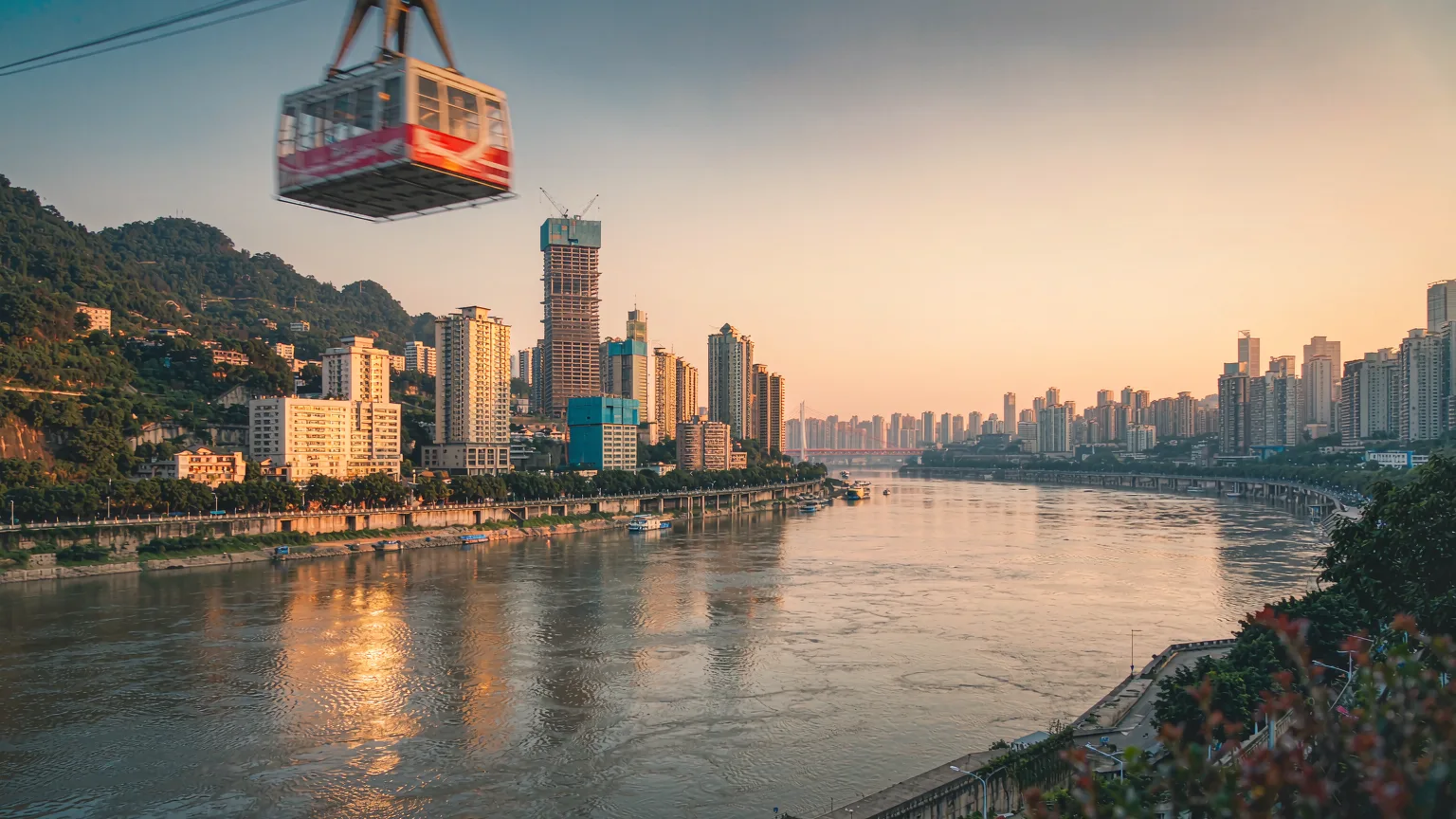
The Yangtze Cableway: The First Crossing
The afternoon makes the first crossing by cable, four minutes packing the peninsula, the south bank ridges and a Yangtze bend into one car, the two-river geography read from the air in a single sitting.
On the south side, walk the riverside path and look back at the peninsula moored midstream like a great ship. Keep day one light after the cable; the night's real show waits at Hongya Cave.
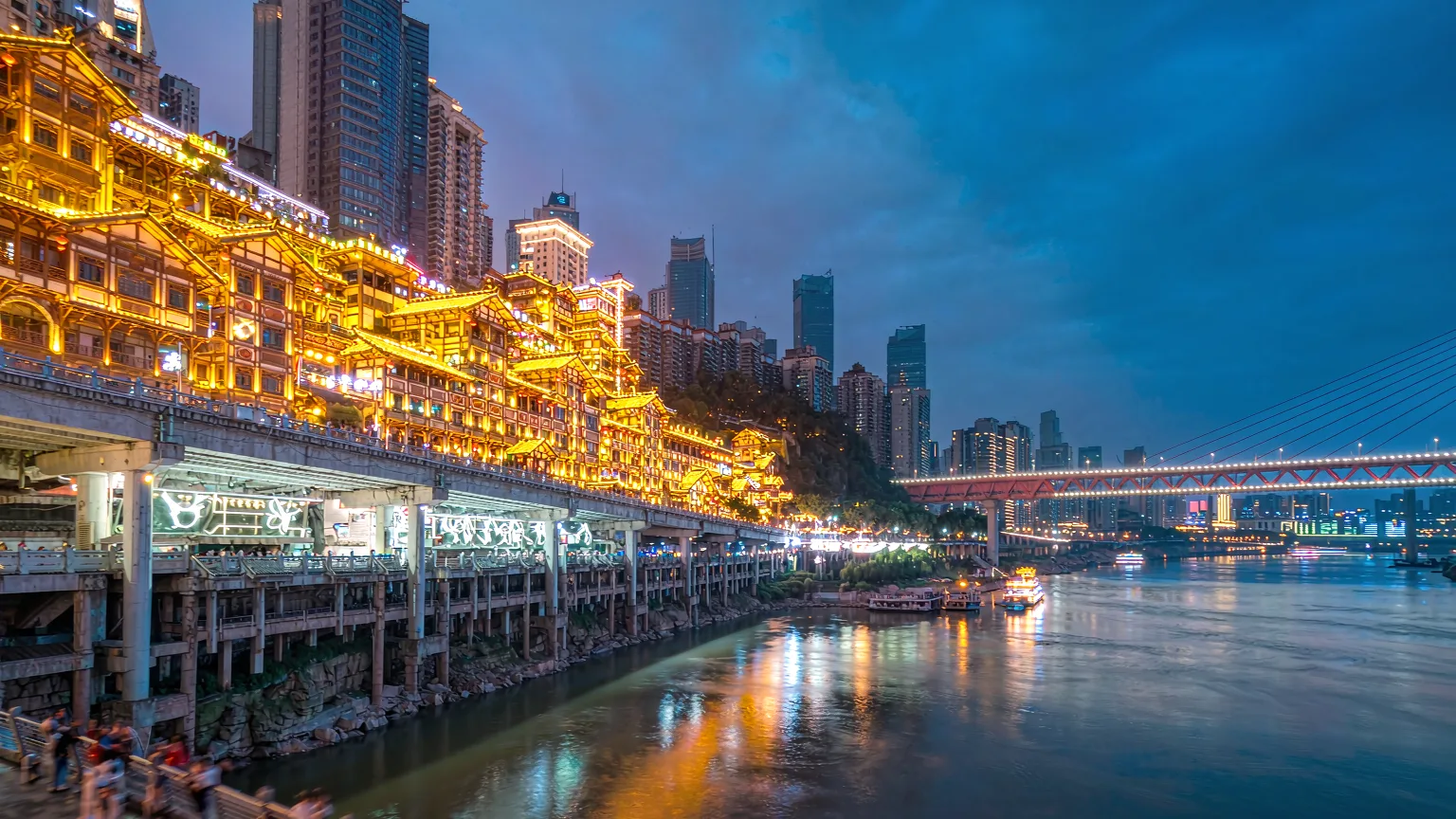
Hongya Cave: The First Night's Lights
Hongya Cave at night is Chongqing's greeting to newcomers: eleven tiers of stilted buildings on the cliff, lights blurred soft by river haze. Take the panorama from Qiansimen Bridge, then work the floors below.
Schedule nothing beyond a late snack on the first night; adjusting to the time zone and the terrain are the same task, and Chongqing's slopes deserve fresh legs.
Ciqikou Ancient Town: An Old Wharf Morning
Day two opens at Ciqikou at half pace. The morning town is just waking, bluestone lanes and old teahouses still the locals', and a stretch of riverside path shows how the Jialing shoulders this wharf town.
Take fried dough twists and hot-and-sour noodles as snacks, a teahouse seat as the main course. Leave before eleven, keeping the afternoon for the metro line.
Liziba: The Class Representative of Terrain
Midday passes Liziba en route, where line 2 exits a tower's sixth floor, the compulsory lesson in Chongqing terrain: train and building designed together, coexisting for over twenty years.
Two trains suffice; boards by the free deck explain the line's engineering. Lunch nearby, then cross the river northward.
Beicang Creative Quarter: An Afternoon in the Old Warehouses
The afternoon crosses to Beicang behind the Guanyinqiao malls, a quarter rebuilt from old textile warehouses, red-brick sheds hiding a library and cafes. Day two's half pace lands here: books, coffee, local design.
Leave Beicang into the Guanyinqiao district for a taste of the north bank's daily density, return to Jiefangbei by evening, and sleep early, because day three starts with a morning train.
Dazu Rock Carvings: The Song Scroll on the Cliff
Day three runs west, rail plus transfer to Dazu. At Baodingshan the Great Buddha Bay unrolls like a scroll, ox-herding scenes and filial-piety tableaux painting sutras as daily life, the Thousand-Hand Guanyin's 830 gilded hands crowning the art's full localization.
Three hours with a guide reveal what sets Dazu apart: narrative, one whole cliff telling one complete story. Return by evening rail and repay your stomach with a plain dinner.
Wulong Three Natural Bridges: Three Arches over the Sinkhole
Day four enters Wulong. The Three Natural Bridges chain three limestone arches across a gorge over deep sinkholes; from the floor, the arches span overhead and a person shrinks to a grain of sand. Walking them takes about two hours, the gorge floor several degrees cooler.
The courier-station courtyard at the pit bottom is the gorge's most photogenic structure. Shuttles bridge the viewpoints, so your effort goes into steps, hence grippy shoes.
Fairy Mountain: The Grassland Coda
The afternoon climbs to Fairy Mountain, vast alpine meadows at the summit with scattered cattle and a little train threading through. The gorge showed steepness, the grassland shows width, two geological moods in one day.
Walk the meadow's forest edge until after four for the softest light, then ride back to the city, keeping day five whole for downtown.
Huangjueping Graffiti Street: A Color Reimbursement
Day five returns downtown, starting at Huangjueping. Generations of graffiti blanket the district's walls, annotated by the old teahouse's lidded bowls and street noodles; after four days of landscape and stone, the color saturation snaps back.
The museum beside the street is worth a pass, its local youth shows turning over fast. Noodles for lunch nearby, then the route bends back north.
Eling No.2 Factory: A Farewell among Old Printworks
The afternoon reaches Eling No.2 Factory, a Republican-era printworks turned creative park, red-brick sheds terracing up the slope, its rooftop the last high perch over the two rivers. Here the five days compress into one sightline: from carved cliffs to a city on cliffs.
The park's indie bookshops and cafes absorb the final hour or two, a chance to top up any missed design goods; store luggage at the desk and go up unburdened.
Nanshan Pipayuan Hotpot: The Farewell Feast on the Hill
The farewell feast sits mid-slope at Pipayuan: over a thousand tables cascading down the hill, one burner each, tree shade stitched into a sea of lights. Half-and-half pot, tripe and intestines by the seven-up-eight-down count, tree shadows above, red broth below.
It is the emotional summit of five days and the best closing argument: every element of Chongqing, hills, rivers, lights, riverside swagger, folded into one pot. Book the descent car ahead.
| Getting around |
|
| Budget | With county-day tickets, transport and lodging throughout, about RMB 2500-4000 pp, excluding long-haul fares. |
| Best time | March-May and September-November run steadiest; Wulong cools the summer, while carvings and gorges deserve the earliest hours. |
FAQs
How demanding is the five-day plan physically?
Moderate to high: the Three Bridges and Dazu involve many steps, and city days top ten thousand. The plan alternates strain and release, easing days two and five to bank energy for three and four. Limited fitness can drop Wulong for Fairy Mountain alone or city hot springs.
Do Dazu and Wulong each really need a full day?
Yes. Each costs about two hours each way plus six-plus hours on site, so half-day versions ruin both ends. The right choices are one of the two, or both with full days; never compress, since a rushed five days loses to a comfortable four.
Where should I stay for this route?
Jiefangbei or Lianglukou wins: lines 1 and 2 cross there, with easy runs to the airport, rail stations, Ciqikou and Liziba. For the Wulong night, either sleep at the site or return downtown; first-timers should return, sparing their luggage and keeping dinner options wide.
How do I keep the budget in range?
Lodging plus the two county days' tickets and transport dominate. Three savings: a chain hotel around Jiefangbei, rail plus site shuttles instead of private cars, and half the meals in noodles and street snacks. Buy all tickets and cable fares via official channels and skip roadside day-tour bundles.