
Seven deep days treat Wudang and Danjiangkou as a book to read, not a list to tick: three days on the mountain in the Ming pilgrim order, from Xuanyue Gate through to the summit; three days along the water, dam to gorge; and a seventh wholly flexible day settling whatever weather and legs still owe.
The deep trip's real currency is rhythm, not sight count: two or three stops daily, blank afternoons, and never more than one late night. The mountain builds effort across three days, the water eases across three, the last stays open, a structure that finishes all seven with you unclenched.
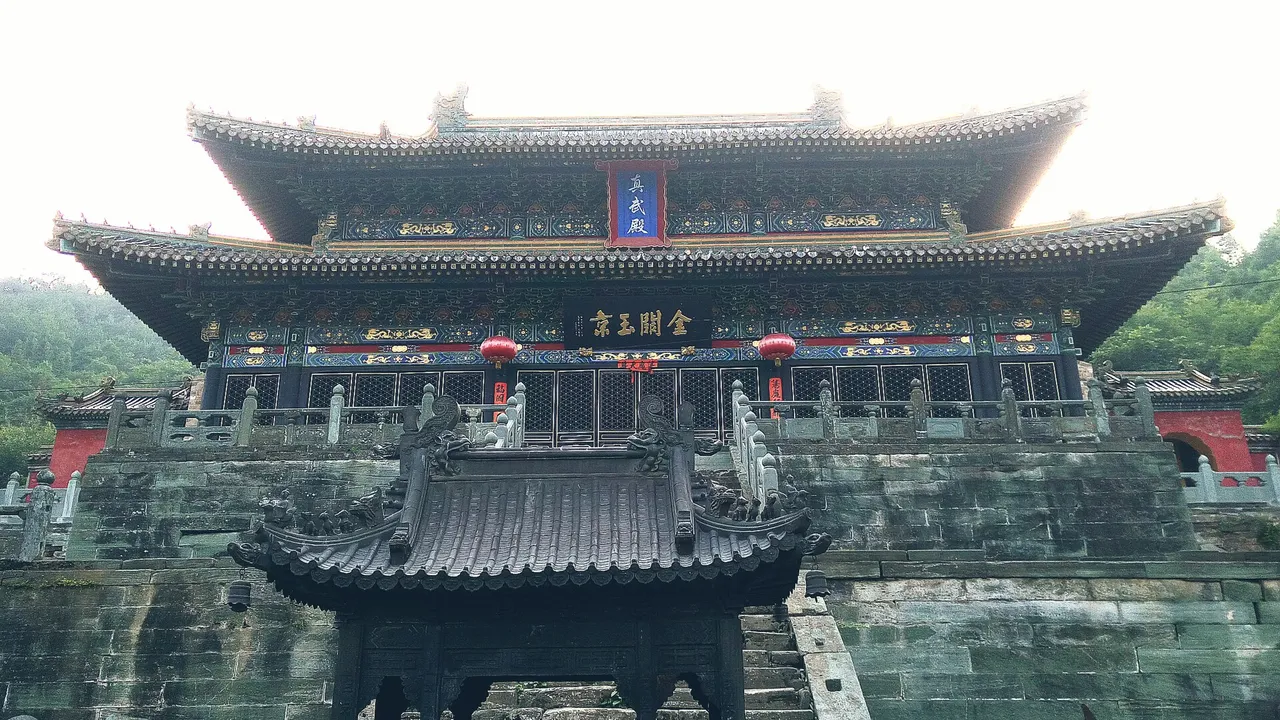
Itinerary at a glance
| D1 09:30 | Yuxu Palace: A Free Grand-Ruins Overture |
| D1 14:30 | Xuanyue Gate: The True Pilgrim Road's Start |
| D2 08:30 | Taizipo: The Full Demonstration of Architectural Wit |
| D2 11:00 | Nine-Bend Yellow River Wall: The Wall Worth a Second Look |
| D2 14:00 | Xiaoyao Valley: Ravine, Martial Arts and an Afternoon of Slack |
| D3 09:00 | Zixiao Palace: The Palace Day's First Exclamation |
| D3 14:00 | Nanyan Palace: An Afternoon on the Cliff |
| D4 08:00 | Wudangshan Hiking Trails: The Pilgrim Trail in Full |
| D4 11:30 | Langmei Shrine: The Trail's Deep-Reading Point |
| D4 14:00 | Taihe Palace and the Golden Summit: The Seven Days' High Point |
| D5 09:30 | Taihu Lake: The Recovery Day's Water |
| D5 14:30 | Canglanghai Tourist Harbor: An Afternoon at the Reservoir's Widest |
| D6 09:00 | The Danjiangkou Dam: The Water's Grand Ledger |
| D6 14:30 | The Ring Road: Deep-Reading the Shoreline |
| D7 08:30 | Taiji Gorge: Day Seven's Ravine and Flex |
The route, stop by stop
Yuxu Palace: A Free Grand-Ruins Overture
The seven days open at Yuxu Palace, once among the largest of Wudang's Ming complexes, free today, its vast terraces, imperial stele pavilions and standing wall sections spread over grass while locals exercise and fly kites, ruin and daily life sharing one frame.
Day one only tunes the instrument: learn the scale of ruins, the steles' height, the walls' bearing, and every complete palace across the next six days will mirror today's absences.
An hour covers it, then hotel rest or town wandering. No mountain on day one; let body and anticipation land first.
Xuanyue Gate: The True Pilgrim Road's Start
The afternoon reaches the mountain-foot Xuanyue Gate, the Zhishi Xuanyue arch a Ming imperially commissioned entrance, carvings crowding the architrave under six centuries of polished weather. Standing beneath it stands you at these seven days' narrative start.
The deep reading gives the arch its full due: cranes, clouds and figure stories panel by panel, decoding the state-works nature behind imperially decreed construction.
The forecourt stays quiet, right for photos and idle minutes; on the return glance at old bridges and field ridges, overnighting in Wudang town.
Taizipo: The Full Demonstration of Architectural Wit
Day two's centerpiece is Taizipo, earliest crowds thinnest. One li four gates, the nine-bend wall, one-pillar-twelve-beams, ten li of osmanthus: four famous devices in a single monastery, the whole Ming negotiation with a steep slope in view.
The deep reading dissects: first walk the circulation feeling guided, then look back from high ground at the folded axis. Give the twelve-beam column five extra minutes, watching load gather into one timber.
Two and a half morning hours; snack at the slope's mouth, then transfer to Xiaoyao Valley.
Nine-Bend Yellow River Wall: The Wall Worth a Second Look
You walked the nine-bend wall with the crowd in the morning; the deep move is turning back for a second pass: first time for suspense, second for method. How the curves screen, release and gather views, one bend one insight.
Glazed coping and ridge beasts reward looking up, and the rose wall's color reads truest in morning light. Teamless, the bends grow quiet enough to hear your own steps.
Forty minutes with photos; a simple lunch near the Taizipo shuttle stop, Xiaoyao Valley in the afternoon.
Xiaoyao Valley: Ravine, Martial Arts and an Afternoon of Slack
Xiaoyao Valley afternoon runs two-phase, show plus stroll: catch a martial performance, then circle the stream slowly. What deep travelers train here is not step count but the ability to do nothing.
Ravine light softens after four, metasequoia straining backlight into gold-green. If masters or students drill among the trees, watch from afar, no approaching, no face shots.
Back to town after, notes and photos at night; tomorrow is the palace day of Zixiao and Nanyan, so tonight holds nothing.
Zixiao Palace: The Palace Day's First Exclamation
Day three is palace day, opening at Zixiao. Along the axis beneath Developing-Flag Peak, Dragon-Tiger Hall, Zixiao Hall and the Parent Hall rise tier by tier, the standard answer of Ming palace architecture fully unfolded.
Read three layers: how axis locks terrain, the pattern system of ridges and paints, the detail of stone terraces. At chanting or ritual music, sit in the courtyard a while, the part no display panel replaces.
Ninety minutes to two hours. Zixiao is the key to Nanyan and the summit; every extra minute today pays out tomorrow.
Nanyan Palace: An Afternoon on the Cliff
The palace day's second half goes to Nanyan. Architecture nesting into sheer rock, stone halls mimicking timber entirely in stone, the dragon-head beam cantilevered over the void, three exclamations in a row, clearest in afternoon light.
Give Nanyan an extra half hour: from the viewing deck watch mist rise off the valley floor until the palace floats midair, the mountain's closest approach to the word fairyland.
Two hours, hand on rail at steps and edges. No summit today; keep the climb whole for tomorrow, early bed in town.
Wudangshan Hiking Trails: The Pilgrim Trail in Full
Day four is the seven days' physical peak. Start from Nanyan at dawn on the old sacred trail toward the summit, the First, Second and Third Heavenly Gates tightening in turn, six centuries of pilgrim order replaying underfoot.
Pace discipline: a talking speed, two-to-three rests an hour of two minutes each; two liters of water and energy food within reach, braces and poles on duty throughout.
About three hours on foot to the summit's foot. Rain slicks the steps, so switch to the cable car without ceremony; deep travelers respect weather above plans.
Langmei Shrine: The Trail's Deep-Reading Point
Langmei Shrine is small, deep value large: the Ming immortal-fruit tribute legend, the court-Daoist relationship, and the pilgrim route's supply node, three stories told in one tiny shrine.
The forecourt platform looks back to Nanyan and the traveled road, among the mountain's best spatial vantages. Rest and hydrate here, budgeting strength for the steep pitch ahead.
Twenty minutes; beyond, steps steepen visibly into a watch-your-feet stretch, with looking up reserved for the pass.
Taihe Palace and the Golden Summit: The Seven Days' High Point
Taihe gathers the trail, the Fortune-Turning Hall's narrow passage the last rite before the top. At the Golden Summit, bronze hall and Purple Gold City crown all peaks, and seven days of groundwork converge here.
The deep traveler's summit task is checking answers: Taizipo's folding, Nanyan's cantilever, Zixiao's axis, the trail's gathering, each verified against the terrain before you. Clear days show the whole Wudang range.
Half an hour to an hour at the top; cloud-sea odds peak after rain clears, so linger ten minutes if today delivers. Descend by Qiongtai cable, soak feet, sleep early.
Taihu Lake: The Recovery Day's Water
Day five recovers, opening at Taihu Lake. Cruise or shore path, handing yesterday's climbed legs to gentle water, the range rolling along the waterline the finest stretching backdrop.
The recovery day assigns nothing: boat, watch mountains, drink tea. The fatigue account peaks two days after a climb, and every ounce saved today pays for the gorge and road ahead.
Two lakeside hours; farmhouse lunch back in town, an afternoon teahouse sit, overnight in Wudang town.
Canglanghai Tourist Harbor: An Afternoon at the Reservoir's Widest
Transfer to Canglanghai in the afternoon, cruising into the reservoir whose widest waters earn the little-Pacific name. The water days' first lesson is scale: the reservoir's immensity only lands mid-water.
Take the upper deck in open reaches, wind and spray meeting you. What deep travelers read here is where the water goes: this clear reservoir will thread a thousand-plus kilometers north, and this is its merest start.
Stroll the harbor quarter after disembarking; overnight in Danjiangkou city or Wudang town per the next two days.
The Danjiangkou Dam: The Water's Grand Ledger
Day six climbs the dam crest, adding the engineering view to yesterday's cruise. Reservoir on one side, river channel on the other, the elevator sparing the legs, recovery-day effort dosed just right.
What deep travelers read here is a system: the diversion's central route draws from this point, headworks, gates and the raised dam turning one clear river sent north from slogan into measurable numbers.
Two hours including exhibits; city fish at noon, the ring road's prime stretches in the afternoon.
The Ring Road: Deep-Reading the Shoreline
The afternoon ring road runs to deep-travel standard: pick two or three prime stretches, twenty full minutes per deck. Bays, islands, fishing boats and autumn color, reading the shoreline page by page.
Opposite the checkpoint sprint, the deep road hours permit idle stops: half an hour on one stretch of water not for photos but for watching cloud shadow travel. The seven days' most luxurious passage.
Wrap driving by dusk, overnight in Danjiangkou city; after dinner walk a stretch of riverside path, seeing the day's water once more by night.
Taiji Gorge: Day Seven's Ravine and Flex
The last day's default is Taiji Gorge: twin peaks embracing like a taiji diagram, streamside trestles about two hours return, gentle effort matching the seven days' closing tempo.
If the previous six days owe weather debts, repay them first: the postponed summit or a ring-road stretch lands here. The flex day serves the experience's completeness, not the sight list.
Lunch in town after the gorge, homeward in the afternoon. The seven-day packing list should hold: one summit-day photo, a tin of Taoist tea, a bag of dried fish, and a lengthened rhythm of breath.
| Getting around |
|
| Budget | Tickets total roughly RMB 350-400, with seven nights, meals and charters the bulk; figure RMB 3,000-5,500 pp. |
| Best time | April-June and September-October are classic, cloud seas, autumn color and ring-road scenery together; the deep pace travels any season with gear adjusted. |
FAQs
What is the greatest risk across seven days?
Not exhaustion but rhythm collapse: front-loading days one to three until the climbing day arrives pre-spent, or burning every recovery night on late sleeps. The counter is built into the structure: two or three stops daily, blank afternoons, never more than one late night. Hold those three and you finish seven days unclenched.
How does the plan adjust if summit day meets rain?
A three-tier plan: light rain, cable car both ways with the summit still seen; heavy rain, trail and cliff edges all closed, switch to flat-ground content like Zixiao and Yuxu; thunderstorms, postpone the whole summit day and swap with Danjiangkou. Here lies the seven-day structure's edge: there is always a day to repay.
Where does deep travel actually differ from a standard five-day run?
The difference is three mores: a flex day (weather and legs both get repayment), half again the dwell time (one palace twice beats two palaces once), and a stretch of blankness (the afternoon teahouse and evening riverbank, the longest-surviving memories). Same sight count, different depth of experience.
What needs advance booking across seven days?
Three categories: lodging by base two or three days ahead, a week in season; the mountain entry bought online in season with summit tickets on site; and one charter driver kept for the whole trip with the itinerary shared early. Cruises and the dam sell at the gate, though off-season cruises deserve a confirmation call.