
Five days is the region's most balanced cut: one low-mountain day takes the essence of Emei hiking, a summit night pockets both cloud sea and sunrise, one day each goes to the Leshan Buddha and to museum-and-monastery, and the last day shops its way home. Against the trio, the extra two days convert entirely into ease.
The altitude-and-stamina curve: day one bases low at 500 to 800 meters, day two rides to 2,400 then cables to 3,079 and sleeps high, day three fully descends, day four recovers at 400-meter Leshan and in town, day five closes at zero-intensity shopping. Each day lands looser than the last.
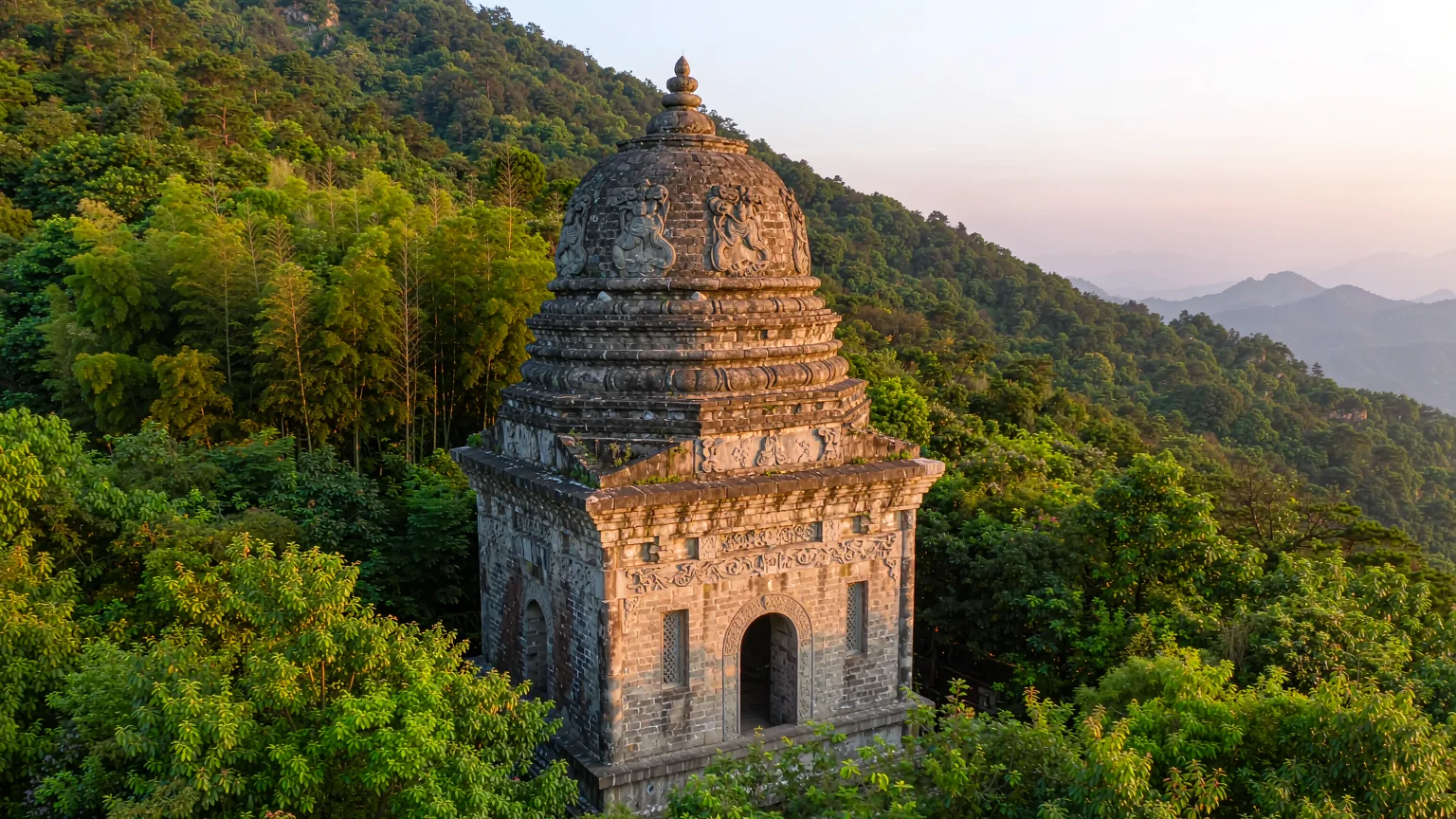
Itinerary at a glance
| 09:00 | Day 1, Baoguo and Fuhu: Gateway and the Dust-Free Garden |
| 14:00 | Day 1, Qingyin Pavilion and the One-Legged Sky Monkey Zone |
| 09:00 | Day 2, Wannian Temple and the Ascent |
| 14:00 | Day 2, Adapting at Leidongping and the Transfer |
| 17:00 | Day 2, Summit Dusk and the Night Up High |
| 06:30 | Day 3, Summit Sunrise and the Descent |
| 14:00 | Day 4, the Leshan Giant Buddha: From Above the Clouds to the Riverbank |
| 15:00 | Day 4, the Museum and Dafo Chan Temple |
| 09:30 | Day 5, Town Shopping and the Close |
| 15:00 | Day 5, Dongmen Snack Street and Farewell |
The route, stop by stop
Day 1, Baoguo and Fuhu: Gateway and the Dust-Free Garden
Five days open on the two gateway temples: morning at Baoguo for its layout and the Kangxi plaque, walking the Tiger Stream trail to Fuhu and in through the nanmu grove. Three hours across both at stroll pace, nothing rushed.
The afternoon completes the chronology at the quarter's museum, dinner of qiaojiao beef, day one's job being warm-up and acclimatization, sampling the mountain-town temperature gap early.
Day 1, Qingyin Pavilion and the One-Legged Sky Monkey Zone
The afternoon shuttle reaches Qingyin, past the Twin Bridges up the Black-River boardwalk to the One-Legged Sky and back through the monkey zone, two hours holding the mountain's finest walking: steps, streams, a rock cleft and the macaques all in one.
Recite the rules once more, sealed food, no crouching or teasing or eye contact, empty hands. Finishing today leaves tomorrow's high day with no suspense, only scenery.
Day 2, Wannian Temple and the Ascent
Day two runs artifacts before altitude: morning shuttle to the Wannian cableway for the Beamless Hall and the Song bronze Puxian, the mountain's key relic taken while legs are freshest, then down and straight onto the ascending shuttle.
Lunch simply en route toward Leidongping, the afternoon ride climbing from 500 to 2,400 meters while the window's shifting vegetation belts teach the altitude lesson in advance.
Day 2, Adapting at Leidongping and the Transfer
Give yourself twenty to thirty minutes adapting off the Leidongping bus: stroll, sip warm water, put the down jacket on. At 2,400 meters most feel only shallower breath, but tonight sleeps here, and the fuller the adaptation the steadier the night.
Walk half an hour to Jieyin Temple as a rehearsal, confirming the cableway queue line and first departure for dawn. This scouted walk is insurance for the sunrise run.
Day 2, Summit Dusk and the Night Up High
The cableway rises straight to the summit, noon-to-dusk covering the ten-direction bronze Puxian, the gold hall and the cliff's cloud sea in one pass. Sunset dyes the sea gold-red, crowds drain on the last cableway, and that high quiet is hard to buy anywhere.
Sleep near the top or at Leidongping, mild head pressure and shallow sleep normal at night. Set the alarm forty minutes before sunrise and stage gear bedside.
Day 3, Summit Sunrise and the Descent
Before dawn the summit holds a hard blue, and in the minutes the sun leaps from the cloud sea's edge the surface burns from gray-blue to gold-red, the five days' redemption moment cashing every setup.
After sunrise, cableway and shuttle down, back at the Baoguo quarter by noon. The afternoon schedules nothing, nap, foot soak, a good meal, executing the five-day curve's first deep recovery.
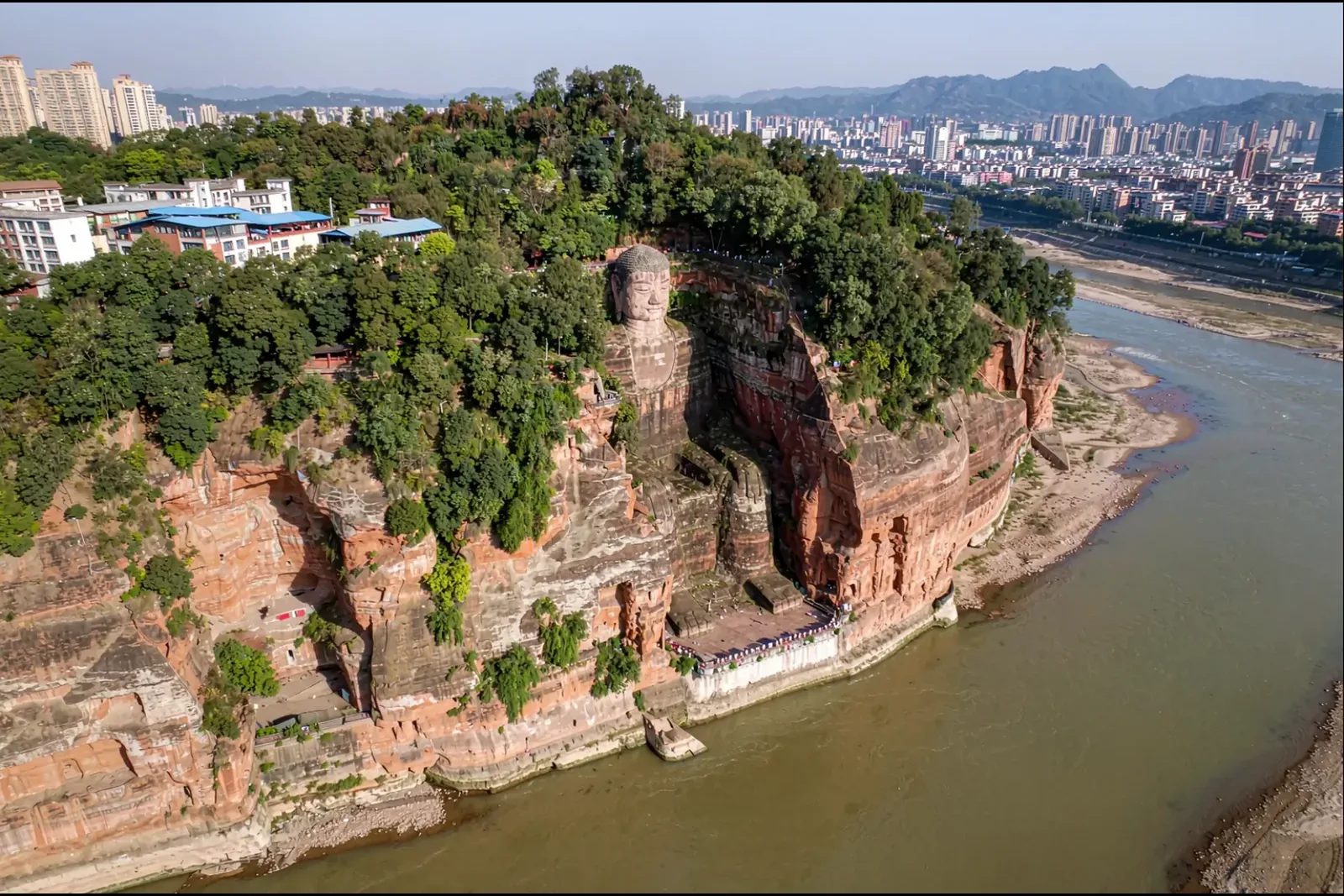
Day 4, the Leshan Giant Buddha: From Above the Clouds to the Riverbank
Day four's rail settles altitude in one move, the riverbank at just 400 meters. Arrive in the morning, queue the cliff path down to the feet, where the upward ten seconds are the trip's most stunning instant, then stroll the riverside promenade, boat or backtrack as you please.
Pace it as a recovery day: nothing rushed, no extra climbs, the morning's best given to the cliff path and the afternoon spent digesting by the river. Yesterday's cloud sea today flows as river mist below the Buddha's feet, the five days' altitude narrative joining shut.
Day 4, the Museum and Dafo Chan Temple
Back in Emeishan, close the day on two indoor stops: the museum replaying the five days' mountain as a chronology, and the Dafo Chan Temple annotating the journey with contemporary monastic scale, both on flat ground to match recovery day.
Catch the vegetarian hall's 17:00 sitting and eat the trip's quietest meal inside the temple, early to bed with shopping and departure still ahead.
Day 5, Town Shopping and the Close
The last day runs at zero intensity: morning at Womei plaza for gifts and travel snacks, tea by grade and sweet-skin duck vacuum-packed, lunch at Crystal Plaza, and with spare time one more hour on Dongmen street and in the old teahouse.
Archive five days of tickets and cableway stubs, split luggage by rail and airline rules. The right way for Emei five days to end is home with aching legs and a box of tea, the legs proving you walked it, the tea proving you kept it.
Day 5, Dongmen Snack Street and Farewell
The last stop before departure belongs to the old town: ice jelly, bobo chicken and a three-yuan Maojian, sitting at the street's end watching locals play cards, every flavor of five days reread freely in the final hour.
Emei's five days did not merely show you things, they assigned one day each to the mountain's low, its high, its relics, its food and its market town. Next visit, you will know which day to live again.
| Getting around |
|
| Budget | Tickets and transport total about RMB 500-600 pp, four nights RMB 600-2000, meals around RMB 500; plan RMB 1600-3100 pp. |
| Best time | September-November pairs the cloud sea with red leaves; winter summit snow stuns but demands microspikes and colder-rated kit. |
FAQs
What do the extra days of a five-day plan buy over three?
The extra day and a half buys pure ease: low-mountain hiking uncramped against summit day, a full recovery day after descending, the Leshan Buddha degraded from a sprint to a stroll, and a dignified shopping close. Seeing the same sights, the trio's fatigue runs roughly double the five-day's.
What if summit lodging is fully booked?
Two fallbacks: stay at Leidongping, more rooms and about thirty percent cheaper, at the cost of racing the first cableway for sunrise; or drop the mountain night, summit by afternoon for the sunset glow and descend same-day, leaving sunrise for a next time. Book one to two weeks ahead in season and it almost always resolves, room first, then tickets.
Is the five-day plan feasible with a seven-year-old?
Feasible and friendly: halve the low-mountain walking, shuttles and cableways cover every climb, the monkey zone is a highlight rather than a risk for kids, and summit day just needs warmth and pacing. The real watchpoint is altitude, since children report poorly, so parents should watch appetite and energy and descend on any anomaly. The five-day's two recovery days are especially valuable for families.
What changes for this five-day route in winter?
Three changes: microspikes and thicker down for the summit leg, with ice and snow common above Leidongping and spikes mandatory for any walking descent; sunrise slips past 7:30, so reset alarms; and the low zone turns mild by day despite big night drops, actually pleasant. Extreme ice can close the summit cableway temporarily, so confirm both before the trip and again on the day.