
Mount Emei has carried the Puxian bodhisattva's cult for over a millennium, a geological specimen for 300 million years, and a martial-arts name for centuries, yet most of that story sits not on the trails but in the halls and theaters at the mountain's foot. One day of museum, temple, woodcraft museum and stage reads the entire backdrop at once.
The rhythm runs knowledge into ritual: the museum lays the base in the morning, the Dafo Chan Temple teaches contemporary monastic scale by noon, the nanmu museum shows how one wood grew into an industry, and the evening show stages martial arts, tea rites and Tibetan-Qiang dance. Paired with climbing, slot it before the ascent, when recognizable details double.
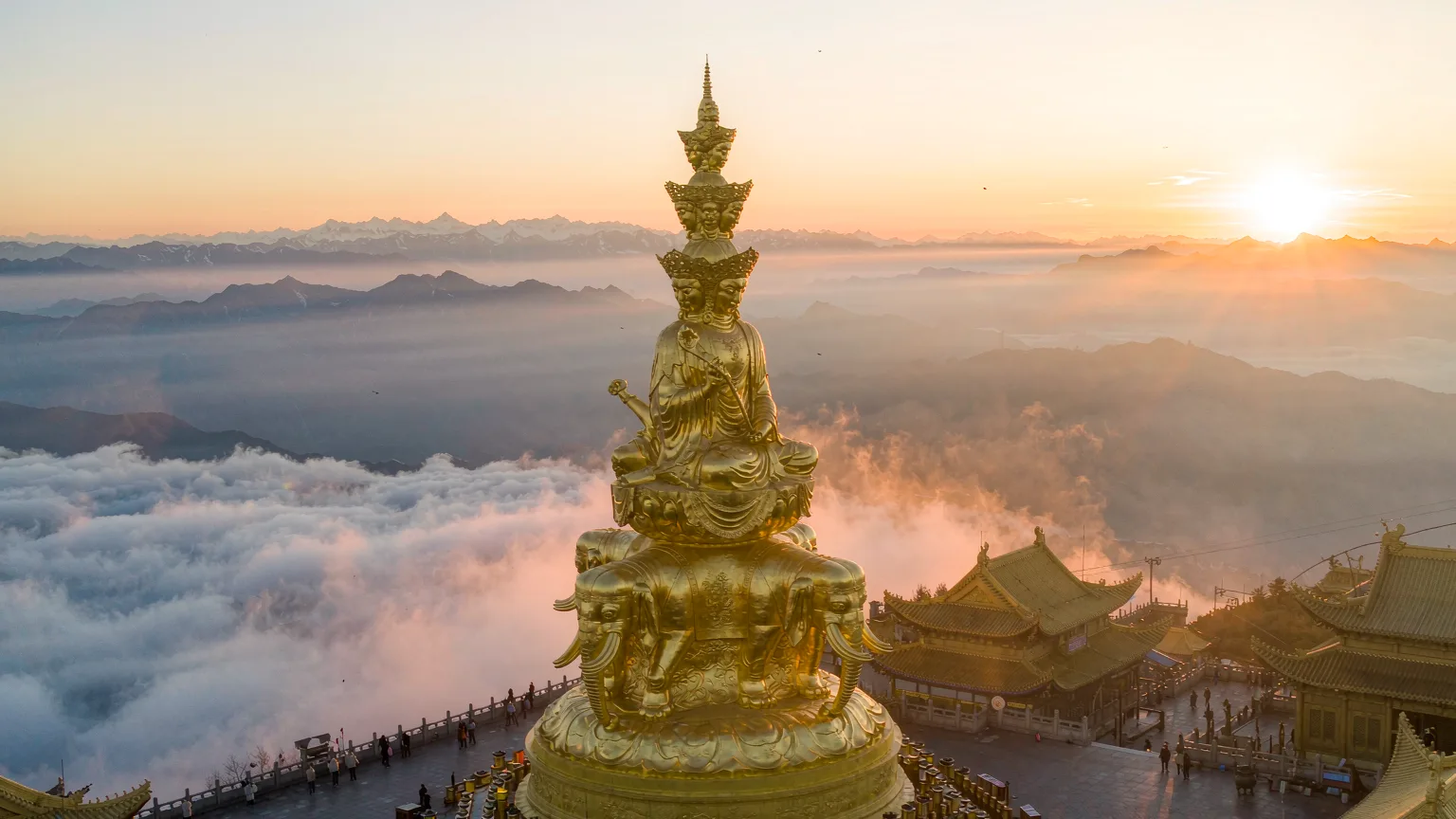
Itinerary at a glance
| 09:00 | Emei Mountain Museum: The Whole Backdrop in One Pass |
| 11:30 | Dafo Chan Temple: The Scale of a Contemporary Monastery |
| 14:30 | The Golden Nanmu Museum: The Life of One Wood |
| 19:30 | Shengxiang Emei: Martial Arts and Tea Rites on Stage |
The route, stop by stop
Emei Mountain Museum: The Whole Backdrop in One Pass
Beside Baoguo Temple, the exhibits run geology, ecology and heritage: the geology hall moves from submarine basalt to a faulted 3,099-meter massif, the ecology hall maps vertical vegetation belts, and the heritage hall sorts the Buddhist-Taoist-Confucian layers, the origin of the Puxian cult and the Emei martial lineages.
Fix on three things: the replica of the Song bronze Puxian and its tie to the Wannian original, the chronicle of eminent monks and rising-falling temples, and the weapons and manuals in the martial gallery. Before the climb, every plaque and hall up there gains a name.
Dafo Chan Temple: The Scale of a Contemporary Monastery
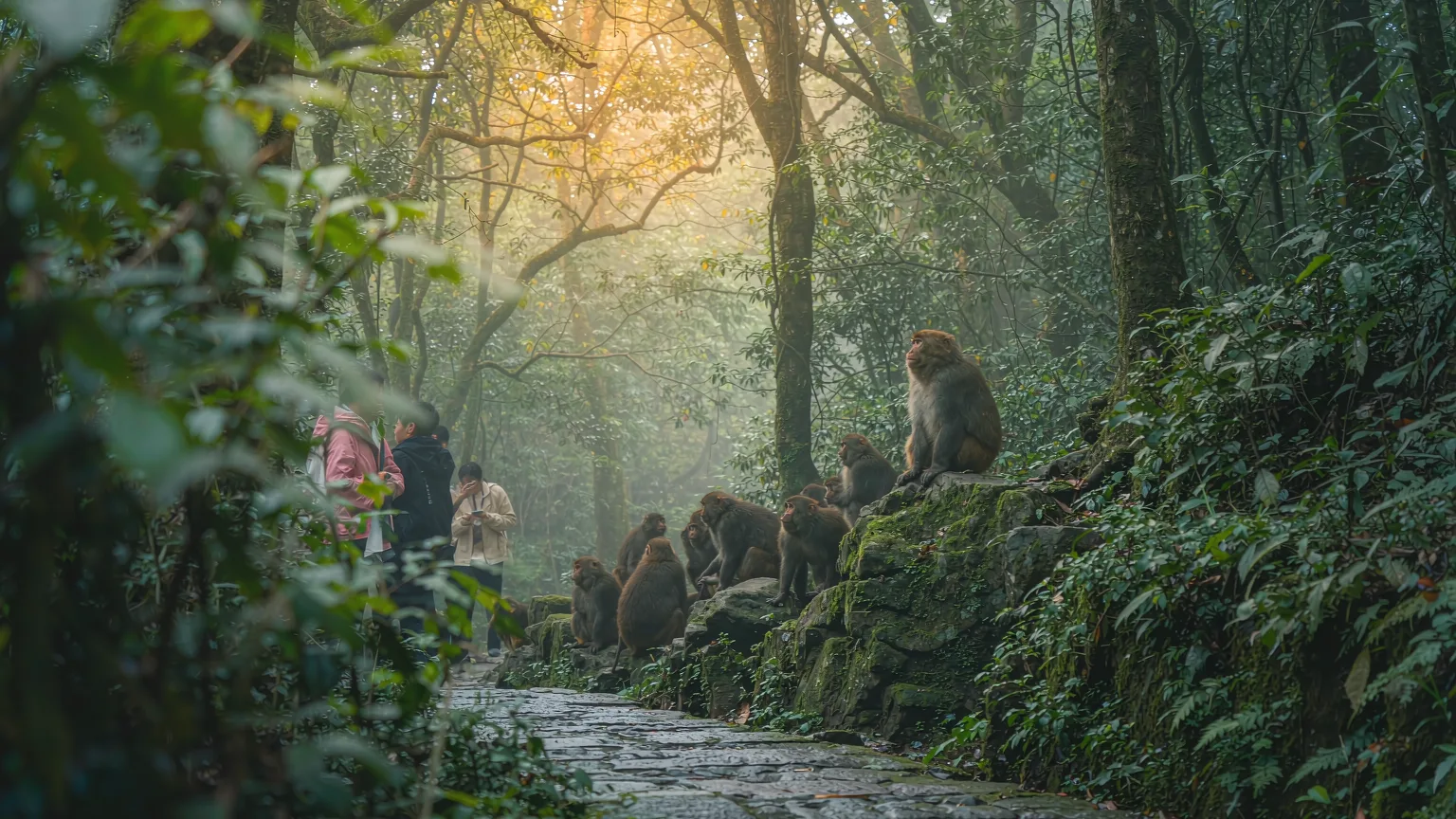
In the city's east, the Dafo Chan Temple is a vast Chan monastery rebuilt this century, axis after axis, a twenty-minute walk from the gate to the last hall, its unbroken roofline an intuitive lesson no ancient temple offers. The gardens and release pond stay clean and restrained, and at noon the refectory bell rolls down the cloisters.
The point is that it is alive: you see monks' real daily routes and rites, not a pickled scenic spot. If the vegetarian hall runs, lunch at thirty to forty yuan a head is the trip's most worthwhile quiet meal.
The Golden Nanmu Museum: The Life of One Wood
Golden nanmu reigns as Sichuan's most prized wood, and this museum tells one wood as a whole industry: the raw-material hall separates golden-strand, water-ripple and raindrop figures, the craft hall shows Ming joinery and the making of buried ancient timber, and a price board quotes going rates with charming candor.
The standard takeaway is reading the strands by flashlight: true nanmu's grain flows under raking light, the basis of authentication. Even with no intention to buy, an hour of pure science pays, since the beauty of wood asks no credentials.
Shengxiang Emei: Martial Arts and Tea Rites on Stage
The evening Shengxiang Emei folds Emei martial arts, tea craft and Sichuan song and dance into eighty minutes, the weapons and paired combat genuinely skilled, the tea section turning Xueya brewing into ritual. The theater sits at Xiangcheng Grand Theatre, dense seating but straight sightlines throughout.
It closes the day: the martial lineages and tea culture read in the morning gain movement and sound on stage. Walk back to the hotel and the day clicks shut as the lights dim.
| Getting around |
|
| Budget | The museums are free or cheap and the show runs about RMB 200-280; plan RMB 250-350 pp before meals. |
| Best time | Year-round; museum and temple breathe best in the morning, and the evening show plays best around 20:00. |
FAQs
Is a dedicated culture day worth it without climbing?
Worth it, especially for seniors with limited legs, families with preschoolers, and travelers using Emei as a Leshan-corridor waypoint. All four stops sit on flat ground, low exertion and high density. On a two-day trip that must summit, compress museum and show into a half day plus one evening.
How do I choose between Shengxiang Emei and other Xiangcheng shows?
Xiangcheng hosts several resident shows; Shengxiang Emei leads with martial arts and local culture, best for first-timers, and for anyone who has already seen Sichuan-opera face-changing, its combat sections stand out most. Buy through the theater's official channels at posted rates, a day ahead in season.
Is the nanmu museum just a shopping trap?
It does attach a retail zone, but the exhibits carry solid information and quote prices openly, rarer candor than the trade usually shows. The countermeasure is simple: treat the visit as science, press pause on buying, and if the urge survives a calm week at home, inquire through proper channels then. Used as a museum, it is one.
Should culture day go before or after the climb?
Before the climb works better: the geological and religious background directly upgrades the trail, and you will recognize more martial schools on stage. After the climb wins only on comfort with zero legs left, at a cost of freshness. One flexible day, put it before; two flexible days, keep one after for hot springs and the show.