
The standard three-day answer runs one low day, one high day, one Leshan day: the Qingyin and One-Legged Sky stretch is the mountain's best walking, worth a full day without any cableway; the Golden Summit's core is the cloud sea and sunrise, both captured only by sleeping up; and the Leshan Giant Buddha closes the trip on the lowest exertion, easing the connection home.
The altitude-and-stamina curve is the skeleton: day one lays the base hiking between 500 and 800 meters, day two shuttles straight to 2,400-meter Leidongping then up to the 3,079-meter summit, day three descends to 400-meter Leshan. The mountain night is the key decision that turns a rushed trio into a composed one.
Itinerary at a glance
| 09:00 | Day 1, Baoguo Temple: The Hike Begins at the Gateway |
| 11:00 | Day 1, Qingyin Pavilion and the Twin Bridges |
| 13:30 | Day 1, the One-Legged Sky and the Monkey Zone |
| 16:00 | Day 1, Wannian Temple and the Descent |
| 08:00 | Day 2, the Shuttle Ride Straight to Leidongping |
| 10:00 | Day 2, the Jieyin Cableway and the Golden Summit |
| 17:00 | Day 2, Summit Dusk and the Night Up High |
| 06:30 | Day 3, Dawn: Sunrise at the Golden Summit |
| 14:00 | Day 3, the Leshan Giant Buddha: From 3,079 Meters to the Riverbank |
| 17:30 | Day 3, Town Close and the Way Home |
The route, stop by stop
Day 1, Baoguo Temple: The Hike Begins at the Gateway
Three days open at the mountain's gateway temple. Half an hour covers Baoguo's core halls, then the walk truly starts: a trail up beside the Tiger Stream under nanmu and camphor shade from the first step. The low mountain's grade stays gentle, the stone steps clean, walking at stroll effort.
Today the gear list debuts: grippy shoes, a light pack, the thermos. No cableway dependence all day, the low mountain forgiving weather best, walkable even in light rain.
Day 1, Qingyin Pavilion and the Twin Bridges
Two gentle hours bring Qingyin Pavilion, where black and white waters meet before Niuxin Pavilion, the sound of water striking the Ox-Heart rock arriving before the view. It is the mountain's most photographed spot and the balance point of crowds and scenery, best before the tour waves around 11 am.
Sit ten minutes on the stones by the pavilion comparing the two waters' voices. The One-Legged Sky and monkey zone branch from here, so toilets, water and the backpack-zip check all happen now.
Day 1, the One-Legged Sky and the Monkey Zone
Twenty minutes up the Black-River boardwalk reach the One-Legged Sky, rock walls pinching single file under one thread of light, the slick boards the day's most adventure-flavored twenty minutes. Ten minutes past the gap, warning signs announce the monkeys.
The zone's Tibetan macaques run sturdy and short-tempered, so three iron rules: sealed food, no crouching or teasing or eye contact, nothing in hand. Pass quickly with respect, the zone only a few hundred meters, and the tension is exactly what makes it the three days' deepest memory.
Day 1, Wannian Temple and the Descent
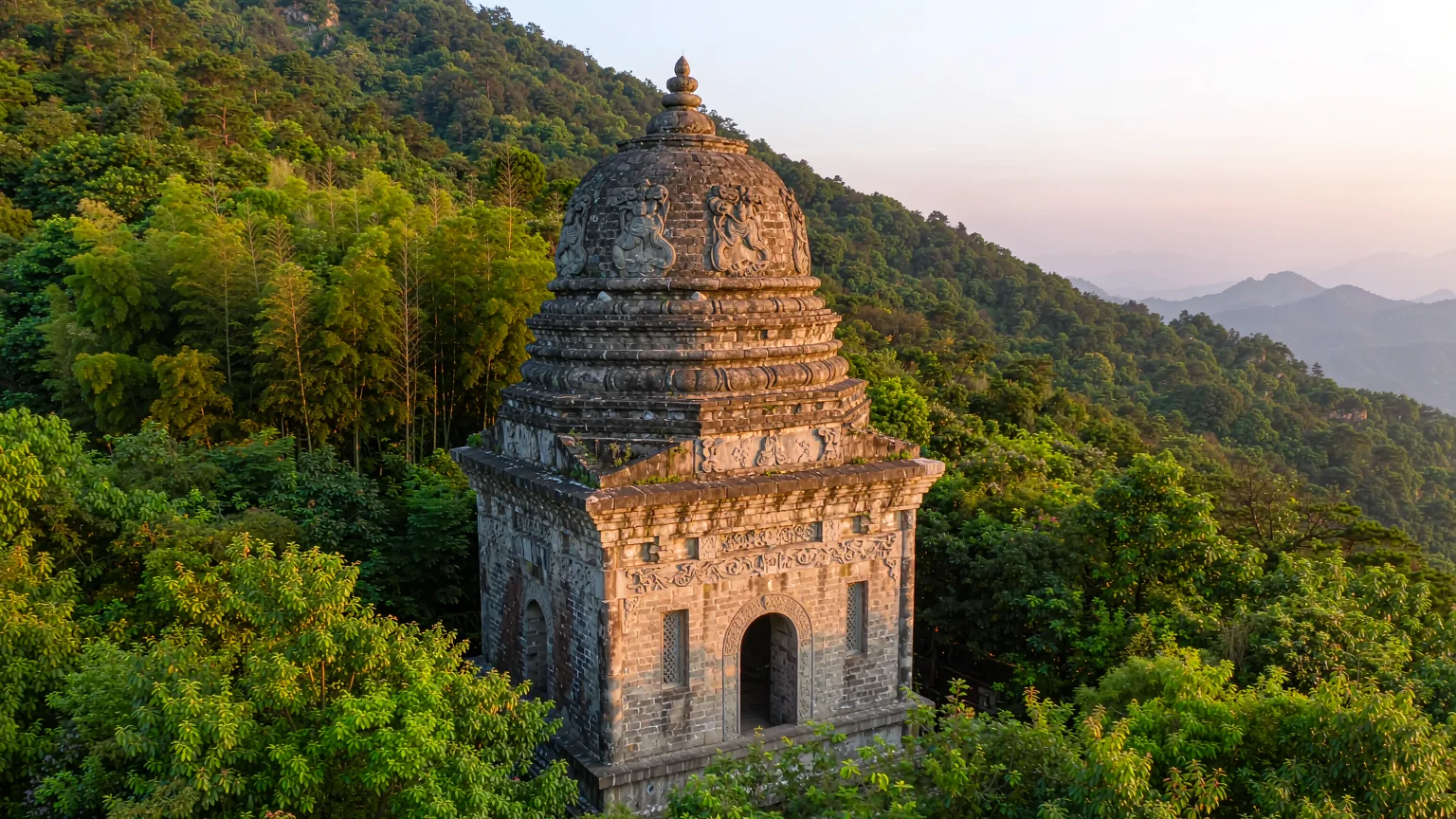
Return along the same boardwalk to Qingyin, shuttle to the Wannian cableway base, five minutes up and a fifteen-minute walk to the temple. The Song bronze Puxian in the brick Beamless Hall stands 7.85 meters, the mountain's crown jewel beneath a dome of brickwork unsupported for a thousand years.
Ride down, shuttle back to the Baoguo area, and sleep at Baoguo or Qingyin, dinner of qiaojiao beef or vegetarian fare, early to bed for the summit start.
Day 2, the Shuttle Ride Straight to Leidongping
Catch day two's first shuttle from the Baoguo terminal straight to Leidongping, about two hours climbing from 500 to 2,400 meters while the window swaps broadleaf for conifer and thins the air into fog, the mountain's easiest altitude lesson.
Leidongping is the end of the summit shuttle line, where the transfer and cableway begin. Adapt for twenty minutes off the bus, strolling and sipping warm water, as 2,400 meters means only slightly shallower breath for most.
Day 2, the Jieyin Cableway and the Golden Summit
Half an hour's walk from Leidongping reaches Jieyin Temple, the cableway rising to the summit in minutes. Most people gasp stepping out: the 48-meter ten-direction bronze Puxian stands in the clouds on its white elephants, and under sun the gilded summit earns its name.
The summit packs tight: the great statue, the gold and bronze halls, and the cloud-sea viewing line along the cliff. One loop takes about forty minutes, with the cloud sea a matter of luck peaking between 10 am and 2 pm.
Day 2, Summit Dusk and the Night Up High
Sleeping high decides the trip: sunset dyes the cloud sea gold-red, the crowds drain on the last cableway, and for an hour the summit holds nothing but wind. Lodging sits at Leidongping or near the top, plain but priceless in position.
At night altitude may knock: mild head pressure and shallow sleep are normal, so drink warm water and slow down. Set tomorrow's alarm forty minutes before sunrise, whose time floats seasonally between 6 and 8 am, posted nightly at the desk.
Day 3, Dawn: Sunrise at the Golden Summit
Before sunrise the summit holds a hard blue, crowds in hotel down jackets lining the cliff. In the minutes the sun leaps from the cloud sea's edge, the surface burns from gray-blue to gold-red and the statue's outline catches fire, the one instant that cashes in three days.
After sunrise, two options: strong legs walk down to Leidongping in about two and a half hours (not advised when icy from winter into spring), or ride cableway and shuttle straight down. Either way, board a descending vehicle by 10 am to save the afternoon for the Giant Buddha.
Day 3, the Leshan Giant Buddha: From 3,079 Meters to the Riverbank
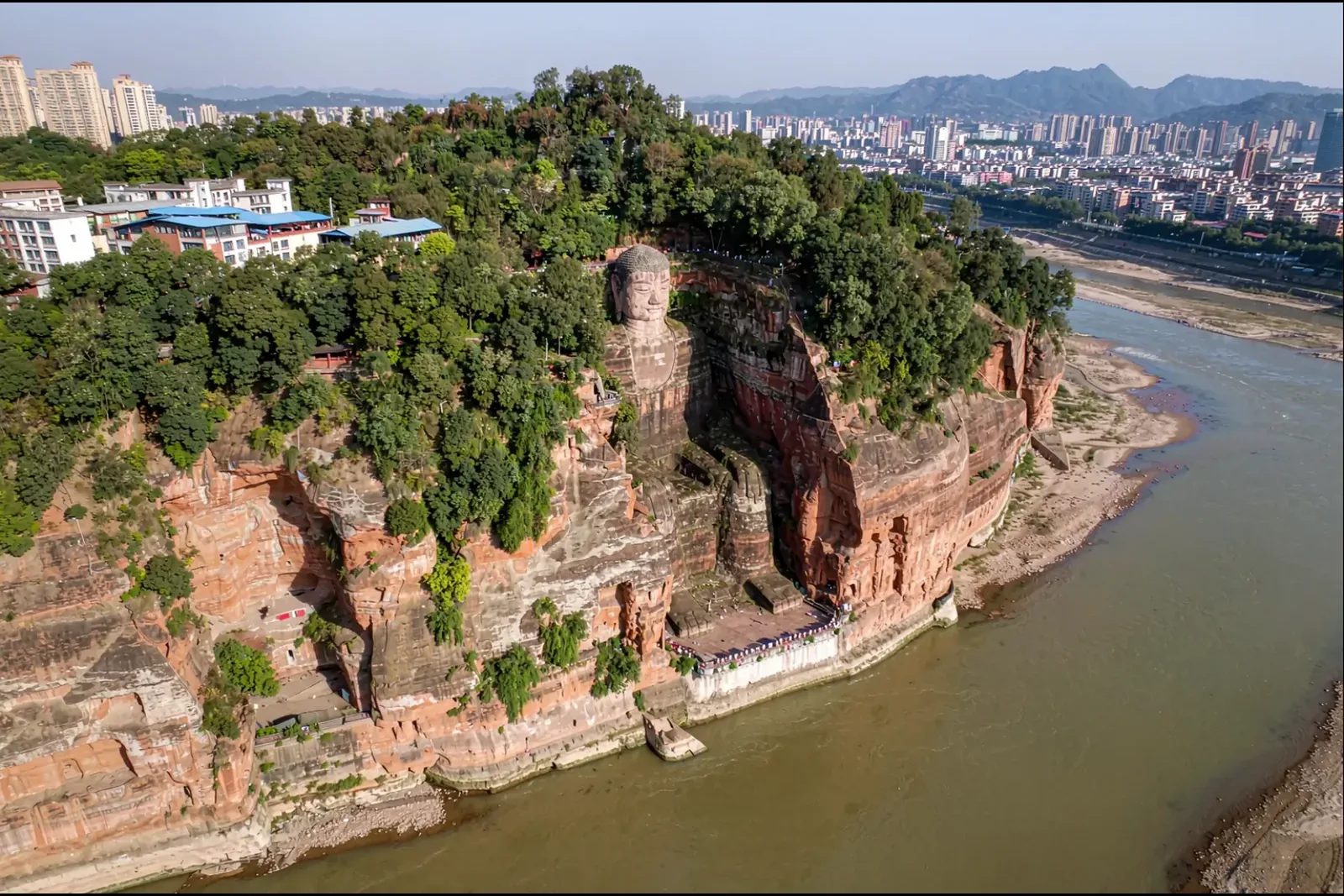
The afternoon rail or car settles altitude in one move, the Buddha's riverbank at just 400 meters. A dozen people stand on the 8-to-11-meter-wide instep, and yesterday's cloud sea now flows as river mist below the Buddha's feet, the high and low of two days aligning in one frame.
On stamina, see the feet and the riverside promenade only, skipping the cliff-path queue. Close with a pot of qiaojiao beef in town, formally filing down three days of intensity.
Day 3, Town Close and the Way Home
Archive the tickets, cableway stubs and photos roughly, and give Leshan's evening to the riverside walk and sweet-skin duck. Both Leshan and Emeishan stations run dense returns, so choose by lodging.
Three days covered a mountain's low, its high and the river beyond it, a vertical completeness that is the trio's most extravagant yield. Heavy legs on the ride home are worth it.
| Getting around |
|
| Budget | Admission RMB 160 plus full-mountain shuttle about RMB 90, Golden Summit cableway round trip about RMB 120, Wannian cableway RMB 65, the Giant Buddha RMB 80, two nights RMB 300-1000; plan RMB 1200-2000 pp. |
| Best time | October-November brings the highest cloud-sea odds with red leaves; winter summit snow stuns but wants chains and microspikes. |
FAQs
How likely is a cloud sea at sunrise?
October-November runs highest at roughly fifty to sixty percent; after winter snow on a clear morning it is near certain, and the morning after summer rain also delivers. Only two levers raise the odds: sleeping up to double your tries, and picking a clear morning off the forecast. Even cloudless, the sunrise itself pays.
How to pick mountain lodging? Is it expensive?
Two tiers: hotels by the summit open onto the cloud sea but run dear and scarce, booking one to two weeks ahead in season; Leidongping offers more rooms about thirty percent cheaper, at the cost of catching the first cableway or a dark hike for sunrise. Seniors and kids suit Leidongping, summit chasers suit the top, budgeting RMB 600-1500 a night.
Should I worry about altitude sickness over three days?
The plan is altitude-friendly: low hiking on day one, a rapid motorized rise on day two, one night at 2,400 to 3,000 meters. Most feel mild head pressure and shallow sleep, fixed with water and pacing. Anyone with cardiovascular history should consult a doctor before the summit, and severe headache or vomiting means descend at once, with medical points at both the summit and Leidongping.
How dangerous is the monkey zone? Can children pass?
The Tibetan macaques do not attack people but raid food and bags, the real risk the tug-of-war at the grab. Children pass fine once they learn the rules: snacks into a parent's pack, no screaming, no teasing, let go if grabbed. Under three, carry them tightly; seven-to-eight-year-olds walk it themselves once briefed.