
Emei's countryside gets marched through by summit chasers yet rarely treated as a destination: Fuhu's nanmu grove is the mountain's oldest shade, Qingyin's valley streams run cool over smooth stone, and Maluqiao's morning market with the old town's snack streets hold the city's real daily life. Three days, no heights, no sunrise, stringing rural and market-town layers at walking pace.
Every day stays at stroll gear: one core area each, out in the morning, a hotel nap after lunch, out again at dusk. Families with seniors or kids, travelers with modest legs, and return visitors seeking a slower second Emei, this line is drawn for them.
Itinerary at a glance
| 09:00 | Day 1, Fuhu Temple: Waking in the Nanmu Grove |
| 14:00 | Day 1, Qingyin Pavilion: An Afternoon in the Valley |
| 16:30 | Day 1, Baoguo at Dusk and Evening Chanting |
| 08:30 | Day 2, Maluqiao's Morning Market: The Town's Market Breakfast |
| 11:30 | Day 2, Gaoji Tofu Pudding and an Old-Town Noon |
| 15:00 | Day 2, Dongmen Snack Street and a Slow Old-Street Loop |
| 09:00 | Day 3, the Leshan Giant Buddha: The Slow Riverbank Line |
| 14:30 | Day 3, the Xiangcheng Quarter: A Slow Afternoon |
| 18:00 | Day 3, the Food Street and the Way Home |
The route, stop by stop
Day 1, Fuhu Temple: Waking in the Nanmu Grove
The country trio opens at the mountain's quietest courtyard. Through the century-old nanmu grove to Fuhu, morning light falling through leaves onto stone steps, the nuns' early chanting faint in the air. The three Tiger bridges and the Dust-Free Garden legend reward slow looking, and the cloister chairs forgive long sits.
The morning deliberately does one thing: put down the city's speed. Walk back along the Tiger Stream lanes past vegetable plots and farmhouses, a stretch of farmland folded between two great temples that most summit hikers never see.
Day 1, Qingyin Pavilion: An Afternoon in the Valley
Ride the afternoon shuttle to Qingyin, giving the crowds their hour and keeping the light for yourself: by 3 to 4 pm the Twin Bridges meet black and white waters before Niuxin Pavilion, mist and coolness clearing all summer heat. Feet in the stream on the stones, the low mountain's most extravagant pleasure.
No rushing, no monkey zone, just the shuttle between bridges and pavilion. Tea rows and bamboo groves line the valley for photos, and after 4:30 the groups withdraw, leaving the gorge nearly yours.
Day 1, Baoguo at Dusk and Evening Chanting
Return to Baoguo as dusk falls: with tourists gone the gate becomes a real temple again, bells and chanting drifting from the main hall. Ten minutes under the osmanthus trees outside, and day one closes on sound.
Dinner at a vegetarian hall or snack shop in the quarter, early to bed, the first country night booking no nightlife, since sleep itself is on the itinerary.
Day 2, Maluqiao's Morning Market: The Town's Market Breakfast
Day two belongs to the market town. Maluqiao, on the road toward the scenic area, runs closer to local life in the morning: soy milk and fried dough, tofu pudding, steamer-fresh ye'er ba, vendor-to-regular banter arriving before the food.
Eat a beef tofu pudding and a ye'er ba, then browse the vegetable and dry-goods stalls. Sichuan pepper, dried bamboo shoots and cured pork make truer gifts than scenic-area souvenirs at sixty to seventy percent of the price.
Day 2, Gaoji Tofu Pudding and an Old-Town Noon
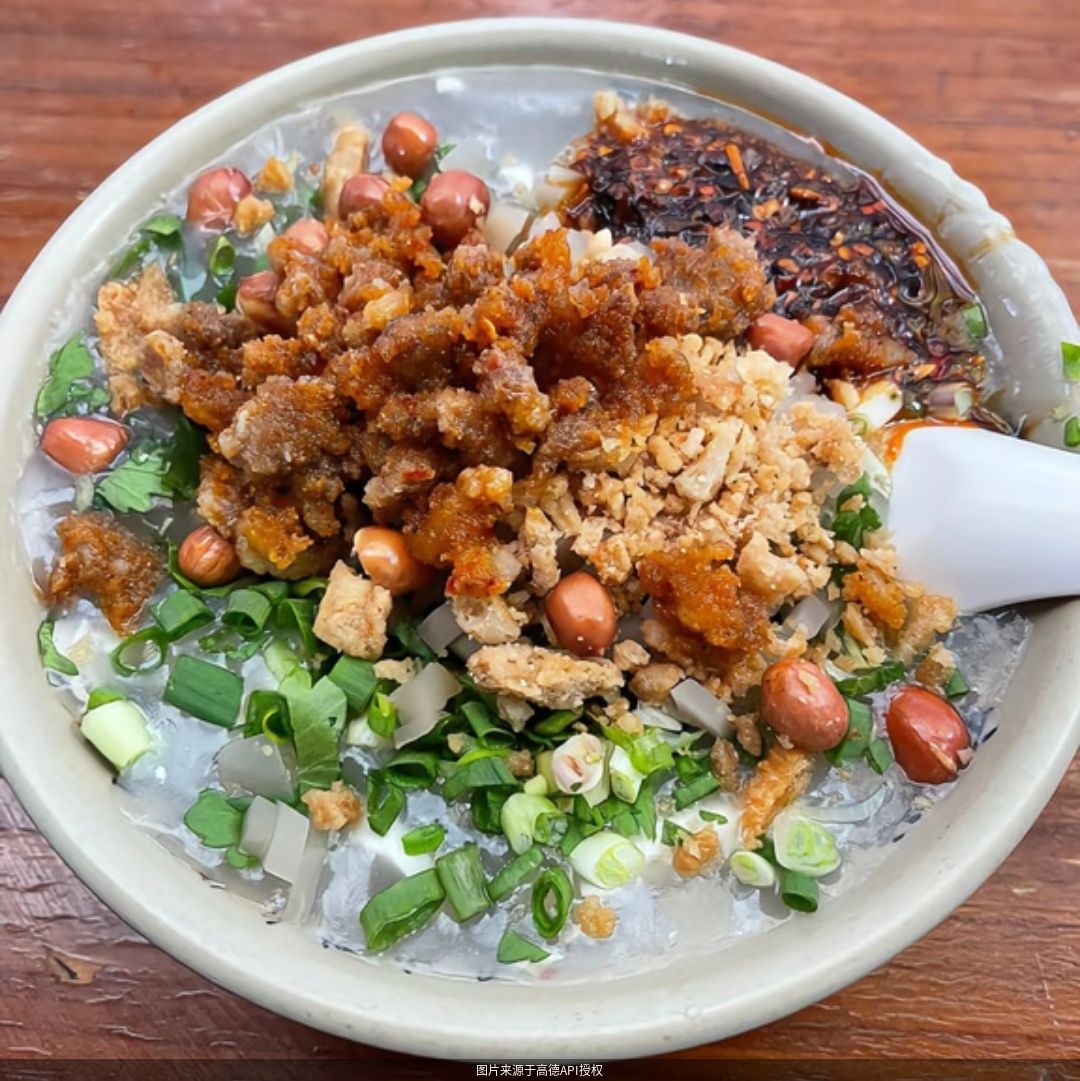
The morning's second sitting belongs to old-town tofu pudding. Gaoji and Jiaosanjiao are the two banners of Emei-style pudding with rival fans: Gaoji runs heavier toppings and generous crisp wonton skin, local youth calling it substantial. The old town's lanes digest the meal, grey tiles and old trees truer than any sight.
Then a hotel nap, the country trio's iron rule: two afternoon hours belong to the bed. Not laziness, just banking energy and appetite for the evening.
Day 2, Dongmen Snack Street and a Slow Old-Street Loop
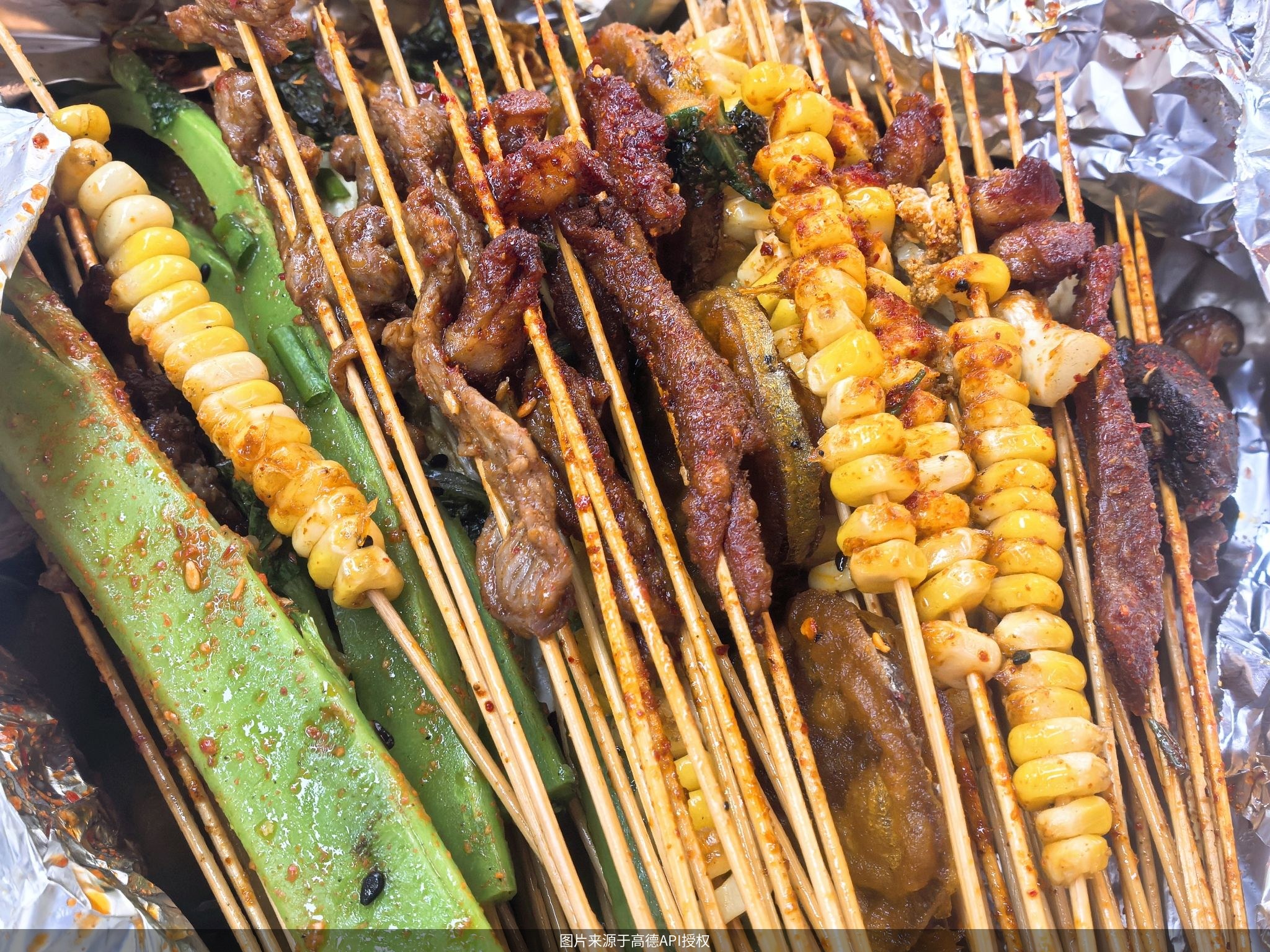
First stop after the nap is Dongmen street, turning the afternoon's opening act into ceremony: a third portion each of ice jelly, bobo chicken and grilled tofu, then a three-yuan Maojian in the old teahouse watching locals play cards.
The old streets' general stores, bamboo workshops and tailor shops browse better than any souvenir row, the small city's life shelved in plain view. Even without buying, the loop earns its walk, the proper feature film of this line's market-town theme.
Day 3, the Leshan Giant Buddha: The Slow Riverbank Line
The last day crosses to Leshan, still slow: skip the cliff-path queue and take the boat for the full river panorama, a twenty-minute loop with kind wind and angle. After landing, stroll the riverside promenade watching the Buddha and Lingyun Hill slide past across the water.
With spare legs, enter the park and stand at the feet for the upward view, two angles on one colossus. Ending the country trio here closes the same cultural-geographic unit as the last two days, at matching pace.
Day 3, the Xiangcheng Quarter: A Slow Afternoon
Back from Leshan, the Xiangcheng quarter is the right buffer at country pace: faux-antique streets, theaters and snack shops in one strip, quiet by day with shaded tea seats, sitting to watch the foot traffic go by.
Nothing here demands a checklist, the value being slowness: find an eave to sit and repack the three days' small buys, letting Leshan's river wind hand over to Emei's mountain air over a cup of tea. If an evening show interests you, check the day's schedule at the theater window.
Day 3, the Food Street and the Way Home
Back in Emeishan by afternoon, the last two hours go to the food street: one sweet-skin duck vacuum-packed as a gift and one eaten on the spot with ice jelly, the market-town thread of three days summed here.
Return from Emeishan or Leshan station by lodging, on dense service. The country trio leaves no to-do list, which is exactly the point: living three ordinary days at a famous mountain's foot comes closer to travel's intent than ten photographed checkmarks.
| Getting around |
|
| Budget | Tickets about RMB 250 total, meals RMB 300-450 pp across three days, two nights RMB 300-800; RMB 900-1600 pp. |
| Best time | April-June and September-October suit best, shade and water both kind; market mornings follow Maluqiao's schedule. |
FAQs
Is a country trio worth it without going up high?
Depends on expectations: this line barely uses the summit cableway or full-mountain shuttle, so ticket costs stay low and what you buy is rhythm and market-town life. If the cloud sea is non-negotiable, this is not your route; if you want to live at a famous mountain's foot for three days, it outlasts a climbing trio.
Can a two-year-old and a seventy-year-old manage this line?
Yes, this line is drawn for exactly them. Softest adjustments: shuttles for the Qingyin leg, boat only at the Buddha, and the daily nap kept sacred. Strollers struggle on old-town flagstone, so use a carrier; seniors carry medications and a thermos, and dense pharmacies cover any gaps.
Which day deserves repeating most?
Day two, the market-town day, since it deforms freely with weather and mood: the morning market optional, tofu pudding swappable for qiaojiao beef, the nap stretchable. On a two-day trip, compress days one and two into half days each, this line's most condensed cut.
Is skipping the monkey zone at Qingyin a big loss?
For the country theme the loss is small: the zone's appeal is tension, while this line's theme is slack. Wanting a look without the gauntlet, peer from the One-Legged Sky entrance a few minutes and turn back. With kids, keeping the monkey experience pays, rules taught, since the thrill is a feature for them.