
Emei's cultural depth hides under the climbing crowds: the Puxian bodhisattva's cult built temples from the Jin dynasty, over a hundred at the Ming-Qing peak, while the mountain also mothers the Emei school of martial arts, its tea culture and folk faiths braiding at the foot. This three-day heritage line skips the 3,000-meter summit, leaving the trails to stamina and the estate to the eyes.
The structure is one mountain, one Buddha, one stage: day one reads the gateway quarter, museum included, closing on martial arts and tea staged; day two's Song bronze at Wannian is the artifact climax, paired with the contemporary monastic scale of the Dafo Chan Temple; day three crosses to the Leshan Giant Buddha, closing two World Heritage sites in one cultural thread.
Itinerary at a glance
| 09:00 | Day 1, Baoguo Temple: The Mountain's Prelude |
| 11:00 | Day 1, Fuhu Temple: The Dust-Free Garden's Nanmu and Nuns |
| 14:30 | Day 1, the Emei Mountain Museum: Completing the Chronology |
| 19:30 | Day 1, Shengxiang Emei: The Day's Knowledge, Staged |
| 09:00 | Day 2, Dafo Chan Temple: A Lesson in Contemporary Monastic Scale |
| 11:00 | Day 2, Wannian Temple: The Song Bronze Puxian |
| 15:00 | Day 2, the Intangible Heritage Hall: A Craft Afternoon |
| 09:00 | Day 3, the Leshan Giant Buddha: The Heritage Line's Riverine Full Stop |
| 15:00 | Day 3, the Xiangcheng Quarter and the Evening Close |
The route, stop by stop
Day 1, Baoguo Temple: The Mountain's Prelude
Baoguo is Emei's gateway, the Kangxi-inscribed plaque over the gate, the name meaning repaying the nation's grace. The temple is compact but ordered: Maitreya, the Great Hall and the Seven Buddha Hall stepping along one axis, with Ming bronze columns before the halls and porcelain and paintings worth slow looks.
The point is building coordinates: Fuhu is its neighbor, Wannian its elder, the summit its far gaze. As a prelude, fifty minutes suffice, saving legs for the afternoon.
Day 1, Fuhu Temple: The Dust-Free Garden's Nanmu and Nuns
A kilometer west, Fuhu arrives only through a century-old nanmu grove, Emei's largest nunnery. The Tiger Bath, Tiger Stream and Tiger Sleep bridges and the name Dust-Free Garden headline: wrapped in dense woods, the roofs hold no leaves, credited by the ancients to marvel and in truth to clever forest airflows.
It is the three days' best place to idle: chairs line the hall cloisters where nuns' chanting mixes with nanmu whisper. Sit a quarter hour and drop the city's tempo entirely.
Day 1, the Emei Mountain Museum: Completing the Chronology
The afternoon returns to the museum by Baoguo, where the morning's two temples gain their chronology: geology from a seabed 300 million years back, the heritage hall ordering temple building from Jin foundations through Ming heights to modern restoration, the Emei martial lineages threaded through.
Fix on the material and replica of Wannian's Song bronze Puxian, whose original awaits tomorrow, plus the soft weapons in the martial gallery that tonight's show deploys. Ninety minutes with the free audio guide.
Day 1, Shengxiang Emei: The Day's Knowledge, Staged
The evening Shengxiang Emei strings martial arts, tea craft and Sichuan song and dance across eighty minutes, soft weapons and paired combat genuinely skilled, Xueya brewing staged as ritual. Every noun banked at Fuhu and the museum now grows motion and sound.
The theater sits at Xiangcheng Grand Theatre, dense seating with straight sightlines, middle rows best. The Xiangcheng streets feed late-night snacks right after, closing day one.
Day 2, Dafo Chan Temple: A Lesson in Contemporary Monastic Scale
Day two opens in the city's east at the Dafo Chan Temple, a Chan monastery rebuilt this century that speaks in scale: axis after axis, twenty minutes gate to farthest hall, unbroken rooflines, restrained gardens, morning sun raking the cloisters as the refectory bell rolls.
You come not for relics but for a living monastery: real monastic routines, rites and the vegetarian hall. Catching it, a quiet thirty-to-forty-yuan lunch is the day's best pause.
Day 2, Wannian Temple: The Song Bronze Puxian
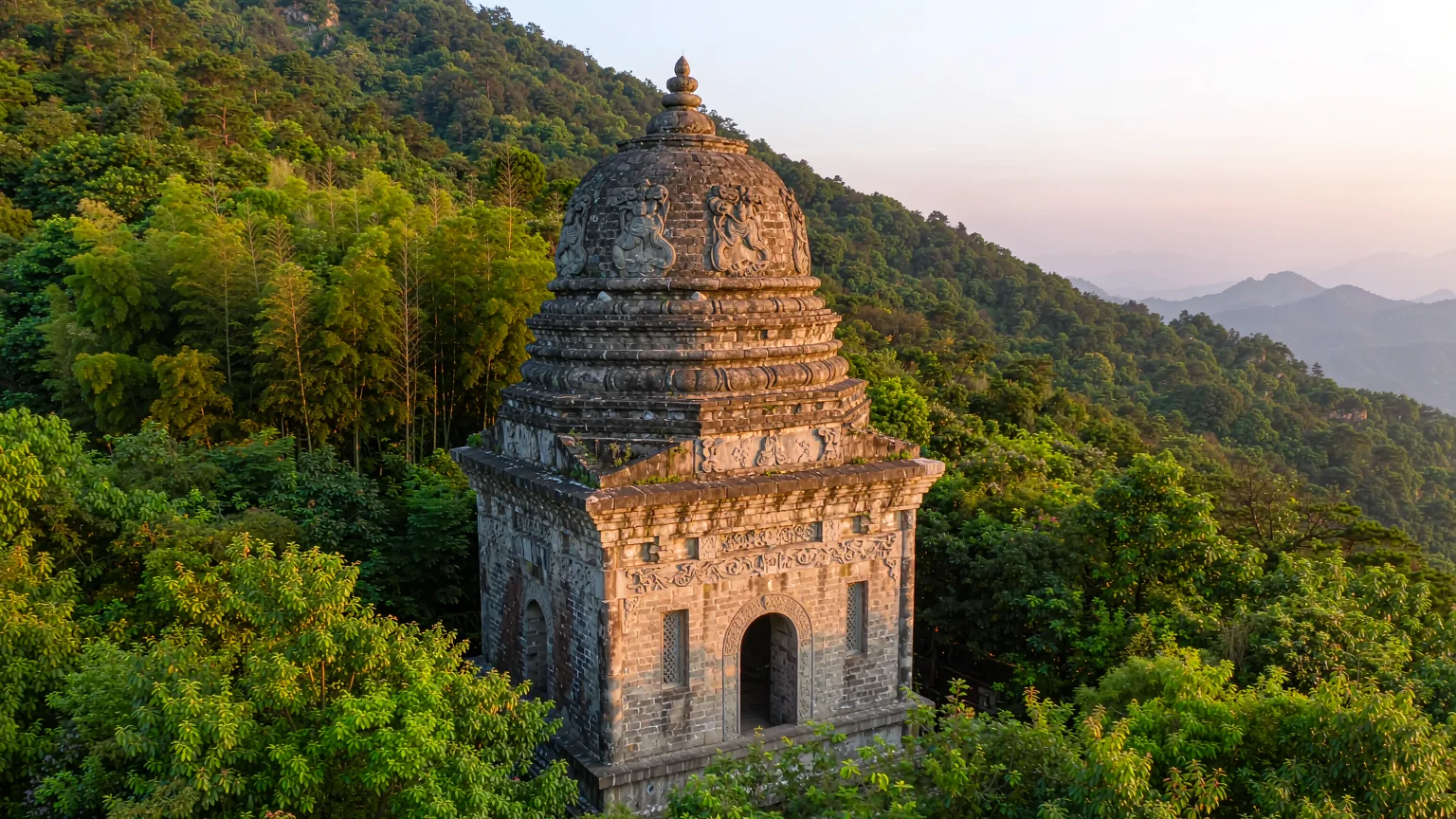
Shuttle to the Wannian cableway, five minutes up and a short walk to the temple. The brick Beamless Hall's domed vault has stood unsupported near a millennium, sheltering a Song-cast bronze Puxian 7.85 meters tall and 62 tonnes, bodhisattva and white elephant poured as one, the mountain's crown jewel.
Stand inside, read the brick vault overhead, then the robe folds and elephant trappings up close, this small hall holding the route's densest heritage hour. Cableway plus walking stays under an hour, minimal effort, maximal artifact.
Day 2, the Intangible Heritage Hall: A Craft Afternoon
The afternoon returns to town for craft: bamboo weaving, cloisonne, graded Xueya tea and Zen-leaning goods lined up, most labeled with makers and process. Morning showed Song-era casting, afternoon shows living weaving and chasing, old and new in one contrast.
For gifts, provenance-backed bamboo tea scoops and cloisonne pieces outclass gate stock; even empty-handed, guides will demo the flashlight test on golden nanmu.
Day 3, the Leshan Giant Buddha: The Heritage Line's Riverine Full Stop
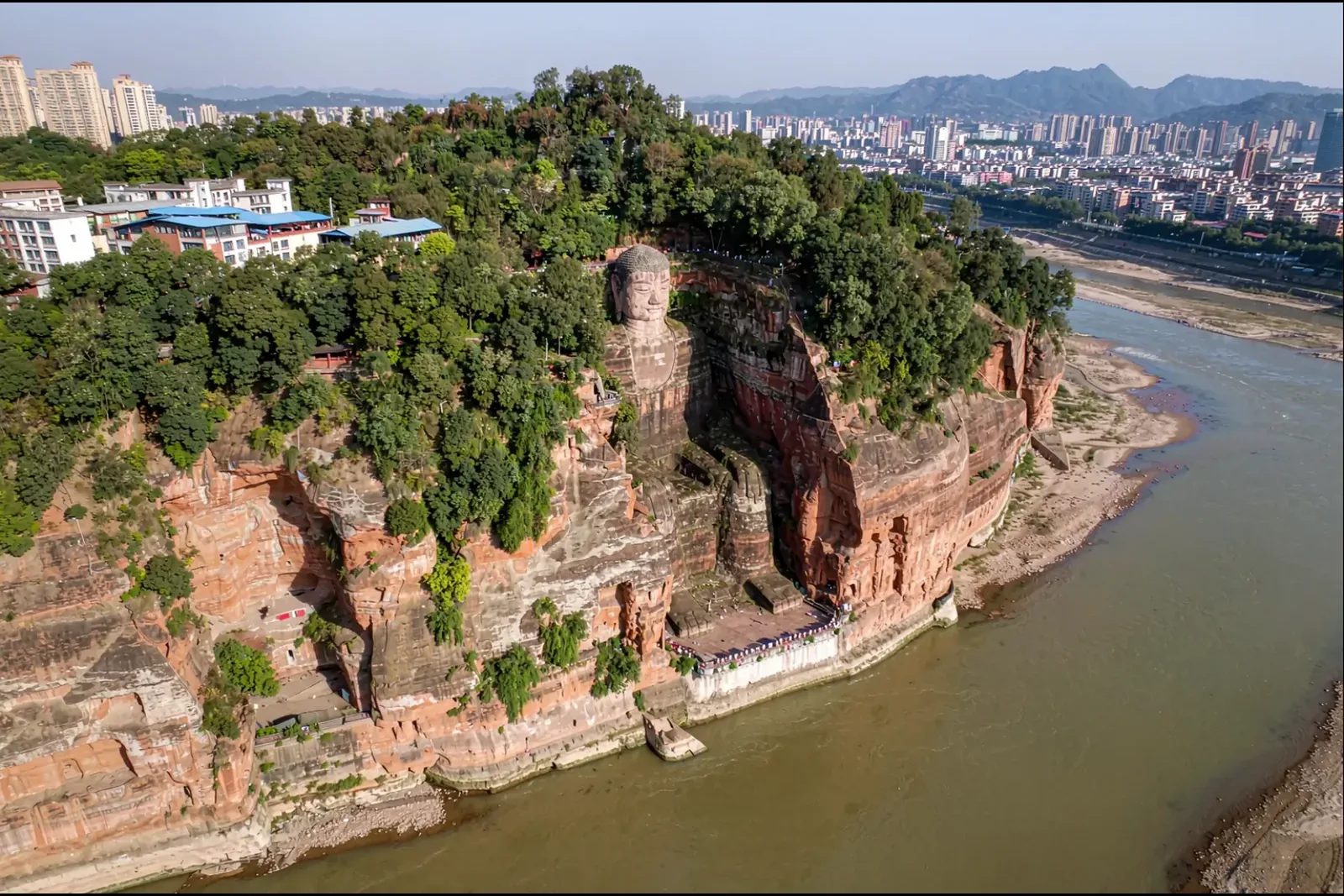
Day three crosses to Leshan, forty minutes by rail or car. The 71-meter Tang Maitreya took over ninety years to carve by the river, seen one of two ways: down the winding cliff path to the feet looking up, or by boat for the panorama. Arrive in the morning for the shortest queue.
From Emei's Puxian cult to Leshan's Maitreya, the bronze met two days ago and the colossus now ahead face each other across one vein of faith, the heritage trio's logic clicking shut.
Day 3, the Xiangcheng Quarter and the Evening Close
Back in Emeishan, give the last half day to the Xiangcheng quarter: faux-antique streets, theaters and snack shops in one strip, photogenic by day and second-show territory at night, face-changing or tea specials if the martial show is already seen.
Dinner in the quarter or back at the food street, sweet-skin duck and qiaojiao beef closing three days. The return rail runs from Emeishan or Leshan station on dense service, and heritage Emei is read.
| Getting around |
|
| Budget | Tickets total about RMB 250-300, two shows RMB 400-550, two nights RMB 300-900; plan RMB 1200-1900 pp. |
| Best time | Year-round; spring flatters the monastery gardens, and show seats need booking two days ahead in season. |
FAQs
Any regret skipping the summit on a heritage trio?
It depends on purpose: this line aims to read the mountain's millennium clearly, leaving the summit's natural spectacle aside. If the cloud sea and sunrise are non-negotiable, switch to the nature trio or compress heritage to two days. Neither ordering outranks the other, it is a trade.
Is a special mountain trip needed just for Wannian Temple?
Worth it and cheap: shuttle plus cableway inside ninety minutes round trip with almost no hiking, capturing the mountain's single most important artifact. Peak-season cableway queues can hit an hour, so go early. Skipping entirely, the museum replica is the fallback, though standing in the Beamless Hall has no substitute.
Do the two shows overlap? If one, which?
Shengxiang Emei leads with martial arts and tea while Xiangcheng's face-changing and tea specials run the Sichuan-opera lane, little overlap but different temperaments. One show and you want the mountain itself, take Shengxiang; already fluent in Sichuan opera or entertaining kids, take face-changing. With both, Shengxiang first, then face-changing, from mountain to Sichuan.
Can seniors manage the heritage trio on stamina?
The trio is built for low intensity: no sustained climbs, a cableway to Wannian, rest spots through museum and monastery. The only watchpoints are the Buddha's stair path and summer heat, solved by the boat alternative and shifting outdoor blocks to morning and evening. The comfiest senior version stretches to two and a half days with two-hour midday breaks.