
Not everyone has the legs or the hours for the mountain, and half of Emei's story happens at its foot: the museum untangles Buddhism, Taoism, Confucianism and geology, Fuhu Temple's nanmu grove is the mountain's quietest courtyard, and Dongmen snack street with the food street carries the town's evening heat. The whole day walks, perfect as warm-up before the climb or recovery after it.
The route runs a clockwise loop: out from the Baoguo area, museum then temple, lunch back at the base, an afternoon walk down Mingshan Middle Road to Dongmen snack street, and a dusk return to the food street. It shines in rain, too, since swapping this day with the mountain day loses almost nothing.
Itinerary at a glance
| 09:00 | Emei Mountain Museum: Read the Mountain before Climbing It |
| 11:00 | Fuhu Temple: The Quietest Courtyard in the Nanmu Grove |
| 14:30 | Dongmen Snack Street: The Afternoon Opening Act |
| 19:00 | The Food Street: The Evening's Main Course |
The route, stop by stop
Emei Mountain Museum: Read the Mountain before Climbing It
Beside Baoguo Temple, the museum's two floors untangle Emei's two systems at once: the geology hall explains the basalt and faults, from a seabed 300 million years ago to today's 3,099 meters, while the culture hall sorts Buddhism, Taoism and Confucianism in order, the origin of the Puxian cult and the martial-arts lineages included.
Seen before the climb, the rocks of Qingyin and the temple plaques gain provenance; seen after, whatever the mountain left unexplained clicks shut. Free, uncrowded and air-conditioned, the best-value ninety minutes of any itinerary.
Fuhu Temple: The Quietest Courtyard in the Nanmu Grove
A kilometer west of Baoguo, Fuhu reveals itself only after crossing a century-old nanmu grove, the largest nunnery on Emei. Inside lie the famed Tiger Bath, Tiger Stream and Tiger Sleep bridges, the halls shaded year-round inside the grove's encirclement, birdsong outnumbering voices.
The sight is not one relic but the phrase aloof from dust: the compound sits wrapped in dense yet leaf-shedding trees with barely a leaf on the tiles, the ancients naming it the Dust-Free Garden. Sit a quarter hour; it is the low mountain's only place worth sitting for its own sake.
Dongmen Snack Street: The Afternoon Opening Act
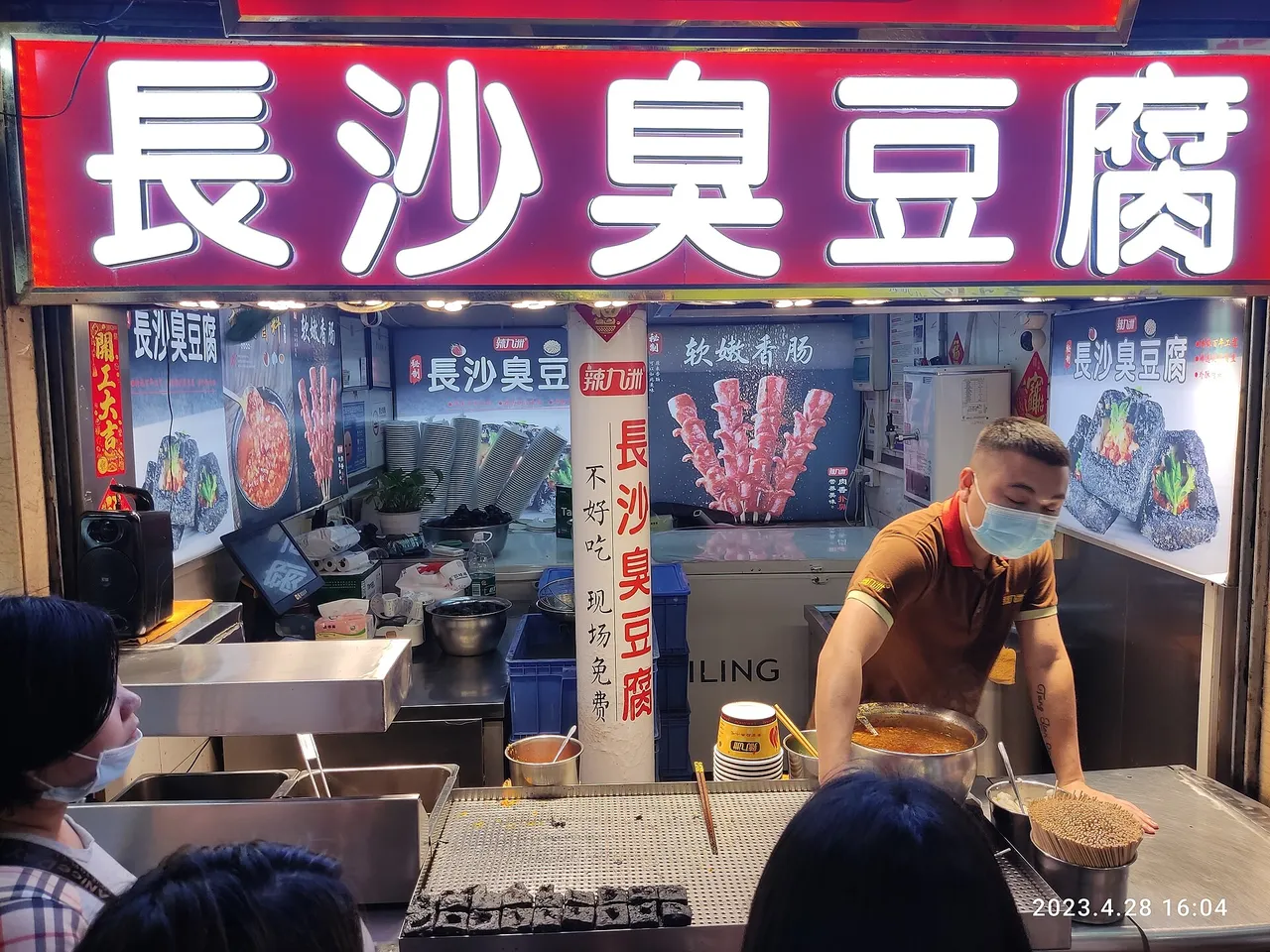
On the old town's side, Dongmen street runs smaller than the food street but is the only one alive mid-afternoon: tofu pudding, bobo chicken skewers, ice jelly and ye'er ba rice bundles in one row at sixty to seventy percent of gate prices, run by vendors with decade-long stalls.
Treat it as an opening act, not a meal: one-third portions each, saving capacity for night. The combo is a beef tofu pudding, half an order of bobo chicken, and ice jelly to clear the palate. At the street's end, a three-yuan cup of Maojian in the old teahouse watching locals play cards is what an Emeishan afternoon is for.
The Food Street: The Evening's Main Course
The food street is Emeishan's night center: grilled fish, qiaojiao beef, cold skewers, fried skewers and sweet-skin duck lined up in steam and charcoal smoke. The eating is combinatorial: one fish or a pot of qiaojiao beef as the base, cold skewers as support, and the mandatory close, a sweet-skin duck with crackling sugar crust and juicy meat, the peak of Leshan's sweet-salty register.
Eat on a plastic stool, closer to the city than any decor'd dining room. If the mountain comes tomorrow, skip the alcohol tonight; the steps keep accounts.
| Getting around |
|
| Budget | The museum is free, Fuhu Temple about RMB 10-15, and a day of snacks runs RMB 80-120 a head. |
| Best time | Year-round; the museum is calmest in the morning while the snack streets fire up after 5 pm, so time both ends. |
FAQs
Is a dedicated town day really worth it?
Worth it in three cases: the arrival afternoon before the climb, the recovery day after, and for companions skipping the ascent. On a two-day trip that must summit, compress the town to dinner plus the museum. The day's value is restoring rhythm, not collecting sights.
What if rain blocks the mountain day?
Rain alone does not close the low mountain: cableways and the Qingyin boardwalks run, and mist often improves the views, so reschedule only for thunderstorms or official closures. If it does close, this town day substitutes perfectly, museum and both streets being indoors or under eaves at near-zero loss.
If I pick only one temple, Fuhu or Baoguo?
By need: Baoguo is the gateway and transport hub, convenient and orderly but busier; Fuhu wins on the nanmu grove and hush, worth sitting for. One temple and the mood matters, take Fuhu; one temple and logistics matter, take Baoguo. Each takes about an hour with the walk.
Can street food go up the mountain? Is payment easy?
Yes, but only hardy items: ye'er ba, vacuum-packed sweet-skin duck, braised eggs and bread travel, while cream things and cold skewers do not, as the mountain has no refrigeration. QR payment covers both streets with codes at every stall, and thirty yuan in small notes covers weak-signal corners. Carrying food up, remember the rule: zip everything deep in the pack before the monkey zone.