
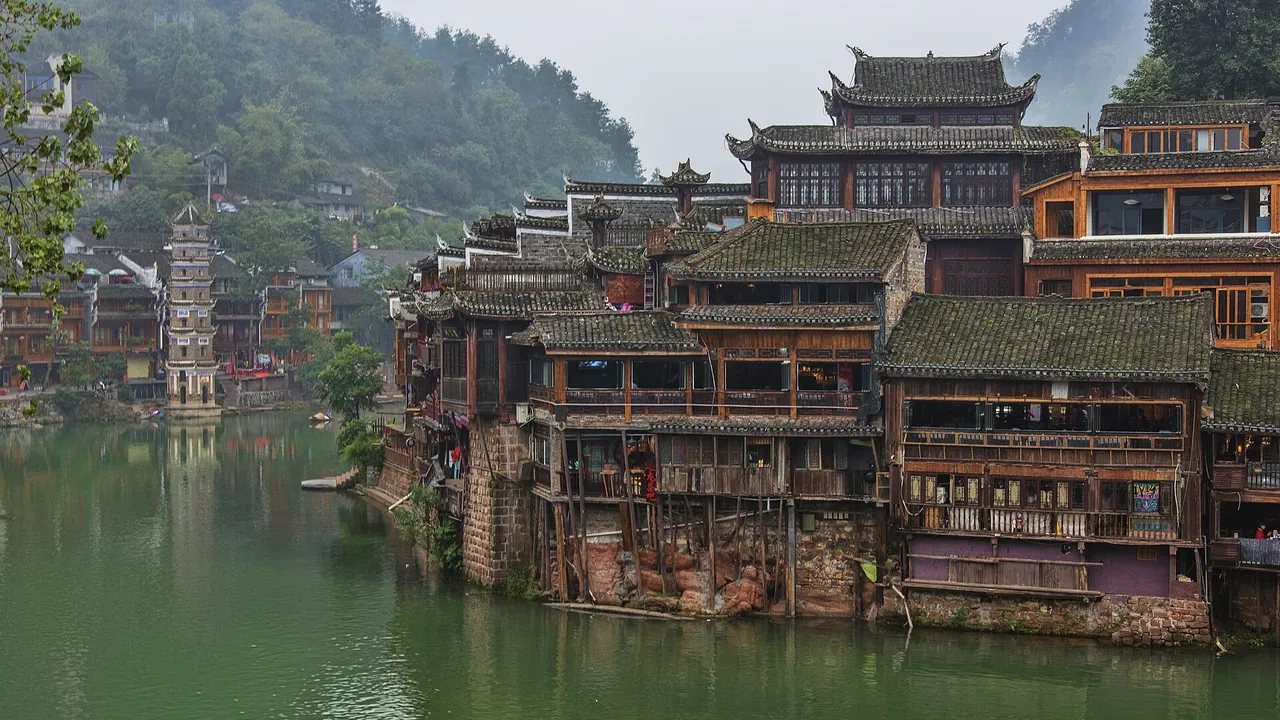
This line leaves the old town's lamps for the Miao heartland of northern Fenghuang county: Shanjiang, Laojiazhai, Zhushan, Laodong, the Lahao camp, plus Huangsiqiao and the markets of Heku and Alaying. Three days read one theme from different angles: how Miao people live today.
The rhythm obeys market days: ask your inn or driver for the Heku and Alaying cycles, pin one market day mid-itinerary, and arrange the villages around it. Chartering is the default transport on these winding roads, so settle fare and waiting before rolling.
Itinerary at a glance
| 第1天 09:00 | Shanjiang Miao Village: The Gateway into Miao Country |
| 第1天 11:00 | The Fenghuang Miao Museum: Half-Reading Miao Country |
| 第1天 14:00 | Laojiazhai: A Quiet Miao Village by the Reservoir |
| 第2天 09:30 | Zhushan Village: A Stone Miao Village on the Ridge |
| 第2天 13:00 | Laodong Miao Village: The Old Miao Village Deep in the Hills |
| 第2天 16:00 | The Lahao Camp: A Village on a Garrison Site |
| 第3天 09:00 | Huangsiqiao Ancient City: One More Look at a Garrison Stone Town |
| 第3天 11:30 | The Heku Market: A Moving Feast of Miao Country |
| 第3天 15:00 | The Alaying Market: Another Fair beneath the Frontier |
The route, stop by stop
Shanjiang Miao Village: The Gateway into Miao Country
The three Miao days open at Shanjiang, the town and its satellite villages keeping the county's most intact Miao culture: stilt houses, stone lanes, elders in festival dress making the first impression. On ritual days, gate wine and Miao song greet the road in.
Village visiting rewards slowness: an embroiderer's stitches, corn strings under the eaves, children carrying siblings down the lane. Where the old town performs, here everything grows in place.
The Fenghuang Miao Museum: Half-Reading Miao Country
The museum stands in Shanjiang town itself, tracing migration, dress lineages, silversmithing and belief. The embroidery, silver horns and timber houses of the morning all find their explanations here, which is exactly why the order runs village first, museum second.
It runs small, an hour to do it justice. Anyone drawn to Miao embroidery or silver should see it before buying souvenirs in the old town, the eye remade and machine-woven fakes suddenly obvious.
Laojiazhai: A Quiet Miao Village by the Reservoir
The afternoon goes to Laojiazhai near Shanjiang, stone houses terracing above a reservoir, thinner crowds than Shanjiang itself. The water shifts between greens with the weather, stilt houses mirrored in one of Miao country's rare symmetric frames.
A circuit takes an hour; the elders speak some Mandarin beyond dialect, and one question answered with another beats any guided script. Sleep in Shanjiang or back in the old town.
Zhushan Village: A Stone Miao Village on the Ridge
Day two opens at Zhushan, an entire village of local bluestone: walls, lanes, pigpens and firewood stacks all stone-built, ranking firm along the ridge. Recent gentle revival turned old houses into galleries and guesthouses while keeping the stone skeleton.
Staged scenes are few and real farm work and crafts plentiful: weaving, basketry, chili peppers drying. Ninety minutes covers the village, best frames at the high gate and by the pond.
Laodong Miao Village: The Old Miao Village Deep in the Hills
The afternoon enters Laodong, one of Miao country's oldest villages, stone lanes and old houses well kept, its deep-hill location limiting commercial development and keeping visitor density low.
The best activity is walking without destination: follow the channel, the cooking smoke, the school kids. Village elders and embroiderers leave doors open; greet, sit, and the household will tell you the village's stories.
The Lahao Camp: A Village on a Garrison Site
Day two ends at the Lahao camp, once a garrison post on the Miao frontier wall line, stone walls and barracks foundations boxing a hilltop stone town where villagers now live, military relic and daily life sharing one flagstone ground.
The draw is the plan: from high ground the town's outline reads whole. An hour here, then down the hill to your night's base or back to the old town, day two closed.
Huangsiqiao Ancient City: One More Look at a Garrison Stone Town
Day three opens at Huangsiqiao, the Tang-founded garrison stone town reading fresh in Miao-country context: the very military hinge that once administered and cordoned the Miao uplands, walls with Miao ridges outside and settler households within.
A wall circuit takes forty minutes, elders' chat and drying laundry softening the stone. Morning light on the bluestone runs best for photos.
The Heku Market: A Moving Feast of Miao Country
Market day is the Miao line's soul. The Heku market opens on its lunar cycle, villages pouring into town with back-baskets: homespun cloth, silver, mountain produce, live poultry and rice-noodle stalls packing the streets, Miao the working language.
Market etiquette favors watching and eating over buying: a bowl of market noodles and fresh-fried dough rings are the set order. Silver and cloth price below the old town, but judge goods carefully, and when the market ends the whole street quiets like a tide going out.
The Alaying Market: Another Fair beneath the Frontier
If timing smiles, catch the Alaying market on the way back, a smaller market town under the old frontier wall with near-zero tourists, selling farm tools, seeds and daily goods, the most localized market sample of all.
Both markets sharing one day is unlikely, so pick by cycle; return to the old town by dusk, three Miao days closing on memories of cooking smoke and back-baskets.
| Getting around |
|
| Budget | Village and heritage ticketing follows each site's postings, some villages adding their own entry fees; charters carry the three days, some RMB 500-800 per car. |
| Best time | Market days rotate on the lunar calendar, confirm with your inn; spring planting and autumn harvest feel most alive, with Miao New Year and the fourth-month eighth festival the loudest. |
FAQs
How do I check market days, and what if I miss them?
Cycles follow the lunar calendar and differ by town, with innkeepers and local drivers the most reliable sources, matching any date you name. Miss Heku and catch Alaying or Shanjiang, one always lands; miss everything and Shanjiang's everyday small market still offers a shrunken taste.
Is three days of chartering expensive?
Priced by the day, mountain itineraries run longer mileage and more waiting than suburban legs, though four or five sharers dilute it well. In the deal, clarify fuel inclusion, waiting charges and night mountain surcharges; bundling all three days with one driver beats day-by-day bargaining.
Can I talk with villagers without speaking Miao?
Yes. Most elders speak Southwest Mandarin, the young Mandarin, and gestures plus a calculator carry any market. The technique is slowness and smiles: greet, praise an embroidery or a house, and one line about whether you have eaten opens every door. Respect is the first language.
Is Miao country tiring for seniors and kids?
Moderate: about two hours of driving daily, village walking mostly flat paths and steps. Cut Laodong, the longest mountain leg, keeping Shanjiang, Zhushan and one market day; kids take to markets and back-baskets far more than ruins, and elders beam at the noodle stalls.