
Guilin's real character hides in free places: tai chi elders at dawn by Ronghu Lake, noodle shops under the arcade eaves of Zhengyang Street, anglers on the riverside with the elephant's silhouette showing free between trees. This route enters no paid sights, reading the city at walking pace for a day, ideal for jet-lagged arrivals, departure-day kill time, or anyone dodging crowds.
The line is an open arc: start with the lakes at dawn, pass the ancient gate and the arcades, lunch at a decades-old noodle shop, then walk south along Binjiang Road with the Li River on your left and the elephant peeking past the treetops. End at the East-West lanes waiting for the lanterns. Six flat, well-shaded kilometers, zero barriers to entry.

Itinerary at a glance
| 07:00 | Ronghu at Dawn: How Guilin Wakes Up |
| 09:00 | The Old Gate and Zhengyang Street: From Song Walls to Arcades |
| 11:30 | Noodle O'Clock: The Full Ceremony of Lucai Rice Noodles |
| 14:00 | Binjiang Road South: A Free Gallery Along the Li River |
| 17:30 | The East-West Lanes at Dusk: When the Old Alleys Light Up |
The route, stop by stop
Ronghu at Dawn: How Guilin Wakes Up
Ronghu at 7 am belongs to locals: tai chi, spinning diabolos and water-calligraphy elders each claiming a stretch of path, the lake flat as a mirror, the twin pagodas silhouetted toward Shanhu. No tourists, air smelling of noodle broth and osmanthus, the best possible doorway into the city's rhythm.
Walk the west bank to the north, passing the stone marking where the Song poet Huang Tingjian moored on his road of exile. The glass bridge and lakeside banyans are century-old residents themselves, shadows folded into the water under slanting light.
Morning stalls ring the lake: fried dough, soy milk and fresh-ground sesame paste at 3 to 8 yuan. Eat standing at the rail like a local, more authentic than any dining room.
The Old Gate and Zhengyang Street: From Song Walls to Arcades
Ten minutes south along Ronghu's east bank stands the Old South Gate, a surviving stretch of Song-era Jingjiang city wall swallowed by banyan roots, with scooters and pedestrians threading the arch in a then-and-now composition. Climbing the wall is free, a quick look at the old skyline with Solitary Beauty Peak in the distance.
Zhengyang pedestrian street continues south along rebuilt arcades, still half asleep in mid-morning, half the shutters up, the right moment to read the architecture itself. The central stage and flanking facades recall when this was Guilin's busiest commercial spine in Republican times.
The scattered craft shops and secondhand book stalls reward browsing now, before the midday surge, so keep the pace slow.
Noodle O'Clock: The Full Ceremony of Lucai Rice Noodles
Noon's ceremony is rice noodles. The soul is the braised master stock, a guarded family secret at every old shop, with crispy fried pork skin and braised beef as the standard toppings. Eat in two movements: dry-mix the bowl first with pickled long beans, sour bamboo, scallions and chili, then ladle in bone broth halfway through, two dishes in one, 7 to 15 yuan.
The old shops sit at lane mouths rather than main streets; look for two signs, locals squatting at the door with their bowls, and steam rising off the stock pot. Peak runs 11:30 to 12:30, and toppings sell out after 12:30.
Pair it with clear broth or mung bean paste. Noodles fill you, soup finishes you, and tea is considered a waste of the braised aroma.
Binjiang Road South: A Free Gallery Along the Li River
The afternoon walks south along Binjiang Road, the city's most underrated stretch: the whole route runs the river's east bank facing Elephant Trunk Hill, Zizhou islet and strings of small karst peaks, all free. Dense shade and river breeze drop the feel two or three degrees below the streets after 2 pm.
The sights move past you: anglers, art students sketching, a retired erhu ensemble. Near Wenchang Bridge the green of Zizhou Park spreads midstream and the elephant's profile leans out from behind trees, the officially tolerated free viewing line.
Tea stands and coffee carts line the bank when legs tire; a cup watching barges and tour boats trade the current eats half an hour happily. The stretch totals about 2.5 kilometers, best savored over two hours of walking and pausing.
The East-West Lanes at Dusk: When the Old Alleys Light Up
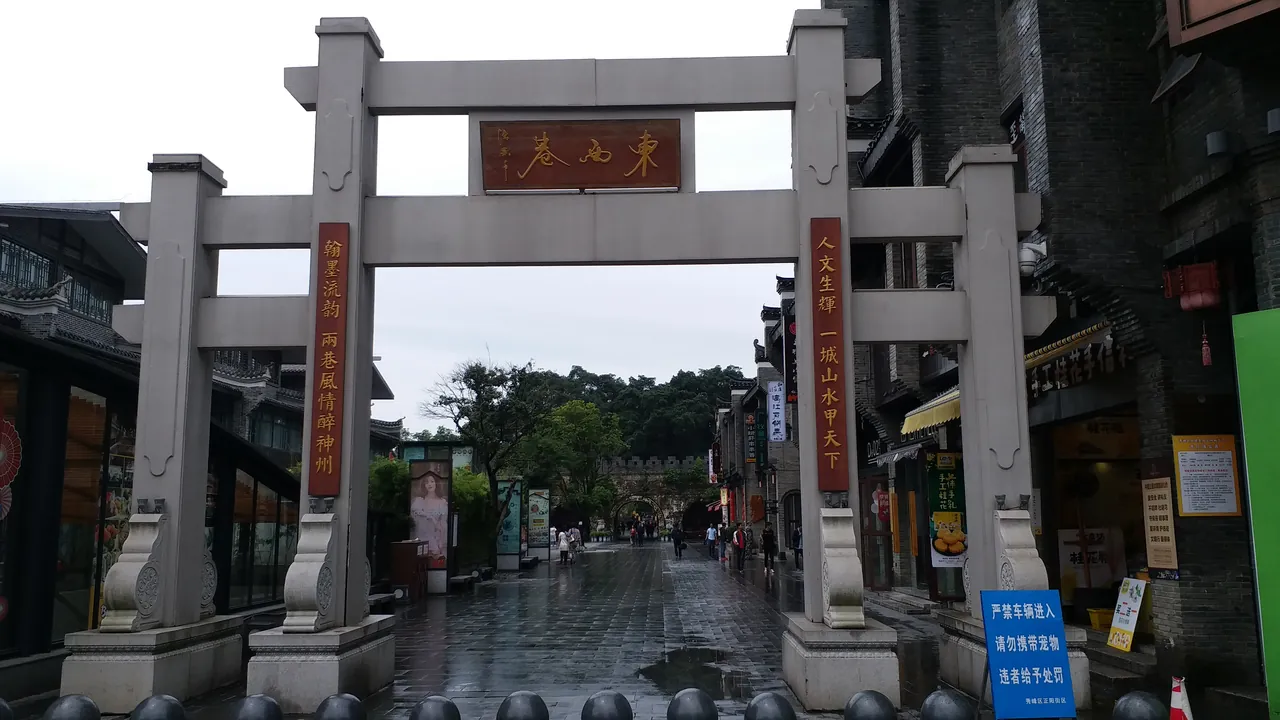
The day returns to the East-West lanes, which peak at dusk: Qing and Republican house fabric filled with teahouses, craft shops and snack stalls, and once the lanterns catch, the grey brick looks twice as good as by day. Free-standing Xiaoyao Tower sits at the lane mouth, its dusk river view a 30-yuan option if you want it.
Dinner inside the lanes runs 50 to 90 yuan a head for beer fish, stuffed river snails and Guilin stir-fries, or assemble a meal from the pastry and braised-food stalls. Walk it off down Zhengyang Street, closing the southern stretch you skipped at noon.
The route ends around 8 pm: look back toward the lakes and the twin pagodas are already lit, and with energy left, rewalk the lake path once in the dark, a perfect loop on the old town.
| Getting around |
|
| Budget | About 60 to 150 yuan per person: zero admission all day, 30 to 60 for noodles and snacks, 30 to 60 for coffee and tea, transit nearly nil. |
| Best time | Year-round, most comfortable October through April; catch 7 am and after 6 pm for light and temperature, and hold noon for indoors and food. |
FAQs
Does this walking day overlap much with the classic one-day sightseeing route?
Barely: the classic day centers on paid sights and the night cruise, all about overlooks and water, while this line sticks to free lanes and riverbanks, all about eye level and daily life. Their only overlap is the elephant, entered from the park in the classic day and framed free from Binjiang Road here, complementary angles. If you do both, space them apart, one day of sights and one of streets, two different courses rather than the same dish reheated.
Without any admissions, doesn't the day feel thin?
It depends on how much you weight city texture. The density rests on three things: lake light at dawn and dusk, the flavor thread of noodles and street snacks, and the constantly shifting street life along the river. For travelers who enjoy reading urban fabric, a day fills neatly; for checklist-driven visitors it will feel light, and they should take the classic day instead. Many deep travelers simply combine them: sights on day one, this slow loop on day two for digestion and gaps.
Is Ronghu at 7 am really worth waking up early for?
Yes, and it is the day's least replaceable hour: the pairing of pagoda silhouettes and mirror-flat water exists only between 7 and 8, before glare flattens the reflections, the exercisers disperse and tour groups appear at the corners, changing the mood entirely. Temperature and light also peak for walking and photography. If you truly cannot rise, fall back to the lakeside after 6 pm when lamps wake, a fine second best, minus the mist and the water-calligraphy elders.
Is this route safe for solo travelers, including the evening part?
Yes. The route follows main paths and commercial streets with steady foot traffic from dawn to night, and both the lakes and the lanes stay well lit and lively through 8 pm. Standard cautions apply: the riverside path empties late, so return to the streets after 9; scooters cut through lane mouths fast, so put the phone away while walking; guard valuables normally. Solo female travelers generally report positive experiences, and for night photos, choose stretches with passing pedestrians rather than deserted river sections.