
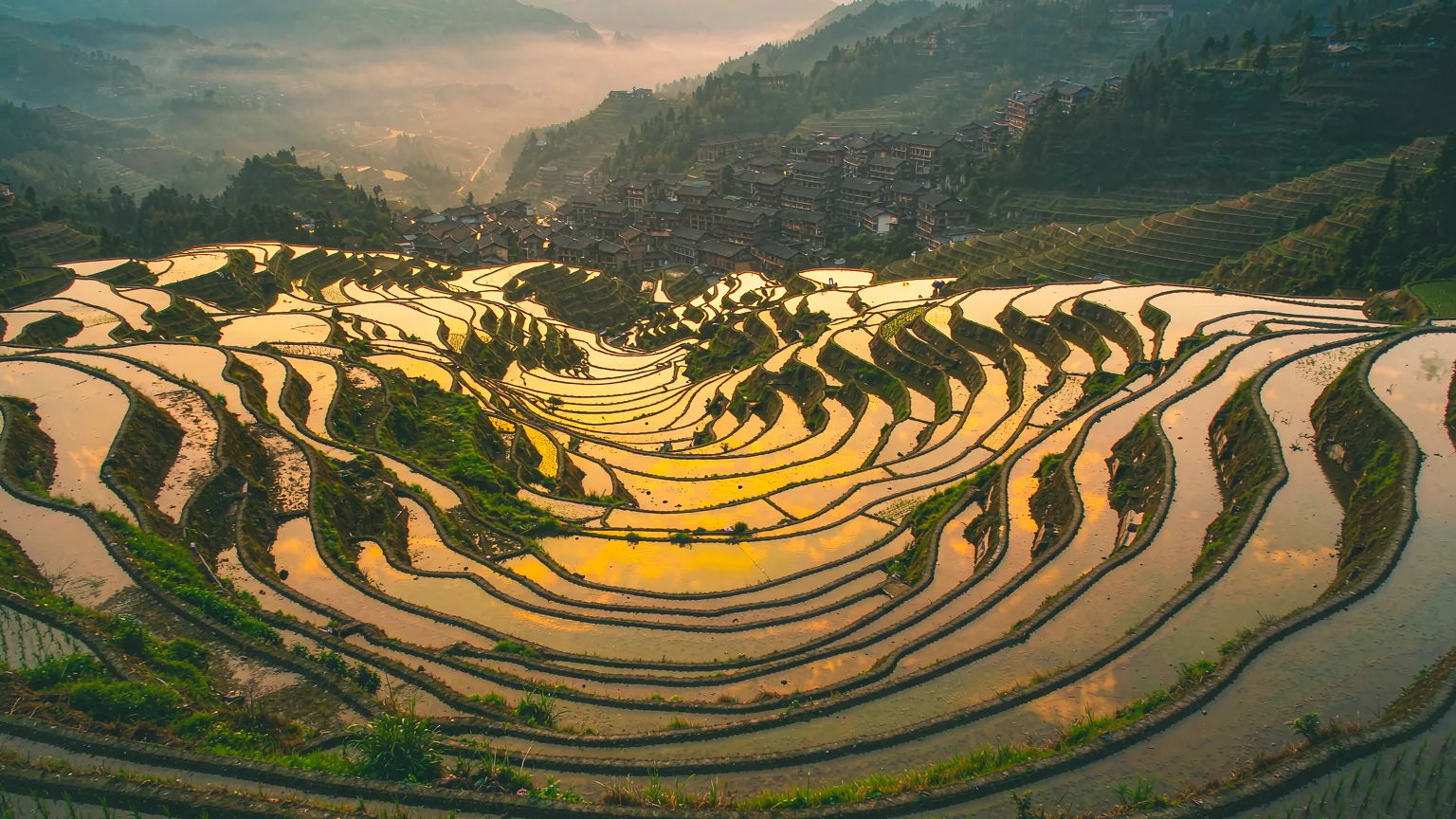
The Longji rice terraces sit 2.5 hours north of Guilin in Longsheng county, carved between 300 and 1,100 meters of elevation, begun in the Qin-Han era and perfected through the Ming and Qing, farmed by Zhuang and Yao communities for over six centuries. The scenic area splits into two personalities: Dazhai's Golden Pit in the northeast, vast and dramatic with three lookouts and a cableway, and Ping'an to the southwest, refined and elegant with mature hiking paths.
The three days run enter, traverse, return: drive up to Dazhai, ride or walk to Lookout One for sunset, sleep there; rise for the sea of clouds, then hike the ridgeline 3 to 4 hours down to Ping'an for Seven Stars and Moon and the Nine Dragons and Five Tigers, staying overnight or returning to Guilin that evening; day three takes in Huangluo Yao village's hair-dressing show before the midday ride back. One trip, both terrace characters, moderate effort, the photographer's standard answer.
Itinerary at a glance
| DAY1 10:00 | Up to Dazhai: The Cableway, Lookout One and Sunset |
| DAY2 06:00 | The Golden Pit Traverse: Cloud-Sea Sunrise, Then Down to Ping'an |
| DAY3 09:00 | Huangluo Yao Village and the Return: The Long-Hair Village's Last Lesson |
The route, stop by stop
Up to Dazhai: The Cableway, Lookout One and Sunset
Leave Guilin in the morning, about 2.5 hours by direct coach or 2 by shared car, reaching Dazhai by midday. After lunch, ride the cableway (60 to 70 yuan one way) or walk stone paths about 90 minutes to Tiantouzhai and on up to Lookout One, West Hill Music, the highest of the three, where terraces cascade from your feet to the far ridge with the grandest sweep of them all.
After 4 pm the light rakes into the valley, and terraced layers plus flooded-mirror reflections (in watering season) deepen until sunset near 7 pm, later in summer. Descend 30 minutes in the dark back to the village, so carry a headlamp or phone light. Dinner at the guesthouse: bamboo rice, cured meats and country chicken soup, 40 to 80 yuan a head.
Choose lodging near the lookouts, terraces at the window, 150 to 400 yuan by standard. Peak weekends sell out a week ahead; the village's total room count is small.
The Golden Pit Traverse: Cloud-Sea Sunrise, Then Down to Ping'an
Step out before 6 am for sunrise and the cloud sea (best odds in watering season and after rain) from Lookout One or Two. Breakfast and check out by 7:30 for the day's main event, the ridgeline traverse to Ping'an: up to Lookout Three, Golden Buddha Summit, then down field edges and paths, 10 to 12 kilometers with steady descent, 3.5 to 4.5 hours on foot.
The scenery shifts from grand to fine as you walk, the Golden Pit's drama behind you, Ping'an's terraces tightening into finer lines ahead. Mid-route villages offer rest and water, and Yao and Zhuang villagers carrying loads still use these paths, a working farming landscape. Reach Ping'an by 2 pm, lunch, then half an hour each at the Seven Stars and Moon and Nine Dragons and Five Tigers lookouts.
Night offers two choices: sleep in Ping'an for its misty morning, or catch the last bus (around 4 to 5 pm) back to Guilin. Staying gives the fuller experience, the village quieter and slightly cheaper than Dazhai.
Huangluo Yao Village and the Return: The Long-Hair Village's Last Lesson
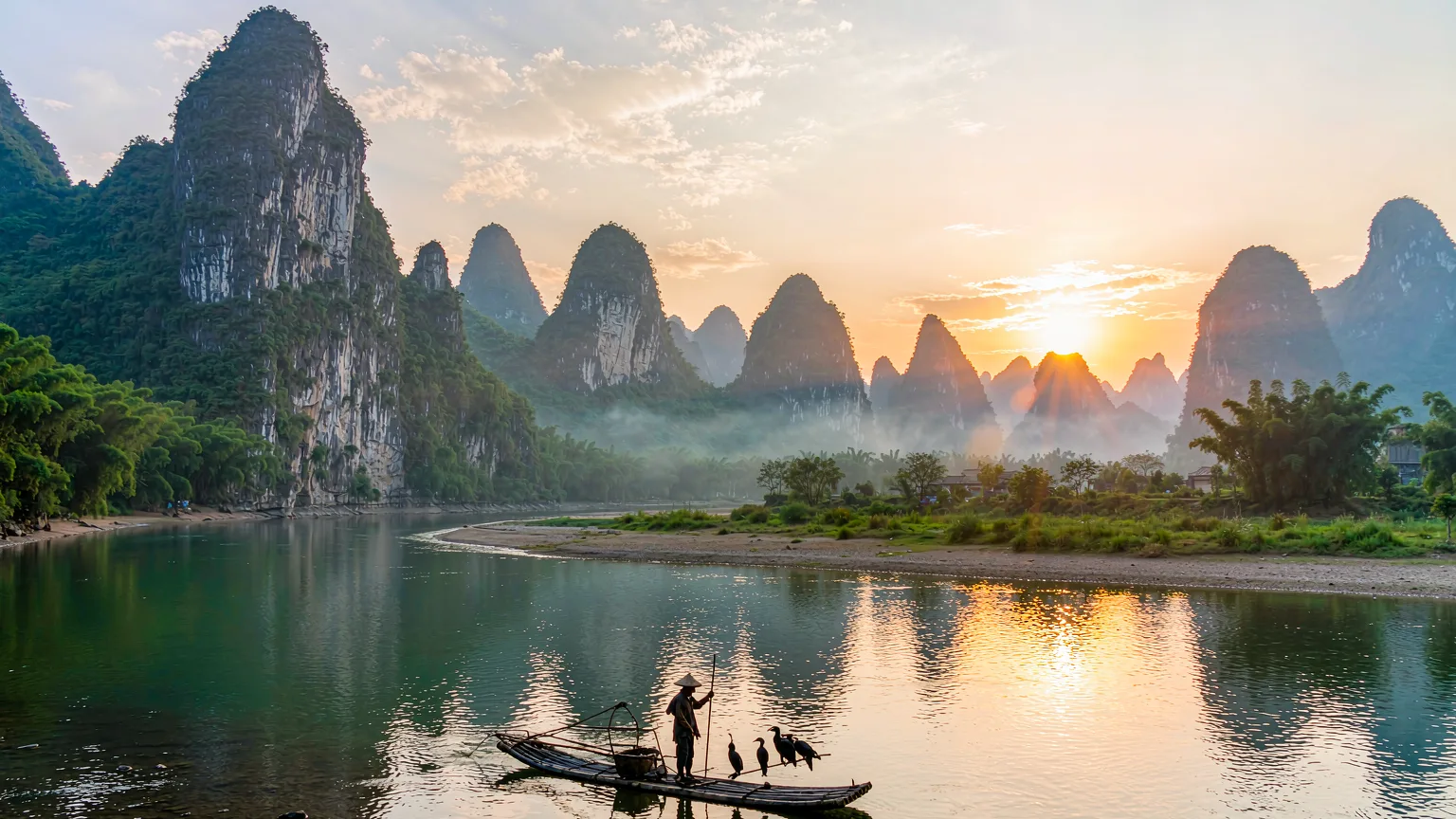
Day three descends from Ping'an to Huangluo Yao village at the mountain's foot, about 20 minutes by car or an hour on foot, home of the Red Yao women famed as the world's long-hair village, most hair past the waist. The dressing and hair show (roughly hourly, ticketed or bundled) reads like a language: unmarried, married and with-child women wear distinct buns.
After the show, lunch in the village on bamboo-tube chicken and mountain greens, a fitting close to the region's flavors. Ride back toward Guilin between noon and 1 pm, about 2.5 hours, reaching downtown by 3, comfortably feeding into trains or onward plans.
If the terraces leave you hungry, add Longsheng's hot springs (a winter choice) or the older Zhuang village of Guzhuangzhai, more original and far less visited, for an extra 1 to 2 hours on the way down.
| Getting around |
|
| Budget | About 500 to 900 yuan per person: terrace admission about 80, the cableway 60 to 70 one way, two mountain nights 300 to 500, round-trip transport near 100. |
| Best time | May-June when flooded terraces mirror the sky and late September to October when they turn gold before harvest; winter snow is a lottery. Start the hiking day early, as mountain fog builds after noon. |
FAQs
Dazhai or Ping'an, one village or both, and what differs?
Different personalities: Dazhai's Golden Pit is vast and dramatic, with high lookouts, huge terrace fields and a cableway, suiting grand-scape lovers who dislike climbing; Ping'an is refined, with fine terrace lines, an atmospheric old village and mature trails. Doing both, this route's traverse is the ideal answer, letting you read the transition on foot. Forced to choose: photographers and wow-seekers take Dazhai, slow travelers take Ping'an. One night in each is the standard deep version.
When do the terraces look their best, flooded season or golden season?
Two different kinds of beauty: in the flooding season of late May to mid-June, terraces become a thousand stacked mirrors, and sunrise plus cloud sea composes the most striking shots of the year; from late September to early October before harvest, the whole mountainside turns gold, saturated color for wide scenes and aerial framing. The green growing season in between reads steady but unremarkable, and January-February snow is a rare prize with icy paths. In short: flooding season wins hit rate, pre-harvest wins golden tone.
How do non-hikers visit Longji?
Zero hiking works fine: coach straight to Dazhai, cableway up and down to Lookout One (about 120 to 140 round trip), view and shoot from the platform and boardwalks, then ride back, as a day trip or overnight. Ping'an's lookouts lie within a gentle 20 minutes of the village center. The only true hike is the Dazhai-Ping'an traverse, and skipping it just means the road transfer around. Longji's core is the visual impact of the terraces, and the lookouts deliver eighty percent of it.
What are mountain lodgings like, and what about hot water and food?
Guesthouses have improved markedly, standard rooms with private baths and kettles, but mountain water pressure wavers, so shower off-peak when evening demand cools the flow. Food is farmhouse cooking, with bamboo rice, country chicken and wild greens the reliable plays, and confirm prices before ordering, since mountain markups of thirty percent for transport are normal. WiFi exists but crawls, phone signal holds on both main streets while the trail flickers in and out. Carry a little cash for stalls that cannot scan.