
Beaches bury Haikou's cultural depth, but the city carries two stories: the scholar-official and coastal-defense history of Hairui and the Xiuying forts, and the modern story of the arcade treaty port and the Nanyang exodus, all rooted by Li brocade and Qiong opera. Three days, one layer each, and the story is told.
The principle is one heavy and one light per day: a physical site in the morning, a museum or craft session in the afternoon, an opera or night stroll in the evening. Museums all need booking, so secure tickets before day one.
Itinerary at a glance
| D1 09:00 | Hairui Cultural Park: The Grave of the Upright Peak |
| D1 13:30 | Xiuying Fort: Late-Qing Coastal Defense |
| D1 16:30 | Haikou Bell Tower and the Old Town: The Port at Dusk |
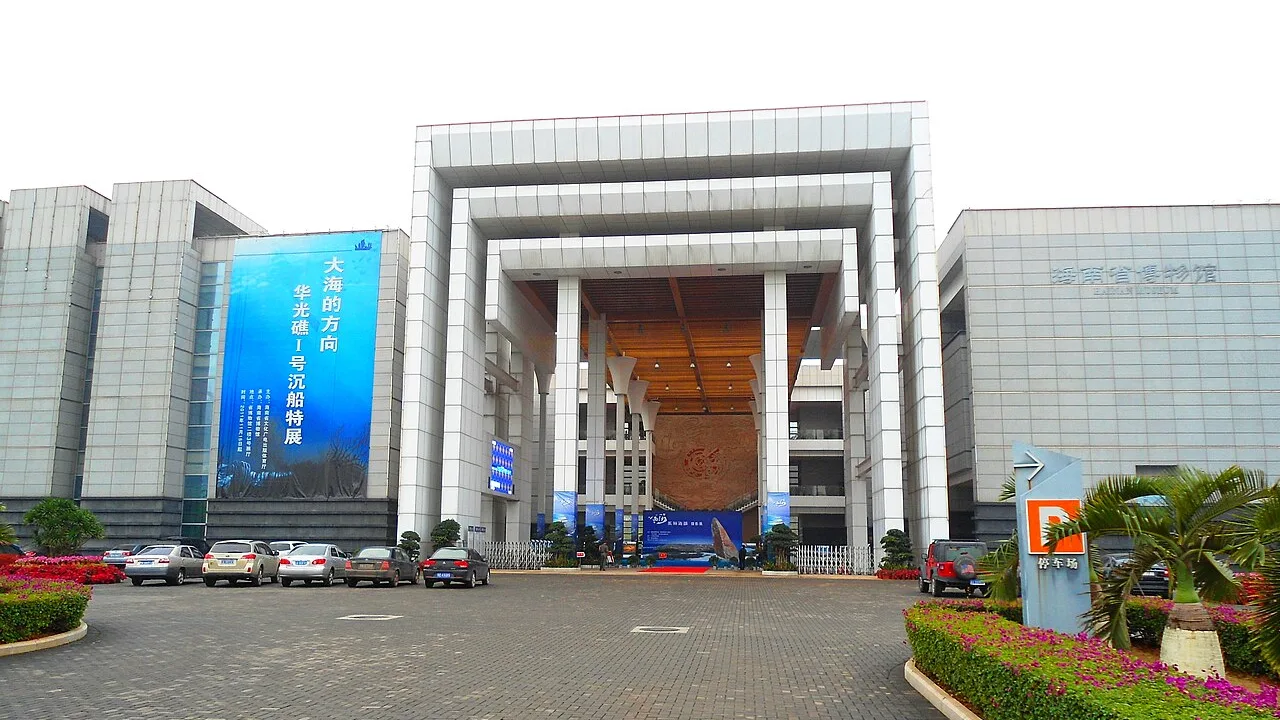
| D2 09:00 | Hainan Provincial Museum: The Island's Master Narrative |
| D2 14:00 | Haikou Museum: The City in Stone |
| D2 19:30 | Arcade Nights: Second Entry to the Old Town |
| D3 09:30 | Tanyun Li Brocade Craft Studio: A Half Day at the Loom |
| D3 14:30 | Hainan Intangible Cultural Heritage Exhibition Center: The Craft Panorama |
| D3 19:30 | Hainan Qiong Opera Theatre or the Heritage Courtyard: The Final Act |
The route, stop by stop
Hairui Cultural Park: The Grave of the Upright Peak
Hairui, a Haikou-born native, was the Ming dynasty's most famous incorruptible official, called Clear Sky Hai by the people. His tomb grounds, now expanded into a cultural park along Qiuhai Avenue, keep the mound, altar and stone avenue to the original plan, with new exhibition halls laying out his life and the background of his blunt memorial to the throne.
Two things earn your time: the stone officials and beasts flanking the avenue, original Ming work, and the pavilion behind the mound displaying centuries of judgments on Hairui. One hour suffices.
Xiuying Fort: Late-Qing Coastal Defense
Built around 1890, Xiuying Fort lines five Krupp gun emplacements along a low rise facing the Qiongzhou Strait, a key example of late-Qing self-built coastal defense that even fired in anger during the war of resistance. The tunnels, magazine and barracks between emplacements survive well.
Stand on an emplacement and look to sea: the strait's full run toward the Leizhou Peninsula reads at a glance, and coastal-defense geography turns instantly concrete. The site is compact, one hour.
Haikou Bell Tower and the Old Town: The Port at Dusk
Return to the old town by evening and close day one with the tower and Changdi Road at dusk. After the arcades by daylight, the lamplit version sits closer to the old treaty port: dockside voices, boats on the creek, trading-house windows.
Dine in the old town. The Provincial Museum waits for tomorrow, and you can return once more to see Zhongshan Road under lights, since seeing one street twice is half the pleasure of a heritage line.
Hainan Provincial Museum: The Island's Master Narrative
Day two's anchor is the Provincial Museum. Take the free ten-o'clock guided run first, then work the history galleries from prehistory to the Nanyang exodus, with the shipwreck relics and remittance-letter rooms as the highlights. Coming with day one's Hairui and fort memories, the coastal-defense material lands a satisfying second time.
Allow three hours. The Li galleries set up the afternoon's weaving, so study the motifs now and every pattern on the loom later will have a source.
Haikou Museum: The City in Stone
The afternoon City Museum is a small, sharp supplement: its founding-story line threads Baishajin anchorage, the Haikou garrison wall and the treaty-port opening into one strand, and among the steles you can find names of merchant families whose shopfronts still stand in the old town, text and street answering each other.
One hour, then a photo stop at the Wugong Temple gate. Spend the pre-dinner gap patching the old town: lanes missed on day one, storefronts skipped, all best caught in this light.
Arcade Nights: Second Entry to the Old Town
The arcades at night run as the heritage line's encore: light strings trace the colonnades and wooden signboards outshine the daytime. Only after the crowds recede do the arcades sound like themselves, ice shavers, Hainanese chatter, bicycle bells.
No program tonight: find a late-open tea house on Zhongshan Road, or simply walk Boai Road down and back. Weaving and opera come tomorrow, so spend tonight's eyes sparingly.
Tanyun Li Brocade Craft Studio: A Half Day at the Loom
Day three's morning goes to brocade. The studio's half-day course opens with motif reading, and the frog and human figures from the museum turn into warp and weft in your own hands. The back-strap posture takes half an hour to settle, but once the rhythm lands, the weave grows visibly.
Three hours later you leave with a handwoven band and a working literacy in Li brocade. The next Li costume you see will read not as pattern but as a people's time kept thread by thread.
Hainan Intangible Cultural Heritage Exhibition Center: The Craft Panorama
The afternoon sits at the heritage center, placing your morning's single craft back inside Hainan's full lineage: coconut carving, Li pottery, rattan weave, opera costumes, each room sharpening the pattern literacy you wove this morning.
It doubles as legitimate retail, so family gifts resolve here, Li brocade small goods and coconut carvings all signed by inheritors. Two hours for exhibits plus shopping.
Hainan Qiong Opera Theatre or the Heritage Courtyard: The Final Act
A heritage close demands a live opera. The Qiong Opera Theatre's grand stage suits a full-length piece with complete subtitles and staging, while the heritage courtyard's excerpts sit three steps from the actors, the better first taste. Choose by that night's schedule.
When the curtain drops, Haikou's three days are told: one upright official, five gun positions, a grid of arcades, two museums, a handwoven band and an opera in Hainanese. The city's base load is yours now.
| Getting around |
|
| Budget | Three days of tickets and sessions run about RMB 300-500 pp; the museums are free with booking. |
| Best time | Year-round with climate-controlled halls; opera schedules fill Friday to Sunday, and Mondays close museums, so route around them. |
FAQs
Will this line bore someone indifferent to history?
The rhythm never leans on vitrines alone: you climb a fort, weave with your hands, watch opera live, half the line is physical. Cutting to a single museum, the Provincial one, still works, freeing a half day for old-town lane wandering. The line's threshold is not knowledge but appetite for stories.
Hairui Cultural Park or the Wugong Temple, if only one?
Most travelers should take Hairui Park: free, moderate in size, with a self-contained story. The Wugong Temple wins on ancient architecture and garden, but tickets up and the displays run traditional. Since the City Museum already sits beside the temple, entering both on one stop is the efficient play, an hour covering the pair.
How different is Qiong opera from Beijing opera? Can I enjoy it without Hainanese?
Very: Qiong opera sings in Hainanese with softer, stickier melodies, coconut fiddle and suona in the pit, and less martial-arts staging than Beijing opera. The entry bar is low, subtitles plus excerpt plots carry you, and listening to it as a local sound sample beats treating it as Beijing opera's understudy.
Do I need a guide across the three days, and where most?
The Provincial Museum first: wandering its history galleries alone scatters fast, and one free tour threads it all; the arcades second, since building details and family histories hide without a guide. The fort and memorial park manage on their signage, and the weaving class brings its own teacher. On a budget, buy only those first two.