
Haikou's nature runs stronger than its reputation: a ten-thousand-year volcanic field at the city's edge, the largest contiguous mangrove reserve in China to the east, and a free-range tropical zoo. Three days split into volcano, mangroves and wildlife, one theme each, all commutes under an hour.
Two time anchors matter: the mangrove boats follow the tides, with mudflats and fiddler crabs showing at low water, and the zoo wakes before ten, big animals retreating to shade once heat builds. Set mornings and afternoons by those anchors and the days run themselves.
Itinerary at a glance
| D1 09:00 | Haikou Volcanic Cluster Global Geopark: The Shape of Lava |
| D1 14:00 | Mission Hills Haikou: An Oasis on Volcanic Rock |
| D2 08:30 | Dongzhai Harbour Mangrove Reserve: Boating into a Sea Forest |
| D2 14:00 | Yanfeng Lunch and the Fishing-House Tables |
| D3 08:30 | Hainan Tropical Wildlife Park: The Active Morning |
| D3 12:30 | Evergreen Park: The City's Seaside Lawn |
| D3 14:30 | Wuyuan River National Wetland Park: An Estuary at the City Edge |
| D3 16:30 | Holiday Beach: The Three-Day Sunset |
| D3 19:30 | Huacai Haikou Bay Plaza: The Night Frame |
The route, stop by stop
Haikou Volcanic Cluster Global Geopark: The Shape of Lava
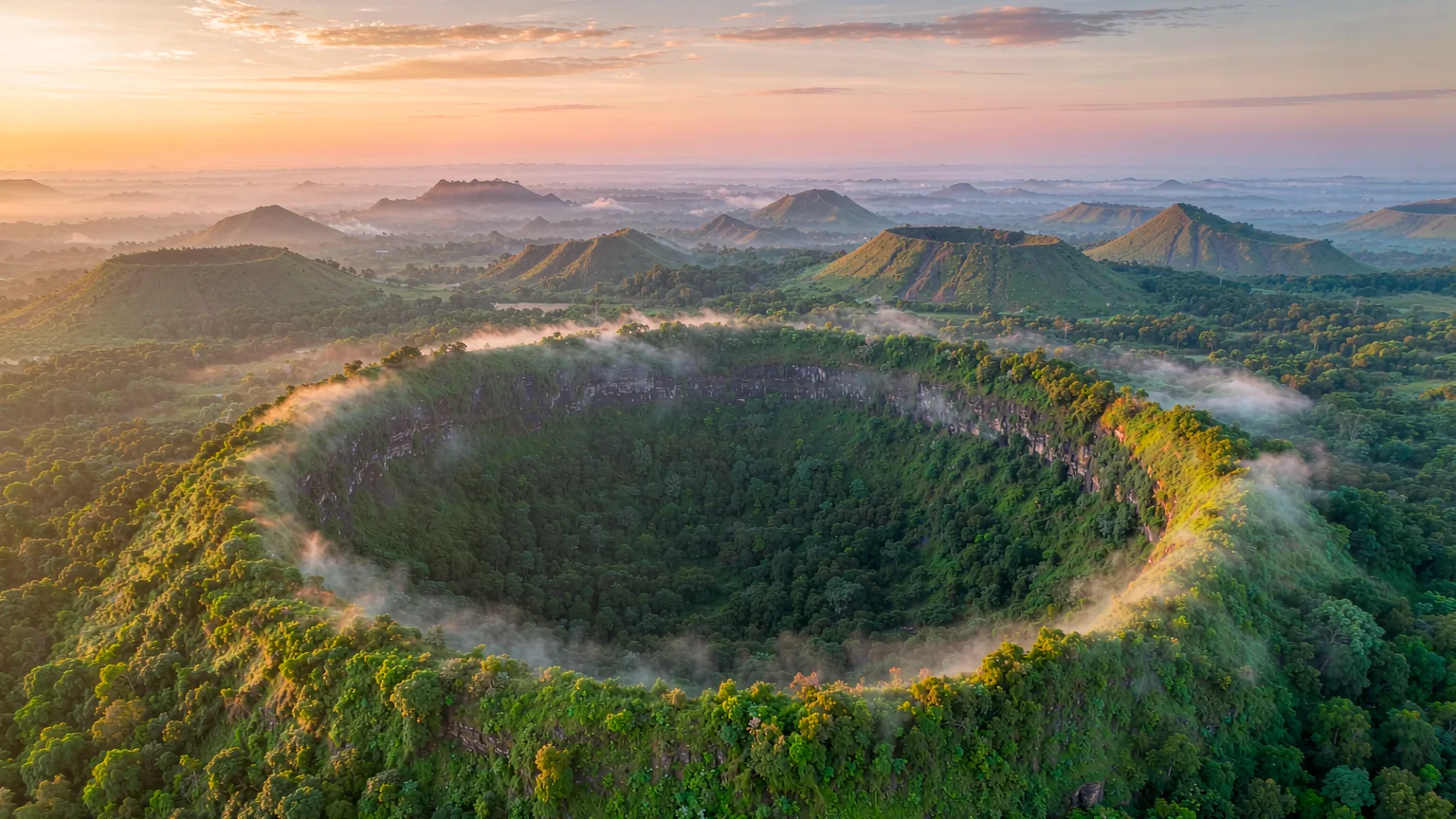
Nature days open at the volcano. The Shishan field last erupted ten thousand years ago, the main crater survives whole, and the trail runs from the foot to the crater's throat. Enter mid-morning for light and cool, a twenty-minute climb, and the rim view of a green-filled pit.
Three geological highlights: scoria and gas bubbles at the crater floor, the volcanic-stone houses of the villages below, and the museum's volcano monitoring displays. A slow loop takes two hours.
Mission Hills Haikou: An Oasis on Volcanic Rock
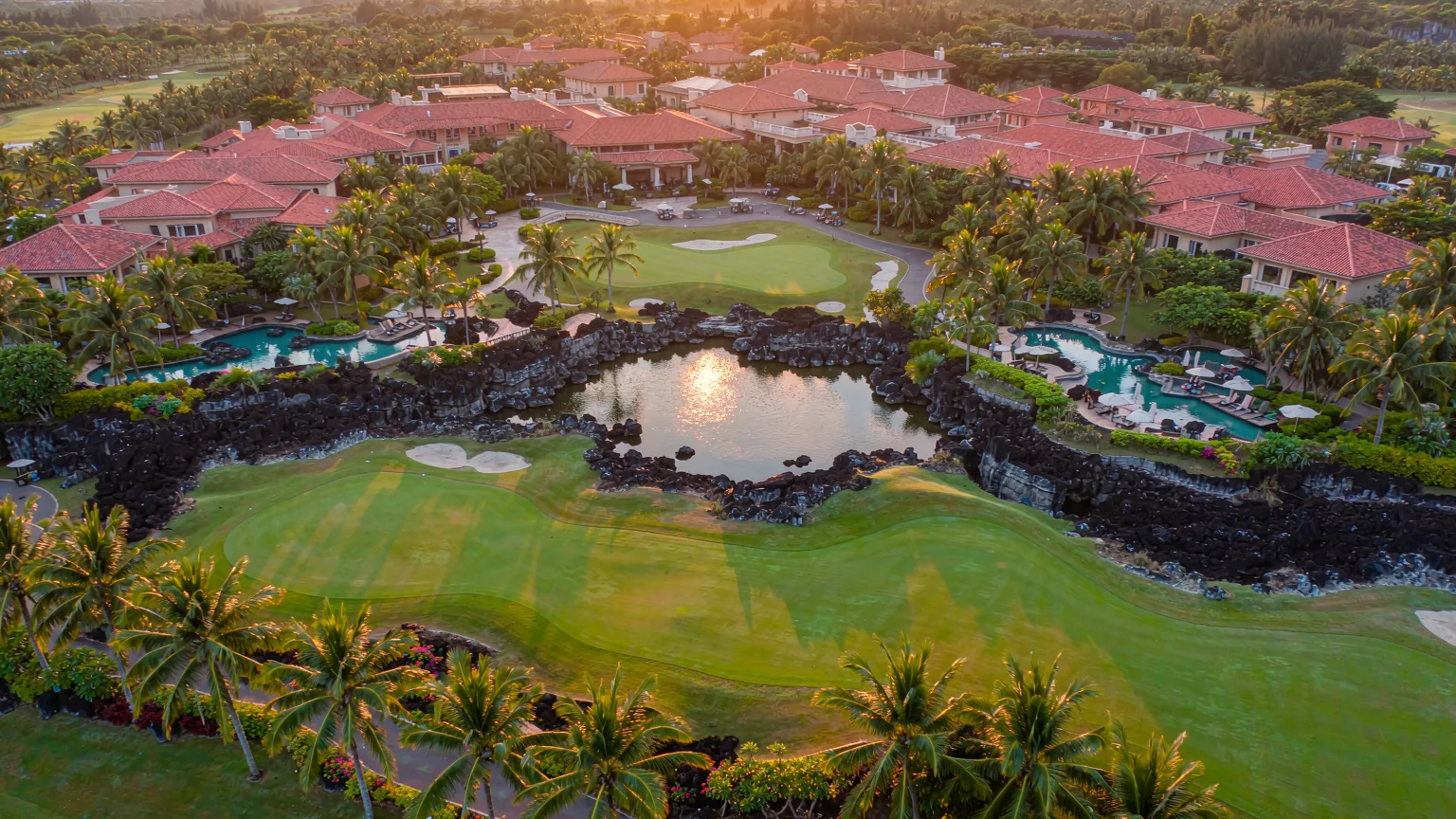
The afternoon goes to Mission Hills, a resort built on a lava wasteland where golf courses and volcanic-rock mineral hot springs carry the name. Non-golfers buy a spring ticket and soak in pools floored with volcanic stone among tropical blooms, a texture unlike mainland springs.
For a nature line, Mission Hills shows how people grew a forest on bare rock: every tree on site sits in a blasted rock pit. Dine early and head back to town.
Dongzhai Harbour Mangrove Reserve: Boating into a Sea Forest
Day two heads northeast to Yanfeng town early, where Dongzhai Harbour holds China's first mangrove reserve, unbroken forest across an inner sea. Boats thread the channels, breathing roots rising from the mud on both sides, egrets and fiddler crabs at work at low tide, Hainan's most distinctive wetland scene.
The boat leg runs half an hour to an hour, with shore boardwalks for a slow add-on. The interpretive signs explain mangrove vivipary well; the pencil-shaped Kandelia seedlings hang from branches and root where they drop.
Yanfeng Lunch and the Fishing-House Tables
Lunch in Yanfeng stays local, fishing-house style: salted fish casserole, mixed-fish soup and blood clams at honest prices, with several courtyard houses sitting at the mangrove line where you can see the forest from your table.
Walk the village after eating, since volcanic-stone houses and coral-stone walls are the local building signature. Head back between two and three, dodging the worst sun and napping in the car.
Hainan Tropical Wildlife Park: The Active Morning
Day three gives its whole morning to this dual-zone park, drive-through and walk-through. The drive zone free-ranges lions, black bears and emus, crossed by your own car or the sightseeing vehicle; the walking zone stars relatives of the Hainan gibbon plus Eld's deer and monitor lizards under tropical canopy that keeps the paths cooler than most zoos.
Animals run liveliest before ten, feeding shows per the daily board. Families with kids can spend the whole morning; adults cover the highlights in two to three hours.
Evergreen Park: The City's Seaside Lawn
On the ride back from the zoo, put lunch at Evergreen Park. Over a thousand mu of lawn run from the city to Haikou Bay, the palms full of picnicking families, and this stop has one job: sit, eat, and recover from the morning's walking.
A timber boardwalk separates lawn from shore; after eating, walk ten minutes of it watching sails and skyline, and the afternoon's route to the Wuyuan wetlands forms naturally from here.
Wuyuan River National Wetland Park: An Estuary at the City Edge
On the way back into town, drop into Wuyuan River wetlands, a river that runs from volcanic country all the way to Haikou Bay, its estuary fitted with boardwalks and bird hides. Egrets flock back to the roost toward dusk, the nearest real birding to downtown.
The flat boardwalk has no steps at all, a small loop an hour. Learn three waterbirds from the signs, common moorhen, white-breasted waterhen and pond heron, and city waterfronts stop being boring forever.
Holiday Beach: The Three-Day Sunset
The nature trip closes where it should, on the sand. After four the sun leans and Holiday Beach softens gold, swimmers and runners sharing the six-kilometer shore, the trip's last walk given to the timber boardwalk.
Sit the sunset out and replay the volcano's rock, the mangrove roots, the wetland birds; the sea wind files the three days away on its own.
Huacai Haikou Bay Plaza: The Night Frame
The last stop after returning to town is the bay's night frame. Huacai Plaza faces the skyline and Century Bridge head-on; as lamps come on, outline lights and the bridge's curve fold into one shot, and the final frame of three nature days is the city's own.
Half an hour of night viewing suffices. Three days showed the natural Haikou; tonight's lamps remind you that all of this city's nature ultimately poses against the city itself.
| Getting around |
|
| Budget | Three days of entry and boat tickets run about RMB 300-450 pp; a chartered car day costs RMB 500-700, shareable. |
| Best time | October to April adds migratory birds; mangroves show best at low tide, and the park feeds animals in the morning. |
FAQs
When is the best time for the mangroves?
Follow tides, not clocks: the two hours around low water expose the mudflats where fiddler crabs, mudskippers and egrets run busiest, and the boat channels read best then. The best time shifts daily, so check the Yanfeng tide table the night before and call to confirm boats. Early morning adds calm wind and good light, the day's softest window.
Is the wildlife park worth the ticket versus a city zoo?
Worth it: it is a free-range park, and the drive-through immersion plus tropical walking habitat are things a city zoo cannot offer. Hainan natives are the big draw, Eld's deer, close gibbon relatives, monitor lizards. An hour of pigeon-feeding in an urban park is no substitute.
Is the nature line hard on seniors?
Manageable: keep to the crater's upper paths rather than the floor, treat the mangroves as a boat day, ride the sightseeing vehicle throughout the park, and Wuyuan's boardwalks are step-free. The real watch items are grip, sun, and the hour-long bumpy legs to Dongzhai and Dongshan, so motion-sickness tablets for those prone.
Which day has the best rainy-day fallback?
Day three: the park runs mostly under canopy, wetland birding actually improves in drizzle, and heavy rain falls back to the Provincial Museum downtown. Day one's crater turns slick in rain and day two's mangroves hinge on boat sailings, both hard to replace, so deliberately keep an indoor card up your sleeve.