
Seven days in Hefei suit a two-structure plan, city plus countryside: four days downtown and near suburbs exhausting four lines, Judge Bao, the Three Kingdoms, the late Qing and modern science, then three days in the Chao Lake and Feixi-Lujiang countryside, closing on town, mountain, springs and lake. Hefei's charm is the leap between identities, two days from an honest judge's shrine to a quantum lab.
Three buffers are built in: a full museum day, an easy Zipeng day and a final free day. Lodging runs in three blocks, three nights in the old city, one at the springs, three back downtown or lakeside, bags riding the car or the front desk, no daily repacking. The hidden spine is food: from duck-fat biscuits to Lei Street crayfish, every day holds one meal worth rising or staying up for.
Itinerary at a glance
| D1 07:30 | Breakfast at the Luzhou Roast Duck House: Opening on Duck-Fat Biscuits |
| D1 09:00 | Bao Park: Shrine, Tomb, Pavilion and Islet in Full |
| D1 14:00 | Xiaoyaojin and Mingjiao Temple: The Three Kingdoms Line in One Day |
| D1 19:00 | Lei Street: The Week's First Night Market |
| D2 08:30 | The Anhui Museum: The Full Deep-Reading Day |
| D2 15:30 | Huaihe Road and Li Hongzhang's Residence: The Gallery Day's Coda |
| D3 09:00 | Sanhe Ancient Town: Going Rural on Day Three |
| D4 09:00 | Zipeng Mountain: A Slow Forest Day |
| D5 09:00 | Zhongmiao and Mushan Island: A Chao Lake Day |
| D5 17:00 | Meadows at Dusk and Dinner by the Lake |
| D6 09:00 | Bantang Springs and the Sangua Commune: The Healing Day |
| D6 18:00 | A Spring-Town Night: The Quiet of Tangchi or Bantang |
| D7 09:00 | Dashu Hill, Hecai 1972 and the Free Day |
The route, stop by stop
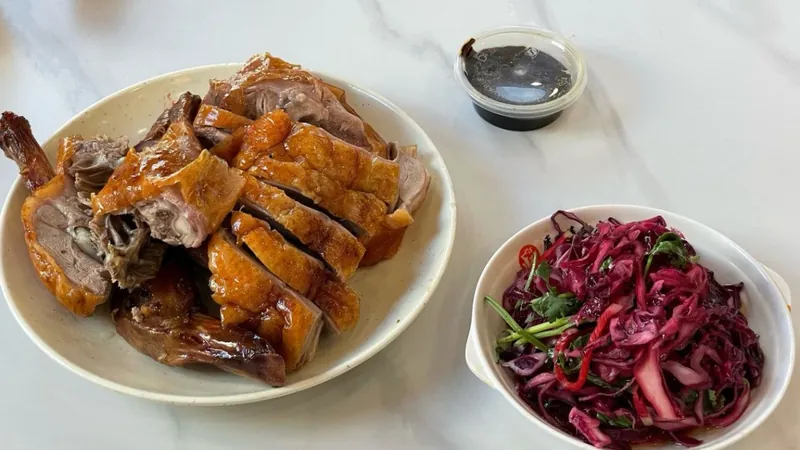
Breakfast at the Luzhou Roast Duck House: Opening on Duck-Fat Biscuits
The first lesson of the week is also Hefei's first lesson: breakfast. The duck-fat biscuits at the Luzhou roast duck house smell best straight off the oven wall, the crisp shell shedding flakes at a touch, paired with freshly simmered red-bean pudding, savory against sweet. Locals have eaten this set for decades; you join them over one breakfast.
Add duck-fat soup dumplings beyond the signature, and light eaters should save half a biscuit as tomorrow's benchmark, because you will want it again. The week's taste anchor sets here.
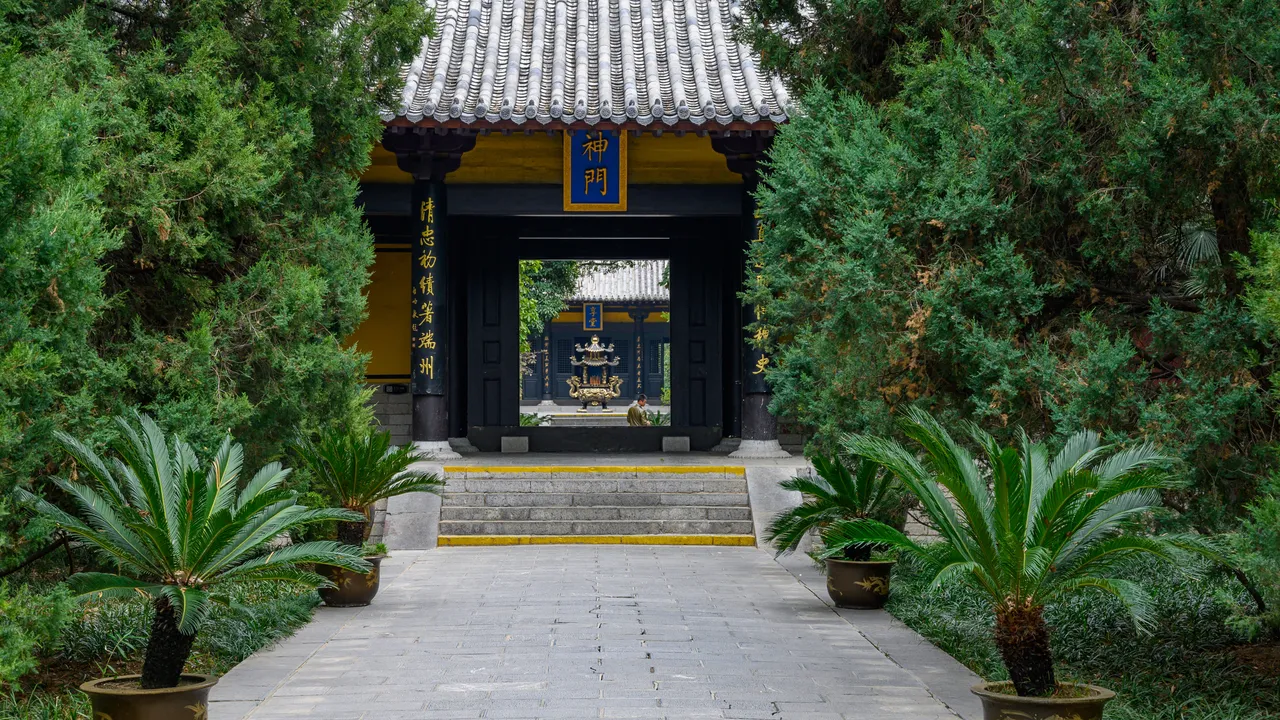
Bao Park: Shrine, Tomb, Pavilion and Islet in Full
Give the morning to Bao Park and walk all four sights: the shrine's plaques and waxwork court scenes, the tomb's carved approach, Qingfeng Pavilion's full-creek view from the top, and Fuzhuang's little Jiangnan garden. Opening the week with an honest judge lays Hefei's historical base color first.
Watch the creek's lotus as you walk, since the threadless-root pun on selflessness makes this water more than scenery. Two hours under shade at a gentle pace.
Xiaoyaojin and Mingjiao Temple: The Three Kingdoms Line in One Day
Close the Three Kingdoms line in the afternoon: the eight-against-ten-thousand tale beneath Zhang Liao's statue at Xiaoyaojin, then the crossbow terrace of Mingjiao Temple where Cao Cao drilled his bowmen. The two sit close, chained by metro or foot, history closed on day one so the rest travels light.
Lakeside benches at Xiaoyaojin invite idling; the terrace's steps are few but steep. Walk Huaihe Road home at dusk, capping day one under 15,000 steps.
Lei Street: The Week's First Night Market
Lei Street opens the nights: crayfish, skewers and country dishes claim a table, and the lei-raising rite gets learned live, the big-mouthed jar filled, clinked and drained. Hefei's nights run livelier than expected, and seven days later you will miss this street with precision.
Keep the first night moderate and note the shops worth returning to; the seven-day plan can visit twice or more. Metro returns easily to the old city.
The Anhui Museum: The Full Deep-Reading Day
Give day two entirely to the museum, the week's only gallery day: the Chu ding, the Ejun Qi tallies and the bronzes and jades in the morning, the Hui architecture and scholar's-treasures galleries in the afternoon, with a mid-museum coffee break. Take the audio guide; information density decides the day's payoff.
A museum day is the pace buffer: climate-controlled, low-mileage, seen seated. Before closing, note souvenir targets at the design counters for a day-seven sweep.
Huaihe Road and Li Hongzhang's Residence: The Gallery Day's Coda
Back from the museum, give the late afternoon to Huaihe Road: the Self-Strengthening materials of Li Hongzhang's residence answer the museum's artifacts with a person, an hour inside, then a slow walk down the pedestrian street digesting the galleries at street level.
Dinner on Huaihe Road or at the temple market, where a heritage Luzhou hall's Baogong fish and hodgepodge deserve the evening.
Sanhe Ancient Town: Going Rural on Day Three
Day three leaves downtown for Sanhe, an hour out. Free to enter, the water-town pattern of three converging rivers survives whole: Old West Street's shopfronts, One-Man Lane's extreme width, Yang Zhenning's courtyard, the Wanniantai stage, walked in order without backtracking.
Give it the whole day: lanes in the morning, Sanhe rice dumplings and country dishes at noon, Liu Mingchuan's residence in the afternoon (a Feixi detour), riverside lamps at dusk. The town's own pace makes this the run's rest day.
Zipeng Mountain: A Slow Forest Day
Day four deliberately slows: forest trails at Zipeng in the morning, the undulating paths under the canopy capped at two hours, with the Xilu Temple's incense and birdsong as soundtrack. No checklist tasks today; this is the run's lung.
The base farmhouse chicken stew makes lunch, the afternoon free, a town stroll or a downtown rest. Sleep early, for the lake boat calls tomorrow.
Zhongmiao and Mushan Island: A Chao Lake Day
Day five belongs to Chao Lake: the millennium red walls of Zhongmiao in the morning, a twenty-minute ferry to Mushan Island, the Wenfeng Pagoda granting eight hundred li of water. No other sight around Hefei gives this openness; the horizon from the pagoda turns the number into a picture.
Afternoon off the island to the lakeshore meadows, the lawn-running-into-water angle made for lying flat. Book the lake-fish dinner ahead, weekends queue savagely.
Meadows at Dusk and Dinner by the Lake
At dusk the meadows thin out while the lake swallows the sunset whole and gives it back, the run's most spacious evening, perfect for doing nothing at all.
After dinner, lodge lakeside or downtown by remaining energy; springs and hills still wait.
Bantang Springs and the Sangua Commune: The Healing Day
Day six heals: the commune's country market and tea fields at a stroll in the morning, buying handmade sauces and produce, then the Bantang springs in the afternoon, where the cold-and-hot twin-eye geology is best heard while soaking. Six days of step debt clear today.
Spring rules: never soak hungry or after drinking, rotating twenty-minute sets. The highland meadow suits a digestive walk at dusk, tulip season counted separately.
A Spring-Town Night: The Quiet of Tangchi or Bantang
Spring-town nights hold no markets, only insects and steam. A cup of local tea on the guesthouse terrace, flipping through six days of photographs, a quiet the city cannot give.
In Tangchi, the general store's tea eggs and pickles make exactly the right supper.
Dashu Hill, Hecai 1972 and the Free Day
The last day returns downtown: Dashu Hill in the morning, forty minutes up to identify every stop of the week from the summit; descend into Hecai 1972, the prison-turned-creative park, its industrial halls and exhibitions footnoting Hefei's modern identity.
The afternoon is free: gaps, souvenirs (museum design goods and the four pastries), or one more Lei Street. Hefei's story closes from the judge's creek to laboratory lights; raise a cup at the farewell dinner.
| Getting around |
|
| Budget | Excluding lodging and long-haul transport, plan RMB 1100-1800 pp over seven days; tickets run free or cheap, with charters, springs and meals the big lines. |
| Best time | Apr-May and Sep-Oct run steadiest; add a spring-soak day in winter and catch morning boats to Mushan Island. |
FAQs
Do seven days feel thematically scattered?
The structure binds as four historical days plus three country days: history on one and two, the town on three, mountain on four, lake on five, springs on six, the modern city on seven, themes progressing without collision. The jumps are Hefei's own trait, a judge's shrine and a quantum lab in one city, and the itinerary only reports it honestly.
Which day fits the springs best?
Day six fits best: five days of accumulated fatigue release on soak day, and the spring towns sit conveniently between the lake and the return route. In winter, upgrade to two spring days (Tangchi plus Bantang), trading one downtown day for a spring guesthouse night.
What mainly separates the seven-day from the five-day plan?
Three things: the countryside grows from one day to three (Sanhe, Zipeng, springs and Chao Lake all unfolded); three more buffers appear (gallery day, slow day, soak day); and eating deepens, with breakfasts and night markets repeatable. Five days read Hefei's skeleton; seven days live its daily life.
How much more than the five-day budget, and where is the extra best spent?
Roughly forty to fifty percent more, mostly extra nights, charter days and spring tickets. The three best spends: the Mushan Island round-trip boat, the lake's core experience; one proper spring soak, the antidote to six days of walking; and two Lei Street dinners, since Hefei's night is this street. The worst spend is any checklist-driven cab sprint.