
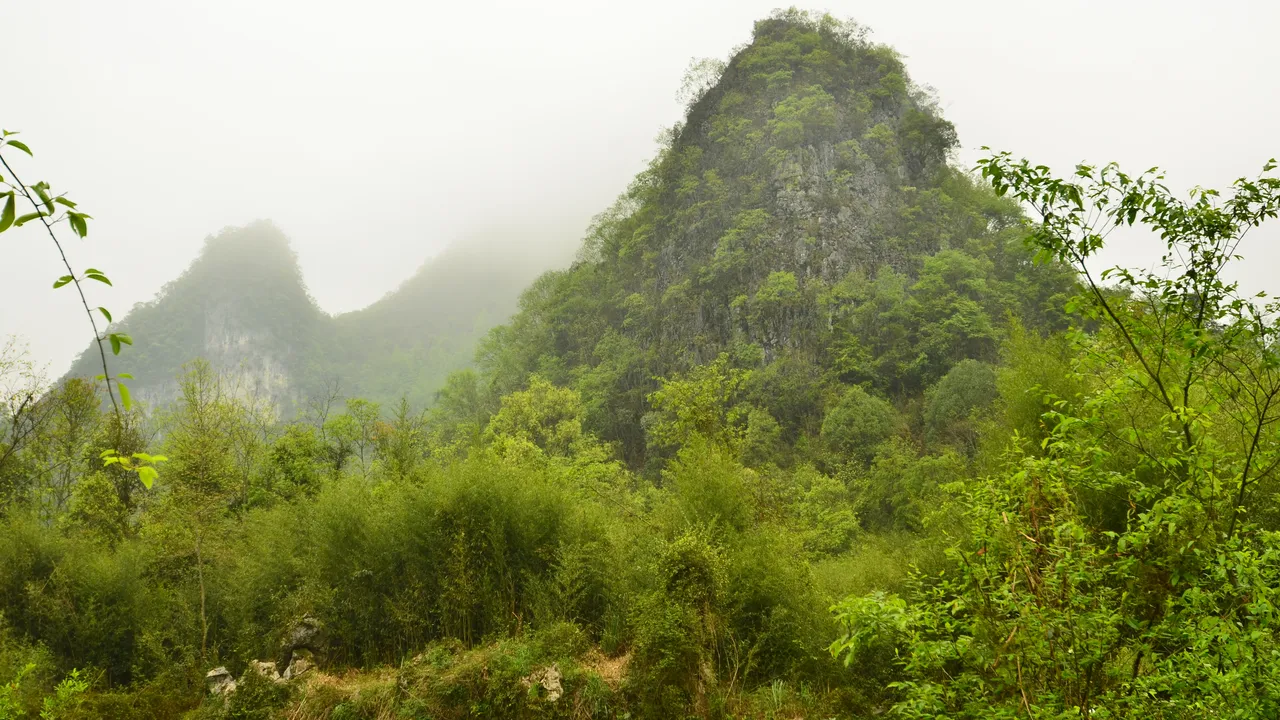
Libo is a karst World Heritage site whose nature comes in two layers: the Zhangjiang turning water into falls, deep pools and gorges, and Maolan turning hills into sinkholes, caves and primeval forest. Three days cover both: the first two to the river system, the third to Maolan's mountains.
The pacing keeps slack: day one fills Xiaoqikong without overdraft, day two splits Daqikong and rafting between effort and ease, and day three, Maolan, is the trip's physical peak, so save your best legs for it. Maolan has no theme-park boardwalks; go by hired car, ideally with a local guide, and do not economize on that.
Itinerary at a glance
| D1 08:30 | Xiaoqikong East-Gate Line: Old Bridge to the 68 Cascades |
| D1 11:00 | Xiaoqikong Scenic Area - The Water Forest |
| D1 14:00 | Xiaoqikong Scenic Area - Cuigu Falls and Wolong Pond |
| D2 08:30 | Daqikong Scenic Area: The Natural Bridge and the Eerie Gorge |
| D2 11:00 | Daqikong Scenic Area: The Gorge Raft Run |
| D2 13:30 | Shuichun River Rafting: Three Hours on the Upper Zhangjiang |
| D3 08:00 | Maolan National Nature Reserve: Five-Eye Bridge and Crab Gully |
| D3 13:30 | Maolan: Golden Lion Cave and the Funnel Forest |
| D3 16:30 | Maolan Sunset Platform and the Ride Back |
The route, stop by stop
Xiaoqikong East-Gate Line: Old Bridge to the 68 Cascades
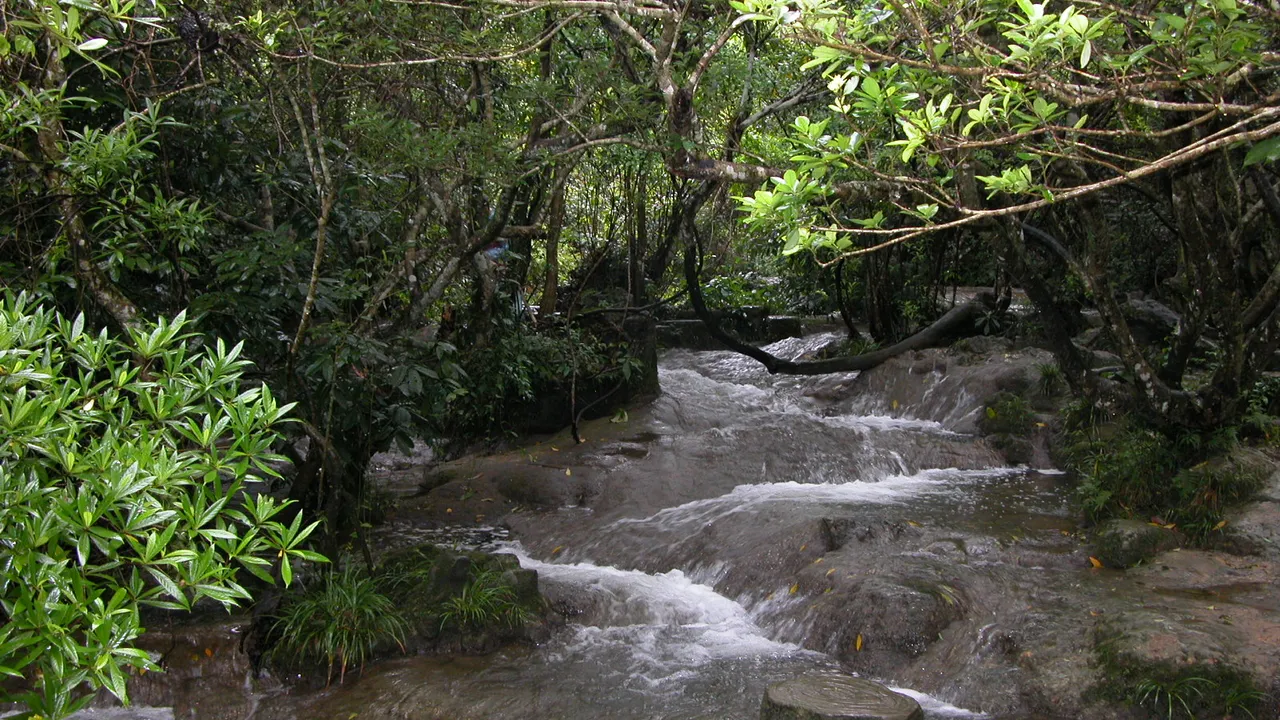
Open with Xiaoqikong's classic stretch: in from the east gate to the Daoguang-era seven-arch bridge, vines trailing to the water, the best photo hour before crowds fill in. Upstream come Laya Falls and the 68 Cascades, white water stepping down beside your boots.
The stretch takes about ninety minutes; do not spend all your enthusiasm at the first stop, since longer lines follow. Shuttles stop at every major point, so ride when tired and ration your legs across three days.
Xiaoqikong Scenic Area - The Water Forest
Reach the water forest before noon as the water warms, right for getting in. Roots gripping stones while you wade the shallows is an experience unique to Libo, the coolest stretch of all three days and the easiest to overrun, so set a ninety-minute alarm.
Slick stones set the rhythm here: grip soles and the guide rope, walked slowly. Afterward lunch in the shade; the service point's noodles are filling rather than good, so keep your appetite for town tonight.
Xiaoqikong Scenic Area - Cuigu Falls and Wolong Pond
The afternoon starts at Cuigu Falls, where the flooded flat invites wading; spend the day's water allowance here. One shuttle stop west sits Wolong Pond, the densest green on the whole line: shoot the panorama from the dam top, then sit below it and let half an hour of water-sound pay for itself.
Wolong Pond is the western end of Xiaoqikong; from here ride the shuttle back toward the east gate. Day one ends there, with dinner in town and the river night-breeze as your cooldown.
Daqikong Scenic Area: The Natural Bridge and the Eerie Gorge
Morning two belongs to Daqikong. The gorge runs cool and quiet at dawn, the boardwalk following the river to the natural bridge, a single stone mass spanning the ravine, wind through the arch and water echoing in the rock chambers. One way is twenty to thirty minutes; return plus photos cap at two hours.
The tired option is the bamboo raft both ways: from the water, the Eerie Gorge's vertical walls press in harder than from the boards. Daqikong's sights are concentrated, so see them and go, saving your legs for the afternoon's rafting.
Daqikong Scenic Area: The Gorge Raft Run
After turning back from the natural bridge, see the gorge a second way: board a bamboo raft down the waterway, where the walls rise straight from the surface, half the height of the boardwalk view and twice the pressure. The boatman's pole and the water are the whole soundtrack.
One way runs about fifteen minutes; board at the mid-route dock or ride both directions. With the gorge read from the water, the afternoon transfer to the Shuichun River slots cleanly, the whole morning spent among Daqikong's stone and stream.
Shuichun River Rafting: Three Hours on the Upper Zhangjiang
The Shuichun River is a gorge run on the upper Zhangjiang, billed as the finest rafting between Guizhou and Guangxi, about three hours alternating rapids with calm water. Daqikong in the morning was for looking; the afternoon is for doing, one still and one moving, a clean split for the day.
Swimming is not required, just a fastened life vest and attention to the safety talk. waterproof your camera and phone, shooting on the calm stretches and stowing before the rapids. The sun is constant: waterproof sunscreen, reapplied every half hour.
Maolan National Nature Reserve: Five-Eye Bridge and Crab Gully
Day three enters Maolan, nothing like the parks' dressing: this is karst forest without fences. The classic morning runs Five-Eye Bridge to Crab Gully, the Qing-era bridge over water clear enough to count pebbles, then wading upstream through the shallow gully, cool over the stones and your insteps alike.
Maolan's routes tangle, with branching paths and weak signal, so do not skip a local guide, who bundles route-finding, safety and interpretation in one. After two hours of wading, a farm lunch of river fish and mountain greens restores you faster than expected.
Maolan: Golden Lion Cave and the Funnel Forest
The afternoon shifts Maolan into mountain mode. Golden Lion Cave is a lit show cave where flowstone gleams damp under the lamps, its constant temperature making it the most comfortable half hour of high noon. Then head toward the funnel forest, where trees climb out of karst sinkholes; from the viewing platform the green turns almost black below.
The funnel trails rise and fall and ask something of your knees, so pace yourself; turning back at the first platform is still a complete experience. Maolan's point is not the checklist but the fact that this forest was never planted.
Maolan Sunset Platform and the Ride Back
On the way down, stop at the viewing platform and watch the karst peaks recede layer by layer into dusk, the only moment of the trip when Libo's mountains appear as one body. For two days you read the hills from the water's side; today you finally stand on the mountain side, facing where the water comes from.
The ride back to town takes about an hour; close the three days with Yaoshan chicken in the old town. If a train waits tomorrow, deposit your bags before the morning's departure so the return is a straight pickup and go.
| Getting around |
|
| Budget | Entries and shuttles total about RMB 300-380 pp, Shuichun rafting RMB 180-220, and the Maolan car share RMB 100-150; with food and lodging the three days run RMB 1200-1800 pp. |
| Best time | May to October brings the fullest water, with falls and rafting at their best; Maolan trails turn slick after rain, so read the three-day forecast before fixing day three. |
FAQs
What needs advance booking across the three days?
Three things: Xiaoqikong entry plus shuttle, a day or two ahead in season; a Shuichun rafting slot, since afternoon sessions fill in peak times; and the Maolan car and guide, booked a day ahead. Lodging sells early in season too, with limited rooms in town and near the rail station, and arriving without a booking loses on both price and location.
Can a water-nervous traveler join the rafting?
Yes. The Shuichun rapids run mild overall, with full life-vest and safety-boat coverage, and the deepest calm stretch is merely a soaking. What matters is posture and obedience: feet tucked, rope gripped through the rapids. If even a soaking is too much, the sightseeing raft on calm sections substitutes, at half the thrill.
Is Maolan walkable without a guide?
Mature points like Golden Lion Cave and the platforms barely manage solo, but Crab Gully wading and the funnel-forest direction strongly advise against it: branching paths, patchy signal, and water levels that shift after rain, with solo mishaps reported every year. A guide at around RMB 100 per half day buys route safety plus a running natural-history lecture, superb value.
What if it rains during the three days?
The river days run in rain, and the falls grow grander for it, though wet stone demands harder grip soles. Rafting operates in light rain and stops in thunderstorms; after heavy rain Maolan's wading sections may close, so slide day three back a day or swap it with a town day. Libo's rain is mostly showers, and half an hour often clears it.