
Dayan is at its best before eight in the morning; Shuhe is at its best after ten. This route stitches the two together: rise early and walk the empty canals before the shutters come down, then ride eight kilometers out to Shuhe and hand your afternoon to the dragon pool and the old stone bridge.
Shuhe currently charges no entrance fee, and Qinglong Bridge and Jiuding Dragon Pool both sit in the free zone. Dayan to Shuhe is about 8 km: a taxi costs RMB 15-20, while the number 11 bus is cheaper but leaves you a walk. Total spend is low, two meals plus transport under RMB 100 per person, lodging aside. With only about six flat kilometers on foot, this is the ideal easy first day in Lijiang.
Itinerary at a glance
| 07:00 | Empty Lanes: Dayan Before the Shutters Open |
| 08:30 | Breakfast Where Locals Eat |
| 09:30 | To Shuhe: An Eight-Kilometer Change of Pace |
| 10:30 | Qinglong Bridge: Four Centuries of Hoofbeats |
| 11:30 | Jiuding Dragon Pool: Where Shuhe Gets Its Water |
| 13:30 | Shuhe Afternoon: Lanes, Coffee and Craft Shops |
| 16:00 | Heading Back: Golden Hour in Dayan |
The route, stop by stop
Empty Lanes: Dayan Before the Shutters Open
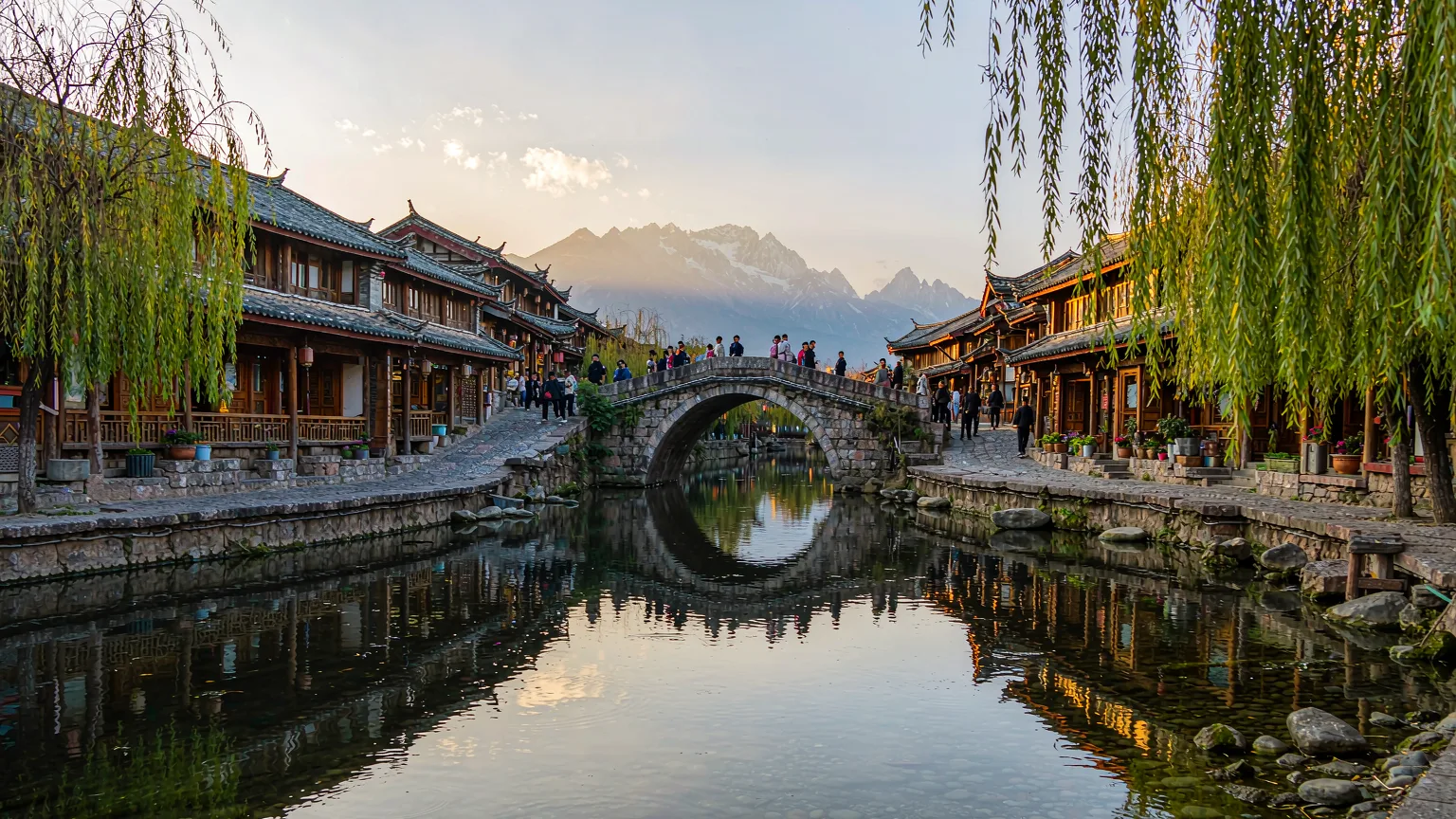
At seven, Dayan belongs to early risers. Most shops on the main streets do not open until nine, and in the hour or two before that the town slips back into being a place where people live: Naxi grandmothers crossing the Big Stone Bridge with market baskets, someone washing rice at the channel, breakfast steam replacing the old caravan bells. The light comes in low and slanted, and the whole town looks freshly woken.
A good line: enter at the big waterwheels on Yuhe Square, follow East Street upstream against the current to the Big Stone Bridge, then duck into Wuyi Street. This is the most lived-in lane in town, light on tourist shops and full of old courtyards, some still lighting their morning stoves. Forty minutes at a stroll, over an hour with photo stops, which lands you perfectly at a breakfast stall at the far end.
Breakfast Where Locals Eat
Two ways to do breakfast here. The tourist version is a cafe set plate; the local version is a street-side Naxi spread: a hot bowl of rice noodles or erysi noodles, a grilled rice cake brushed with chili, and a pot of butter tea. Try the rice blood sausage too, pig's blood and glutinous rice in casing, steamed and sliced with chili dip, an old festival dish you can still find at morning stalls.
The stalls around Wuyi Street and Zhongyi Market draw the most local trade: a small-pot noodle bowl runs about RMB 7-8, add a fried dough stick for two, and ten yuan fills you up. Butter tea comes salty or sweet; go salty on a first taste, closer to the Tibetan original. Locals drink it to hold off hunger, perfect with baba flatbread. Afterward, browse the market's mushrooms and mountain goods; in July and August the matsutake and chicken-mushroom displays are spectacular.
To Shuhe: An Eight-Kilometer Change of Pace
Dayan to Shuhe is eight kilometers between two towns with completely different temperaments. Dayan is loud, commercial and deep; Shuhe is quiet and village-like, a better-preserved stop on the old Tea Horse Road, developed later and far less dense. The stretch is not worth walking: a taxi takes twenty minutes for RMB 15-20 and drops you at the entrance.
The number 11 bus covers the route in about forty minutes from the old town gate, plus a walk of over a kilometer, for just RMB 2. If your morning already had plenty of steps, take the taxi and save your legs for Shuhe. Entry is currently free; horse touts and golf-cart shuttles wait at the gate, and the polite shake of the head works: the town core is small and entirely walkable.
Qinglong Bridge: Four Centuries of Hoofbeats
Qinglong Bridge dates to the Ming dynasty, more than four hundred years old and the largest stone arch bridge in the Lijiang area. Centuries of hooves have worn hollows into its flagstones, and on clear days the sun cuts across the arch and drops its curve onto the water, making this the most photogenic spot in Shuhe. The Zhonghe River below runs a deep green, waterweed swaying downstream, where caravans once watered their horses before entering town.
The bridge anchors the old street core. From the top you can read both versions of Shuhe at once: north, a well-kept old village of earthen walls, screen walls and courtyards drying corn; south, the newer run of guesthouses and restaurants. Linger a few minutes for the reflection, then head north, where the lanes feel properly Shuhe and the crowds thin by half.
Jiuding Dragon Pool: Where Shuhe Gets Its Water
Jiuding Dragon Pool lies at the foot of the hill north of Shuhe's old street, the town's water source: a pool of deep green wells up from below and splits into channels that feed the lanes. The Qing-era Sansheng Pavilion stands at its edge, honoring Guanyin, the dragon king and Sun Bin, its threshold stones worn glassy. The water is startlingly clear, shifting between blue and green with the sky, and rainbow trout cruise the pool, cousins of the fish on every Shuhe grill.
Ten minutes on foot from Qinglong Bridge through old lanes and small shops. The benches by the pool are the best seats in town, back to the hill, face to the water; half an hour in the sun doing nothing is time well spent. Step into the pavilion too: the upper window frames pool and mountains exactly where the ancients wanted them.
Shuhe Afternoon: Lanes, Coffee and Craft Shops
Lunch in Shuhe is a calmer affair than in Dayan: courtyard restaurants line the lanes, and Naxi grilled fish or copper-pot rice at about RMB 50-60 per head is the right call. Skip any fixed plan afterward; the correct way to see Shuhe is to wander. On Renli Road, indigo-dye workshops let you peer into the plant-dye vats, old courtyards explain the town's leather-craft fame, and most cafes come with a yard where one coffee can carry you to three o'clock.
Prices in Shuhe run noticeably below Dayan, the same flower pastry or latte costs twenty to thirty percent less. The buying rule is simple: browse first, buy second, and trust the shops deep in the lanes over the main street. Around four, parents start collecting kids from school and the town flips from attraction back to village, the gentlest hour of the day and your cue to head back.
Heading Back: Golden Hour in Dayan
Grab a taxi back around four and you will hit Dayan right at golden hour. If you still have appetite for one more stop, the Tea Horse Road heritage house in Shuhe is free to enter: a small courtyard telling the true story of a local caravan family, with more substance than most commercial exhibits.
Close the day with dinner at Xiangshan Market, the locals' canteen: pork rib hotpot, potato chicken and barbecue stalls packed shoulder to shoulder at roughly half the old town's prices. Ten minutes by taxi, then an easy stroll home. Ending day one this way teaches you something the pure tourist circuit cannot: Lijiang was a town where people lived for eight centuries before it was a sight.
| Getting around |
|
| Budget | Shuhe is free; two meals plus round-trip transport runs about RMB 80-120 pp (excluding lodging and craft workshops) |
| Best time | Mar-Jun and Sep-Nov are most reliable; in the rainy season mornings beat afternoons. Also a great first-day, easy-pace introduction |
FAQs
Is one of the two towns enough, or do I need both?
They are very different: Dayan for scale, architecture and nightlife, Shuhe for village feel and water. Half a day each beats choosing one, which is exactly how this route is cut.
What time should I head out in the morning?
Around 7 am in summer, 7:30 in winter: shutters still shut, best light, fewest people. Confirm breakfast stall locations with your guesthouse first, then start walking.
Does Shuhe charge entry, and what hidden costs are inside?
Shuhe is currently free to enter. A few small exhibit rooms charge separately; horse rides and shuttles are optional extras and a polite no always works, nothing is forced.
Does this route suit kids or older travelers?
Yes. About six flat kilometers at a pace you set. Just mind children near the pool edge, and the afternoon cafe stretch doubles as a rest stop for everyone.