
Nyingchi's cultural layers hide under peach blossoms and snow peaks: this is home to the Gongbu Tibetans, with the Monpa and Lhoba peoples settled deep in the gorges and a Nyingma temple keeping its incense at the forest edge. Give one unhurried day to museums, temple and folk park, and the ethnic map of southeastern Tibet takes shape.
The build runs page, then hill, then table: two museums frame the knowledge in the morning, Lama Ling shows a living faith site in the afternoon, and the folk park turns the day's nouns into atmosphere with dinner and dance. Every leg under an hour of driving, exactly as loose as a culture day should be.
Itinerary at a glance
| 09:00 | The Monpa-Lhoba Historical and Cultural Heritage Museum: First Lesson in the Gorge Peoples |
| 11:00 | The Niyang Pavilion (Southeastern Tibet Cultural Heritage Museum): The Gongbu Master Key |
| 14:30 | Lama Ling Monastery: A Nyingma Dojo at the Forest Edge |
| 18:00 | The Ajilin Folk Culture Park: Turning Nouns into Atmosphere |
The route, stop by stop
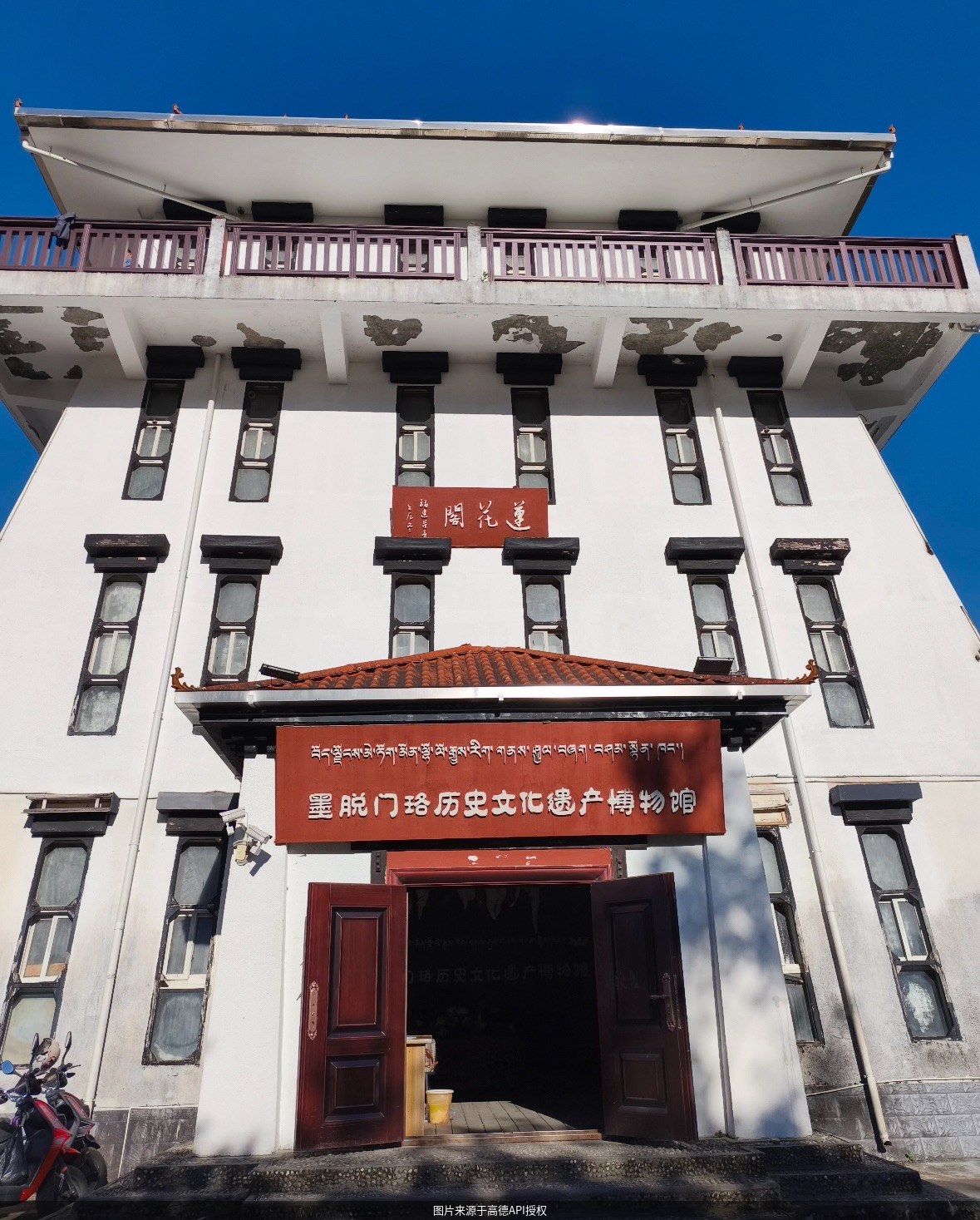
The Monpa-Lhoba Historical and Cultural Heritage Museum: First Lesson in the Gorge Peoples
The Monpa and Lhoba are among China's smallest ethnic groups, settled deep in the Yarlung Tsangpo gorge, and this museum concentrates their history: the craft of rattan bridges and nets, old hunting and slash tools, the color systems of dress and ornament, displayed densely and clearly.
Focus on Monpa opera masks and Lhoba woven bands; the two peoples' different livelihoods produced entirely different material worlds. Two hours read it thoroughly.
The Niyang Pavilion (Southeastern Tibet Cultural Heritage Museum): The Gongbu Master Key
The Niyang Pavilion stands by the Niyang river, the building itself an exhibit of southeastern Tibetan architecture, its halls laid out by people and theme across Gongbu, Monpa-Lhoba and Deng cultures. Gongbu dress, whistling arrows, Tibetan knives and festival customs all read here, arming you for the temple below and the dance tonight.
The top floor's view earns the climb; finish the exhibits, glance down the Niyang, then head for a solid lunch. Two museums back to back carry heavy information, so eat properly.

Lama Ling Monastery: A Nyingma Dojo at the Forest Edge
Lama Ling hides in the forests of Bujiu township, a Nyingma (Red Hat) temple whose main hall holds a solemn Guru Rinpoche statue, mandalas and murals glowing saturated under butter lamps. The temple is known for monks and nuns practicing on one site, both robes visible in the courtyard.
The circumambulation path rings the temple, locals walking clockwise and visitors simply following. Halls usually welcome quiet visits, no noise, no stepping on thresholds, and asking before photos is the safest form.
The Ajilin Folk Culture Park: Turning Nouns into Atmosphere
The folk park serves up the day's reading: live Gongbu costume displays, Guozhuang and arrow-dance performances, and a Tibetan banquet of roast yak and barley wine. Every noun noted in the museums starts moving by nightfall.
Performers invite guests to join, entirely by choice. After dinner stand a while in the courtyard; Nyingchi nights run cool and clean, the best digestion a culture day can ask.
| Getting around |
|
| Budget | Both museums free or cheap, the monastery by donation, the folk-park dinner RMB 80-150 a head; a full culture day around RMB 150-250. |
| Best time | Year-round; rainy days are its ideal trigger, while the monastery and folk park photograph best in afternoon light. |
FAQs
Do the two museums overlap?
Some overlap but clear division: the Monpa-Lhoba museum goes deep on the two small gorge peoples, while the Niyang Pavilion spans all southeastern Tibet, with Gongbu culture and the building itself as draws. Pressed for time, pick by interest and give either ninety minutes, no quality lost.
What rules govern visitor access at Lama Ling?
Standard etiquette covers it: knees covered, silence in halls, clockwise on the kora, ask before photographing people. Monks and nuns sharing one site is the temple's signature; simply yield to practitioners, no gawking.个别 halls may close or charge per the site, and donations stay fully voluntary.
Does the culture day work starting only in the afternoon?
Inversion works: two museums from two o'clock (one plus the pavilion), the temple at dusk when light actually flatters, banquet to close. But temples shut early in the evening, so under inversion, move the temple to next morning. The full version still opens best in the morning.
How tiring is the culture line with seniors or kids?
The gentlest of Nyingchi's lines: both museums seat and lift or keep low floors, the temple courtyard runs flat, and the folk park is dinner and a show from a chair. Kids lock onto masks, arrows and dance, seniors onto documents and dress, everyone served, and the short driving is the biggest advantage.