
Nyingchi's humanities read less often than its views: the Gongbu Tibetans keep their own dress, whistling arrows and new year, the Monpa and Lhoba preserve rattan bridges and woven bands deep in the gorges, and Nyingma temples carry old traditions at the forest edge. Three days chase no checklist, reading these threads in order instead.
The build runs from page to ground: day one sets the frame across two museums and a temple; day two moves from the sacred mountain to a working craft cooperative, with a folk banquet stitching the evening; day three goes to Basum Lake for faith at its lakeside address, closing back in town on one last stage show. Short drives throughout, Nyingchi's gentlest three days.
Itinerary at a glance
| 09:00 | The Monpa-Lhoba Historical and Cultural Heritage Museum: The Gorge Peoples' Register |
| 11:00 | The Niyang Pavilion (Southeastern Tibet Cultural Heritage Museum): The Gongbu Master Key |
| 15:00 | Lama Ling Monastery: A Living Faith Site in the Woods |
| 09:00 | Biri Sacred Mountain Ecological Area: Morning on a Bon Sacred Mountain |
| 14:30 | The Tuanjie Traditional Handicraft Cooperative: Craft at Its Workbench |
| 18:00 | The Ajilin Folk Culture Park: A Banquet-and-Dance Interlude |
| 09:30 | The World King Cypress Garden Scenic Area: Sacred Trees, Another Face of Faith |
| 13:00 | Basum Lake: Tsozong Temple by the Sacred Water |
| 19:30 | The Gongbu Happy Performing Arts Centre: The Three Days' Curtain Call |
The route, stop by stop
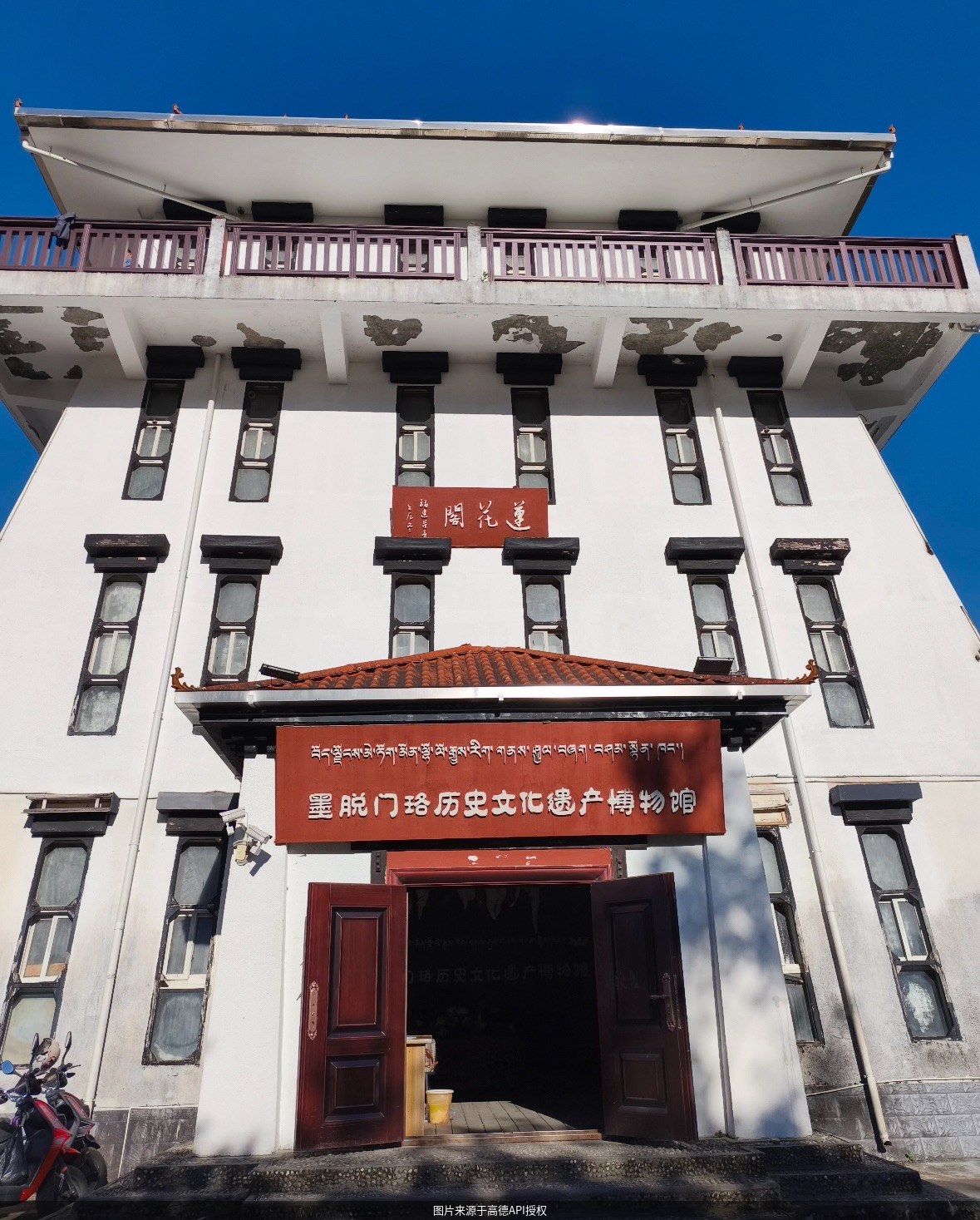
The Monpa-Lhoba Historical and Cultural Heritage Museum: The Gorge Peoples' Register
Three heritage days open with China's smaller peoples. Monpa and Lhoba migration, the transport wisdom of rattan bridges and rope crossings, hunting and farm tools, dress and ornament, the exhibits laying out both peoples' livelihood logic clearly. Read here first and every element met later in temples and dance gains its source.
Focus on the rattan craft and the Lhoba band's pattern system, patterns being an ethnic language. Two hours suffice, notes encouraged, useful again on day three's road.
The Niyang Pavilion (Southeastern Tibet Cultural Heritage Museum): The Gongbu Master Key
The second museum widens to all southeastern Tibet: Gongbu Tibetans, Monpa-Lhoba and Deng peoples in sequence, with whistling arrows, Gongbu dress and new-year customs as the heavyweights. Half the folk elements met over three days find their master key here.
After the exhibits, climb to the top floor for the Niyang view, then lunch back in town; the afternoon transfers toward Bujiu township, forty minutes by car.

Lama Ling Monastery: A Living Faith Site in the Woods
The afternoon drive moves you from display cases to incense. Lama Ling is an old Nyingma temple, its Guru Rinpoche statue and mandala murals the headliners, the uncommon arrangement of monks and nuns practicing on one site rarely seen elsewhere in Tibet. Afternoon light plays the gilded roofline against the forest beautifully.
Walk the kora clockwise, smiling aside for elder pilgrims. No guide needed here; the atmosphere is the content.
Biri Sacred Mountain Ecological Area: Morning on a Bon Sacred Mountain
Day two opens on the sacred mountain, reading the Bon faith's everyday form: morning exercisers and pilgrims on the paths, mani stone heaps and prayer flags up the slopes, the platform's panorama of town and valley. Faith in Nyingchi is not an exhibit but a way of living.
Reach the hill by taxi, a gentle thirty minutes of path to the viewing belt. Dawn light runs soft, and this is the likeliest hour to meet a pilgrimage line.
The Tuanjie Traditional Handicraft Cooperative: Craft at Its Workbench
The afternoon switches from reading history to watching craft. The cooperative retails herder and farmer artisans' work direct, Tibetan wooden bowls, pulu weaves, silver ornaments and bamboo wares lining the counters, with luck a craftsman working in view. Yesterday's museum knowledge becomes something touchable here.
Whether buying or not, talk through the making process; identifying handmade marks learns fastest on site. Inspect and pack purchases face to face, big pieces shipped with assistance.
The Ajilin Folk Culture Park: A Banquet-and-Dance Interlude
Night at the folk park performs the day's reading live: Gongbu costume displays, Guozhuang and arrow dances, a Tibetan banquet in rotation. The museums' nouns put on clothes and take steps, and heritage day two folds itself shut.
The menu runs fixed, flag vegetarian needs in advance; shows invite participation, joining entirely optional. Sleep early, for day three departs for Basum Lake.
The World King Cypress Garden Scenic Area: Sacred Trees, Another Face of Faith
Day three reads trees first. The 2,500-year-old cypress is revered as a sacred tree in the Bon faith, the grove lined with ancients, prayer flags and juniper smoke never absent. Nature and faith draw no boundary in this garden, the distinctive grammar of Tibetan humanities.
An hour covers the grounds, resin scent strongest in morning light. Then set out for Basum Lake, about two hours by car.
Basum Lake: Tsozong Temple by the Sacred Water
The heritage line's last stop returns faith to landscape. Basum is a Nyingma sacred lake, Tsozong Temple on Tashi Island at its heart traditionally founded in the late Tang era, joined to shore by a wooden bridge, pilgrims and visitors sharing one lakeside path.
Visit the island temple, walk a stretch of the lake, two to three hours. Back in Bayi by evening, just in time for the show's opening.
The Gongbu Happy Performing Arts Centre: The Three Days' Curtain Call
The closing show mobilizes every thread: Gongbu song and dance, whistling-arrow tales, costume passages carrying Monpa-Lhoba elements. Seated below, you keep recognizing what the last two days showed you, and that recognition is exactly what heritage travel pays.
Watch over a Tibetan dinner, two-plus hours that never drag. Return to the hotel and pack, the three days' humanities line closing its covers.
| Getting around |
|
| Budget | Museums mostly free, temples by donation, Basum Lake about RMB 170, folk park and dinner-show RMB 100-200 a head; three days total roughly RMB 1,500-2,500 pp with car and lodging. |
| Best time | Year-round; the days around Gongbu New Year, the first day of the tenth Tibetan month, carry the fullest atmosphere, a bonus if you land in them. |
FAQs
Heritage three days or nature three days?
Follow interest weight: for peaks, gorges and lakes take the nature line; to understand why Nyingchi is the way it is, take the heritage line. They do not conflict, and with spare days run both, nature for views, heritage for context, the combination doubling your grasp of the place.
What taboos apply in temple visits?
Standard etiquette: knees covered, hats and sunglasses off, silence in halls, walk clockwise, ask before photographing people, never step on thresholds, and indicate Buddha statues with joined palms rather than pointing. Lama Ling hosts monks and nuns together, so yield naturally to practitioners. Donations stay voluntary, nobody checks.
Is Gongbu New Year worth planning around?
Very much so. Gongbu New Year, the first day of the tenth Tibetan month, falls two months before the Tibetan new year and is Nyingchi's liveliest festival: the dog banquet, whistling-arrow shooting, Guozhuang dancing and Gongbu feasting. Book rooms early in festival weeks and keep the schedule elastic, as venue hours shift.
Do these three days suit children?
Highly suitable: museums and the cooperative work as living teaching aids, kids read the shows' energy easily, and the lake and cypress grove buffer outdoors. Manage snack and rest rhythm inside the car hours, brief children on two words, quiet and respect, before temple visits, and everything else runs bonus.