
Nyingchi's geography is written by water: the Niyang, the Yarlung Tsangpo, Basum Lake and countless eastern-Tibet streams and glaciers stitching forest to snow peaks. Three days follow the water: the sacred lake on day one, the great river and gorge on day two, mist and forest sea on day three, no water color repeated.
The loop runs without retracing: north to Basum as appetizer, south to the canyon for the night, east over Sela Pass into Lulang on day three. The night in Sosong anchors everything, river sound and stars worth staging a whole evening around.
Itinerary at a glance
| 09:30 | Basum Lake: The Water Line's First Lesson |
| 17:30 | The Yani National Wetland Park: Evening at the River Confluence |
| 20:00 | The Nyingchi Night Market: A First Waterside Supper |
| 09:30 | The Yarlung Tsangpo Grand Canyon: A Full Day Descending the River |
| 14:30 | Namcha Barwa: Looking Up from the River to the Snowline |
| 17:30 | Sosong Village: Sleeping on the Sound of the River |
| 10:00 | Sela Pass: Climbing the Watershed |
| 12:00 | The Lulang Forest Sea: The Mist Storehouse |
| 14:30 | Lulang International Tourism Town: The Water Days' Closing Stroll |
The route, stop by stop
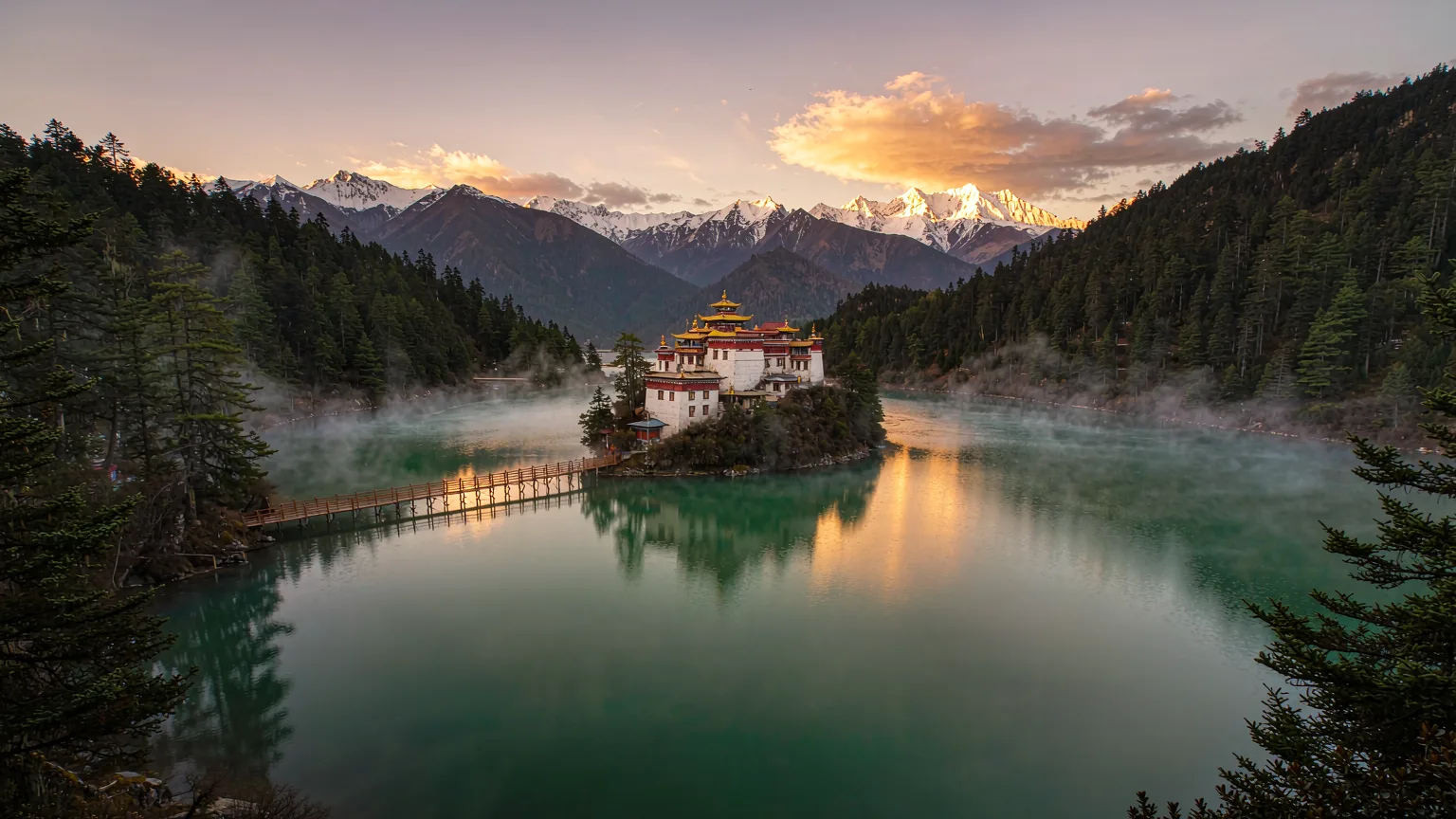
Basum Lake: The Water Line's First Lesson
Three days of water open on its stillest sheet. Mornings at Basum often run windless with the fullest reflections, Tashi Island and Tsozong Temple at the composition's heart, and a stretch of lakeside path delivers snow peaks dropping into water.
The shuttle in takes about an hour, the lakeshore sitting near 3,400 meters, so walk gently. Lunch at the lake basin or on the road back.
The Yani National Wetland Park: Evening at the River Confluence
Stop at the Yani wetland on the way back to town, where the Niyang joins the Yarlung Tsangpo and the braided channels turn gold in evening light. Gentle platforms make this the three days' best-value free scenery.
Forty minutes watching the water change toward sunset, then into town for dinner; tomorrow follows this same river south.
The Nyingchi Night Market: A First Waterside Supper
Keep night one unhurried: a hot market supper of roast yak, Tibetan noodles and fried potatoes with chili powder, yogurt to close. The only clock-free hour of three days; eat, stroll, sleep.
In matsutake season, July and August, the market displays each day's arrivals and prices; watch plenty, ask a little, and leave actual buying for daylight.
The Yarlung Tsangpo Grand Canyon: A Full Day Descending the River
Day two belongs to the river. Board the park shuttle upstream, platforms calling in sequence, the water visibly shifting from calm to torrent, and near Zhibai Village the river and Namcha Barwa share one frame, the water line's cover shot.
Lunch inside the park; touring plus driving eats most of the day. Confirm the last shuttle time firmly, or simply sleep inside the gorge.
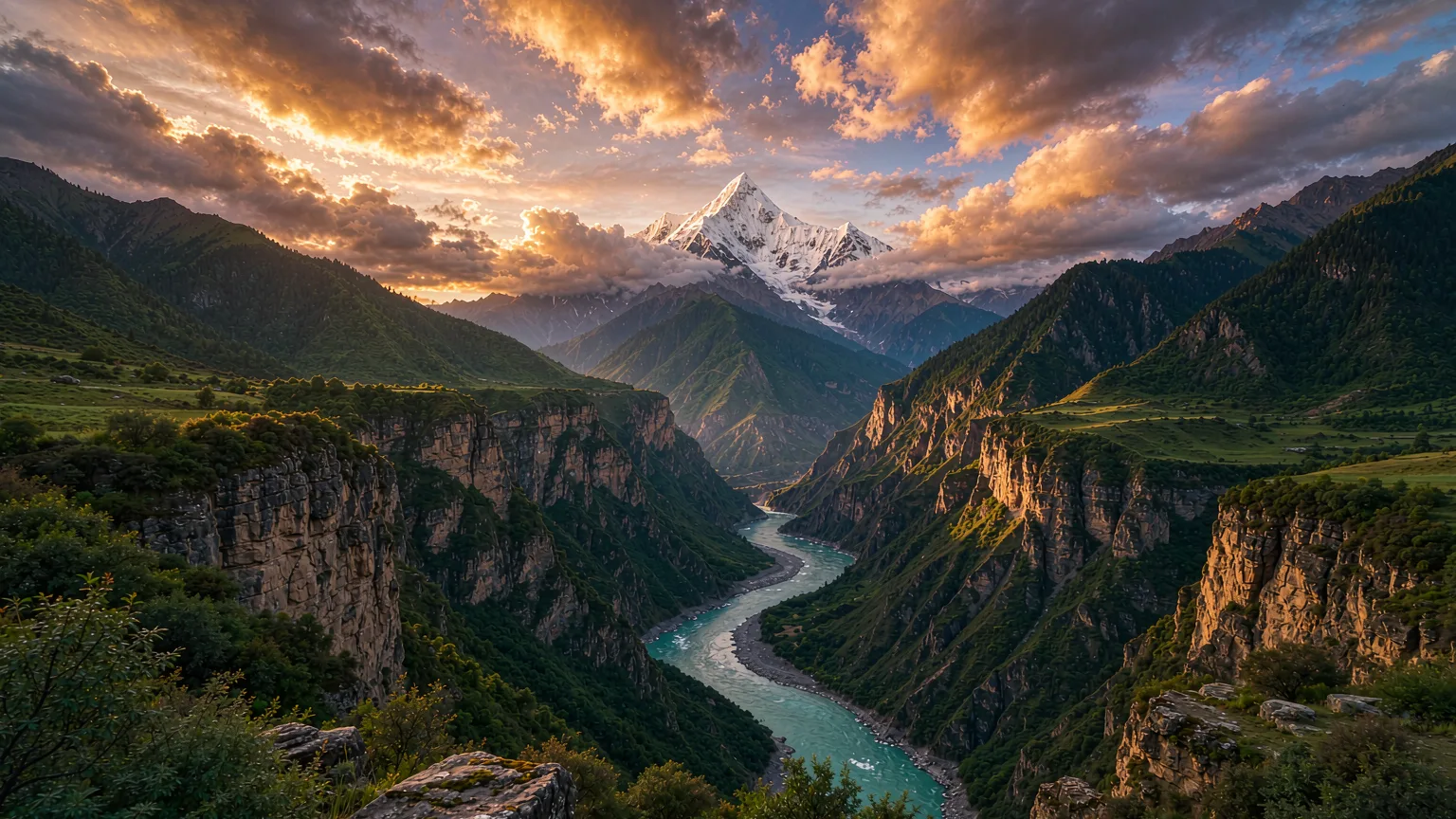
Namcha Barwa: Looking Up from the River to the Snowline
Inside the gorge Namcha Barwa presses upward from the river with a violence of scale, thousands of meters falling inside one field of view. Hold the afternoon for the parting clouds, river mist and mountain cloud trading places, full views rare but won by waiting.
Stay near the viewing belt; cloud windows often last minutes only. Wind clears skies faster, so dress for it before settling in.
Sosong Village: Sleeping on the Sound of the River
Three reasons to sleep in Sosong: sunset and sunrise face Namcha Barwa head-on, the river runs just behind the village, and nights stay quiet down to water and wind. Stroll the lanes at dusk and hand tomorrow's alarm to the sunrise rather than any schedule.
In blossom season, late March into early April, peach trees frame river and snow together, so book a week or more ahead; off season rooms sit loose but few, plain in condition, so pack your own kit.
Sela Pass: Climbing the Watershed
Day three leaves Sosong in the morning and climbs Sela Pass at over 4,700 meters, the watershed between the Niyang and Yarlung systems, the pass's flags and cloud sea serving as the water line's farewell. Look back: the river already lies beneath the clouds.
Twenty to thirty minutes, moving gently at altitude. On clear days the pass doubles as a backup angle on Namcha Barwa, a free bonus if granted.
The Lulang Forest Sea: The Mist Storehouse
Down into the forest sea, where mist is water in its next costume over the fir forest. Platforms overlook the valley, cloud moving through the treetops, skies opening around midday as the greens light up wave by wave. The water line's final form of water arrives as fog.
An hour at the platforms, lunch solved in Lulang town below, stone-pot chicken being the standard answer.
Lulang International Tourism Town: The Water Days' Closing Stroll
After lunch loop Zhatang Lucuo, a modest lake with complete snow-peak reflections and gentle boardwalks. The lake, the river and the mist of three days share one last frame here, and the drive home may proceed straight to sleep.
Leave around four for the two-hour return to Bayi, a light dinner in town, and three days of road fatigue left to dreams.
| Getting around |
|
| Budget | Basum about RMB 170, the canyon RMB 240, Lulang sightseeing extra, three days of charter RMB 1,500-2,100, with lodging and meals three days total roughly RMB 2,500-4,000 pp. |
| Best time | Summer brings peak water and deepest greens, autumn pairs river color with gold leaves; Namcha Barwa favors autumn and winter odds. |
FAQs
Does the water line duplicate the classic nature line?
The skeleton overlaps but the lens differs: Basum moves up front, the wetland enters, and narration centers on water shaping terrain. Pick one: photographers favor the water line, landmark collectors the classic line, and running both is pointless.
Which season shows the best water?
Each season owns a title: summer brings maximum volume, turbid but thunderous rivers; autumn clears the water beside gold leaves, the most photogenic; spring reflects peach blossom, a limited edition; winter lowers levels but sharpens peak reflections. Photographers choose autumn, comfort seekers late spring into early summer.
Is two nights in Sosong worth it?
Depends on photographic intent: two nights is rational for sunrise, sunset and stars, the second night exploring other village positions; ordinary visitors need one, returning the hours to Lulang. Two nights presuppose a weather window, so with back-to-back rain, change the plan without ceremony.
Where lies the trip's highest-altitude risk?
Sela Pass and the Basum basin are the two high points, the former at 4,700 meters only briefly, the latter at 3,400 with little overnight exertion. Three controls: short pass stops, no strenuous activity on the first lake day, and chartered freedom to stop and rest anytime. With underlying conditions, consult a doctor before departure.