
Luoyang served thirteen dynasties, and its buried strata run deeper than any street above. A day chaining the museums walks three thousand years in order: the morning Luoyang Museum for the panorama, noon's chariot pits for the physical reality of Zhou royal carriages, the afternoon canal museum for grain transport and the city's lifeline, and dusk at the Mingtang to stand before the empress from the books.
The day again turns on booking: the Luoyang and canal museums are free but capped, while the chariot pits sell cheap tickets on site. Order the day by booking difficulty, giving the morning to the hardest slot, and nothing jams. Most museums close Mondays, so check notices before setting out.
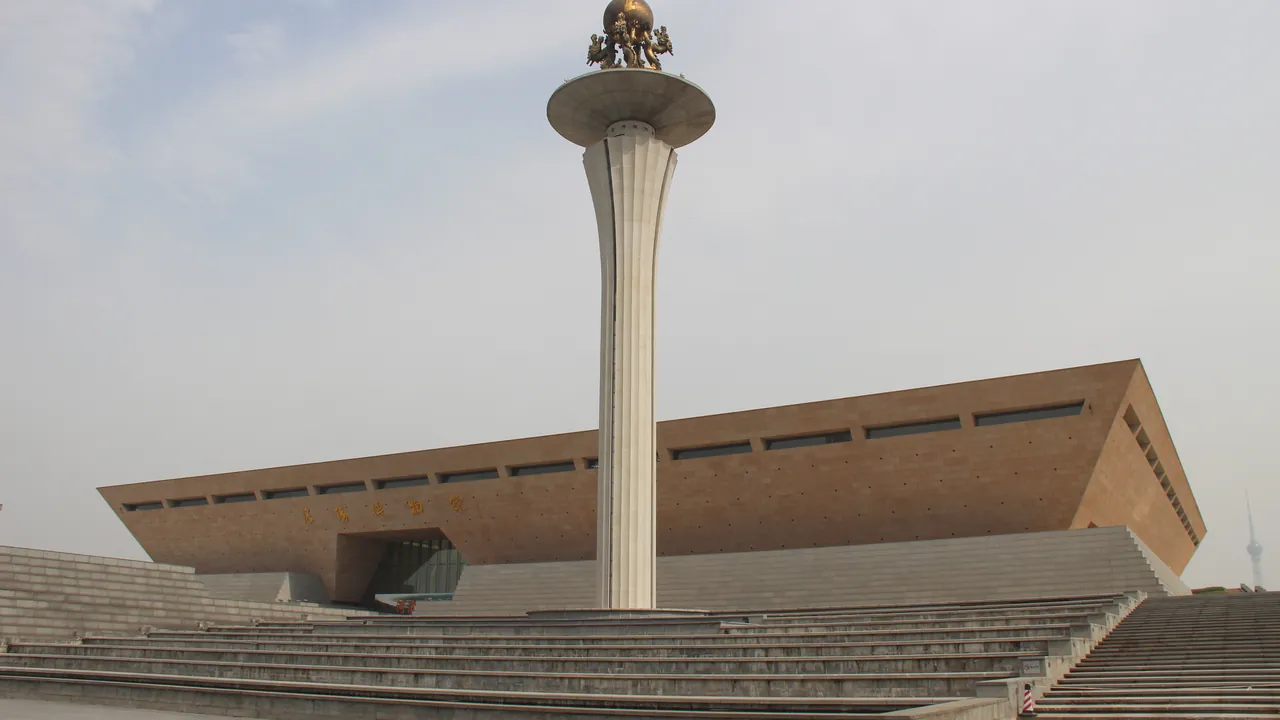
Itinerary at a glance
| 09:00 | Luoyang Museum: The Wealth of Thirteen Dynasties |
| 12:00 | The Royal Chariot Pits Museum: Around Lunch above a Zhou Stable |
| 14:00 | The Sui-Tang Grand Canal Museum: A City's Watery Fate |
| 16:30 | Mingtang and Tiantang: Standing the Empress on the Axis |
The route, stop by stop
Luoyang Museum: The Wealth of Thirteen Dynasties
The permanent exhibition arranges the city's story by dynasty, from prehistoric pottery through the Five Dynasties, a standing history of Luoyang in rooms. Among the signature pieces, the Eastern Han stone winged beast dominates by sheer mass, the plain white jade cup of Cao Wei stuns with its polish, and a whole wall of tri-color figures, camels and horses closes the Tang.
Work the chronology first, two hours minimum, then return for the thematic galleries. Casual visitors should bank their time on the tri-color and stone-carving sections, and rent the audio guide: statues alone are objects, narrated they become dynasties.
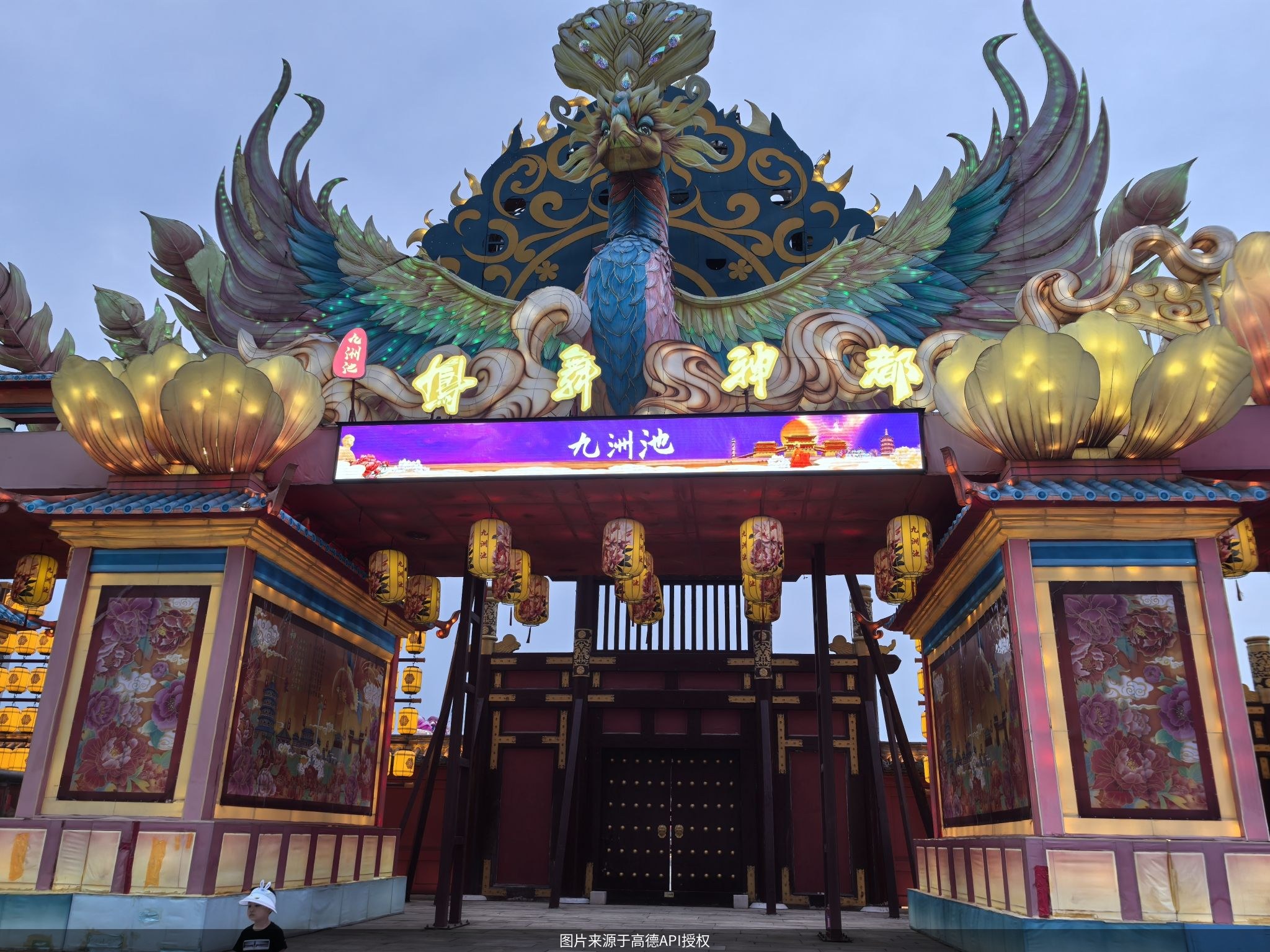
The Royal Chariot Pits Museum: Around Lunch above a Zhou Stable
Built beneath Wangcheng Square, this small museum carries heavy weight: in the Eastern Zhou chariot pit excavated in 2002, one carriage buried with six horses survives in place, the first physical proof of the ancient rule that the Son of Heaven rode six. Standing at the pit's edge before the full array beats ten replicas.
An hour suffices, tickets are cheap and sold on site. Slot lunch at the nearby Xigong lane around it, famous for fried dumplings and meatball soup, then carry on into the afternoon.
The Sui-Tang Grand Canal Museum: A City's Watery Fate
One of Luoyang's newest heavyweight museums, the building itself is award-winning, a great arched roof rolling like waves. The core exhibit is a full-story cross-section of the Bian River site, its strata stacking Tang and Song channels and sunken boats legibly, a millennium of siltation in one glance.
The galleries explain plainly how the canal fed Luoyang and how it silted with the dynasties, rich in interactive displays, the most child-friendly of the three museums. The rooftop terrace then returns you to the real Luo River, closing the water theme in the flesh.
Mingtang and Tiantang: Standing the Empress on the Axis
Close the culture day on the Sui-Tang axis. The Mingtang hall rebuilds Wu Zetian's great ritual palace over the original foundation pits and column bases; the Tiantang tower stacks Buddhist art floor by floor and ends at a panorama over the old town and the Luo River.
When slanting evening light enters the main hall, the relationship between excavation and reconstruction reads clearest. If the three museums were reading, this stop is seeing, turning the day's texts into space, a grounded full stop.
| Getting around |
|
| Budget | All three museums are free with booking; the main costs are the RMB 120 tower-park ticket and city transport, so the day runs about RMB 150-220 pp. |
| Best time | Year-round in climate-controlled halls; in peak season, July-August and Golden Week, book 3-5 days ahead, and note most museums close Mondays, so plan around it. |
FAQs
What if the Luoyang Museum slots are gone?
Three routes: camp the release window on the official account, since cancellations drip back; choose a weekday afternoon with far looser quotas; or substitute the Grand Canal museum or the ancient tombs museum, both first-rate swaps that cost the day nothing.
Are four stops feasible in one day, or too rushed?
Yes, because the load tapers: give the city museum three hours, the pits one, the canal museum two, the tower park two. The real risk is overrunning the first museum, so set an alarm and walk out on time, and the rest flows.
Is this route worth it for someone without a history habit?
It stands without the history bug: the canal museum's architecture and interactives entertain on their own, the tower's climb ranks among downtown's best views, and the chariot pit delivers raw excavation drama. Treat it as an indoor-plus-viewpoint day and it still works, cool in summer and warm in winter.
Does this suit primary-school kids?
Yes, with an order: start at the chariot pit, where a real buried chariot hits children hardest; then play the canal museum's interactives; keep the city museum for the morning's best energy. All three offer kids' guides or activity sheets, so ask at the entrance.