
Luoyang is not only a museum city: an hour out in any direction, the Funiu Mountains and the Yellow River take over. The three-day loop runs north first for the river and a red-rock gorge, southwest next for Laojun, the range's main summit, and closes in Luanchuan among a karst cave and a bamboo water-village, drawing a clean circle.
The budget centers on Laojun Mountain: entry, two cableway tiers and a summit bed all flex. One piece of advice above all: give the mountain your strongest full day, sleep on top, and take both sunset and sunrise, the most expensive and most rewarding ticket in western Henan's scenery.
Itinerary at a glance
| 09:30 | Longtan Gorge: First Lesson in Red Rock |
| 14:00 | Xiaolangdi Dam: Watching the River Become a Lake |
| 19:30 | Fengxiang Hot Springs: Washing Off the Gorge Day |
| 08:30 | Laojun Cableway and the Ten-Mile Painted Screen: The First Ascent |
| 11:30 | The Golden Summit: Daoist Halls in the Clouds |
| 14:30 | Zhuimeng Valley: A Stream Gorge on the Descent |
| 09:00 | Jiguan Cave: The North's Foremost Karst Cave |
| 13:00 | Chongdugou: A Bamboo Water-Village Afternoon |
| 19:30 | A Night in Chongdugou: Bonfires and Springwater |
The route, stop by stop
Longtan Gorge: First Lesson in Red Rock
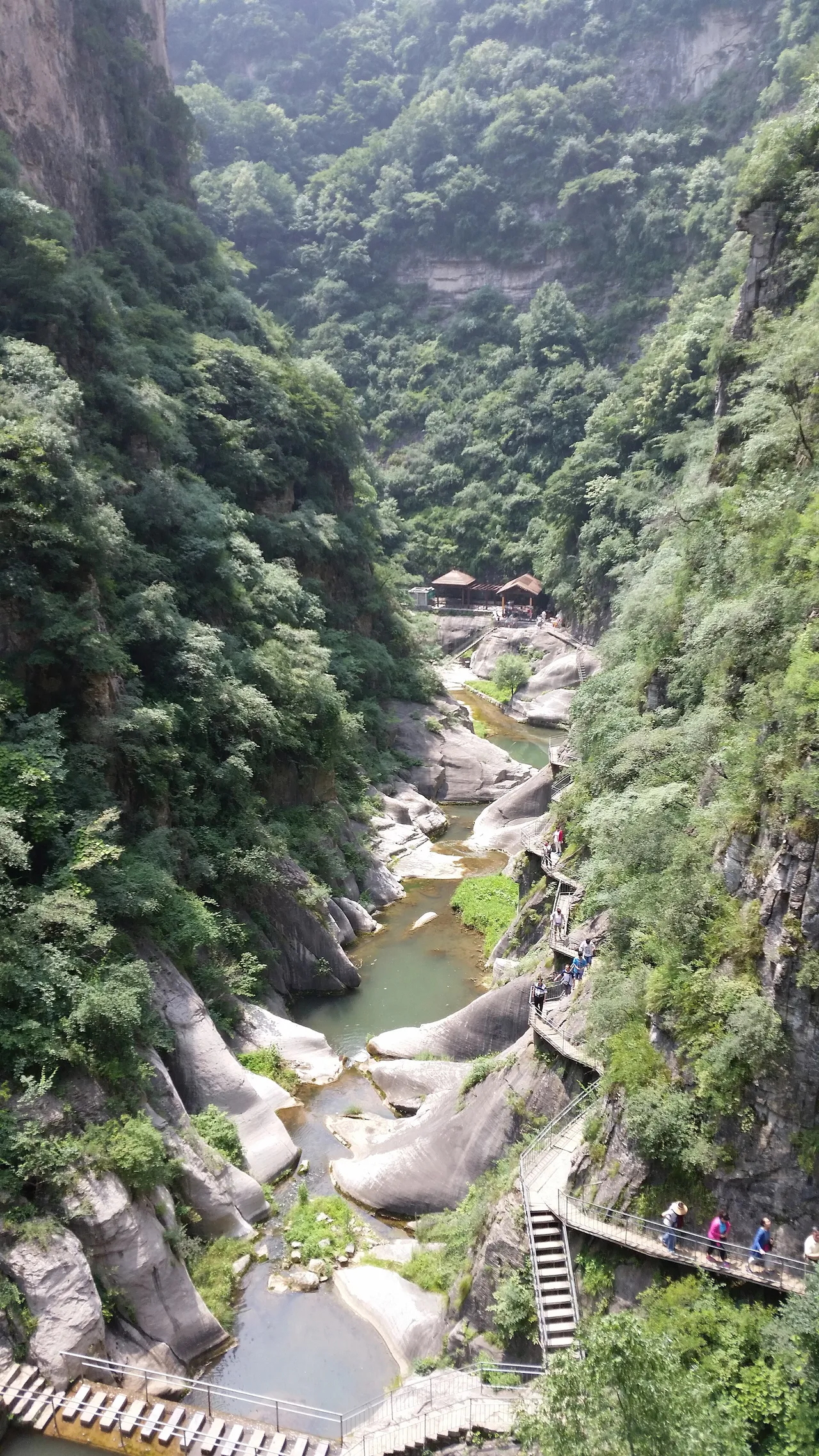
Drive north a bit over an hour from Luoyang to Longtan Gorge in Xin'an, a U-shaped canyon cut through purplish-red quartz sandstone, walls sheer and floor deep, with the folded strata of the Bonsai Gorge narrows reading like a geology textbook. In summer the ravine runs several degrees cooler, and the waterside invites long stops.
The trail stays gentle, three hours round trip, a low bar of fitness. The quiet window is the first two hours after opening; tour groups land after ten, so photographers should come early for clean shots.
Xiaolangdi Dam: Watching the River Become a Lake
From the gorge, afternoon shifts to the Xiaolangdi multipurpose dam, where the tamed Yellow River pools into a broad quiet lake, and the viewing deck takes in dam face, spillways and water at once. The spectacle comes in late June and early July's sediment-flushing runs: engineered flood pulses erupt from the tunnels in ochre columns tens of meters high.
Outside flushing season it is a calm lakeside, and the ring road suits slow driving. Frame from the below-dam platform or the high points toward Zhangling Peninsula, where the evening water catches the best light.
Fengxiang Hot Springs: Washing Off the Gorge Day
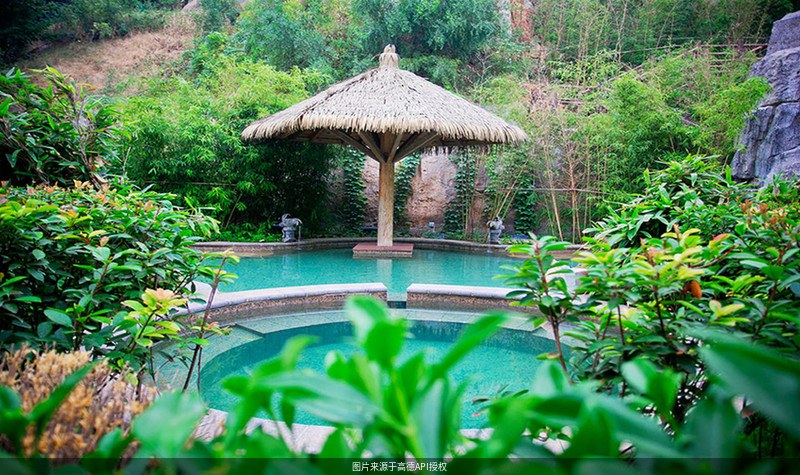
The right close to day one is a soak. Fengxiang Hot Springs lies in the southern hills outside the city, its outdoor pools terraced along the slope; after a day of gorge and dam, hot water on the legs is where tomorrow's climbing strength comes back.
The complex has indoor halls and open-air pools; night wind on the hill is cool, so surface between soaks and rehydrate. Sleep nearby and set out for Luanchuan early, the gentlest way to start the drive.
Laojun Cableway and the Ten-Mile Painted Screen: The First Ascent
Leave Luoyang early for the two-hour run to Laojun Mountain in Luanchuan. The low-effort ascent chains two cableways, the first to Zhongtianmen and the second to the upper station, which opens onto the Ten-Mile Painted Screen, the mountain's signature forest of slide-tectonic stone pillars, walkways threading between them; when fog lifts off the valley the whole stone forest floats.
The screen takes about ninety minutes on gently undulating boardwalks, pacing you neatly toward the summit. The top runs far colder than the base, so carry a windproof layer even in high summer.
The Golden Summit: Daoist Halls in the Clouds
The golden summit complex is the mountain's heart: three clusters of gilt-roofed halls, Laojun Temple, Liangbaotai and Yuhuangding, standing on the peak tops, genuinely dazzling in sun. Tradition places Laozi's reclusion here, with temples from the Northern Wei onward, though today's summit halls are recent rebuilds, grander for scale than age.
Two moments earn the climb: afternoon when the cloud sea boils up and the halls float like islands, and sunset when the last light fires the gilt tiles. Summit hotels exist, and one night capturing both sunset and sunrise is this route's best spending.
Zhuimeng Valley: A Stream Gorge on the Descent
With legs left after descending, the Zhuimeng Valley at the mountain's foot is an unexpected bonus: a water-first gorge trail where waterfalls chain into deep pools along streamsided boardwalks, a wholly different terrain from the summit's stone forest.
The loop takes about two hours under dense shade on gentle grades, soaking the climb's soreness in the sound of water. If you must reach Luoyang tonight, skipping it costs little; the valley stays put.
Jiguan Cave: The North's Foremost Karst Cave
Day three opens at Jiguan Cave, a karst system developed inside Jiguan Mountain, stocked with stalagmites, stone waterfalls and flowstone curtains, its largest hall seating a thousand, an underground stream murmuring alongside the whole route. The cave holds near eighteen degrees year-round, stepping inside like changing seasons in midsummer.
The one-way loop takes about an hour over many slick patches, so wear grippy shoes. Lighting is staged; skip the flash and focus on colorfully lit formations.
Chongdugou: A Bamboo Water-Village Afternoon
Afternoon arrives at Chongdugou, a valley styled as a water-village: bamboo groves mass along the streams, farm stays line the water, and waterwheels and springs dot the route. The Jinji River sector shows waterfalls and clear pools, the Dicui River sector bamboo and village life, two landscapes in one valley.
The right way is to stay over: farm guesthouses cluster inside the gate, bonfires light the night, and morning fog threads the bamboo. With the three days winding down here, giving the last half day and one night to the groves beats squeezing one more sight.
A Night in Chongdugou: Bonfires and Springwater
The loop's last night stays in the valley. Dinner happens in the farmhouse, stewed chicken, mountain chive eggs, fermented-grain noodles, most ingredients from the hills behind the yard; afterward the bonfire opens and travelers and hosts circle the flames, a looseness cities rarely produce.
Stand in the yard ten minutes before bed, stream and bamboo wind drowning everything. Next morning revisit the Jinji River for the fog, leave by noon, and the three-day circle closes by three.
| Getting around |
|
| Budget | Tickets and cableways total about RMB 450-600 pp, Laojun entry near 100 with the cableway extra, plus RMB 500-900 for three days of meals and beds, charter costs split separately. |
| Best time | May-October is prime, mountain air running 5-8 degrees below the city; late-April peach blossom and mid-October foliage spike briefly; winter snow scenes shine but wind often halts the cableway. |
FAQs
Laojun Mountain as a day trip or a summit night?
Sleep on top if budget and legs allow. A day trip races the cableway and leaves clouds and sunset to luck, while a night buys sunset, sunrise and stars after the last car, when the summit belongs to guests. Rooms are basic; treat them as part of the view's ticket price.
Can a non-hiker manage this route?
Yes. Two cableways carry the mountain, leaving gentle stairs near the summit and the flat screen boardwalk; the gorge and valley are riverside flats. The steepest sections are optional, viewing decks can substitute, and the fitness bar sits lower than feared.
Does this loop work in winter?
Winter is another route: the gilt summit after snow is a viral image, and the cave's constant temperature turns friendly. But cableways and mountain roads bow to weather, and the dam and gorge underperform. Cut to two days, mountain plus cave, confirming cableway and road clearance before leaving.
Where does the three-day budget concentrate?
Three buckets: the mountain's cableways and summit bed, fuel and tolls or charter fees, and valley-and-spring lodging and meals. Savings are equally clear: sleep at the base to halve lodging but lose sunrise, or swap charter for buses to save hundreds daily at two or three extra hours of riding; cut by what you value least.