
The walled city heads Jinzhong, but the Shanxi merchants' roots run into villages: the bank owners came from them, and the silver flowed back to build compounds and temples. These three days start in villages, Haodong with Zhenguo Temple, Liang village across the river, the Wang compound at Jingsheng, the cave dwellings of Hengpo, closing on Shuanglin's sculpture.
The rhythm is rural: temples and roads in the morning, farmhouse lunch at the village mouth or town street, courtyards slowly after. No checkpoint sprints in three days, only the Jinzhong earth taken in at walking pace.
Itinerary at a glance
| Day 1 · 08:30 | Zhenguo Temple: A Five-Dynasties Hall in Haodong Village |
| Day 1 · 11:00 | Liang Village: Daily Life in a Named Historic Village |
| Day 1 · 15:00 | The Pingyao Beef Museum: From Village Back to Industry |
| Day 2 · 08:30 | The Wang Family Compound: Jingsheng's Morning |
| Day 2 · 13:00 | Zishou Temple: An Underrated Round of Sculpture and Wall Painting |
| Day 2 · 19:00 | The Pingyao Grand Opera Hall: Jin Opera and Drums by Night |
| Day 3 · 08:30 | Hengpo Ancient Village: Cave Houses and an Eco Park in the Morning |
| Day 3 · 13:00 | Shuanglin Temple: The Sculpture Coda at Qiaotou Village |
| Day 3 · 17:00 | Ma Family Courtyard: One Last Courtyard Inside the Walls |
The route, stop by stop
Zhenguo Temple: A Five-Dynasties Hall in Haodong Village
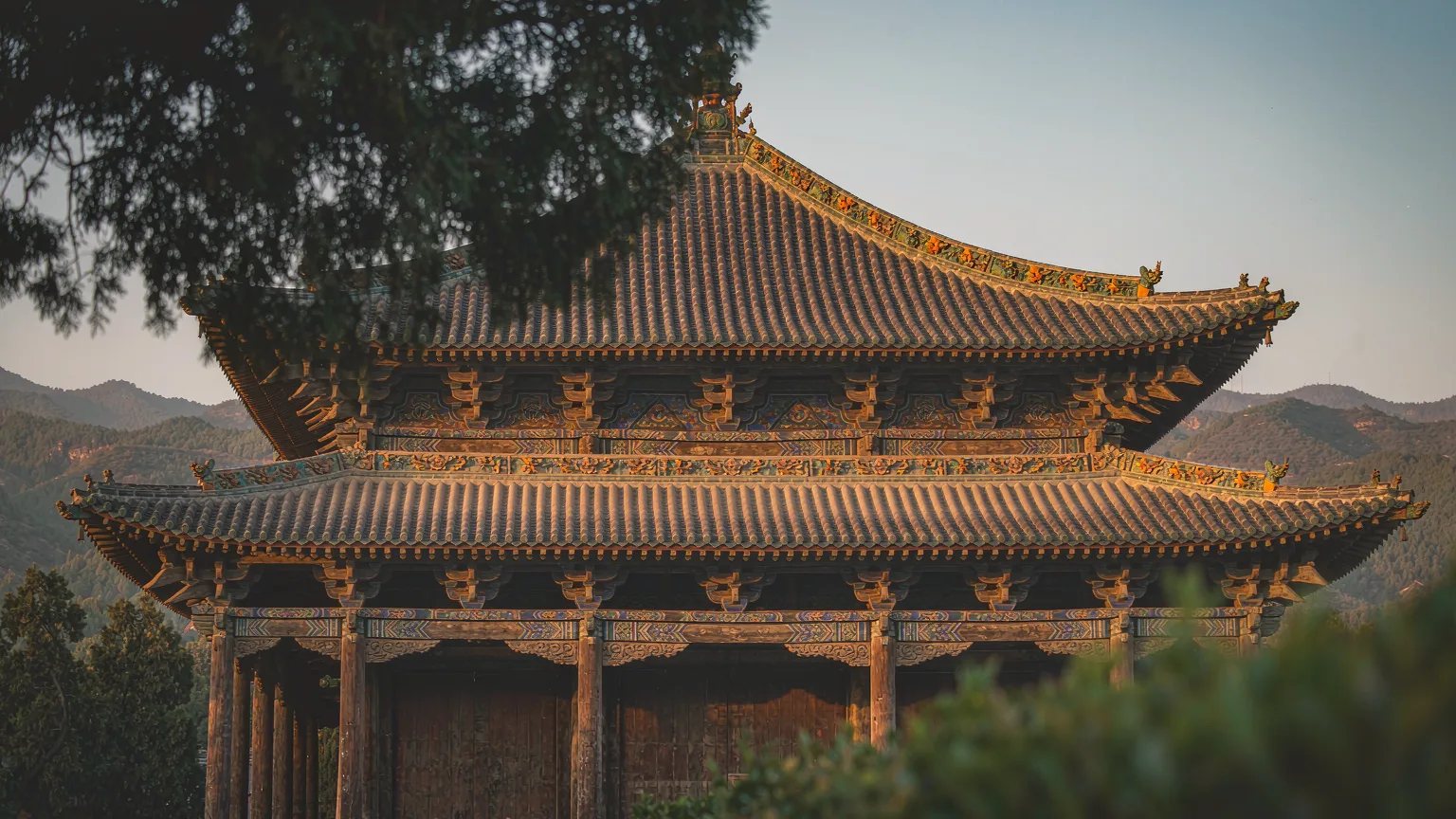
Day one starts twelve kilometers northeast at Haodong. Zhenguo's Wanfo Hall rises from the Five Dynasties' Northern Han among China's oldest timber frames, its bracket sets nearly half the column height, Tang-era heft legible even to newcomers. The village stays quiet, and locals often play chess under the old locust before the gate.
Read the Wanfo Hall by walking to a corner for the brackets' reach, then inside for the sculpture of the same era. The temple is small; an unhurried hour overfills it.
Liang Village: Daily Life in a Named Historic Village
Southwest of Zhenguo sits Liang, a settlement on the national historic-villages list. Its fabric is classic Jinzhong terrace-building, cave houses and brick homes interleaved, castle-style lane gates still standing, carved screen walls surviving at old doors. No souvenir shops here, only genuine village life on display.
Elders outnumber visitors and corn and chilies dry across the lanes, so greet before shooting. The sight is space itself; take an unhurried hour or two for one loop.
The Pingyao Beef Museum: From Village Back to Industry
The afternoon returns toward town and links the rural morning to Jinzhong produce. The beef museum lays out the trade's history and craft, ancient butchery beside the modern line, with the trade routes and salt transport behind every slice on display; after seeing it, the eating gains a layer of history.
The interactive zone suits children and the tasting counter suits everyone; an hour walks the whole line.
The Wang Family Compound: Jingsheng's Morning
Day two drives early to Lingshi. Beating the crowds at the Wang compound is the whole game: after 8:30 the Gaojiaya section echoes with your own steps, sun slants into the courts, and the brick carving turns sculptural in low light. Called a folk Forbidden City, its scale and carving density carry the title.
From the bridge linking Gaojiaya to Hongmenbao, look back on Jingsheng town and the mountains in one frame. Two morning hours cover both sections.
Zishou Temple: An Underrated Round of Sculpture and Wall Painting
The afternoon's Zishou Temple sits near Lingshi town, a Ming monastery whose fame lags far behind its merit: eighteen arhat figures each with a distinct temper, wall paintings of fluid line, and suspended-sculpture craft in the guardian hall kin to Shuanglin's. Tour groups rarely reach it, so viewing feels nearly private.
If Shuanglin awaits tomorrow or sits behind you, this works as preview or review; read the two temples side by side and the craftsmen's lineage shows.
The Pingyao Grand Opera Hall: Jin Opera and Drums by Night
Back in Pingyao, the evening goes to the Grand Opera Hall. This playhouse stages Jin opera excerpts with folk song and drum nightly, the square tables and lidded tea bowls rebuilding the old house rules. The clapper opera's voice climbs to the rafters, and even without the words the emotion carries, while the martial tumbling thrills children most.
The show runs about an hour with tea included; two temples and a great compound by day, an opera by night, and Jinzhong's puzzle completes.
Hengpo Ancient Village: Cave Houses and an Eco Park in the Morning
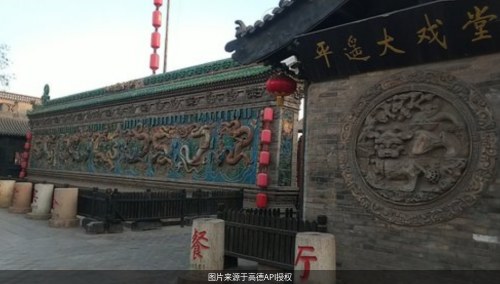
Day three runs to Hengpo outside Pingyao, a village pairing cave dwellings with an eco estate: terrace-built cave courtyards intact, deer and poultry in the park beside, crop fields right behind the houses. What makes Hengpo special is that it lives, villagers really residing in the caves.
Farmhouse meals are on offer, and mid-morning light on the arched facades is the photo hour. Two hours suffice.
Shuanglin Temple: The Sculpture Coda at Qiaotou Village
Stop at Shuanglin in Qiaotou village on the way back, closing the rural line at its peak. Over two thousand figures hide behind plain temple walls, guardian kings at the entrance, the Weituo within, a village temple delivering palace grade, exactly the depth of Jinzhong's countryside, where silver and craft both fermented.
An hour covers the essentials, and Qiaotou back to the old town runs twenty minutes.
Ma Family Courtyard: One Last Courtyard Inside the Walls
Close back in town, sewing country to city with Ma Family Courtyard: this in-town magnate's house and the compound beyond the walls belong to one wealth system, and seen together the path the money traveled, village to city, lays itself out. The dusk courts run soft-lit, right for finishing the last courtyard quietly.
The rural three days close here. Dine on South Avenue tonight, and tomorrow, onward or home, runs easy.
| Getting around |
|
| Budget | Tickets total RMB 150-250, two days' charter RMB 800-1200, and three days of meals and beds RMB 600-1200 pp. |
| Best time | May-October walks best, with harvest fields a bonus; villages turn spare in winter though visits go on. |
FAQs
How do I choose between the rural three days and the heritage three days?
The heritage line stays mostly in town reading institutions and finance; the rural line goes beyond the walls for villages, compounds and land. Running them together also works, alternating village and town days for better rhythm. First visit, take heritage; lovers of vernacular building and soil, take rural.
How do Liang and Hengpo differ?
Liang is raw heritage fabric, its appeal spatial and architectural, with almost no tourism infrastructure; Hengpo is a living cave village plus eco park, offering farmhouse meals and estate activities. For an archaeological stroll pick Liang, for children meeting countryside pick Hengpo.
Is the Wang compound worth a dedicated trip from Pingyao?
Yes, it and Pingyao form two halves of one merchant story: in town you watch silver earned, in Lingshi you watch it spent. An hour each way pairs best with Zishou or Zhangbi into one full day. If only one compound makes the cut, the Wang house's scale and carving have no equal.
What do I eat on the rural line, and must I sleep in the villages?
Farmhouse eating is the highlight: Jingsheng's wantuo and oat noodles, home-style dishes at village mouths, solid meals at RMB 30-40 a head. No lodging moves needed, since every evening returns to the old town, with South Avenue and the opera hall as nightly perks.