
Pingyao earns three days because it is at once a government seat, a bank and a temple complex. Day one reads the city's order: the wall for the plan, the yamen for governance, West Street for finance; day two makes the Shanxi merchants one continuous thread, banks and escort agencies cross-confirming an immersive drama at night; day three leaves town, Shuanglin's clay sculpture and Zhenguo's Five-Dynasties timberwork, the county's two national treasures handed to Chinese architectural history.
The pace breathes: under fifteen thousand steps a day, with an afternoon gap for air each day. Sight density here runs extreme, and three days digest it exactly.
Itinerary at a glance
| Day 1 · 08:30 | The Pingyao City Wall: Three Days Begun from Above |
| Day 1 · 10:30 | The County Yamen Museum: Governance, Sampled Whole |
| Day 1 · 15:00 | The Banks of West Street: An Afternoon on the Financial Drag |
| Day 2 · 09:00 | Rishengchang Again: A Second, Deeper Read |
| Day 2 · 11:00 | The China Escort Agency Museum: Silver on the Road |
| Day 2 · 15:00 | The Confucian Temple and City God Temple: A Civil-and-Martial Pairing |
| Day 2 · 19:00 | Encore Pingyao: Two Days of Knowledge, Staged |
| Day 3 · 08:30 | Shuanglin Temple: A Morning in the Sculpture Treasury |
| Day 3 · 11:30 | Zhenguo Temple: Five-Dynasties Timber and Its Hall |
| Day 3 · 16:00 | Back in Town: Filling the Temple Gap and the Wall at Dusk |
The route, stop by stop
The Pingyao City Wall: Three Days Begun from Above
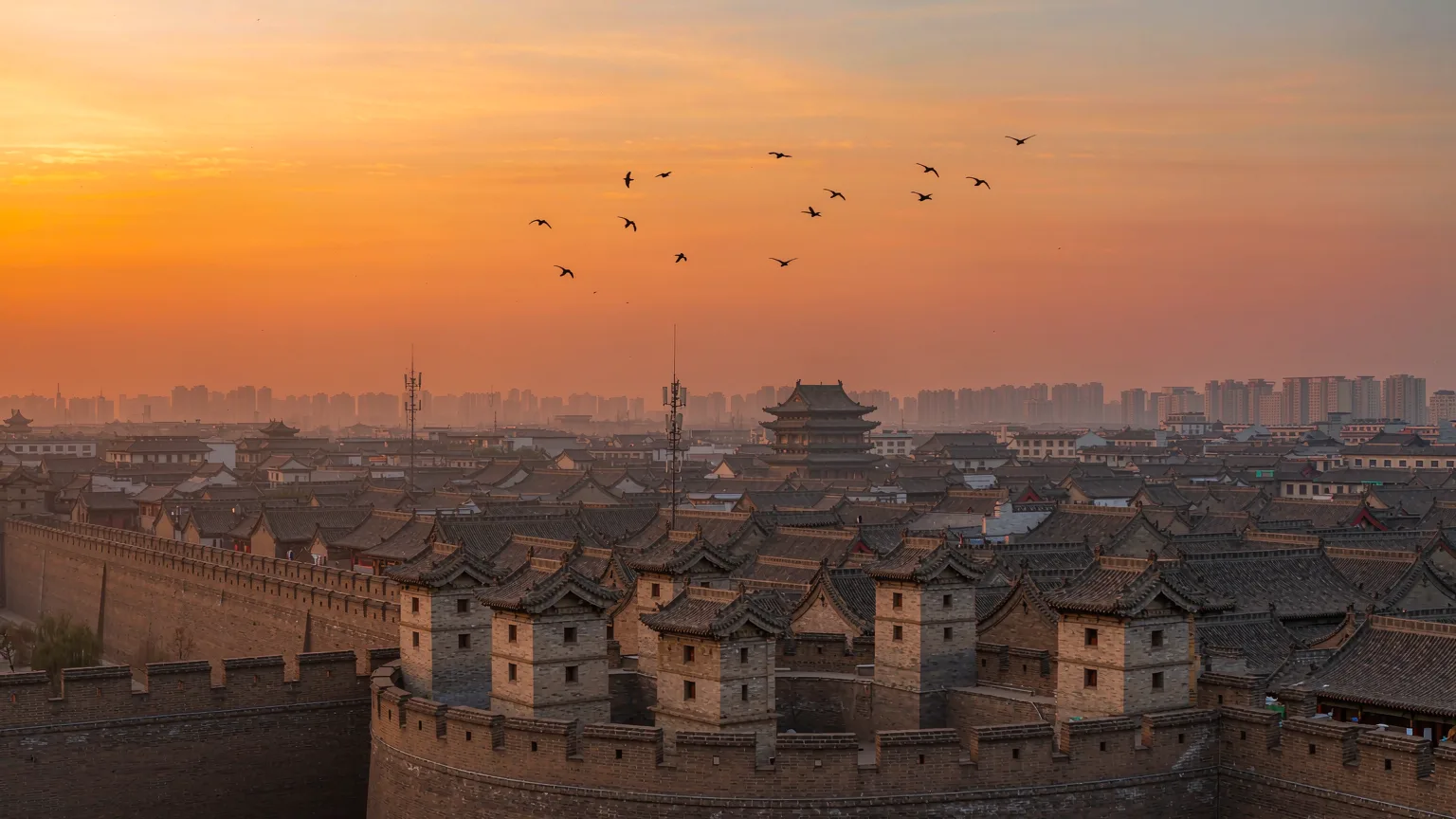
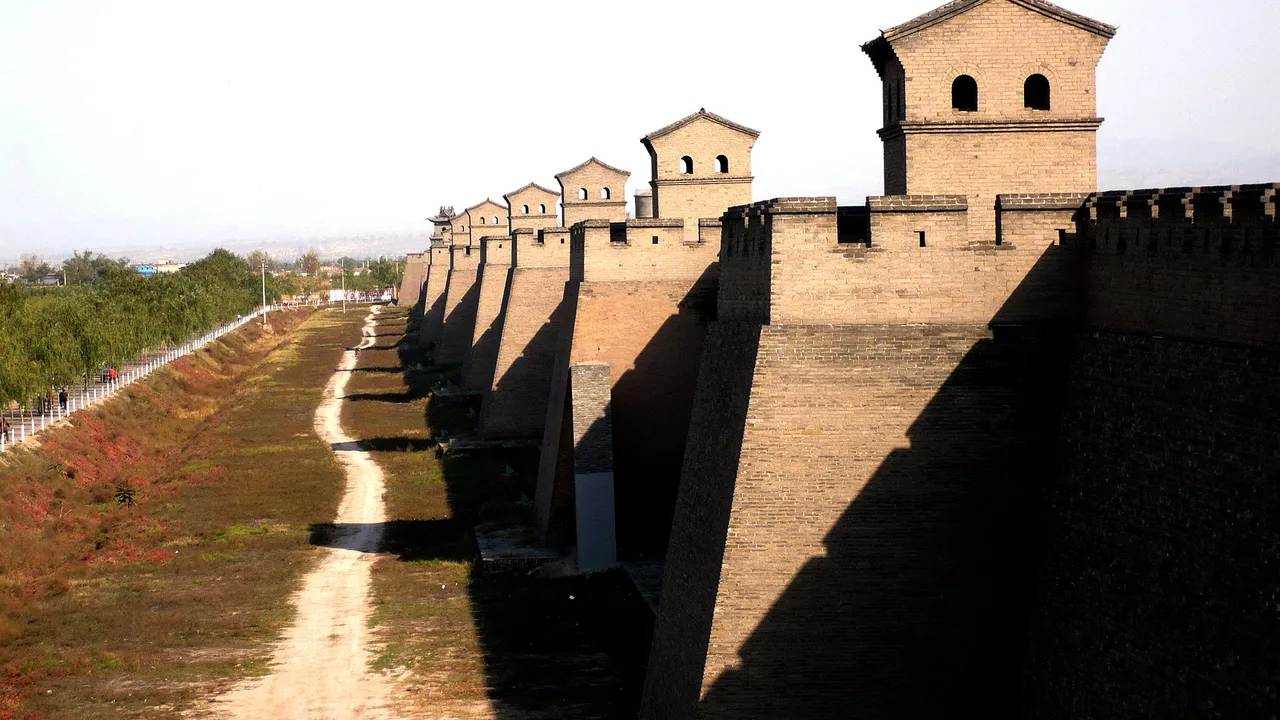
Day one opens with the climb at Yingxun Gate. Early on the wall top runs thin of people and cool of wind, where you can literally count the three thousand battlements and seventy-two towers; walk from the south gate to the southeast corner and back, and forty minutes of overhead views load the whole street grid into your head, giving the next three ground days a map in the mind.
The wall itself is an exhibit: dressed stone outside, brick within, rammed-earth cores exposed beside several towers, the Ming logic of military engineering visible and touchable.
The County Yamen Museum: Governance, Sampled Whole
Tour the yamen by function: the grand hall for trials, second hall for deliberation, inner quarters for living, treasury and jail on the west, the officials' shrine and parlor on the east, a county government's full anatomy in one compound. The morning court show plays before the grand hall, a storyfied case walking ancient judicial procedure through.
Guiding earns its fee here best of all: why the etiquette gate opens center, how to read the grand hall's plaque, why the jail's construction differs, all skimmable past without one.
The Banks of West Street: An Afternoon on the Financial Drag
The afternoon books West Street's three: Rishengchang for system and cipher, Xieqingqing for the underground vault, and Weitaihou or Baichuantong for layout and furnishing. Their eras and scales differ, and only side by side does the market structure of the trade's heyday come clear.
Bank fatigue is real, so between houses break for a glass of seabuckthorn juice and a bench by the counters. Wrap by evening and keep the night free.
Rishengchang Again: A Second, Deeper Read
Day two returns to Rishengchang with questions: the yamen and the bank were two systems of one era, so how did the state watch the silver and the bank watch the risk? The panels on branch management and the manager system reward line-by-line reading, and the Shanxi invention of body shares prefigures modern equity incentives.
Against yesterday's impressions, details surface: counter height, the account room's orientation, which room hung the cipher poem, arrangements all loaded with intent.
The China Escort Agency Museum: Silver on the Road
The escort agency completes the banks' other half: drafts solved credit at distance, but escorting bullion and valuables belonged to the swordsmen. The museum arrays carts, weapons and jianghu rules in full, march banners, night-camp defenses, and the slang system negotiated with the green woods along the way, a complete roadside survival studies.
Read beside the banks, the Shanxi system shows both its legs: credit on paper, life on the blade.
The Confucian Temple and City God Temple: A Civil-and-Martial Pairing
The afternoon pairs the two poles of the town's spiritual life: the Confucian Temple for the sage, examinations and moral instruction; the City God Temple for the city god, rewards, punishments and affairs below. Both compounds rank high, the Jin-era Dacheng Hall on one side, glazed ornament on the other.
They sit minutes apart on foot. Read temples through incense and society: rank and grain, this world and the next, the townsfolk's spiritual accounts all kept in these two ledgers.
Encore Pingyao: Two Days of Knowledge, Staged
Placing Encore Pingyao on night two is deliberate: having seen the banks and the agency, every scene now pairs with an object or institution from the day's halls, the escorts' deaths, the owner's ruin, the rules of bride selection, each footnoted somewhere you stood. The moving-audience staging doubles its charge when you know the ground.
The show runs about ninety minutes; the lamplit town greets the curtain, and sleep early before day three.
Shuanglin Temple: A Morning in the Sculpture Treasury
Day three leaves town. Shuanglin's sequence starts at the Heavenly Kings Hall and runs through the Thousand Buddha Hall, the Arhat Hall and the great hall, two thousand figures each with a face, a drapery, a gesture, saving the Weituo for the summit. Morning light through doors and windows gives the figures their strongest relief.
The temple stays hushed, courts often yours alone. Do not rush sculpture: fifteen minutes a hall, letting eyes adjust to the dark before reading closely.
Zhenguo Temple: Five-Dynasties Timber and Its Hall
From Shuanglin cross the county northeast to Zhenguo. Its value sits in the Wanfo Hall, a timber hall of the Five Dynasties' Northern Han, among China's oldest surviving wooden buildings, with massive bracket sets and deep eaves still breathing Tang manner; the sculpture and murals inside belong to the same era, one hall holding a whole chapter of dating history.
Zhenguo and Shuanglin pair as Pingyao's twin temples: one for figure, one for frame. Both in a day runs tight but earns it.
Back in Town: Filling the Temple Gap and the Wall at Dusk
Give the return gap to the Confucian Temple. If day one skipped it, the Jin-era Dacheng Hall and the top scholar's paper snap the last piece into the cultural puzzle; if already seen, climb the wall for the dusk stretch instead. Looking at the town from the wall three days ago and back at the wall from town tonight, the swap is itself the souvenir.
Dine properly on South Avenue, wantuo and beef both present, and three days of Pingyao close complete.
| Getting around |
|
| Budget | The RMB 125 pass covers the in-town sites, the two temples about RMB 60 combined, Encore Pingyao from about RMB 238; three days of meals, beds and transport run RMB 800-1500 pp. |
| Best time | April-June and September-October suit best; the Chinese New Year festival glitters but floods with crowds, so museum lovers pick the quiet season. |
FAQs
Do three days repeat themselves?
No, each day runs its own axis: day one the city's order, wall, yamen and street; day two the merchant system, banks, agency and the show; day three religious art, Shuanglin and Zhenguo. No site is revisited except once, and then with new questions.
Must I see both temples, and how do I ration tight time?
Both is the standard answer; when rationing, follow taste: architecture and dating favor Zhenguo's Wanfo Hall, figure and detail favor Shuanglin. With only half a day, Shuanglin hits harder, while Zhenguo best serves architecture devotees on a mission.
Which night suits Encore Pingyao best?
Night two, clearly: night one lacks the groundwork and reads as spectacle, night three finds the trip already scattered. By night two the banks and agency are fresh, every detail lands, and feeling and knowledge arrive together.
Do seniors and children manage these three days?
Manageable: daily walking can compress under ten thousand steps, the yamen and banks offer seating, and the charter solves all inter-temple legs. Children latch onto the court show, the agency's weapons and hunting arhats at Shuanglin; the pass lasts three days, so rest whenever and re-enter tomorrow.