
Seven days turn Pingyao into fieldwork: five inside the walls reading in layers, day one the city's order, day two the merchants' finance, day three faith and street life, day four out for sculpture and produce, day five into old villages; the last two deepen southwest, Zhangbi's tunnels, the Wang compound and Mianshan completing Jinzhong's geography.
The rule is one chapter a day: close reading in the morning, digestion in the afternoon, free evenings. Pingyao's depth is not sight count but the new layer the same town yields every day.
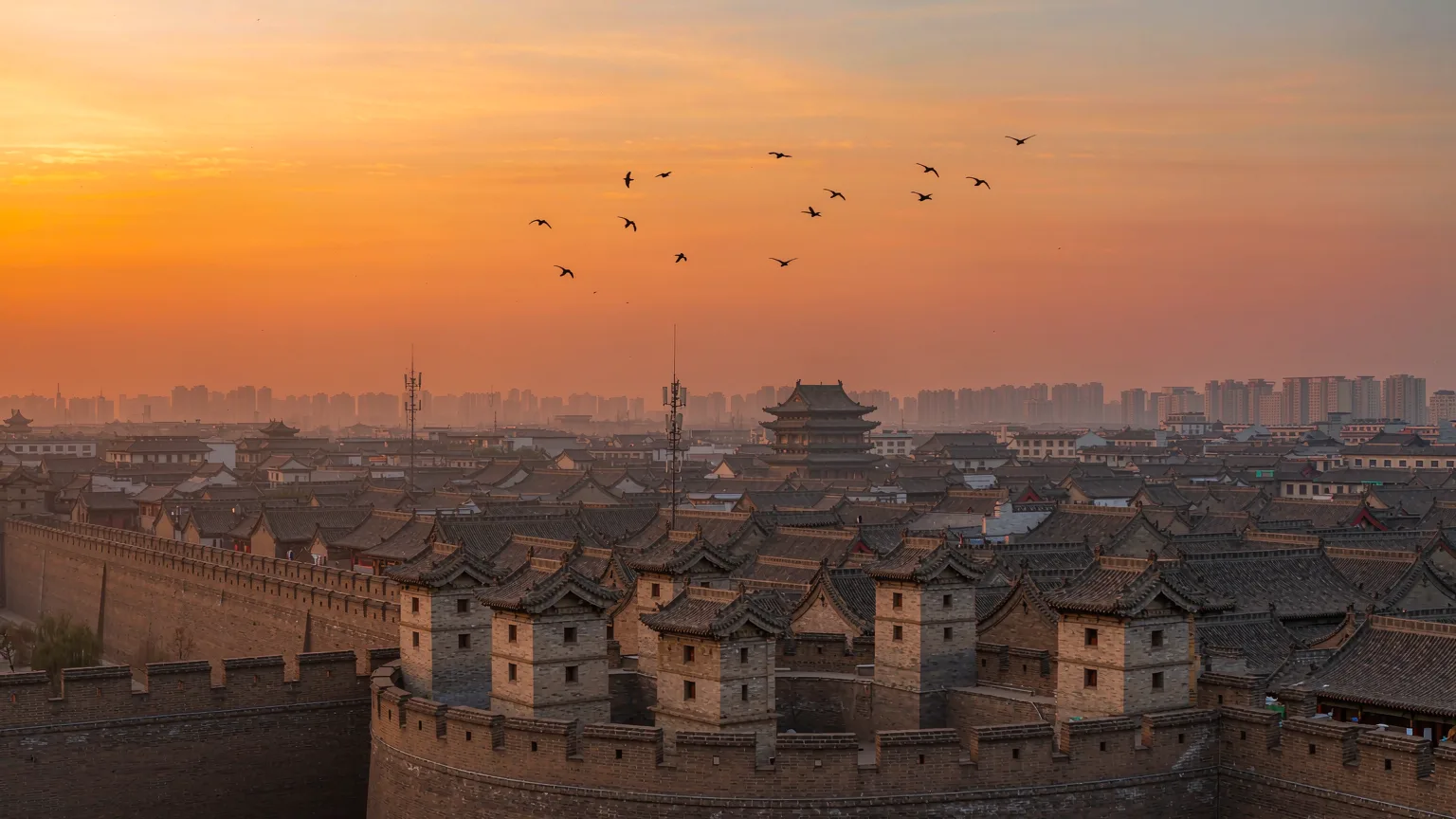
Itinerary at a glance
| Day 1 · 08:30 | The Pingyao City Wall: The Book's Table of Contents |
| Day 1 · 14:00 | The County Yamen Museum: Chapter One, Order |
| Day 2 · 08:30 | Rishengchang: Chapter Two, Finance |
| Day 2 · 11:00 | The Xieqingqing Money-House: Chapter Two Goes Underground |
| Day 2 · 15:00 | The China Escort Agency Museum: Finance's Security Wing |
| Day 2 · 19:00 | Encore Pingyao: Chapter Two's Climax |
| Day 3 · 09:00 | The Pingyao Confucian Temple: Chapter Three, Faith and Rank |
| Day 3 · 11:00 | The Pingyao City God Temple: The Order of Reward and Punishment |
| Day 4 · 08:30 | Shuanglin Temple: Chapter Four, The Peak of Craft |
| Day 5 · 08:30 | Zhenguo Temple: Chapter Five, Dating the Timber |
| Day 5 · 11:00 | Liang Village: Chapter Five's Village Floor |
| Day 6 · 08:30 | Zhangbi Ancient Castle: Chapter Six, War Below |
| Day 6 · 13:30 | The Wang Family Compound: Chapter Six, Where the Silver Ended |
| Day 7 · 08:00 | Mianshan: The Final Chapter, Jinzhong's Landscape |
| Day 7 · 19:30 | The Pingyao Light Show: Closing the Book |
The route, stop by stop
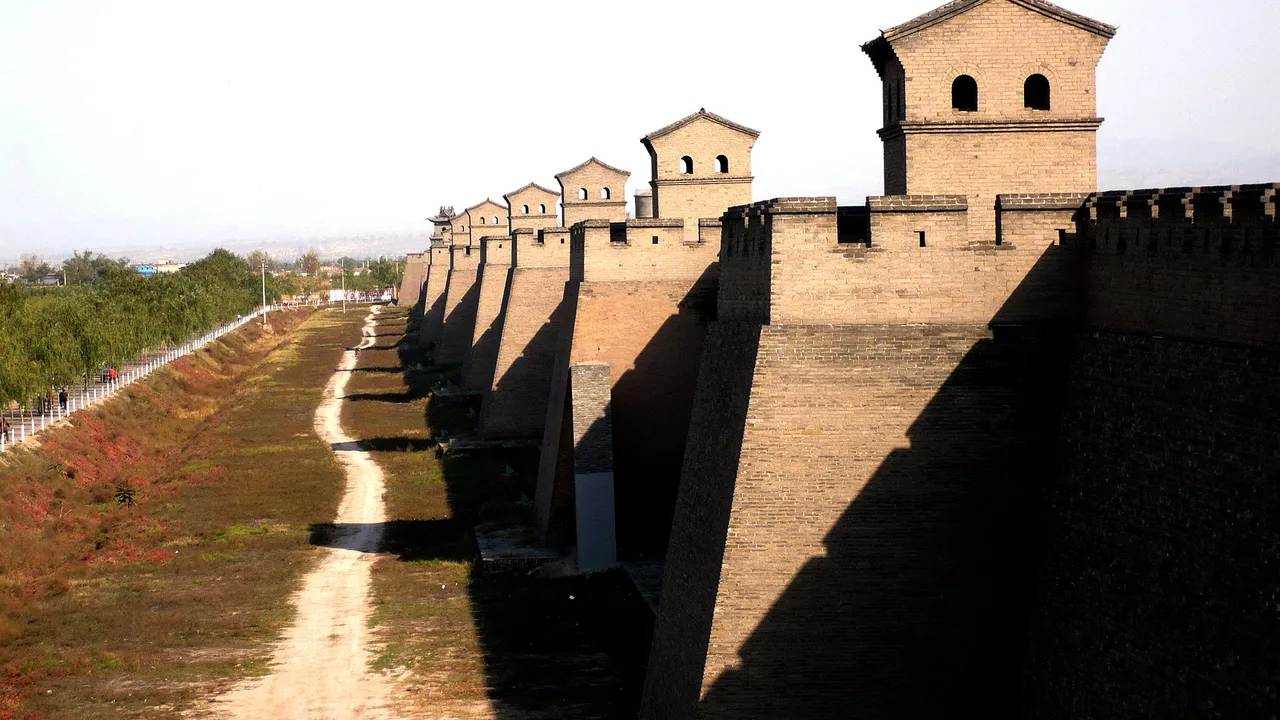
The Pingyao City Wall: The Book's Table of Contents
Seven days open at the wall, functioning like a book's contents page. Climb at Yingxun Gate, read how the four avenues meet the axis, count the towers and battlements, and file the city's plan into memory. Morning light keeps the ramparts near empty, right for setting a slow pace.
Walk to the southeast corner and back. Nothing else today: afternoon and evening belong to the streets, testing on foot the coordinates learned overhead.
The County Yamen Museum: Chapter One, Order
The afternoon reads chapter one: how power ran a county. The yamen keeps grand hall, second hall, inner quarters and jail complete; walk it by function with a guide, decoding the etiquette gate and the plaques, and if the court show plays an afternoon set, catch it.
Tour the yamen south to north without backtracking, exit onto the yamen street for South Avenue, and dine in a lane tonight.
Rishengchang: Chapter Two, Finance
Day two's theme is how silver moved. Enter Rishengchang at opening and walk from the counters to the cipher display until the anti-forgery code of Chinese characters reads clear. China's first draft bank, its institutional inventions set the pattern of Chinese finance for the century after.
The placards number by room, so read slowly. Leaving, walk West Street east, identifying the banks' plaques one house at a time.
The Xieqingqing Money-House: Chapter Two Goes Underground
The morning's second half descends to the vault. In Xieqingqing's cave-style storerooms, iron chests and oil lamps rebuild the scene of silver storage, the venting and anti-theft design a lesson in objects. Rising to the counters again, the difference between money house and draft bank acquires texture.
Nap back at the inn after lunch through noon; the afternoon's targets are the agency and buying tickets.
The China Escort Agency Museum: Finance's Security Wing
The afternoon completes finance's security wing: banks for credit on paper, escorts for lives on the road. Carts, strongboxes and martial hardware array fully, and the march banners, slang and camp defense rules form a survival discipline of their own.
Leave the agency near four, rest in a South Avenue teahouse, and wait out the evening show.
Encore Pingyao: Chapter Two's Climax
Night two's Encore Pingyao is the week's first emotional peak. With banks and agency seen, the escorts' sacrifice and the owner's all-in wager now carry footnotes from real rooms, and the moving-audience staging upgrades from spectacle to close reading.
Walk South Avenue home after the curtain, buy a hot bowl of wantuo on the way, and let the feeling land.
The Pingyao Confucian Temple: Chapter Three, Faith and Rank
Day three reads the spirit. The Confucian Temple's Jin-era Dacheng Hall is the oldest timber inside the walls, its courtyard among the town's quietest corners. The top scholar's exam-paper replica fills its gallery, immaculate to the point of awe, making the examination ladder concrete.
An hour at the temple, then the City God Temple, the quarter-hour walk between settling lunch.
The Pingyao City God Temple: The Order of Reward and Punishment
The City God Temple poles the town's spirit against the Confucian one. The city god audits the world below, the compound's rank and glazing run high, and the stage facing the main hall fits the house's purpose exactly, plays performed for the god's eyes.
If a noon show runs, stand ten minutes for a clapper set. Lunch in the streets before the temple, then give the afternoon to the deep lanes off South Avenue.
Shuanglin Temple: Chapter Four, The Peak of Craft
Day four leaves town. Shuanglin's two thousand figures run from the Heavenly Kings Hall to the Thousand Buddha Hall, the Weituo's weight shift acknowledged as the summit of Chinese clay sculpture. Morning crowds run thin, and the halls' hush lets the faces' shifts register.
Two close hours, then farmhouse food on the road back, and an afternoon at the inn sorting photographs and notes.
Zhenguo Temple: Chapter Five, Dating the Timber
Day five leaves town again, northeast this time. Zhenguo's Wanfo Hall stands in Five-Dynasties Northern Han timber, its massive brackets and deep eaves a living textbook of structural dating, and with Shuanglin's sculpture behind you, both legs of Chinese building art, figure and frame, have now shown their summit within the week.
The village before the temple stays hushed; circle the village mouth before boarding.
Liang Village: Chapter Five's Village Floor
Zhenguo to Liang is minutes. This named historic village raised more than one bank owner, its cave-and-brick fabric, castle lane gates and screen walls standing as physical proof of wealth flowing back to the land. Village cats, drying corn and chess-playing elders make the week's loosest stop.
Two hours cover the main lanes; lunch at a farmhouse or back in town.
Zhangbi Ancient Castle: Chapter Six, War Below
Day six pushes southwest. Zhangbi's ten-kilometer tunnel network drops in three levels beyond the walls, a complete defense in its day. Descend with a guide, and the branching dark, air shafts and trap design make the week's closest brush with adventure.
The Khagan shrine and glazed steles are one-of-a-kind, an hour for the surface. Lunch toward Jiexiu, with the Wang compound as the afternoon's target.
The Wang Family Compound: Chapter Six, Where the Silver Ended
The afternoon's Wang compound is where the merchants' silver terminated. Courtyards stack up the slope in ranks, the density of brick, wood and stone carving leaves you wordless, and from the Hongmenbao wall the whole roofscape below gathers every ounce of silver the week has followed into one frozen town.
Two hours link Gaojiaya and Hongmenbao, with a guide worth hiring. Return to Pingyao by dusk, dining through Jiexiu en route.
Mianshan: The Final Chapter, Jinzhong's Landscape
The last day belongs to Mianshan, framing Jinzhong's landscape into the week. Morning in Shuitaogou's stream gorge, afternoon at Yunfeng Temple's cliff halls and the bell-strewn embrace of Baofu Rock. Northern height meets southern grace here, and water scenery of this density is near luxury on the loess plateau.
Leave the mountain by dusk, an hour back to Pingyao. Close the seven days at the wall light show, town and mountain folding into one frame of light.
The Pingyao Light Show: Closing the Book
The week's last scene is the wall light show. From the moat-side square watch light flow over Yingxun Gate's brick as city-building, banking, caravans and temples unfold in sequence, seven days of memory bound into one volume here.
Enter the walls for a farewell dinner and pack tonight for tomorrow. Seven days of Pingyao, read cover to cover, earn a line in any travel chronicle.
| Getting around |
|
| Budget | Mid-range seven days run RMB 2600-4200 pp covering six nights, the pass, show tickets and three days of charter transport, excluding long-haul travel. |
| Best time | April-June and September-October suit long stays; winters run dry and cold with warm inns, and photographers favor fresh snow. |
FAQs
Are seven days too long, and how do I avoid museum fatigue?
Not if each day reads one chapter: Pingyao's sight density needs digestion, and seven days set the daily dose lowest. The anti-fatigue trick is a non-museum program every two days, Liang's village stroll, Mianshan's landscape, an evening show.
Is the seven-day order fixed?
The frame holds, details flex: three in-town chapters first and the outward days after is the spine; which day climbs depends on weather, since rain ruins Mianshan and can swap with a temple day. Keep Encore Pingyao on night two, when the groundwork is exact.
What does a week cost, and where do budgets leak?
Mid-range runs RMB 2600-4200 pp with six nights, the pass, show, charters and meals. The leaks are charter add-ons and show-adjacent spending: guides at Mianshan and the compound, springs, late-night snacks, small sums at high frequency, and three days of bookkeeping exposes the flow.
How does a solo seven days feel?
Pingyao treats soloists kindly: the walking fabric is complete, charters find companions easily, and inn commons plus teahouses make natural meeting grounds. Seven deep days suit solo travel precisely, since the pace is wholly yours and no one hurries you out of the sculpture halls.