
The three sites stage the ritual; this line stages the learning. The Confucius Museum sorts the life and the school's lineage in modern display; the Han-Wei Stele Gallery shelters the calligraphy canon's superstars, the Yiying, Liqi and Zhang Menglong steles; and the Analects Stele Garden carves the sayings into a garden. After one day, Confucianism stops being a textbook word.
The pace runs deliberately slow: two to three morning hours at the museum, an hour each at the steles and garden, half an hour at the art museum by dusk. Everything is free or cheap, with booking the only gate.
Itinerary at a glance
| 09:00 | The Confucius Museum: Stringing the School into One Line |
| 13:00 | The Qufu Han-Wei Stele Gallery: The Calligraphy Canon's Headliners |
| 15:00 | The Analects Stele Garden: Walking the Analects as a Garden |
| 16:30 | The Confucius Art Museum: A Contemporary Footnote to the Culture Day |
The route, stop by stop
The Confucius Museum: Stringing the School into One Line
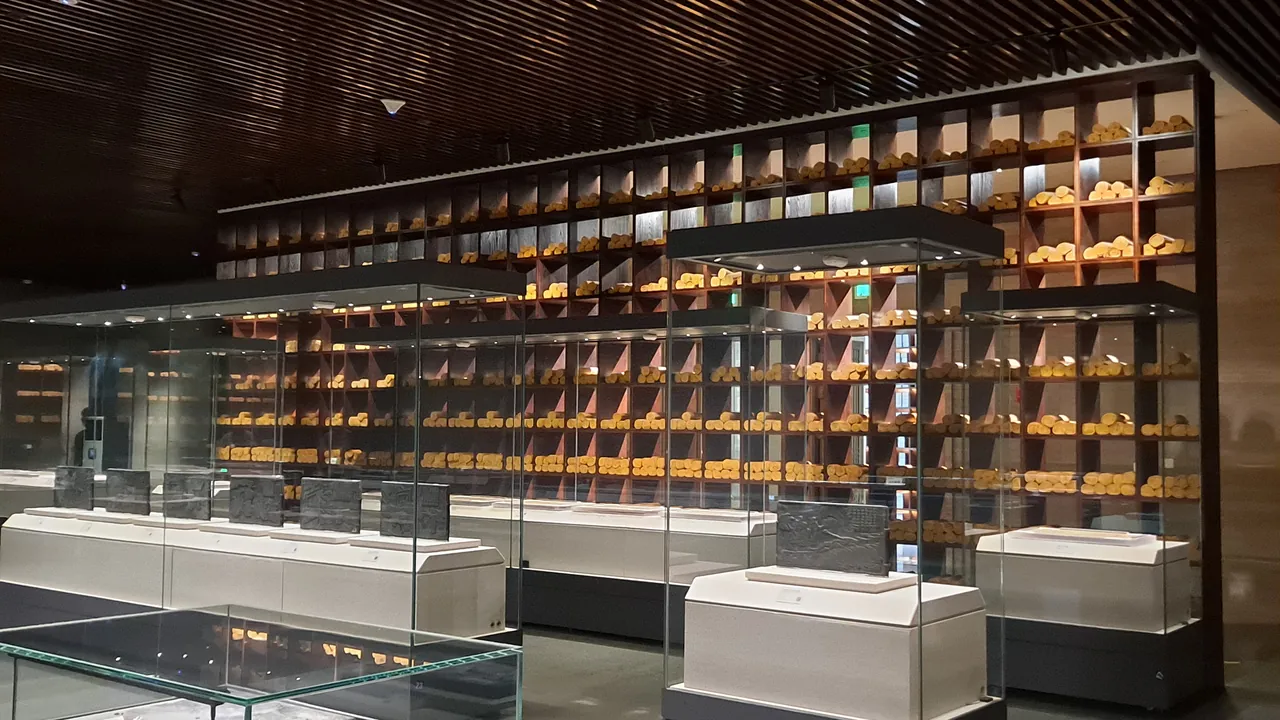
The Confucius Museum is this line's foundation. A vast wall of books opens the hall, the permanent show running from the man's life through the school's spread and the Kong family history, with Warring States and Han ritual bronzes, portraits across dynasties and early editions, all in fully modern presentation, never dry.
Three sections matter most: his era, his thought, and the family genealogy. Do not stall at the hard parts; the narrative interlocks, and it clarifies in retrospect after the full walk. Two to three hours.
The Qufu Han-Wei Stele Gallery: The Calligraphy Canon's Headliners
The afternoon opens at the Han-Wei Stele Gallery, home to the Yiying, Liqi, Shichen and Zhang Menglong steles, names no calligraphy history skips, all in one hall. Han clerical script's poise and stretch, Wei stele script's angular force, the strokes' power carries through the glass.
Non-calligraphers still feast: the texts mostly record Han local officials restoring temples and rites, a second historical stage beyond the three sites. Seeing rubbings after the originals explains why the calligraphy world calls this a holy place.

The Analects Stele Garden: Walking the Analects as a Garden
The garden displays Analects passages carved in stone through a landscape of pavilions and water, famous lines in calligraphers' hands from many eras set among the scenery. The experience is odd and lovely: every phrase once memorized, every phrase newly met, the garden giving the text its pacing and breath.
Find a stone bench, sit, and silently reread the stele before you. The garden's correct usage is slowness, an hour's walk merely passing, three seated lines earning the grade.
The Confucius Art Museum: A Contemporary Footnote to the Culture Day
The last stop is the Confucius Art Museum, showing Confucius-themed painting, calligraphy and contemporary work, an old-versus-new counterpoint to the day's steles and scripture. The halls are compact, half an hour enough, their quiet perfect for letting the day's volume of information settle.
Step out at dusk and find dinner along the way. A day of Confucian study needs no conclusion; carrying the unresolved questions to the dinner table is exactly the state this line aims for.
| Getting around |
|
| Budget | Venues run mostly free by booking; the day totals about RMB 50-150 pp with sessions and meals. |
| Best time | Year-round; the museum thins in the morning, steles glow in softer afternoon light, and most venues close Mondays, so plan around it. |
FAQs
Between this line and the three sites, which wins?
By depth and visit count: first-timers owe the three sites, making this line the bonus question; on a return trip or with concrete interest in the school and calligraphy, this line runs denser. Together they need two days, so with only one, apply the rule above.
Does the Confucius Museum need booking? What if slots run out?
Yes, real-name booking on official channels, free of charge. When slots vanish: camp early-morning and late-afternoon releases, rebook next morning, or ask the staffed window about returned slots. Check Monday closures and holiday arrangements first.
Without calligraphy knowledge, will the stele gallery hold me ten minutes?
Read the stories, not just the script: the stelae record Han local officials restoring temples, requesting funds, arranging rites, two-thousand-year-old paperwork from grassroots administrators. Three texts read before the glyphs, and interest grows itself. An audio guide or pre-reading on the Yiying stele both work.
Is this culture line workable with children?
Yes, and the museum is the most child-friendly stop in Qufu: rich interactives, clean routing. Cap the stele gallery at forty minutes and two famous stones, give the garden room for kids to run, and target interactive installations at the art museum. Keep everything to morning and early afternoon, dodging the fatigue trough.