
Three days can tell Qufu whole: day one builds the space of ritual at the three sites, temple as state cult, mansion as family order, cemetery as time itself; day two moves to the space of learning, the museum, the steles and two sage temples completing the school's outline and its surroundings; day three goes to Mount Ni, the birthplace, supplying the story's starting point.
The pacing runs heavy, light, heavy: day one carries the most walking, day two lives indoors, day three travels farthest. Book every venue a day ahead and arrange Mount Ni transport in advance, and nothing jams.
Itinerary at a glance
| 第一天 08:30 | The Temple of Confucius: The Full Axis of State Rite |
| 第一天 11:00 | The Confucius Mansion: The Order of a Family |
| 第一天 14:00 | The Confucius Family Cemetery: Time Itself |
| 第二天 09:00 | The Confucius Museum: The Story Made Systematic |
| 第二天 13:00 | The Qufu Han-Wei Stele Gallery: Eye to Eye with the Originals |
| 第二天 14:30 | The Yan Temple: The Courtyard of the Returned Sage |
| 第二天 16:00 | The Zhougong Temple: The Prelude of Rite and Music |
| 第三天 09:00 | Nishan Sacred Land: The Birthplace |
| 第三天 14:00 | The Nishan Temple and Academy: An Old Temple in the Hills |
| 第三天 16:00 | The Analects Stele Garden: Gathering Back in Town |
The route, stop by stop
The Temple of Confucius: The Full Axis of State Rite
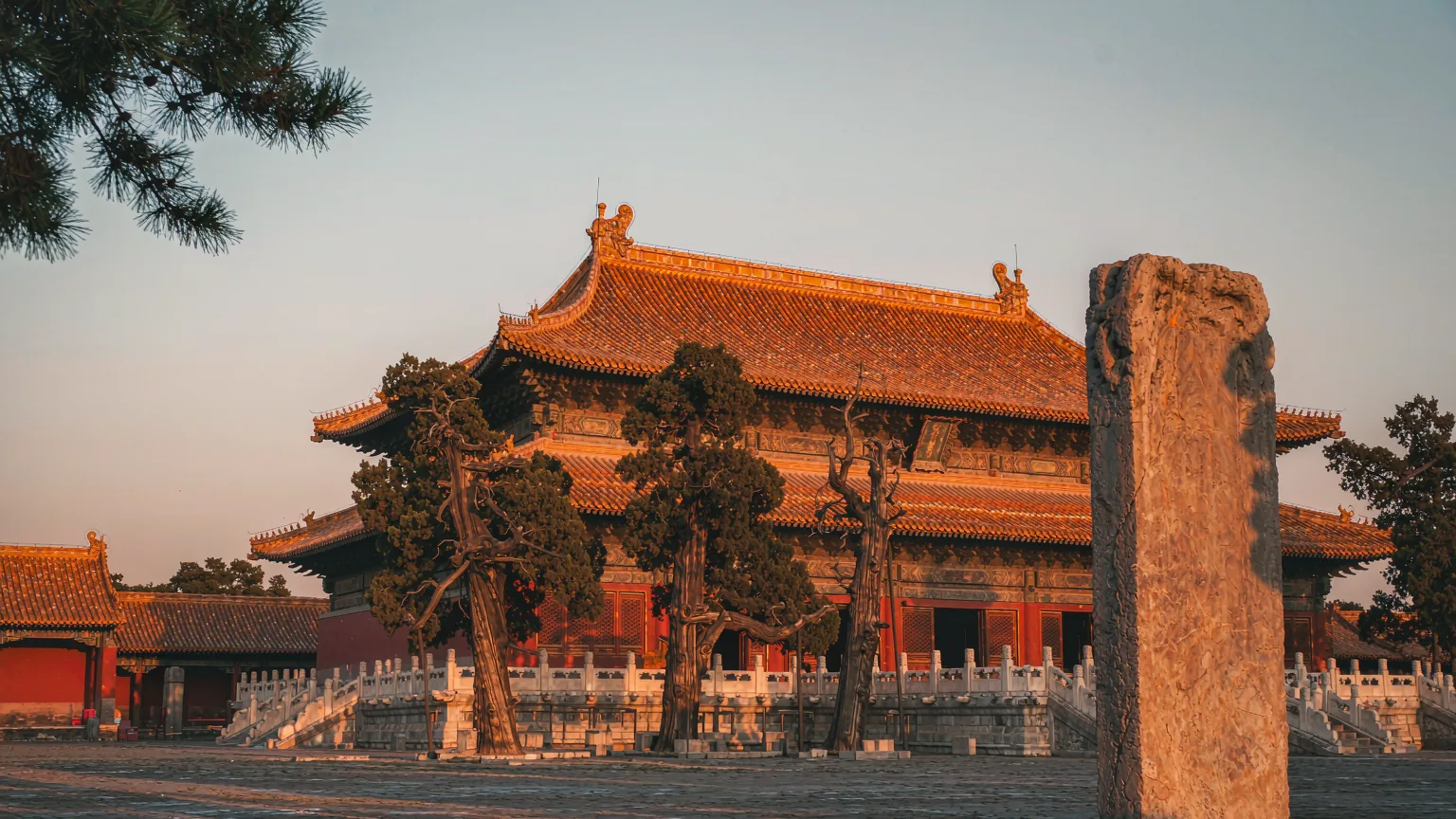
The three days open at the temple. Enter at the bell and walk the axis from the Golden Voice Archway to Dacheng Hall, the nine courtyards' escalation felt only step by step. Give Kuiwen Pavilion and the thirteen stele pavilions their due; Dacheng Hall's dragon columns are the crescendo, morning light splitting the deep reliefs into clear scale and claw.
The Apricot Platform and the Poetry-and-Rite Hall behind the hall run dense with story. Two hours minimum, a guide worth hiring, since without one the imperial steles and the protocol reduce to stones.
The Confucius Mansion: The Order of a Family
Enter the mansion through the passage east of the temple. Offices front and quarters behind is the key to the family: the great hall's desk as the public self, the Anti-Greed fresco inside the inner gate as the private one, the rear garden's cycads as the lived life. Nearly nine centuries of ducal history compress into one courtyard group.
Ninety minutes covers the core. Chongguang Gate usually stays closed to traffic, admire its protocol from outside; pause at the inner gate's Anti-Greed painting, the family's warning to its own, plainer than any house rule.
The Confucius Family Cemetery: Time Itself
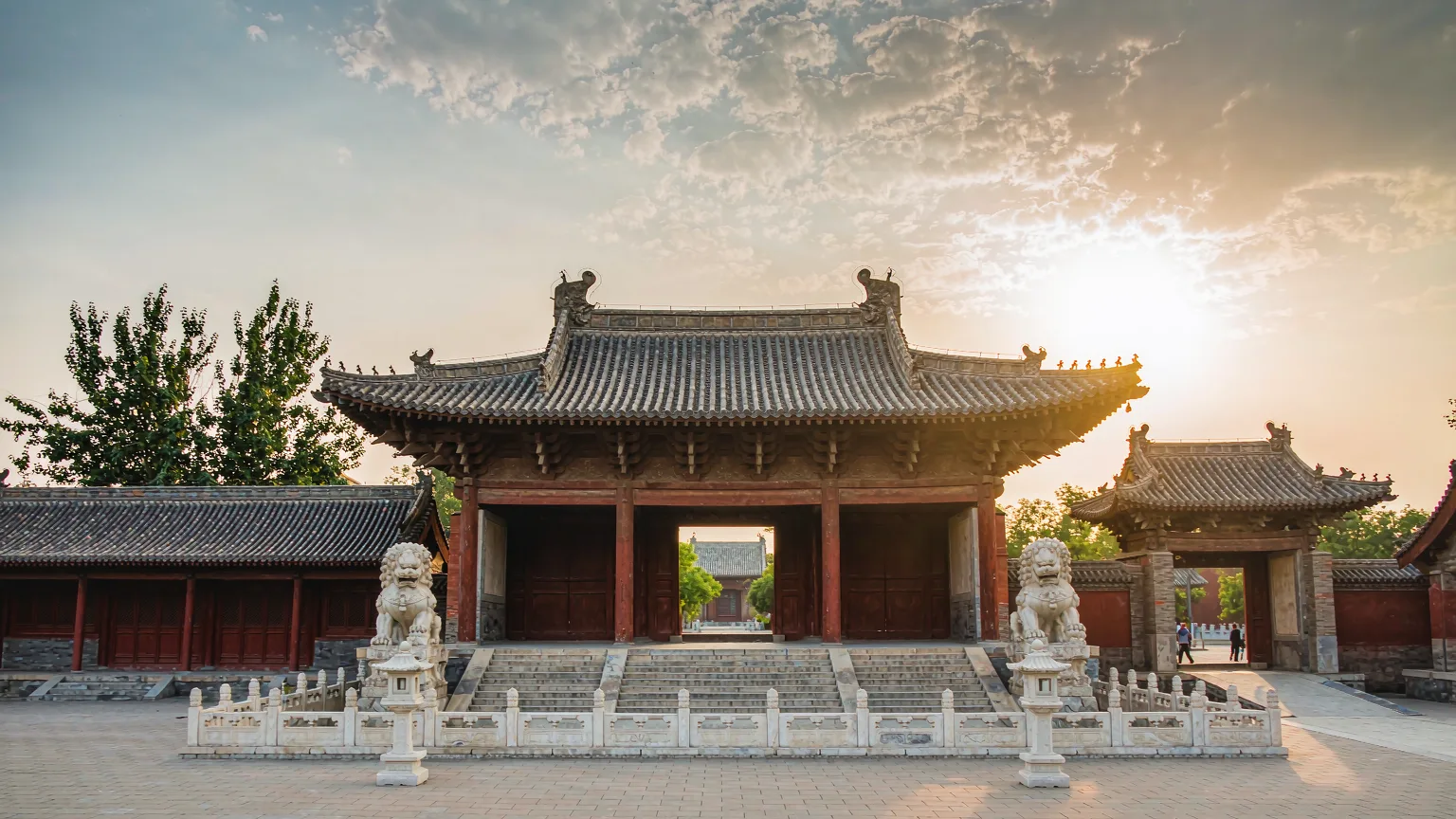
The afternoon enters the cemetery, the world's longest-running family burial ground: walk the axis from the Zhushui Bridge and offering halls to Confucius's tomb, then bend to Zigong's planted tree and his mourning hut. Under the shade of tens of thousands of old cypresses, two millennia compress into a stroll.
The electric cart halves the legwork, and the hush beyond the core earns twenty idle minutes. Looking back down the avenue on the way out, thread the day: temple, mansion, cemetery, three settlements of ritual.
The Confucius Museum: The Story Made Systematic
Day two's morning goes to the Confucius Museum, where yesterday's immediacy becomes system: the life, the school's evolution, the family genealogy and ritual bronzes in the flesh. Seen after the sites, every case object maps back onto some courtyard of the day before.
Two to three hours for the permanent show. See the lobby book wall and the on-the-hour projection first, and work the thought gallery's interactive screens one by one, the densest information in Qufu.
The Qufu Han-Wei Stele Gallery: Eye to Eye with the Originals
The afternoon starts with stones. The Yiying, Liqi, Shichen and Zhang Menglong steles share one room, Han clerical poise against Wei angularity in sharp contrast along one route. Practitioners find it hard to leave, and non-practitioners still feel the weight in the strokes.
An hour suffices, one masterpiece each from Han and Wei, cross-read against the enlarged rubbings beside the cases. The texts, mostly local officials' temple and rite paperwork, are the school landed at the administrative level.
The Yan Temple: The Courtyard of the Returned Sage
Walk from the stele gallery to the Yan Temple, the shrine to Yan Hui, Confucius's most beloved disciple. Full in protocol yet uncrowded, the Huti Alley well and its pavilion land the porridge-bowl-and-gourd story onto an actual wellhead, the particular charm of Qufu's smaller temples.
Forty minutes covers it. Against the temple's hubbub, the quiet here turns touring into rest, the old trees and steles rewarding slowness, and any interest sparked in Yan Hui transforms the relevant Analects chapters on the ride home.
The Zhougong Temple: The Prelude of Rite and Music
The day's culture closes at the Zhougong Temple. The Duke of Zhou, Confucius's lifelong model and the Western Zhou sage who devised rite and music, keeps a small temple, the Heaven-and-Earth archway and the main hall as its body. Understand the Duke and Confucius's lifelong project suddenly acquires its cause.
Thirty minutes suffices. The lingxing gate and old cypresses photograph well, visitors run scarce, and this is where day two's knowledge settles. Step out at dusk for dinner at a local kitchen.
Nishan Sacred Land: The Birthplace
Day three drives twenty-five kilometers southeast to Mount Ni, where Confucius was born beside the Fuzi Cave. The sacred-land complex takes the seventy-two-meter bronze statue as its landmark, the Golden Voice plaza and the Great Hall's Hall of Ren unfolding in sequence, a modern language restating the school at a scale unlike the three sites.
See the statue and the Great Hall in the morning, the Hall of Ren's dome and lighting deserving extra minutes looking up. The grounds run vast with electric-cart links, saving legs for the buildings that matter.
The Nishan Temple and Academy: An Old Temple in the Hills
The afternoon walks to the Nishan temple and academy on the complex's north side, genuinely old architecture: founded in the Five Dynasties, the temple spreads along the slope, the River-Watching Pavilion marking the legendary lament over the flowing water, with the Fuzi Cave walkable below.
Visitors thin out sharply here, and the bond between old temple and wooded hill deserves slow reading. From the pavilion, look toward the Yi River, recall the line about time flowing like this water, and three days of humanist threads gather in the mountain wind.
The Analects Stele Garden: Gathering Back in Town
Back in town from Nishan, enter the Analects Stele Garden after three for the last stop. The lines read at the temple, the documents seen at the museum, the river pondered on Mount Ni, all settle into place inside this garden carved with the Analects. Sit in a pavilion and silently reread one line, and the trip closes whole.
An hour covers the garden, dusk falling as you step out. After dinner, a glance at the lit Liaohe riverside gives the three heritage days an easy tail.
| Getting around |
|
| Budget | The three-site combo about RMB 140, Nishan Sacred Land about RMB 150, most of the rest free; the trip runs roughly RMB 500-900 pp. |
| Best time | Apr-May and Sep-Oct are best; enter the three sites at opening, and Nishan's evening program follows official notices. |
FAQs
Should all three nights stay in Qufu town?
Stay in town all three nights: days one and two live entirely in the city, day three's Mount Ni returns same-day, and the town offers the widest dining and taxi options. Travelers chasing Nishan's night lights can move to a foothill hotel for night two and return to town otherwise, keeping the route clean.
Is Nishan Sacred Land worth it, and does it repeat the three sites?
Worth it and not repetitive: the three sites are the historical stage, Nishan the birthplace and a modern restatement, each language earning its place. Pressed for time, compress Nishan to half a day for the statue and temple only; but the River-Watching Pavilion's view is something the three sites cannot give, so a full day if you have it.
Are the small temples like Yan Temple and Zhougong Temple necessary?
Yes, they complete Qufu's humanist puzzle: Yan Hui and the Duke of Zhou are two keys to Confucius's thought, and the small temples tour far better than the flagships, quiet, cheap, an hour each. Skip them and the three-day story shows an obvious hole.
How should effort and budget split across three days?
Effort peaks day one, around twenty thousand steps, lightest day two indoors, medium day three trading driving for walking. Budget concentrates in the combo ticket and Nishan entry, about RMB 290 combined, with guides, carts and meals as variables. Tight budgets drop the Nishan cart and small-temple guides without touching the core experience.