
Seven days in Qufu unfold in four layers: rite (the three sites and two sage temples), learning (museum, steles and the Analects garden), origin (Mount Ni) and street life (pedestrian streets and the river). The first two days run heaviest, the middle two slow, day five leaves town, and the last two live like a local.
Deep travel pays compound interest: the museum answers the first days' questions, the steles echo the museum, Nishan supplies the source, and everything settles back into the streets. Book everything the first night and confirm the Nishan car a day ahead, and nothing jams.
Itinerary at a glance
| 第一天 09:00 | The Temple of Confucius: Opening the Seven-Day Story |
| 第一天 14:00 | The Confucius Mansion: Nine Centuries of a Family |
| 第二天 08:30 | The Confucius Family Cemetery: The Morning Given to Time |
| 第二天 11:30 | The Yan Temple: The Returned Sage and the Wellhead |
| 第二天 14:30 | The Zhougong Temple: The Prelude and the Second Key |
| 第三天 09:00 | The Confucius Museum: Answering the First Two Days |
| 第四天 09:30 | The Qufu Han-Wei Stele Gallery: Eye to Eye with the Canon |
| 第四天 14:00 | The Analects Stele Garden: Reading Scripture as Landscape |
| 第四天 19:30 | The Lit Liaohe Riverside: A Waterside Intermission Midweek |
| 第五天 09:30 | Nishan Sacred Land: Setting Out for the Source |
| 第五天 14:00 | The Nishan Temple and Academy: Gathering at the River-Watching Pavilion |
| 第六天 09:30 | The Wanren Palace Wall: Returning to the Town's Own Angle |
| 第六天 11:00 | Queli Pedestrian Street: The Formal Gift Buy |
| 第六天 16:00 | Wumaci Street: A Street-Level Afternoon and the Last Restock |
| 第七天 10:00 | The Liaohe Old Street: A Daytime Goodbye by the Water |
The route, stop by stop
The Temple of Confucius: Opening the Seven-Day Story
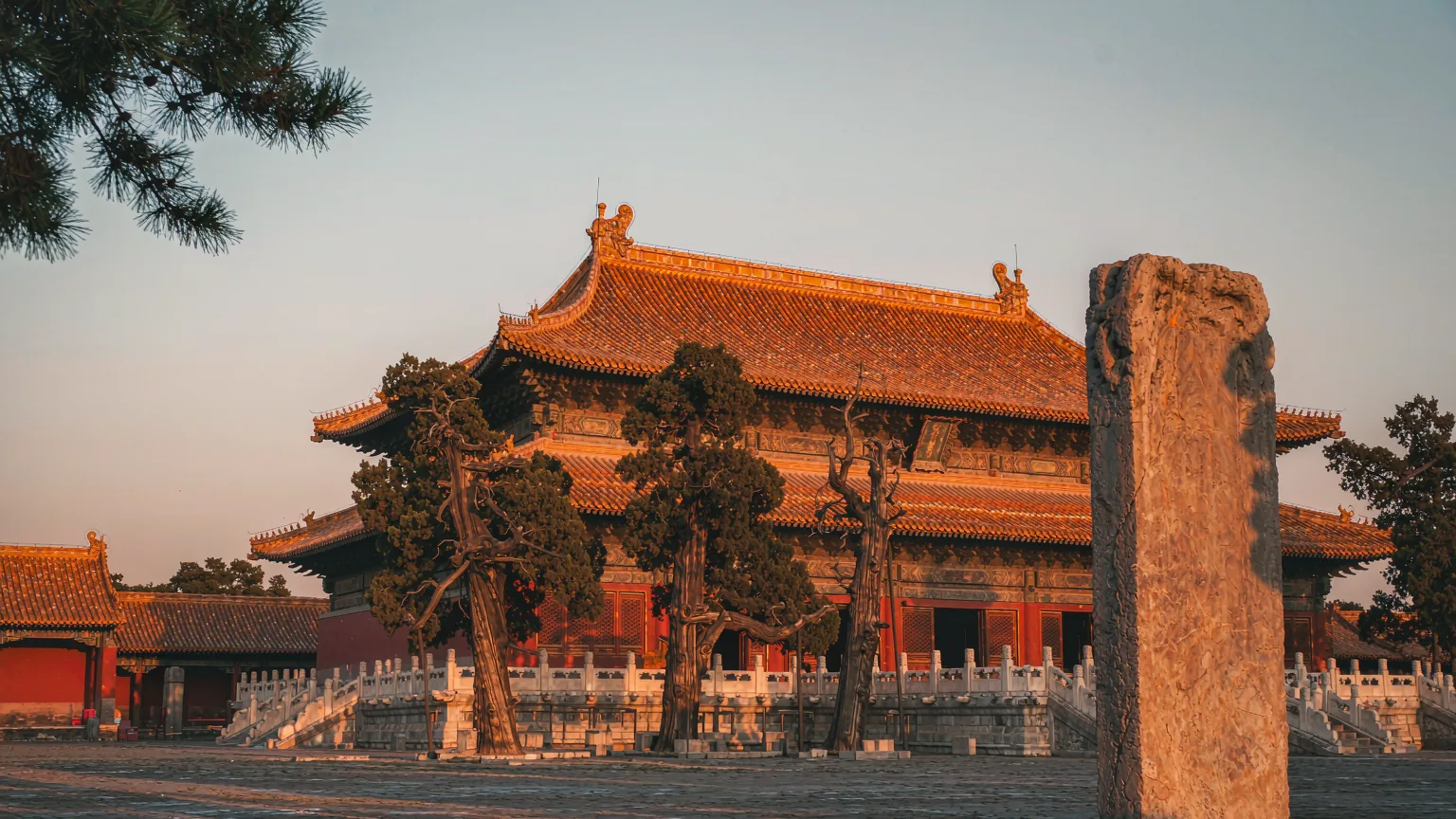
Day one's morning belongs to the temple, entering at the bell. Walk the axis from the Golden Voice Archway to Dacheng Hall, nine courtyards escalating one by one, giving Kuiwen Pavilion and the stele pavilions their due, morning light splitting the deep dragon reliefs into scale and claw.
The first day's job is collecting questions: what the imperial steles say, why the Apricot Platform sits here, where the Poetry-and-Rite Hall's name comes from. The museum, two days on, will answer each.
The Confucius Mansion: Nine Centuries of a Family
The afternoon enters the mansion, offices front and quarters behind dividing public from private: the hall's desk, the inner gate's Anti-Greed fresco and the garden as work, discipline and life, nearly nine centuries of ducal order unfolding through one courtyard group.
Ninety minutes covers the core, the rear garden closing it. No evening program today; return to the hotel, organize notes, and mentally rewalk the temple and mansion routes.
The Confucius Family Cemetery: The Morning Given to Time
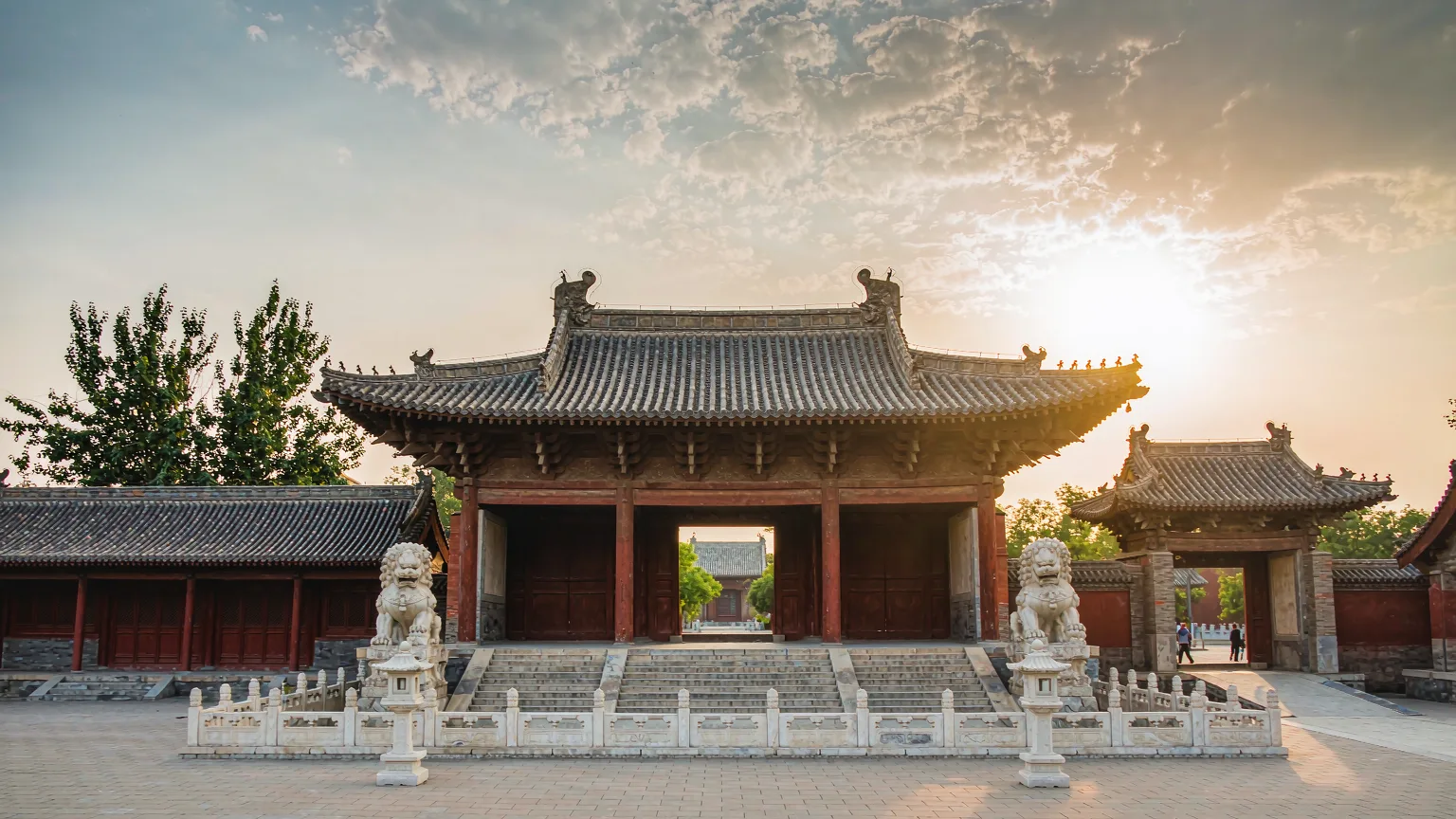
Enter the cemetery early on day two. Walk the axis from the Zhushui Bridge and offering halls to Confucius's tomb, then Zigong's planted tree and mourning hut, two millennia a stroll under tens of thousands of old cypresses, morning light slanted and the woods hushed.
The electric cart saves the legs, and the deep woods beyond the core earn twenty minutes. Looking back down the avenue on the way out, the sage temples of this very day wait ahead.
The Yan Temple: The Returned Sage and the Wellhead
The late-morning Yan Temple runs nearly empty. Full in protocol, its Huti Alley well and pavilion turn the porridge-and-gourd story into objects, dense old trees holding off the noon heat.
Forty minutes covers it. Yan Hui is the first key to Confucius's thought, and thinking of this contented pauper at the wellhead clarifies more than doing so in the temple crowds.
The Zhougong Temple: The Prelude and the Second Key
The afternoon's Zhougong Temple supplies the prelude. The Duke of Zhou devised rite and music, Confucius's lifelong model, the Heaven-and-Earth archway and main hall the body, gate cypresses as old as the cemetery's. This is the second key to Confucius's thought.
Thirty minutes suffices. With four temples across two days, the rite layer stands exhausted, so head back for a local dinner and bank energy for day three's indoor stretch.
The Confucius Museum: Answering the First Two Days
Day three turns to the learning layer. The Confucius Museum answers each question banked earlier: the life, the school's evolution, the family genealogy and ritual bronzes in the flesh, opening under the lobby's book wall with the thought gallery's screens worked one by one.
Two to three hours for the permanent show, taken slow. Viewing with questions beats any dash through, every note from the day before finding its own display case.
The Qufu Han-Wei Stele Gallery: Eye to Eye with the Canon
Day four opens with stones. The Yiying, Liqi, Shichen and Zhang Menglong steles share one room, Han clerical poise against Wei angularity, while the temple's Tang and Song imperial steles gave the emperors' view and this hall gives calligraphy history's, the two readings set side by side.
An hour suffices, one masterpiece each from Han and Wei studied close against the enlarged rubbings. Practitioners struggle to leave, and non-practitioners still feel the weight in the strokes.
The Analects Stele Garden: Reading Scripture as Landscape
The afternoon's Analects garden carves the text among pavilions and water, famous lines in calligraphers' hands set into planting and streams. The morning read steles as objects, the afternoon reads them as text, one complete day of stones.
An hour covers it, a stone bench and three silent lines the goal. Late-afternoon light slants into the colonnades for the best reading, chaining neatly into the riverside night.
The Lit Liaohe Riverside: A Waterside Intermission Midweek
Day four's night goes to the river. Both banks glow, reflections flooding the water, slow boats passing as bridge arches and lamp shadows alternate. Four days of stones, halls and documents need a slack outlet, and water-borne light is exactly it.
Dinner riverside, then walk to the street's end and back, forty minutes a loop, thinking nothing while the lamps do the work, the midweek blank a deep itinerary requires.
Nishan Sacred Land: Setting Out for the Source
Day five leaves town for Mount Ni, the birthplace. The seventy-two-meter bronze backs the hill and faces the lake, the plaza's mass nothing like the town's courtyards, the modern restatement of the school at its loudest here.
The Hall of Ren's dome earns extra minutes looking up. Mornings keep the water calm, mountain and figure mirrored together, the widest single image Qufu offers.
The Nishan Temple and Academy: Gathering at the River-Watching Pavilion
The afternoon walks to the Nishan temple and academy, Five-Dynasties buildings spreading along the slope. The River-Watching Pavilion is the whole trip's pivot, legend placing the lament over flowing water here, with the Fuzi Cave walkable below, the birth legend tied to the small stone hollow.
Visitors thin sharply here, old temple, wooded hill and cave the true face of Mount Ni. From the pavilion, look toward the Yi River and feel five days of questions and answers gather in the mountain wind.
The Wanren Palace Wall: Returning to the Town's Own Angle
Day six starts with the town itself. The Ming-era Wanren Palace Wall at the south gate takes its name from Zigong's metaphor of a wall many ren high; after six days of halls and stones, standing below the tower with the avenue running at the temple, the ancients' spatial design finally reads.
One walk down and back takes about forty minutes, locals exercising along the base in the morning. This free angle footnotes every ticket bought so far: the town exists organized by those halls.
Queli Pedestrian Street: The Formal Gift Buy
Late morning settles the gifts in one pass. Kaidiao ruyi and bracelets want local workshop marks, Nishan inkstones their stone and finish, and every rubbing gets the hand-pulled-or-printed question, a five-fold price gap.
The trick for costly goods is three shops before returning, same-piece quotes varying thirty percent; keepers love explaining, and conversation is itself one of this street's products. Lunch on the street.
Wumaci Street: A Street-Level Afternoon and the Last Restock
The afternoon's Wumaci handles two cargoes: edibles and everything forgotten. Bulk stalls of pancakes, sesame brittle and local pastries price honestly, and dense general stores and supermarkets cover any gap in ten minutes.
Dinner on the street as the fried-bun and sa-soup kitchens hit stride. Afterward inventory seven days: pad the breakables, check seals and dates on food.
The Liaohe Old Street: A Daytime Goodbye by the Water
The last day's morning passes on the old street. The river runs through the lane, stone bridges and antique fronts along the banks, daytime hushed, the waterside tea seat the closing position. Seven days of halls, stones, hill and streets settle onto this stretch of water.
Order a pot of tea and sit to noon, flipping through a week of photos and notes. With a late train, one more look at the lit riverside closes the seven days symmetrically.
| Getting around |
|
| Budget | Tickets about RMB 300 with six nights and meals dominating; the trip runs roughly RMB 1500-2500 pp. |
| Best time | Apr-May and Sep-Oct are best; take the three sites at opening, give Nishan a full day, and reshuffle Monday-closed venues ahead. |
FAQs
What do the two extra days over five add?
Rain barely changes anything: the museum and the stele gallery are indoors with the Analects garden mostly under cover, only Nishan and the wall affected. Swap Nishan and the wall to a clear day, let indoor venues fill the wet ones, and seven days absorb it all without strain.
Which stops can be dropped, and how?
Lowest priority: Wumaci Street and the lit riverside, cuttable without hurting the story, with the Analects garden compressible to half an hour. Untouchable: the three sites, the two sage temples, the Confucius Museum, the Han-Wei stele gallery and Nishan, the five pieces of the seven-day skeleton.
Can average fitness finish seven days?
Yes. The heaviest walking lands on days one and two at around twenty thousand steps daily, museum and stele days under ten thousand, and the last two days nearly rest. Tired, use the cemetery cart fully, read the garden seated, and skip one gift shop; the slack is everywhere.
How should rain adjust the plan?
Rain barely changes anything: the museum and the stele gallery are indoors with the Analects garden mostly under cover, only Nishan and the wall affected. Swap Nishan and the wall to a clear day, let indoor venues fill the wet ones, and seven days absorb it all without strain.