
Five days is the minimum for a complete Qufu: day one temple and mansion, day two the cemetery and two sage temples, day three the museum, Han-Wei steles and the Analects garden, day four Nishan Sacred Land and its temple-academy, day five the pedestrian streets, old street and night lights. Rite, learning, origin and street life, nothing missing.
Pacing hinges on days three and five, densities deliberately lowered to digest the heavy cultural input of the first two. Handle all bookings the night before and confirm the Nishan car a day ahead.
Itinerary at a glance
| 第一天 08:30 | The Temple of Confucius: The Five Days' First Lesson |
| 第一天 11:00 | The Confucius Mansion: From State Rite to Family Order |
| 第二天 08:30 | The Confucius Family Cemetery: Family and Time, Moved to Morning |
| 第二天 11:00 | The Yan Temple: The Courtyard of the Returned Sage |
| 第二天 14:30 | The Zhougong Temple: The Prelude of Rite and Music |
| 第三天 09:00 | The Confucius Museum: Immediacy Made Systematic |
| 第三天 14:00 | The Qufu Han-Wei Stele Gallery: Eye to Eye with the Originals |
| 第三天 16:00 | The Analects Stele Garden: Evening Lesson in a Garden |
| 第四天 09:30 | Nishan Sacred Land: Openness at the Birthplace |
| 第四天 14:00 | The Nishan Temple and Academy: An Afternoon at the River-Watching Pavilion |
| 第五天 10:00 | Queli Pedestrian Street: The Final Gift Inventory |
| 第五天 15:00 | The Liaohe Old Street into the Lit Riverside: Day Handing Over to Night |
The route, stop by stop
The Temple of Confucius: The Five Days' First Lesson
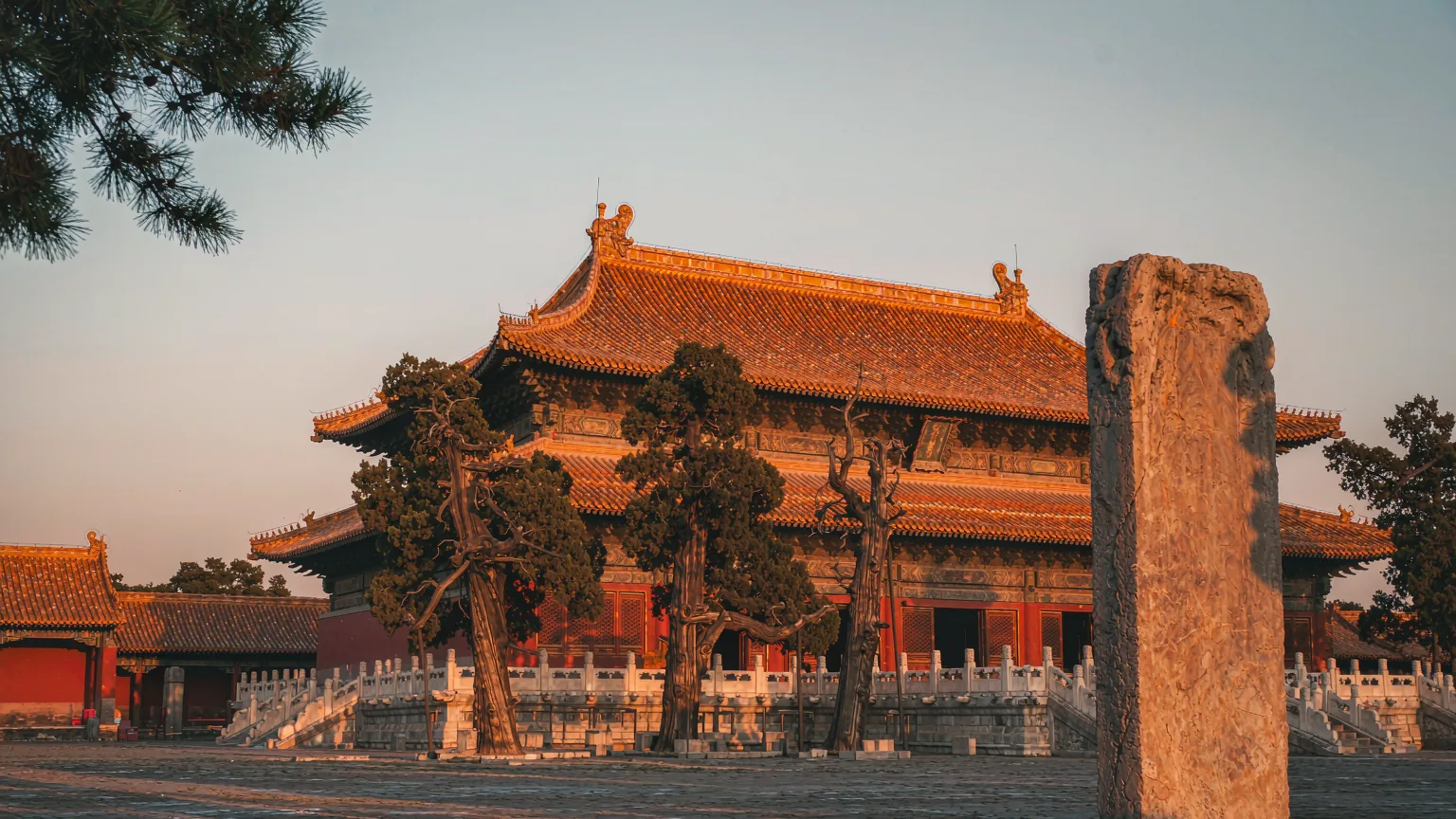
The five days open at the temple, entering at the bell. Walk the axis from the Golden Voice Archway to Dacheng Hall feeling the nine courtyards escalate step by step, giving Kuiwen Pavilion and the thirteen stele pavilions their due, morning light splitting the deep dragon reliefs into clear layers.
Two hours minimum, a guide worth hiring. The Apricot Platform and Poetry-and-Rite Hall behind the hall run dense with story; note your questions, and the coming museum days will answer them one by one.
The Confucius Mansion: From State Rite to Family Order
Enter the mansion through the passage east of the temple, offices front and quarters behind as the key to the family: the hall's desk, the inner gate's Anti-Greed fresco and the garden's cycads as the public, private and lived layers, nine centuries of ducal history compressed into one courtyard group.
Ninety minutes covers the core. Pause at the inner gate's Anti-Greed painting, the family warning its own; the rear garden is the trip's first sanctioned spot for idle sitting.
The Confucius Family Cemetery: Family and Time, Moved to Morning
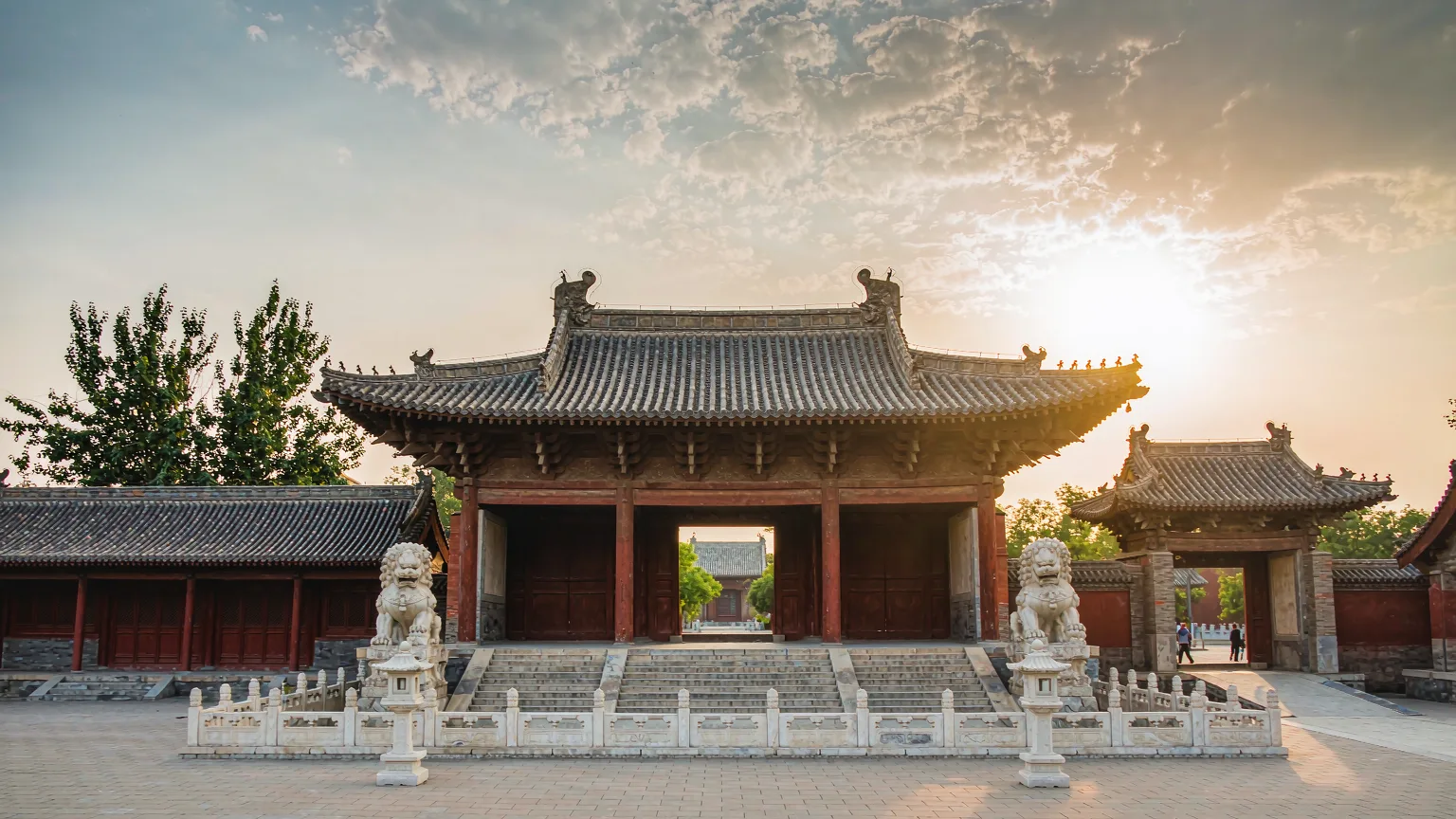
Enter the cemetery early on day two, ahead of groups and heat. Walk the axis from the Zhushui Bridge and offering halls to Confucius's tomb, then Zigong's planted tree and mourning hut, two millennia compressed into a stroll under tens of thousands of old cypresses.
The electric cart halves the legwork, and the quiet beyond the core earns twenty minutes. Morning light comes slanted and soft, a double golden hour for photos and idle thought alike.
The Yan Temple: The Courtyard of the Returned Sage
Walk back into town from the cemetery, reaching the Yan Temple by late morning. Full in protocol yet thin of visitors, the Huti Alley well and its pavilion land the porridge-and-gourd story into objects, the particular charm of Qufu's smaller temples.
Forty minutes covers it. Against the temple quarter's noise the quiet turns touring into rest, and any interest sparked in Yan Hui transforms the related Analects chapters afterward.
The Zhougong Temple: The Prelude of Rite and Music
The afternoon's Zhougong Temple supplies the story's prelude. The Duke of Zhou devised rite and music, Confucius's lifelong model; the temple runs small, the Heaven-and-Earth archway and main hall its body. Grasp the Duke and Confucius's project gains its origin.
Thirty minutes suffices. The gate cypresses and lingxing gate photograph well, visitors scarce, a quiet corner for digesting two days of input, with a local dinner at dusk.
The Confucius Museum: Immediacy Made Systematic
Day three's morning goes to the Confucius Museum, where the first two days' immediacy becomes system: the life, the school's evolution, the family genealogy, every case object mapping back onto some courtyard already walked.
Two to three hours for the permanent show. See the lobby book wall and the on-the-hour projection first, work the thought gallery's interactive screens one by one, the densest information in Qufu and the answer key to every prior question.
The Qufu Han-Wei Stele Gallery: Eye to Eye with the Originals
The afternoon goes to stones. The Yiying, Liqi, Shichen and Zhang Menglong steles share one room, Han clerical poise against Wei angularity along one route, practitioners finding it hard to leave.
An hour suffices, one masterpiece each from Han and Wei, cross-read against the enlarged rubbings. The texts, mostly officials' temple and rite paperwork, prove the school landed at the administrative level, footnoting the museum's story.
The Analects Stele Garden: Evening Lesson in a Garden
Day three closes at the Analects Stele Garden. Lines from calligraphers across eras sit among pavilions and water, sentences read days prior reappearing in a different material.
An hour covers it, late-afternoon light slanting into the colonnades the best reading hour. Sit on a stone bench and silently reread one line, and the day's lesson runs full.
Nishan Sacred Land: Openness at the Birthplace
Day four drives to Mount Ni. The seventy-two-meter bronze backs the hill and faces the lake, the plaza's scale nothing like the sites' courtyards, a modern language restating the school. Mornings keep the water calm, mountain and figure mirrored together.
The Hall of Ren's dome earns extra minutes looking up. The grounds run vast with cart links, saving legs for the lakeside path and the afternoon's old temple.
The Nishan Temple and Academy: An Afternoon at the River-Watching Pavilion
The afternoon walks to the Nishan temple and academy, Five-Dynasties architecture spreading along the slope. The River-Watching Pavilion is the pivot, legend placing Confucius's lament over flowing water here, with the Fuzi Cave walkable below, the birth legend tied to the small stone hollow.
Visitors thin out sharply from the showpiece zone, and the pairing of old temple, wooded hill and cave is Mount Ni at its most durable. From the pavilion, look toward the Yi River and let five days of threads gather in the mountain wind.
Queli Pedestrian Street: The Final Gift Inventory
Day five holds no hard schedule, the morning spent settling gifts along Queli. Kaidiao, inkstones and rubbings all met in passing days before, today they get bought: marks on bracelets and inkstones, the hand-pulled question on rubbings, dates and seals on Mansion pastries.
Walk to the temple's outer wall and back, lunch on the street, and let the return train set the afternoon: slack means tea on the Liaohe old street, tight means the station straight away.
The Liaohe Old Street into the Lit Riverside: Day Handing Over to Night
The five days end on the Liaohe. Walk the old street to its end in the afternoon and take a waterside tea seat; when dusk lights the banks, stay, both shores glowing, reflections flooding the water, slow boats passing, the town folding its day into the river.
Dinner riverside, one loop after the lights, then back. Five days opened on the temple's dragon columns and close on lamplight in the water, kaidiao and rubbings in the luggage, the trip complete.
| Getting around |
|
| Budget | The combo about RMB 140 and Nishan about RMB 150 with most of the rest free; allow roughly RMB 700-1200 pp with meals and transport. |
| Best time | Apr-May and Sep-Oct are best; take the three sites at opening, Nishan in evening light, and reshuffle Monday-closed venues ahead. |
FAQs
Will five days feel repetitive?
Not if the days follow themes: one and two are the stage of rite, three of learning, four of origin, five of street life, different material daily. Repetition usually means too many steles on day one, so cap the temple at two hours and it never arrives.
Does Nishan deserve a full day, or will half do?
Half a day covers the core: statue, Hall of Ren, Nishan temple. The full day adds night lights and shows for a far more complete experience. Within five days there is room, so take the full version and keep the dusk pavilion for the finale.
Where does the budget concentrate, and how to save?
Tickets are the minor share, combo plus Nishan about RMB 290; five nights of lodging and meals dominate, with guides and carts the main variables. Save by traveling off-season for twenty to thirty percent cheaper rooms, letting free venues like the museum and garden cover paid ones, and ordering the banquet a la carte.
How should a Monday departure reshape the plan?
The Confucius Museum and some venues close Mondays while the three sites and the garden do not. Slide the museum from day three to Tuesday, fill Monday with the cemetery and temples, or pull day five's streets forward. Five days absorb the shuffling with almost no loss, just check each venue's notices first.