
Qufu holds more than steles and halls, also mountains, water and trees two millennia in the planting. Three days exhaust the natural side: Mount Ni, the birthplace, low but misty, its lake and bronze statue framing Qufu's widest scene; the cemetery's cypress wood as the town's best natural air; the Liao River handing over both dusk and night.
Intensity tapers: day one travels farthest and sees most, day two strolls gardens and temples, day three keeps only wall and riverbank. No stairway trials anywhere, fit for recovery or for flanking a three-sites trip.
Itinerary at a glance
| 第一天 09:30 | Nishan Sacred Land: The Statue and the Open Lake |
| 第一天 14:00 | The Nishan Temple and Academy: Old Buildings and the River-Watching Pavilion |
| 第一天 19:30 | The Lit Liaohe Riverside: Water Nights after the Return |
| 第二天 08:30 | The Cemetery Cypresses: A Green Cathedral Two Millennia Deep |
| 第二天 11:00 | The Analects Stele Garden: Reading a Garden like a Book |
| 第二天 14:30 | The Yan Temple: An Afternoon of Old Trees and a Wellhead |
| 第二天 16:30 | The Zhougong Temple: Before Dusk under Old Cypresses |
| 第三天 09:00 | The Wanren Palace Wall: A Ming-City Morning |
| 第三天 15:00 | The Liaohe Old Street: Closing Three Days by the Water |
The route, stop by stop
Nishan Sacred Land: The Statue and the Open Lake
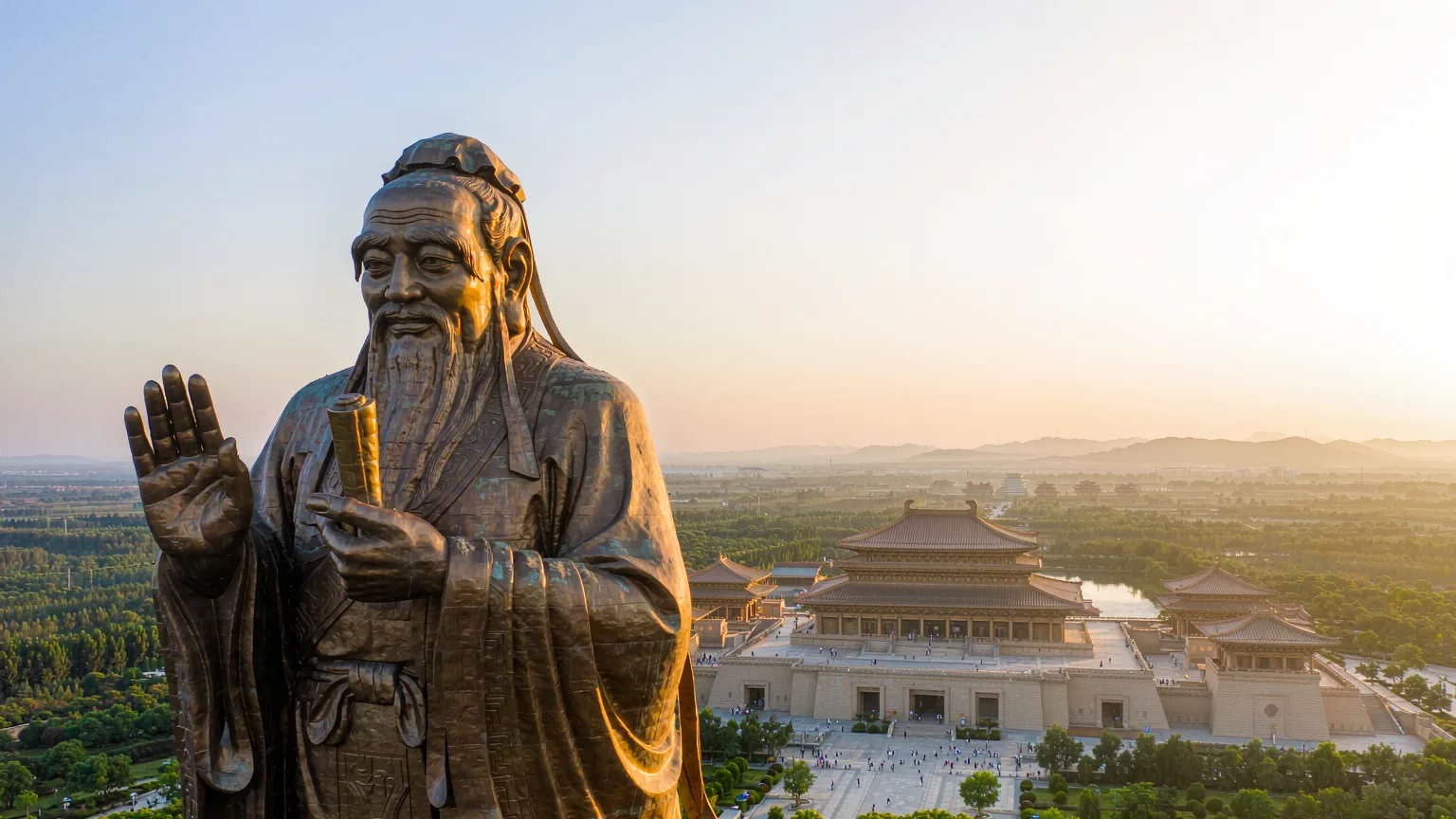
The three days open at the farthest stop. Nishan's master image is the seventy-two-meter bronze of Confucius, back to the hill and facing the sacred lake; from the Golden Voice plaza the mass lands as pressure and solemnity at once, and in a windless morning the lake mirrors both mountain and figure.
The Great Hall's Hall of Ren stands opposite, its dome and lighting the park's finest work. See statue and plaza first, then duck into the hall past the noon heat, letting electric carts handle transfers while legs go to the lakeside path.
The Nishan Temple and Academy: Old Buildings and the River-Watching Pavilion
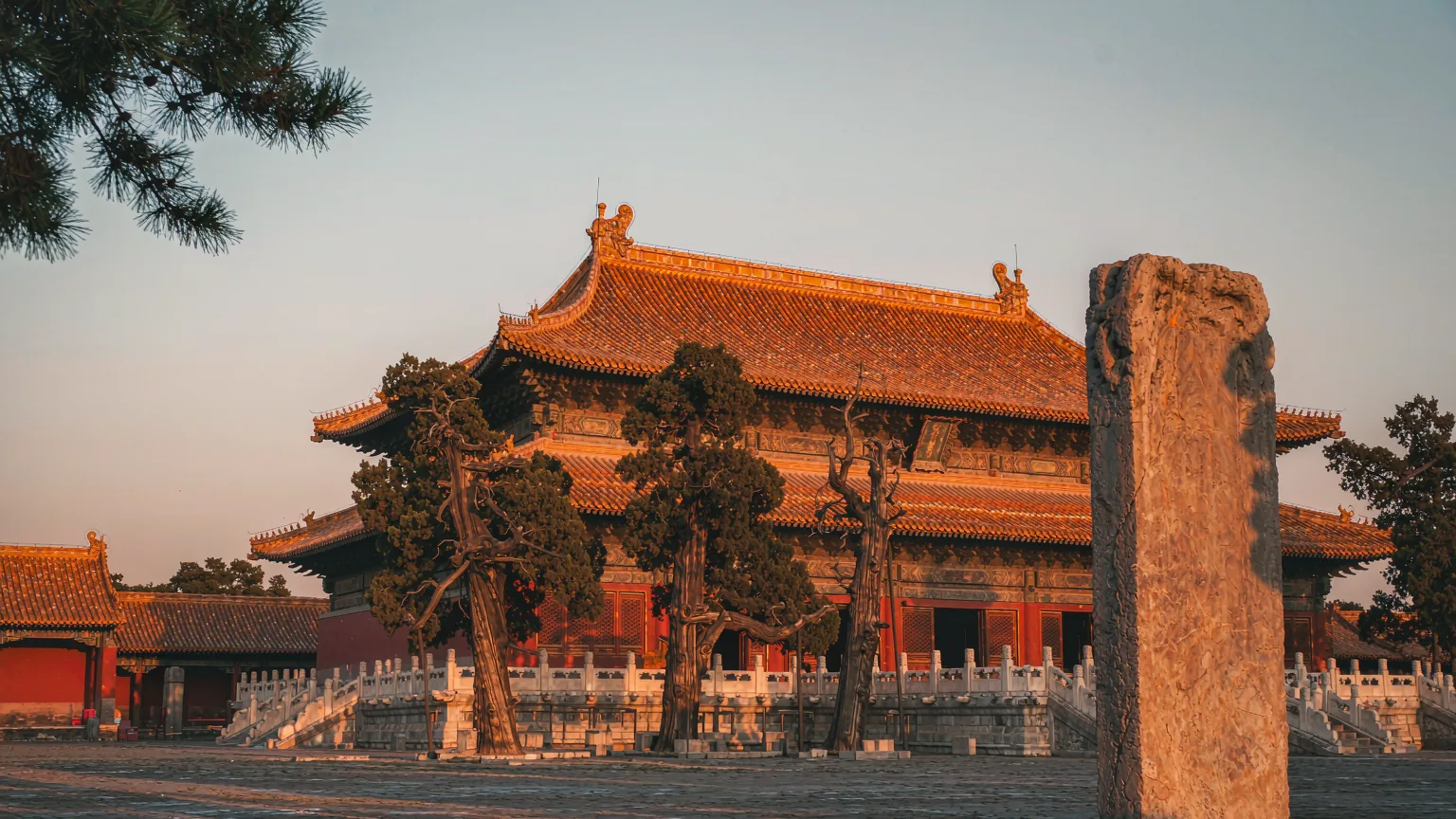
The afternoon walks to the temple and academy on the north side, genuine Five-Dynasties architecture spreading along the slope. The River-Watching Pavilion is the pivot, where legend has Confucius lamenting time over the flowing water; stand inside, look toward the Yi River, and the mountain wind explains more than any guide.
The Fuzi Cave lies walkable below, the birth legend tied to this small stone hollow. Crowds thin sharply here, and the pairing of old temple, wooded hill and cave is Mount Ni at its most durable, outlasting the showpiece zone.
The Lit Liaohe Riverside: Water Nights after the Return
Back in town from Nishan, the evening belongs to the Liaohe lights. After dark both banks glow, reflections flooding the water, slow boats passing while bridge arches and lamp shadows alternate. Artificial light inside a nature trip looks contradictory but fits: the day gave landscape's openness, the night gives a small town setting its light afloat.
Dinner riverside, then walk to the street's end and back, forty minutes a loop, dissolving most of the long day's ride fatigue in evening wind and water glow.
The Cemetery Cypresses: A Green Cathedral Two Millennia Deep
Day two's morning belongs to the cemetery, viewed as wood, not tombs: tens of thousands of cypresses centuries old at minimum, the oldest legends passing a millennium, canopy overhead with dawn light leaking through, the air all cedar breath, Qufu's richest oxygen and negative ions.
Walk the avenue from the great gate to Confucius's tomb, then bend into the deep-woods quiet zone. The double identity as garden and burial ground gives the hush its weight; slow down, pocket the coughs and the phone.
The Analects Stele Garden: Reading a Garden like a Book
From the cemetery, shift to the Analects Stele Garden, the Analects carved into a landscape. Famous lines in calligraphers' hands from many eras sit among pavilions and water, planting slowing the text's pulse. At eleven the garden runs nearly empty, stone benches and shade all yours.
Use it seated: take a corner, silently read the stele before you, then the next. Three lines an hour is passing for this line of travel, the full garden walked is excellence.
The Yan Temple: An Afternoon of Old Trees and a Wellhead
The afternoon's Yan Temple is the three days' most underrated stop. Full in protocol yet thin of visitors, its old trees and the Huti Alley well turn the porridge-and-gourd story into objects. The canopy is thick, holding the afternoon's heat outside the walls.
Forty minutes covers it, the wellhead and its pavilion the focus. Against the temple quarter's noise, the quiet turns touring into rest, and ten idle minutes under the colonnade fit this day better than three more steles.
The Zhougong Temple: Before Dusk under Old Cypresses
The day closes at the Zhougong Temple. The shrine to the Duke of Zhou runs small, the Heaven-and-Earth archway and main hall its body, the gate cypresses as old as the cemetery's. Visitors scarce, pre-dusk light slants through the lingxing gate and warms the courtyard.
Thirty minutes suffices. The Duke, Confucius's lifelong model, is the prelude of rite and music; grasp him and Confucius's project gains its origin. Ten minutes on foot from the Yan Temple, and dusk sends you out to a local dinner.
The Wanren Palace Wall: A Ming-City Morning
Day three relaxes fully, morning along the Wanren Palace Wall and its avenue at the Ming city's south gate. The wall survives from the Ming, the avenue running straight at the temple, morning light raking the bricks while locals exercise along the base, the town's most lived-in image of the day.
One walk down and back takes about forty minutes, reading the rammed core and brick skin. The feel differs utterly from the temple's solemnity, the best angle on a city living beside its relics.
The Liaohe Old Street: Closing Three Days by the Water
The itinerary's last stop is the old street's afternoon. The river runs through the lane, stone bridges and antique fronts along the banks, daytime hushed, the waterside tea seats Qufu's most comfortable closing position. Three days of hill, trees and wall settle finally onto this stretch of water.
Order a pot of tea and sit toward dusk, walking to the street's end and back before the lamps come on. Dinner on the street, catch the first minute of lights, and the trip's ease is sealed.
| Getting around |
|
| Budget | Nishan Sacred Land about RMB 150 with the rest free or cheap; the trip runs roughly RMB 300-600 pp. |
| Best time | Apr-May and Sep-Oct are best; Nishan empties after four as groups leave, and the river lights run all year. |
FAQs
Does this nature line still need the three-site combo?
Only the cemetery ticket is needed, temple and mansion outside this line, a single-site ticket cheaper than the combo, priced per posted notice. The temple's exterior, the avenue and the wall are all free, no reason to upgrade for that.
Is half a day enough for Nishan Sacred Land?
Yes, but only the core: the statue, the Hall of Ren and the Nishan temple. Night light shows and performances demand staying past evening, a full day then. Within this three-day rhythm the half-day version wins, giving the night to the Liao River for better value.
Does tree-only visiting waste the cemetery ticket?
Not wasted, tree and tomb being one: the cypresses survived precisely because this is a protected family cemetery, the trees the ground's second body. Walk to Confucius's tomb, then bend into the deep woods, and the ticket earns itself fully.
The best season and the best hours within each day?
April-May and September-October run steadiest, trees and water at their best in both shoulder seasons. Nishan wants morning, the cemetery early morning, garden and temples afternoon, the river evening; the timetable is essentially designed around light, so copy it as is.