
Shanghai's culture hides in two belts: the People's Square to Pudong museum belt led by the East Wing, and the Xuhui riverside gallery belt led by Long and West Bund museums. The route goes east in the morning for the masterpieces, the bronze collection ranking national top tier, west in the afternoon for the contemporary scene, and closes on traditional opera, three faces of the city in one day.
The homework is booking: the East Wing is free but time-slotted, West Bund special exhibits sell separately from permanent shows, and Kunqu studio seats are few. Do it all online and the day itself is only looking.
Itinerary at a glance
| 09:30 | The East Wing: Bronze and Painting Before Noon |
| 12:30 | Riverside Lunch and the Transfer |
| 14:00 | The West Bund Galleries: An Afternoon of the Contemporary |
| 17:30 | Riverside Dusk and Dinner |
| 19:30 | The Night Slot: Kunqu, Theater or Symphony, Pick One |
The route, stop by stop
The East Wing: Bronze and Painting Before Noon
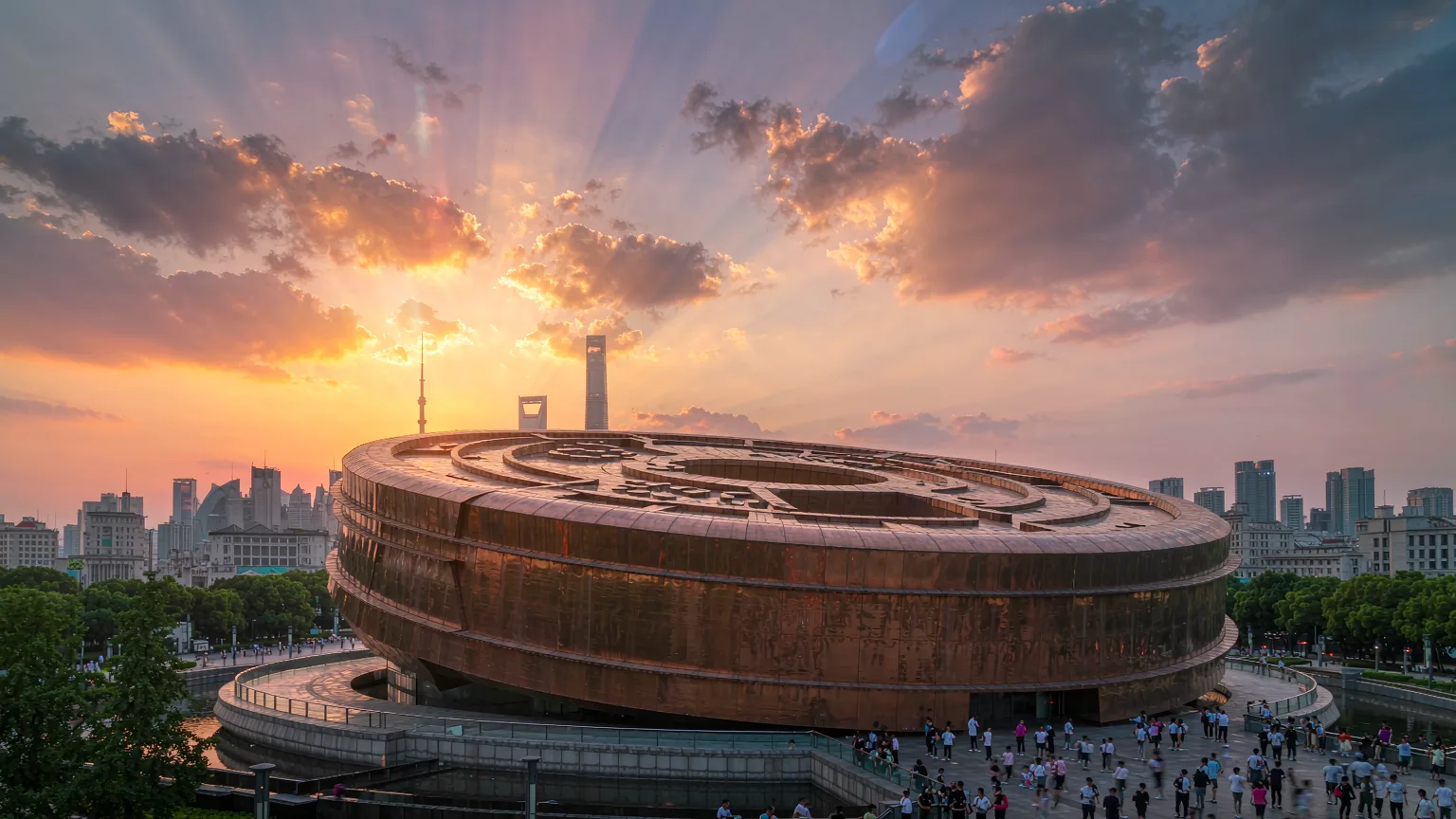
The East Wing, fully open since 2024, curates its bronze hall at textbook level, from Erlitou through Qin-Han by typology and inscription, with the great Ke ding and the Zizhong Jiang basin on the permanent line. The painting galleries rotate works on schedule, so check what is up before you go.
The wing's luxury is space: tall halls and wide flows, no glass-pressing even in season. The fourth-floor urban archaeology gallery digs up Shanghai's underground history, this museum's native easter egg.
Manage the intensity at the East Wing: bronzes and paintings sit on different floors, so check the current painting rotation's gallery number before riding up, and the benches cluster near the elevator halls. Sit for five minutes every hour of viewing; that is the baseline for surviving several museums in a day.
Riverside Lunch and the Transfer
Cross the river to Xuhui's west bank in about forty minutes, line 4 then 11 or a taxi. Lunch at the West Bund camp strips, priced for museum crowds at 60-120 a head.
The riverside path runs walkable from the Long Museum to the West Bund Museum, the most successful stretch of the Huangpu's transformation, running tracks, climbing walls, picnic lawns and container markets sharing one bank.
The West Bund Galleries: An Afternoon of the Contemporary
The West Bund Museum's five-year Pompidou partnership keeps a slice of the French national modern collection on long display, while the Long Museum's concrete vaults are an exhibit themselves. With the small galleries around, ShanghART and Aike, the belt walks in twenty minutes, played as one big show plus one free space.
Contemporary art newcomers lose nothing: the West Bund's permanent narrative, Duchamp through Zao Wou-ki, reads clearer than most textbooks.
The riverside path between the two museums earns its walk: the raw-concrete vaults of the Long alongside cargo barges on the river is a picture unique to the West Bund. If the legs object, shared bikes park between the two, five minutes door to door, saving your steps for what hangs inside.
Riverside Dusk and Dinner
Galleries wind down around six, handing dusk to the riverside path, the Lupu Bridge and Houtan skyline recoloring in sunset. Dinner splits two ways: riverside for views at higher prices, or back downtown for range and honest rates.
Downtown Benbang is the recommendation: veterans like Lanxin or Lao Jishi need reservations, and the red-braised pork and braised intestine are the required orders. RMB 150-250 pp.
The Night Slot: Kunqu, Theater or Symphony, Pick One
The culture day ends with audible Shanghai: Kunqu at the Lanxin Theater or the Zhou Xinfang space near Yu Garden, small and beautiful with bilingual surtitles; theater at Anfu's drama center; symphony at the Shanghai Symphony Hall on Fuxing Middle, whose building alone earns the trip. All three share small houses and dense experience.
Picking tips: Kunqu by the classic Peony Pavilion scenes, the Garden and the Interrupted Dream; theater by the season's premieres; symphony by the published season calendar. The metro mostly still runs after curtain, and these districts stay impeccably safe at night.
| Getting around |
|
| Budget | Most halls free; budget RMB 100-300 pp including special exhibits and a show. |
| Best time | Year-round; both the East Wing and West Bund galleries need booking, three days out during special exhibits. |
FAQs
East Wing or the old People's Square museum?
By collection: bronze and archaeology belong to the East Wing, fully upgraded in display and storage; painting, calligraphy and furniture still rotate in the People's Square system. Tickets release separately, book both if time allows, and the bronze half-day repays the trip.
Is the West Bund worth it for contemporary-art novices?
Yes, and it is the best classroom going: the permanent narrative is designed for zero-background visitors, with architecture and riverside views as free bonuses. Finish the permanent show and you catch yourself forming opinions, which is exactly what a good museum does.
What if I cannot follow the Kunqu singing?
Three tools: a surtitled performance, a ten-minute read of that night's story, and permission to spend the first twenty minutes on sound alone. The water-polished melody is music, not information, let the subtitles carry plot and the ears carry beauty.
What does this museum day cost in total?
The spread comes from special shows and the evening performance. The base day is nearly free: the East Wing reservation, the West Bund permanent collection and the riverside cost nothing beyond lunch and transit. Add an 80 to 150 yuan special exhibition and a 100 to 280 yuan Kunqu seat and you land near 300 a head, already comfortable. Dinner swings the most, with heritage Benbang rooms at 150 to 250 and their mall cousins about half that.