
This route unfolds Shantou's geography squeezed between hill and sea: Queshi's granite and the inner bay as act one; Nan'ao's Huanghua Mountain forest park, among Asia's rare island national forests; the ring road's northern mudflats and pond farms, a cafeteria for migrating birds; and Qing'ao Bay plus the rocky coves as the final two acts.
Nature days run heavier kit than city ones: grippy shoes, sun hat, repellent and binoculars. Pacing follows tide and light, mudflats at ebb, hill mist at dawn, sunset at close, so spend the clear days where they count.
Itinerary at a glance
| 09:00 | Queshi's Ta Hill: First Lessons in Granite and Sea |
| 14:00 | The Seafront Promenade: Mudflat Watching at Low Tide |
| 09:00 | The Nan'ao Bridge: The Moment of Crossing |
| 10:30 | Huanghua Mountain National Forest Park: Old Forest on an Island |
| 14:30 | The Ring Road's North Stretch: Mudflats and Ponds, the Migrants' Cafeteria |
| 17:00 | Qing'ao Bay: Giving the Day to the Sea |
| 08:00 | The Nature Gate: Sunrise on the Tropic of Cancer |
| 10:00 | Song Well: Fresh Water between Tides |
| 14:00 | Gold-Silver Isle: A Finale of Rocks and Legends |
The route, stop by stop
Queshi's Ta Hill: First Lessons in Granite and Sea
The nature line opens on Queshi's hill, a seaside granite mass polished for ages by tide and monsoon, boulders stacked and caves linked, the Chuihong cave chain the finest sector, trails threading the stone seams. From the summit the inner bay and city skyline share one frame.
Ta Hill's charm is mountain beside sea: unlike inland peaks, every walkway carries sea wind and tide sound. The round trail takes two hours at a gentle grade, a proper warm-up for three nature days.
The Seafront Promenade: Mudflat Watching at Low Tide
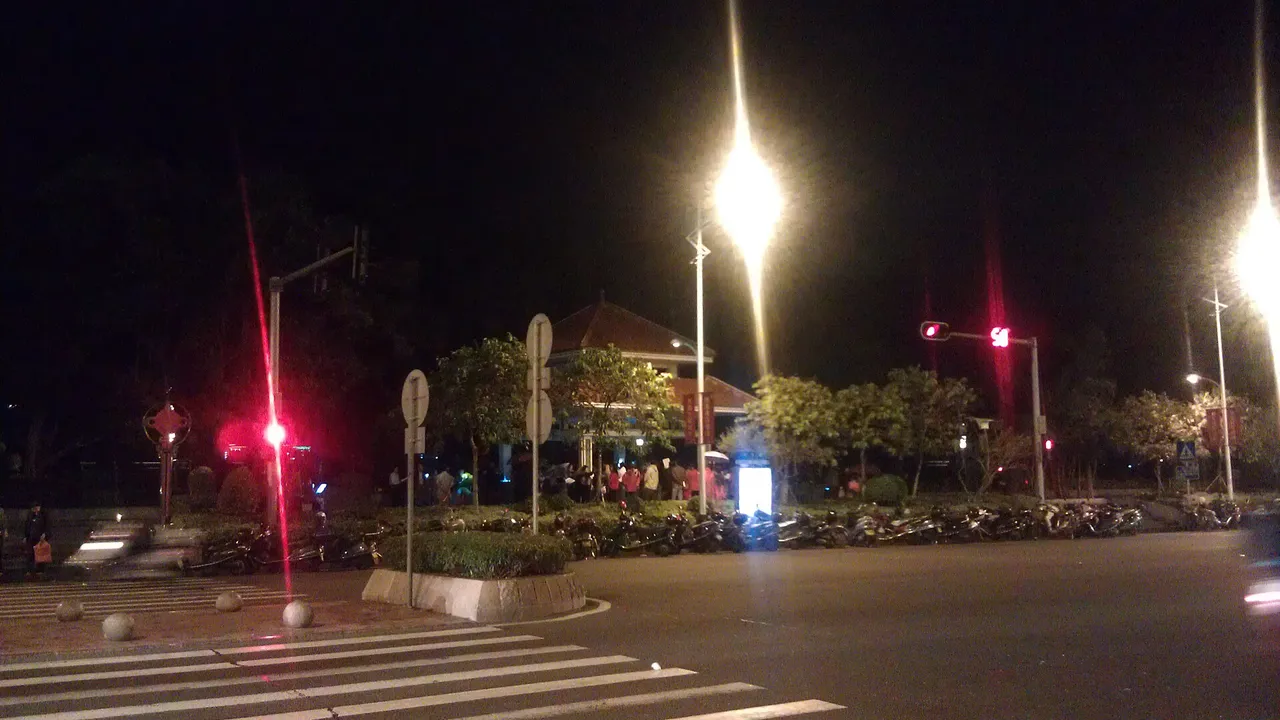
Cross back at midday and press the promenade into service as a watching point. At ebb the mudflats surface, egrets and sandpipers feeding while locals bend for shellfish, a full intertidal scene; the binoculars earn their first hour here.
Shade trees and pavilions make easy rest, with an herbal tea on the way. Early sleep is mandatory tonight: Nan'ao awaits, and dawn is prime time for flats and hill mist.
The Nan'ao Bridge: The Moment of Crossing
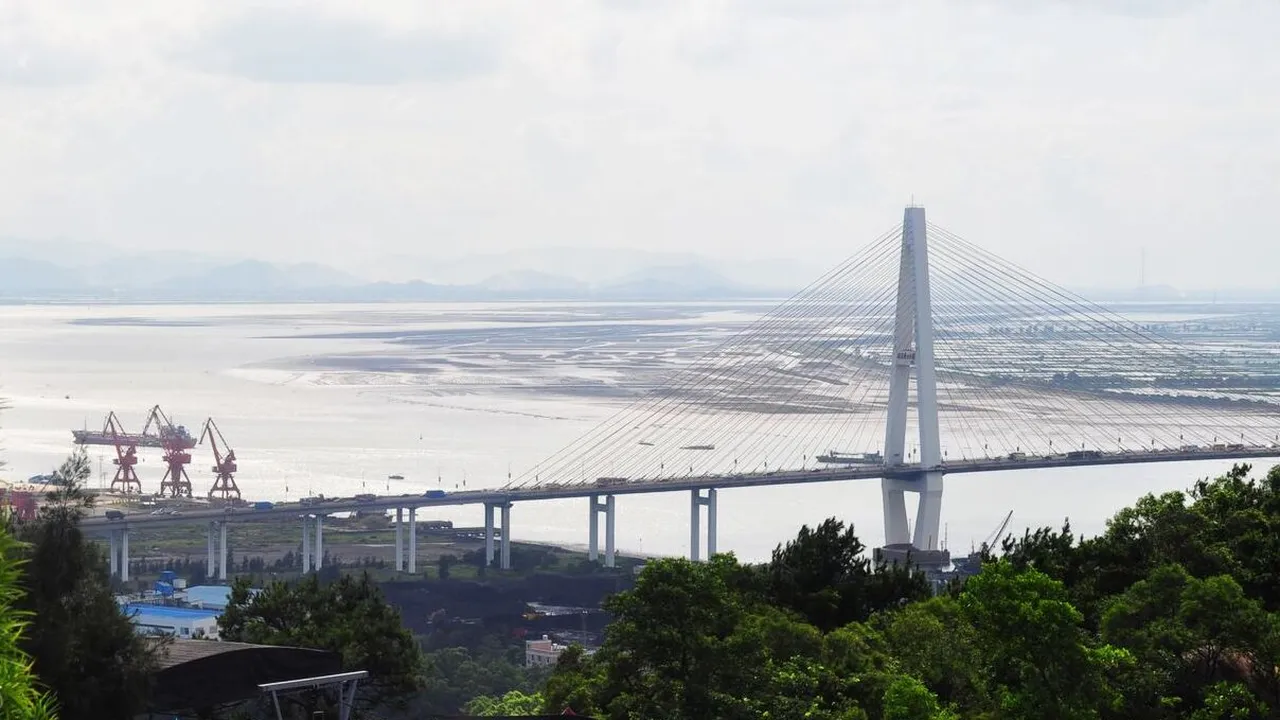
Cross onto Nan'ao on the second morning. Along eleven kilometers the sea shifts from inshore grey-green to offshore blue, wind turbines ranked on the island's western ridges; before the bridge, crack a window and let the salted wind in, the ritual of entering nature mode.
Stop once at the bridgehead viewing platform to look back at the span and the Shantou shore. Slow the first island day: nature lines reward detail, not checklist density.
Huanghua Mountain National Forest Park: Old Forest on an Island
Huanghua is among the country's few island national forest parks, low hills under complete canopy: Formosan acacia, masson pine and native broadleaf in mixture, the understory air so dense with oxygen that breathing turns deliberate. Trails climb to a summit platform in permanent shade, comfortable even in summer.
Birding runs a full class above the city: dark-backed white-eyes and red-whiskered bulbuls work the forest edge, and with luck a raptor passes over. About ninety minutes of trail, the line's only pure forest walk.
The Ring Road's North Stretch: Mudflats and Ponds, the Migrants' Cafeteria
Work the ring road's north stretch in the afternoon, aquaculture ponds and mudflats inland, open sea out. In migration season, plovers feed on the flats, egrets stalk the pond edges, and fishing rafts share frames with flocks, Nan'ao's ecology at its truest.
Birder's etiquette: no flushing, no feeding, keep distance; a long lens beats walking closer. Several lay-bys allow parking, and a charter's edge is following the flocks.
Qing'ao Bay: Giving the Day to the Sea
Reach Qing'ao Bay by early evening. Over two kilometers of arc, the sand fine and water clear; walk barefoot a stretch, the sand the best massage around. As the bay-mouth light slants, the beach turns from gold to honey, swimmers come ashore, and the bay goes quiet.
Staying near Qing'ao tonight is the smart call: tomorrow's Nature Gate sunrise and the night beach both reward it. Dinner at a bay-side stall, sea wind sharing the table with wok breath.
The Nature Gate: Sunrise on the Tropic of Cancer
Reach the Nature Gate plaza around half past six. The Tropic-of-Cancer marker is a hollow sphere; at every clear sunrise the light climbs through it from the sea, and while the strict astronomical alignment comes only at summer solstice noon, any clear dawn makes the shot.
The plaza stands near empty at this hour, surf the only soundtrack. After sunrise come local dawn swimmers and shore gleaners, people and nature in one frame, Nan'ao's quietest hour.
Song Well: Fresh Water between Tides
Mid-morning at Song Well in Yun'ao. Legend says the fleeing Song court dug here for water, wells on the beach appearing and hiding with the tide yet always fresh, the island's famous double riddle of history and geology. Wellheads, steles and a platform form a compact site, an hour well spent.
Use the tide table as your guide: the hour around low tide shows the wells whole, and watching the flood swallow the platform has its own interest. Walk the rocks slowly; moss and sea mud out-slick all expectations.
Gold-Silver Isle: A Finale of Rocks and Legends
The last call is Gold-Silver Isle, where the Ming pirate Wu Ping was said to bury his treasure. At ebb the reef field surfaces, boardwalks and zigzag bridges threading the rocks, and the layered sea-erosion landforms outshine the legend; tide pools full of small fish and crabs delight children.
The site is compact, forty minutes around, a fitting close to three nature days: hill, forest, flats, beach and reef complete the coastal set. Before the island, shucked oysters at a nearby village give the nature line a fresh full stop.
| Getting around |
|
| Budget | Entries over three days total RMB 60-100; island charter RMB 400-600 a day, RMB 600-900 pp before lodging. |
| Best time | October to April fills the mudflats with migrants; in summer take hills at dawn, mudflats at low tide, and Qing'ao after four. |
FAQs
Which months are truly best for the nature line?
October through April is the all-round season: migrants on the flats, cool air, clearer water. Summer buys swimmable Qing'ao and the Nature Gate sunrise at the price of midday glare and typhoon risk; the compromise is late September into early October, water still warm and birds arriving.
Are binoculars worth carrying for a non-birder?
Yes. Beyond birds, the uses stack: fishing-port details, texture of opposite hills, stele inscriptions at Song Well, turbines on the ring road. A basic eight-power glass at a few hundred yuan suffices, rented or borrowed still beating naked eyes, with flats and forest edge the biggest gains.
What if weather turns mid-trip?
Nature lines are weather-sensitive, so pre-plan fallbacks: in rain swap hills for forest under canopy, flats for museums, and when bridge or ferry closes, promote city nature spots, Queshi's lower grounds and the promenade hold up in wind and rain. One red line only: no sea walls and no swimming under typhoon warnings.
What should one know about shore gleaning and tide-pool watching?
Three rules: check tides (the hour after ebb is the window), protect feet (rubber or canyoning shoes against slips and cuts), and photograph without collecting (tide-pool life is fragile, and some shells are toxic). Watching the catch-sorting is fine up close; before picking anything, copy the locals, since some flats are off-limits farm beds.