
Five-day Shantou runs in four movements, town, bay, island, country: the first two days stay in the treaty town and inner bay, exhausting the pavilion quarter, Mazu temple, two museums, Queshi and the promenade; day three crosses to Nan'ao for the ring road and Qing'ao with an island night; day four takes Song Well and the commander's compound, returns, and joins the countryside line at the Chen Cihong mansion; day five closes with Dahao and its fish balls, an evening gap-sweep, and the night market.
The core idea is one sea crossing: sleeping once on Nan'ao saves two transits and buys the island's dawn and night. Two city days, two country days, one focus per day with everything else en route.
Itinerary at a glance
| 09:00 | Xiaogongyuan and the Memorial Pavilion: The Five Days' Center |
| 11:00 | The Mazu Temple and Its Dumplings: Goddess and Kitchen |
| 14:30 | The Letters Museum and Treaty-Port Hall: An Afternoon of History |
| 09:00 | Queshi Scenic Area: Day Two's Summit Panorama |
| 14:30 | The Seafront and Cannon Fort: A Bay-Side Afternoon |
| 08:30 | The Nan'ao Bridge and Landing: Day Three over the Sea |
| 13:30 | The Ring Road: Turbines, Villages and Stopping at Will |
| 16:30 | Qing'ao Bay and the Nature Gate: Sand and Astronomy |
| 09:30 | Song Well and the Commander's Compound: Day Four's History Slot |
| 15:30 | The Chen Cihong Mansion at Qianmei: The Countryside Estate |
| 09:30 | Dahao Walled Town and Fish Balls: The Last Day's Proper Meal |
| 16:00 | The Gap Sweep and Night Market: Five Days' Close |
The route, stop by stop
Xiaogongyuan and the Memorial Pavilion: The Five Days' Center
Day one circles the treaty quarter from the memorial pavilion as hub. Restored arcades carry rich pediments, arches and lime relief, the old Nanseng corner tower the most photogenic. Circle the outer ring for orientation, then dive deep along Shengping Road.
Morning builds spatial sense: the old town radiates like umbrella ribs, and once the pavilion is fixed as hub, four more days hold no risk of getting lost. Shoot casually under the arcades now, saving serious photography for tonight's lamps.
The Mazu Temple and Its Dumplings: Goddess and Kitchen
At the quarter's edge, the old Mazu temple joins Tianhou and Guandi halls, Qing porcelain inlay and woodcarving intact, a dense specimen of Chaoshan craft. Next door, the heritage shop's two-flavor zongzi splits savory and sweet, and with an oyster omelette makes the canonical lunch.
Enter before eleven to beat crowds; the ridge porcelain reads best from across the street. Dumpling queues swell at noon, so buy first and wait inside the temple, timing beating location.
The Letters Museum and Treaty-Port Hall: An Afternoon of History
Link the two galleries in the afternoon: the treaty-port hall on commerce since 1860, the letters museum on emigration, remittance and correspondence, one facing outward and one inward, together completing modern Shantou's story. The captions beside paper originals move readers.
Ten minutes on foot between them, ninety minutes each the comfortable pace. After the exhibits, step into the quarter to match names on the ground, old street names reviving corner by corner, the museum day's cheapest extension.
Queshi Scenic Area: Day Two's Summit Panorama
Day two crosses by square ferry to climb Queshi. The Ta Hill trail sums up in forty minutes with the Chuihong cave chain en route, and the summit gathers inner bay, arcades and sea bridge into one frame, the definitive viewpoint on the one-bay-two-shores idea.
The morning settles two tasks at once, ferry experience and high point. Descend along the seaside walk, hunting cliff inscriptions slowly. Return after lunch, where the promenade and the fort wait.
The Seafront and Cannon Fort: A Bay-Side Afternoon
After returning, walk the seafront promenade, where low tide brings egrets and shell-gatherers to the flats below. Turn into the fort park for the Qing-era Qilu battery, its ring fortress and moat intact, lawns inviting idle time, stitching yesterday's seascape to today's history.
Return to the promenade for sunset, ferries and freighters crossing orange water. The two city days close here, with sea and bridge taking the lead tomorrow.
The Nan'ao Bridge and Landing: Day Three over the Sea
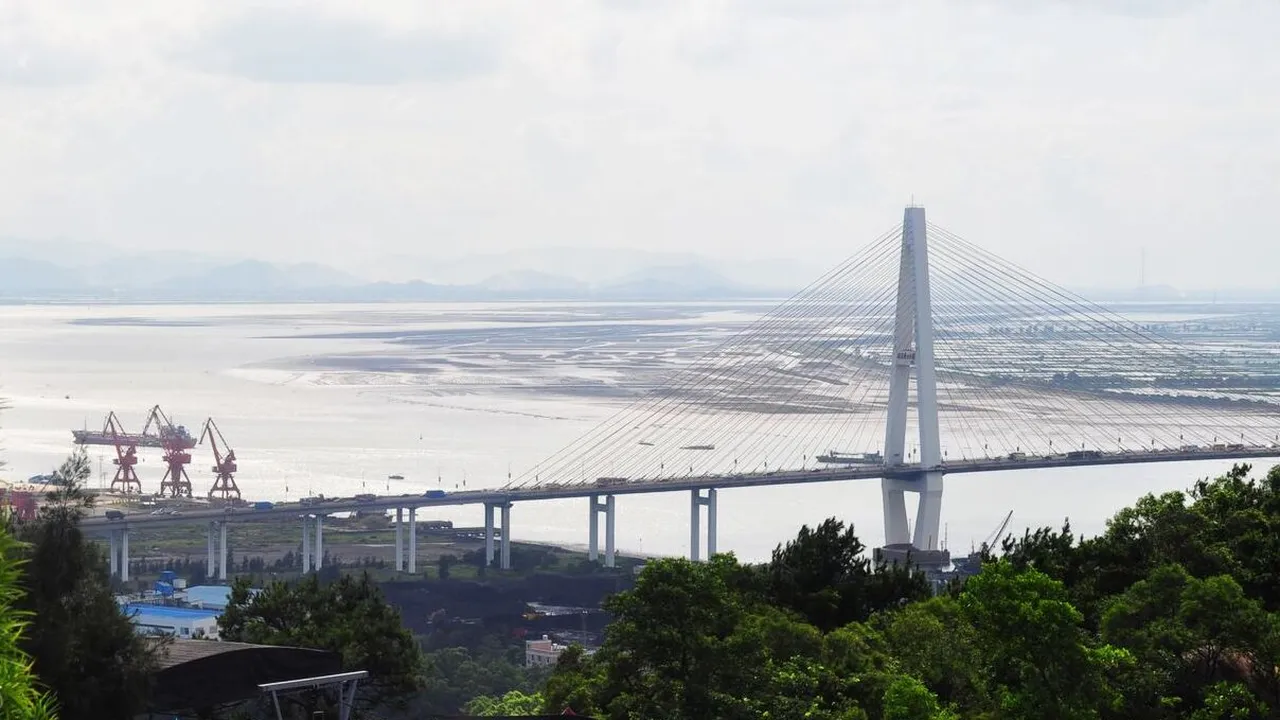
Set off early over the Nan'ao Bridge. Across eleven kilometers the sea unfolds tier by tier, the inbound towers and cables the most photogenic; tolls run a few tens, and crosswinds demand care in gusts. Land and take a seafood lunch in Houzhai before starting the loop.
Two island nights is the five-day plan's key decision: it erases two extra crossings and buys two island dawns and evenings. Day three's afternoon goes to the western loop and Qing'ao Bay.
The Ring Road: Turbines, Villages and Stopping at Will
The ring road is the island's finest corridor: hills and turbines on one side, sea and fishing quays on the other, tens of kilometers where every pull-off works. The west looks back at Shantou and the bridge while eastern bays grow cleaner one after another, fish rafts, drying nets and oyster shuckers along the way.
Afternoon light favors the east stretch: slanting sun silvers the water while turbines turn backlit. Charter freedom pays off in full here, calling a stop at any bay that pleases.
Qing'ao Bay and the Nature Gate: Sand and Astronomy
By late afternoon reach Qing'ao, the island's finest swimming bay with two-plus kilometers of fine sand. At its head the Tropic-of-Cancer marker, a hollow sphere pierced by sunlight at summer solstice noon, doubles as the best silhouette foreground any day.
Sleep by the bay tonight: tomorrow's sunrise and the night beach both launch from here. Dinner at a stall, then barefoot along the dark sand, where Nan'ao's surf sounds clearer than by day.
Song Well and the Commander's Compound: Day Four's History Slot
Link two history stops in the morning: Song Well at Yun'ao, the beach well that hides with the tide, best around ebb, and the commander's compound at Shen'ao, the Ming-Qing naval yamen whose banyans and old cannon string together the whole sea frontier. Three hours total.
Both sit on the east coast, the line smooth. Lunch in Shen'ao, then take the ring road's west stretch over the bridge, leaving the afternoon to the countryside leg.
The Chen Cihong Mansion at Qianmei: The Countryside Estate
The return routes north to Qianmei in Chenghai. The mansion builds on the Chaoshan four-horses plan laced with Nanyang tiles and Western columns, hundreds of rooms in a maze, hailed as Lingnan's foremost emigrant estate, the finest place to see Nanyang wealth converted into a hometown mansion.
Give two hours to the contrasts: gilt carving beside Italian tile, lime relief beside louvers. Courtyard forks multiply, so photograph the plan at the gate and wear flat shoes.
Dahao Walled Town and Fish Balls: The Last Day's Proper Meal
Day five opens at Dahao in Haojiang. The Kangxi-era pocket town takes two circuits in half an hour, gate, walls and lane fabric intact with life continuing. Temples and old shops sit en route, and the heritage fish-ball houses by the walls settle the day's main meal.
Ending at Dahao is deliberate: the walls close the sea-defense story, the fish balls close the sea's story, and the two together shut the five days neatly by the Haojiang shore.
The Gap Sweep and Night Market: Five Days' Close
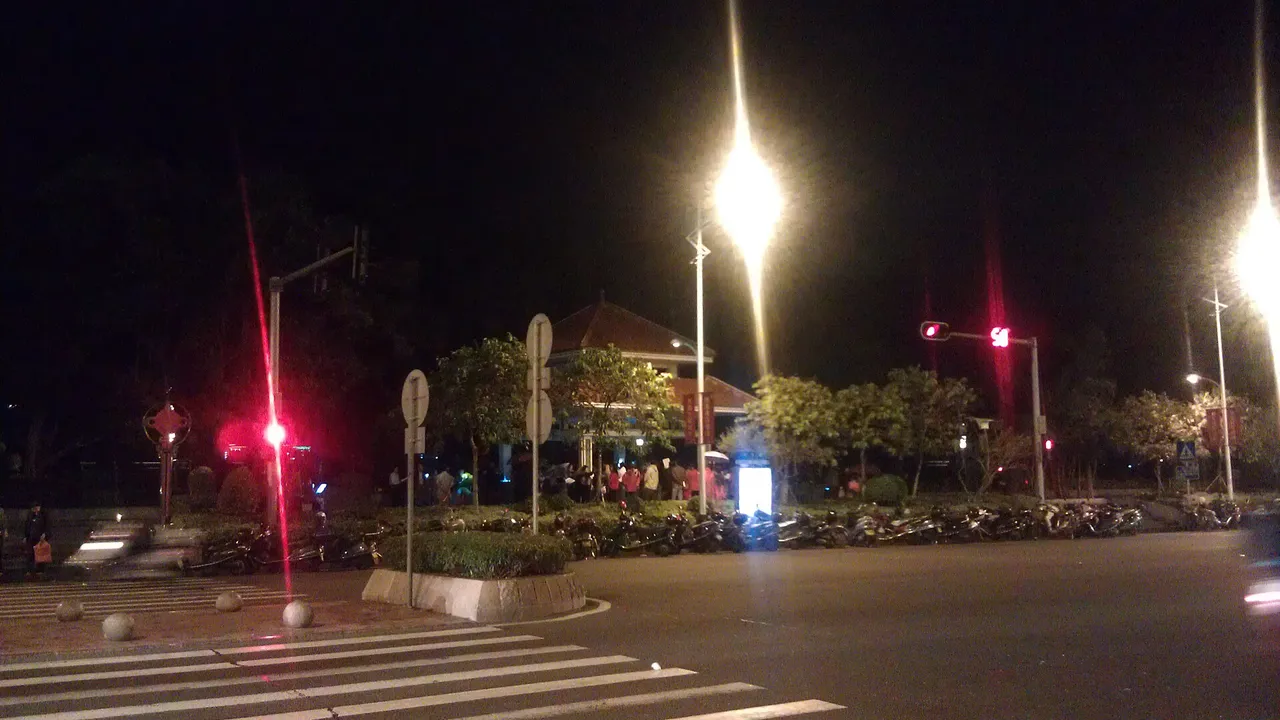
Return by evening and sweep the gaps: choose between the fort and the east-coast embankment, then one last look at the pavilion quarter's night lamps. As they come on, the arcades change costume, a contrast to the first morning's plain face.
Give the final night to Longyan South Road: oyster omelettes, grilled oysters and licorice fruit eaten while browsing. With beef balls and shacha sauce packed, five days of Shantou are read through, the next page left for next time.
| Getting around |
|
| Budget | Entries over five days total RMB 150-200 plus island charter; RMB 1000-1500 pp before lodging. |
| Best time | October to December steadies all five days; April-May brings clear mild seas; July-August suits swimmers but demands typhoon vigilance. |
FAQs
How should lodging be staged across five days?
Four nights in the city, one on Nan'ao: base around Xiaogongyuan or the seafront road, close to everything, and take the island night at Qing'ao for sea access. Both hotel moves stay under half an hour, luggage kept light, and buy cold-chain gifts the night before leaving the island.
How much does a second island day change things?
The difference is dawn and dark: two days buy the Qing'ao sunrise, night beach and morning fishing port, while a day trip sees only daytime crowds. The one island night is the whole plan's best-value spend, worth protecting even at the countryside leg's expense.
How to balance museums and outdoors, and what is the rain plan?
The first two days clear all three galleries, tilting weight naturally toward the island. In rain: swap Queshi for galleries or malls, postpone the island for Dahao and the countryside line, which suffers least from weather. Typhoon warnings are the hard red line, island plans yield unconditionally.
Where does the five-day budget concentrate, and how to save?
Lodging and island charter dominate: city hotels RMB 200-500 a night, Qing'ao sea-view rooms doubling on holidays, charters RMB 400-600 a day. Savings come from off-peak play: skip holidays, cross on weekdays, share charters. Food itself is cheap, RMB 100-150 a day eating very well.