
Seven-day Shantou peels in order, city to sea to country: three days sink into the old town, reading the treaty quarter, the Mazu temple, two museums and the fort whole; day four finishes the inner bay's geography by ferry, hill and east dike; days five and six cross to Nan'ao, looping the island, climbing its forest park, sleeping two nights by Qing'ao and the wells; the last day runs north to the Chen mansion and southwest to Dahao to close the ring.
The week's discipline is one focus per day: Shantou's density is modest but its depth extreme, arcade lanes, handwriting on letters, the division of labor at a fishing quay, all worth slow reading. After seven days you carry a complete map of the city, from red-bow ships to container cranes, arcades to wind turbines, every thread with its origin known.
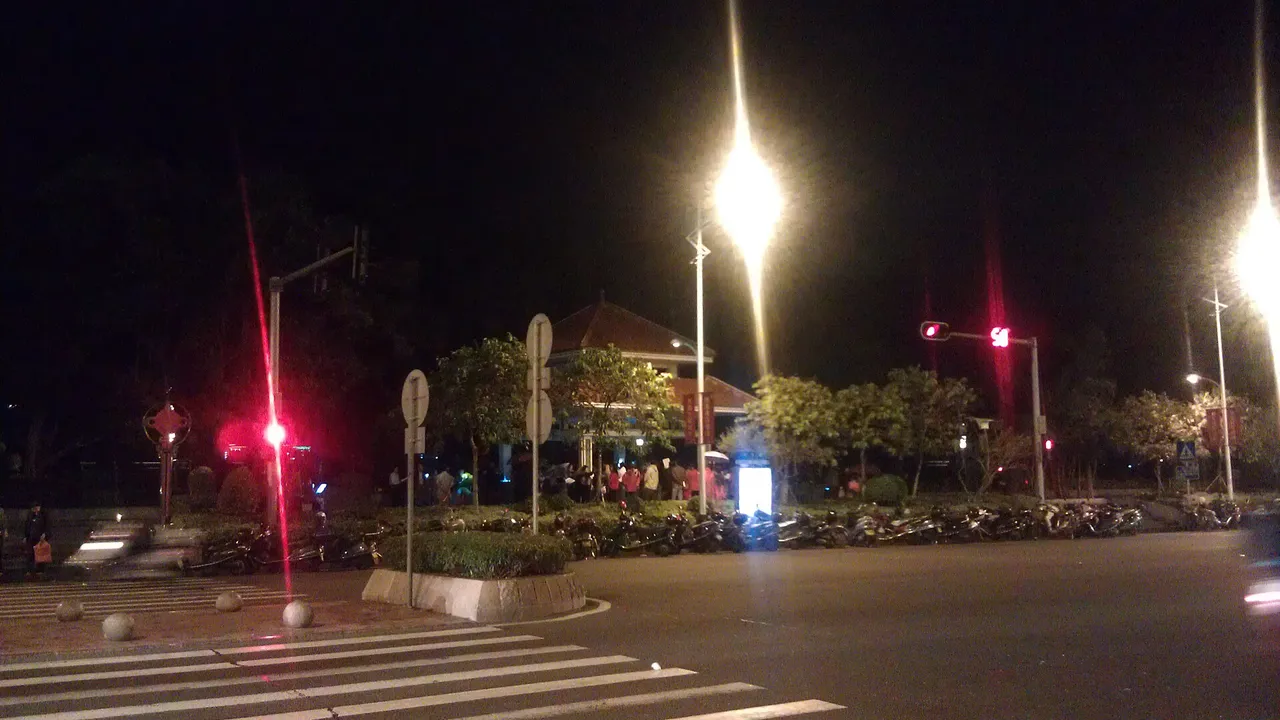
Itinerary at a glance
| 09:00 | Xiaogongyuan and the Memorial Pavilion: The Week's Hub |
| 11:00 | The Old Mazu Temple: A Craft Class in a Sea-Goddess Hall |
| 14:30 | The Treaty-Port Hall and Letters Museum: Two Centuries in an Afternoon |
| 10:00 | Cannon Fort Park: A Morning in the Ring Fortress |
| 14:00 | The Promenade and Square Ferry: The Sea for Loose Change |
| 16:30 | Queshi Scenic Area: One Bay, Two Shores from the Top |
| 17:00 | The East-Coast Embankment: The New Shantou's Long Dike |
| 08:30 | The Nan'ao Bridge: Crossing to the Island |
| 10:30 | Huanghua Mountain National Forest Park: Old Forest on the Island |
| 14:30 | The Ring Road: The Corridor of Turbines and Villages |
| 17:00 | Qing'ao Bay: Giving the Evening to the Sand |
| 06:40 | The Nature Gate and Song Well: A Morning of Sunrise and Tides |
| 11:00 | The Commander's Compound and Departure: Closing the Sea Frontier |
| 14:30 | The Chen Cihong Mansion at Qianmei: The Emigrant Maze |
| 09:30 | Dahao Walled Town and Port: The Week's Last Ring |
The route, stop by stop
Xiaogongyuan and the Memorial Pavilion: The Week's Hub
Day one circles the treaty quarter from the memorial pavilion. Streets radiate like umbrella ribs, arcades rich in pediments, arches and lime relief, the old Nanseng corner tower the most photogenic. Loop the outer ring for orientation, then go deep along Shengping Road.
Morning builds the spatial map: fix the pavilion as hub, and every street bearing for seven days refers back to it. Shoot casually under the arcades now; the serious frames wait for tonight's lamps, when you will return.
The Old Mazu Temple: A Craft Class in a Sea-Goddess Hall
Tianhou and Guandi halls stand side by side, Qing porcelain inlay, wood and stone carving intact: opera figures on the ridges saturated with color, gilt carving stacking between the beams, the quarter's densest craft sample.
Read the inlay from across the street, the carving close under the porch. Next door, the heritage shop's two-flavor zongzi splits savory and sweet, and with an oyster omelette makes the canonical lunch, the morning's class graduating at the stove.
The Treaty-Port Hall and Letters Museum: Two Centuries in an Afternoon
Link both galleries in the afternoon: the treaty hall on commerce and building since 1860, the letters museum on emigration, letters and remittance, one facing out, one facing in, modern Shantou told in both directions. Captions beside paper originals move readers, some pages written whole to a mother.
Ten minutes on foot between them, ninety minutes each the comfortable pace. Step outside afterward to match names on the street, old labels reviving corner by corner, and day one teaches the method the week will use: galleries annotating streets.
Cannon Fort Park: A Morning in the Ring Fortress
Day two opens at the Qing-era Qilu battery. Ring walls of sticky-rice lime mortar, moat, firing positions and shell stores all legible, and looking up from the inner court the geometry of coastal defense lands hard. Restored and free, its lawns and ring path invite idle hours.
Morning light clears the moat reflections, the southwest corner holding the shot. An hour covers the fort; kids burn half an hour on the slope while parents reclaim a coffee, set your own pace.
The Promenade and Square Ferry: The Sea for Loose Change
Walk the promenade after lunch, low tide bringing egrets and gleaners to the flats below. At the square pier ride the ferry across, fifteen minutes of water with the old-town skyline astern and Queshi ahead, the town's best-value harbor view.
A no-climb afternoon can simply ride out and back, reading the inner bay's width in half an hour. Return to the promenade for sunset as ferries and freighters cross orange water, the city's bay line complete.
Queshi Scenic Area: One Bay, Two Shores from the Top
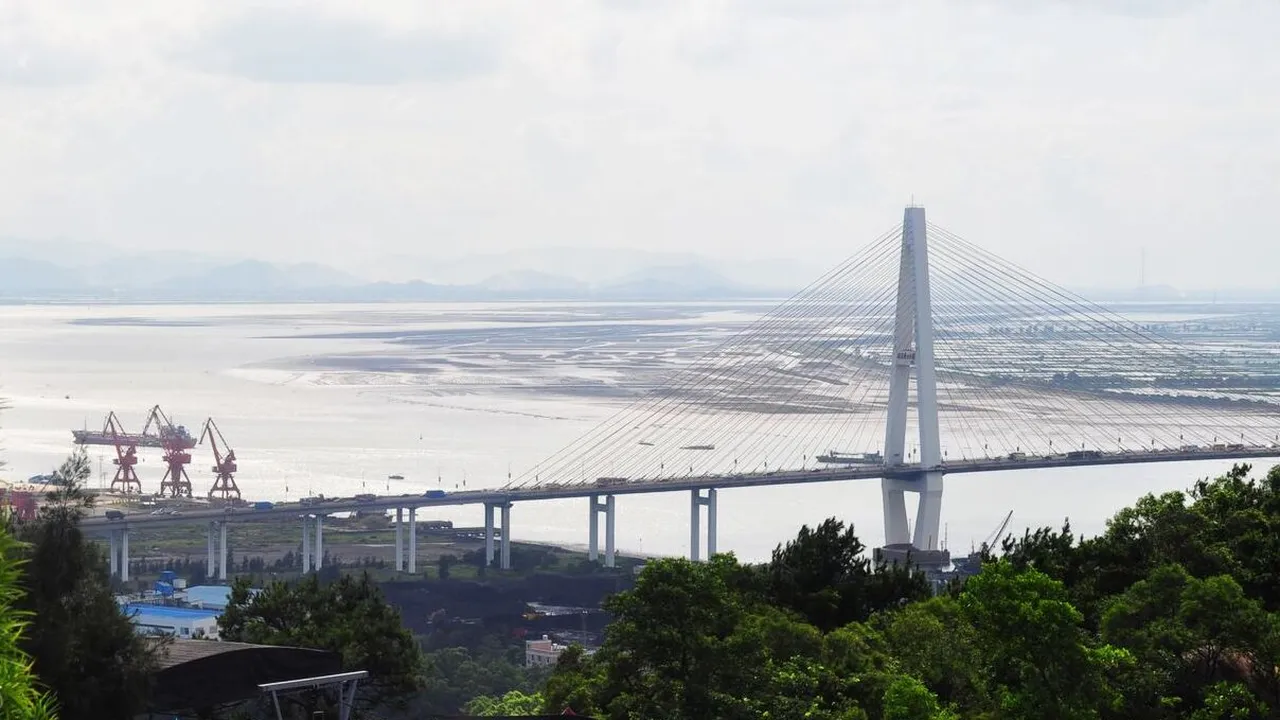
Disembark and climb Ta Hill. Forty minutes by trail or minutes by chairlift, with the Chuihong cave chain en route, the summit gathering arcades, sea bridge and port cranes into one frame, the high point for reading the city's layout.
By late afternoon the water starts gilding, the last photo window. Descend for a ferry back before the last sailing, dinner at a promenade stall, with the sea taking the lead tomorrow.
The East-Coast Embankment: The New Shantou's Long Dike
Move at dusk to the east-coast new district. The reclaimed land's embankment faces the open sea, a different animal from the inner bay: wider water, harder wind, a clean skyline with cranes and towers rising across the bay.
Sunset here draws few people, a locally guarded camera spot. Half an hour of silhouettes closes day three's hinge: from the historical old town to the growing new one, then out to the island.
The Nan'ao Bridge: Crossing to the Island
Day four crosses the Nan'ao Bridge early. Eleven kilometers unfold the sea tier by tier, the inbound towers and cables keeping the strongest rhythm; tolls run a few tens, crosswinds demand care in gusts, and lunch goes to a seafood table in Houzhai first.
Two island nights is the week's key decision: the loop, forest park, Qing'ao and the wells scatter on all sides, and sleeping over halves the driving. Day four's afternoon goes to Huanghua and the western loop.
Huanghua Mountain National Forest Park: Old Forest on the Island
Huanghua ranks among the country's few island national forest parks, acacia and masson pine in complete canopy, permanent shade comfortable even in summer. Trails climb to a summit platform with birding a full class above the city, white-eyes and bulbuls working the edges.
About ninety minutes of trail, the week's only pure forest walk. Muddy after rain, stick to the main line, and with forest mosquitoes plentiful, long trousers and repellent are hard kit.
The Ring Road: The Corridor of Turbines and Villages
Work the ring road in the afternoon, tens of kilometers where every pull-off is a position: hills and turbines one side, sea and fishing quays the other. The west looks back at Shantou and the bridge, the north stretch holding ponds and flats with plovers and egrets in season.
Charter freedom pays off in full here, calling a stop at any bay that pleases. Roadside oyster shuckers are mandatory, eaten standing with a cold drink.
Qing'ao Bay: Giving the Evening to the Sand
Reach Qing'ao by evening, the island's finest swimming bay in two-plus kilometers of arc. Walk barefoot as the bay-mouth light slants, sand turning from gold to honey, swimmers ashore, the bay going quiet.
Tonight and tomorrow night both belong here: the Nature Gate sunrise, the night beach and the morning gleaners are sleeper's privileges. Dinner at a stall, then barefoot on the dark sand where the surf sounds far clearer than by day.
The Nature Gate and Song Well: A Morning of Sunrise and Tides
Reach the Nature Gate plaza at dawn, the sun rising through the Tropic marker's hollow sphere off the sea, the plaza empty and the surf the only soundtrack. Late morning moves to Song Well in Yun'ao, the beach well appearing and hiding with the tide, best around ebb.
Both stops make time itself the content: sunrise by the clock, the well by the tide, so pull the day's sunrise and tide tables first and order the visits by water level. Wear grippy shoes on the rocks.
The Commander's Compound and Departure: Closing the Sea Frontier
Day six opens at the commander's compound in Shen'ao, the Ming-Qing naval yamen. Banyans and old cannon string together the defense history of the Fujian-Guangdong sea border, exhibits untangling piracy, smuggling and the water forces, half an hour of visiting carrying a whole sea's story.
Lunch in Shen'ao, then the ring road and the bridge home. Six days hand over here from city and island: leave the harbor's freshness on the tongue and set expectations for tomorrow's emigrant mansion.
The Chen Cihong Mansion at Qianmei: The Emigrant Maze
The return routes north to Qianmei in Chenghai. The mansion builds on the Chaoshan four-horses plan laced with Nanyang tiles, Western columns and louvers, hundreds of rooms in a maze, hailed as Lingnan's foremost emigrant estate, the finest witness to Nanyang wealth made into a hometown mansion.
Two hours hunting contrasts: gilt carving beside Italian tile, lime relief beside latticed windows. Courtyard forks multiply, photograph the plan at the gate, wear flats, and side light flatters the columns on clear days.
Dahao Walled Town and Port: The Week's Last Ring
The last morning reaches Dahao in Haojiang. The Kangxi-era pocket town takes two circuits in half an hour, gate, walls and lanes intact with life continuing, a living specimen of a Qing coastal sentry post, and the heritage fish-ball houses beside it serve the trip's final proper meal.
Closing at Dahao is deliberate: from the quarter's arcades to the island's lighthouse to this small walled town, seven days of Shantou's threads tie off by the Haojiang shore. When fish balls, oyster omelette and gongfu tea land on the table, the city's account is settled, the balance left for next time.
| Getting around |
|
| Budget | Entries over seven days total about RMB 200, plus island charter and lodging; RMB 1500-2200 pp before accommodation. |
| Best time | October to December steadies the week; April-May brings clear mild seas; July-August swims but demands typhoon watch; migrants add mudflats October to April. |
FAQs
Which nights truly need advance booking?
Two: Qing'ao sea-view rooms and popular guesthouses on holidays or in season. City supply is ample and same-day bookable, though holiday prices climb, so a week ahead locks better. The rule: spend certainty on the island and holidays, keep flexibility for city weekdays.
Does seven days repeat the five-day plan too much?
Only the skeleton overlaps; the two extra nights buy three things, a third old-town day that turns walking into reading, the island's two dawns and night beach, and an uncrushed countryside leg. On a five-day budget, dropping the third city day and half the countryside loses the least.
Without Chaoshan dialect, is communication a problem for a week?
No barrier: Mandarin works across town and sights, elders in townships may speak it thinly but gestures close every gap, and transactions run on calculator and phone screens. Two phrases, the local for have you eaten and for our own people, buy more smiles than any phrasebook.
How should photography hours be scheduled across seven days?
Schedule by light: dawn to Qing'ao and the fishing port, morning to east-facing arcades and the fort, noon indoors or under canopy, dusk to Queshi's summit and the east dike, night back to the pavilion lamps. The sunset ferry and the Nature Gate sunrise are the two protected frames, the rest by fortune.