
Shaoxing's cultural estate climbs three steps. The oldest is Yu the Great's mausoleum, ancestral ground of flood control; the middle is the Orchid Pavilion, where the gathering of the ninth year of Yonghe made calligraphy a core event of Chinese aesthetics; the newest hides in town, Xu Wei's Green Vine Studio and Qiu Jin's residence on Hechang lane, one a lone peak of art, the other a heroine of modern revolution. One day climbs all three.
The route runs far to near: the Orchid Pavilion twenty minutes southwest by car, Yu's mausoleum southeast of town, afternoon back downtown for the Green Vine and Qiu Jin's home, both in walking range. Ticket costs run above the old-quarter lines, but so does explanation density; calligraphy and history buffs will slow to a crawl, so leave slack.
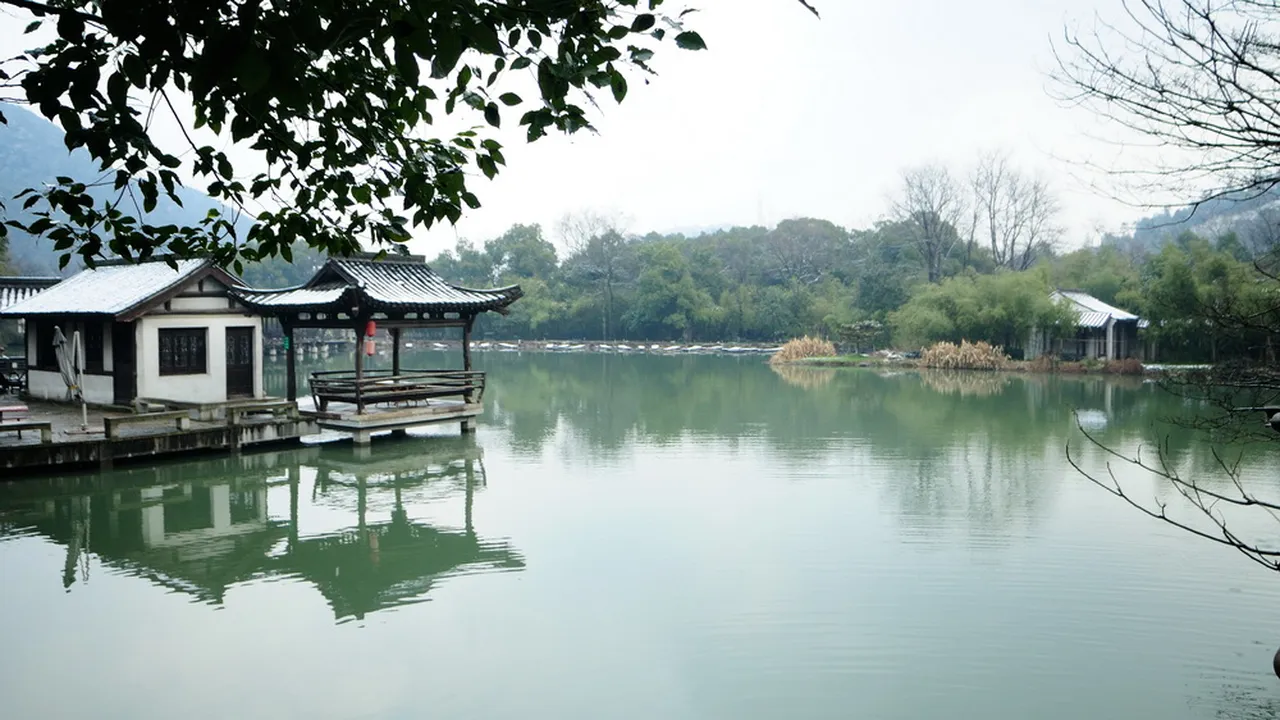
Itinerary at a glance
| 09:00 | The Orchid Pavilion: The Ground of the Winding Stream |
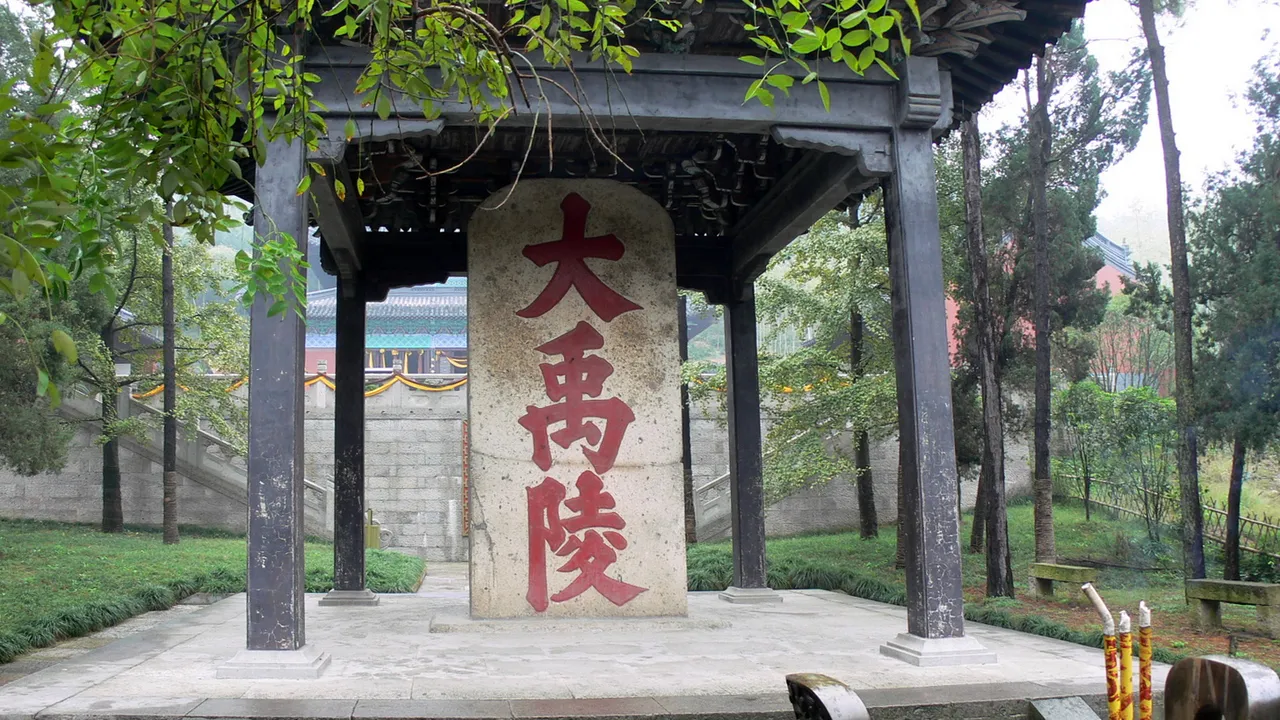
| 13:00 | Yu the Great's Mausoleum: Ancestral Ground of Flood Control |
| 15:30 | The Green Vine Studio: Xu Wei's Proud Little Courtyard |
| 17:00 | Qiu Jin's Residence: The Woman Knight of Mirror Lake on Hechang Lane |
The route, stop by stop
The Orchid Pavilion: The Ground of the Winding Stream
The Orchid Pavilion is where Wang Xizhi wrote the famous preface, at a gathering of forty-one in the ninth year of Yonghe, cups floating down a winding stream, wine and verses traded, the greatest running script in history written half-tipsy. The core three are the floating-cup pavilion, the goose pool and the imperial stele pavilion, the two characters on the goose stone credited jointly to father and son Wangs.
The grounds outrun expectations: beyond the core, the Orchid Pavilion Calligraphy Museum tells the history of the art and this letter's transmission in detail. The site hosts annual calligraphy festivals and copying events, and ordinary visitors can try the winding-stream game in the activity area. Two to three hours.
Yu the Great's Mausoleum: Ancestral Ground of Flood Control
Yu's mausoleum leans on Mount Kuaiji, the site of his worship, imperial envoy steles lining the approach through dynasties. The layout is solemn: tomb, temple and stone pavilion along one axis, with the rites still performed today. Do not litigate the chronology; what the ground carries is four millennia of Chinese remembrance of flood control and public spirit.
The summit asks several hundred steps, so the modest can stop at the stele pavilion, the mid-slope look-back being the mountain's finest angle. The Incense Burner Peak sits adjacent, and strong legs can add its climb for the whole city below.
The Green Vine Studio: Xu Wei's Proud Little Courtyard
Afternoon returns downtown to the Green Vine Studio. Xu Wei is the hardest man to classify in Ming art: superb at poetry, prose, painting, calligraphy and drama, yet poor, ruined, and nine times failed at taking his own life. The two small courtyards, white walls, sky pool and the four-century vine, turn the plaque's phrase not one grain of dust arrives into something physical.
Twenty slow minutes here beat ten big scenic areas: the ink grapes and splashed ink of Xu's paintings draw their compositions from this wall's shadows. A few-yuan ticket, superb interpretive panels, and the whole lineage of Ming literati painting comes into focus on the way out.
Qiu Jin's Residence: The Woman Knight of Mirror Lake on Hechang Lane
The culture day closes at Qiu Jin's residence. The Woman Knight of Mirror Lake planned an uprising in Shaoxing and died at the city's Xuantingkou at thirty-two. The compound where she lived as a girl and young wife keeps plain furnishings, study and sword practice side by side, her farewell line about autumn wind and rain set in the exhibition.
From the residence, walk to the Qiu Jin memorial at Xuantingkou and stand where traffic and stele share one crossing, modern history and today overlapping in an intersection. The culture line ends here, dinner solved in the old quarter nearby.
| Getting around |
|
| Budget | Tickets total about RMB 100-150 pp (mostly the Orchid Pavilion and Yu's mausoleum), meals and transport adding RMB 80-120. |
| Best time | Year-round, with the days around April's calligraphy festival the richest mood; the Orchid grounds sprawl, so wear comfortable shoes. |
FAQs
Neither the pavilion nor the mausoleum touches the metro, so how?
Both sit outside town, taxis the direct answer: twenty to thirty minutes downtown to the pavilion, twenty-five between pavilion and mausoleum. Public transport needs multiple transfers, not worth it. A half-day hire suits pairs and up, costing close to stacked taxis while the driver waits at each gate and lunch links smoothly.
Can the pavilion and mausoleum share one day?
Yes, tightly: two to two and a half hours at the pavilion, a simple lunch on site or back in town, two core hours at the mausoleum without the summit. Devotees will want two days, opening the calligraphy museum and the mausoleum's rite history separately. Average legs hoping to add Incense Burner Peak should drop one stop outright.
How do the day's tickets work? Any combos?
The pavilion runs about RMB 40 with the calligraphy museum, the mausoleum about 60 with the tomb grounds, while the Green Vine and Qiu Jin's home cost a few yuan or nothing. All sell on site, with online fast lanes in season; the peak climb, when open, adds a small fee per the posted notice, the four stops totaling about RMB 100-150.
How should culture day and the Lu Xun day be ordered?
First-timers should run the Lu Xun line first, the city's cognitive foundation where textbook memory supplies constant reference. Culture day second, the distance of pavilion and mausoleum against the Green Vine's intimacy making a rhythm. With kids, invert: warm up at the pavilion's activity area, close at the hometown, matching children's attention curves.