
Lu Xun's fame shadows Shaoxing's landscape, yet the terrain is hard-core: Mount Kuaiji as an ancient altar, East Lake and Hou Hill carved into cliffs and deep pools by a thousand years of quarrying, Jianhu left by an Eastern Han water project, and Fuzhi Mountain with glacier stone waves and thousand-year terraces. Three days walk each landform, threaded by black-boat waterways, finishing Shaoxing's nature course.
Exertion runs heavy, light, far: day one's mausoleum and peak carry the most climb, day two's wetland and lake stay flat, day three's Fuzhi drives farthest but walks easy. Rent or hire a car; buses reach East Lake and Keyan, while Fuzhi and the peak see sparse schedules.
Itinerary at a glance
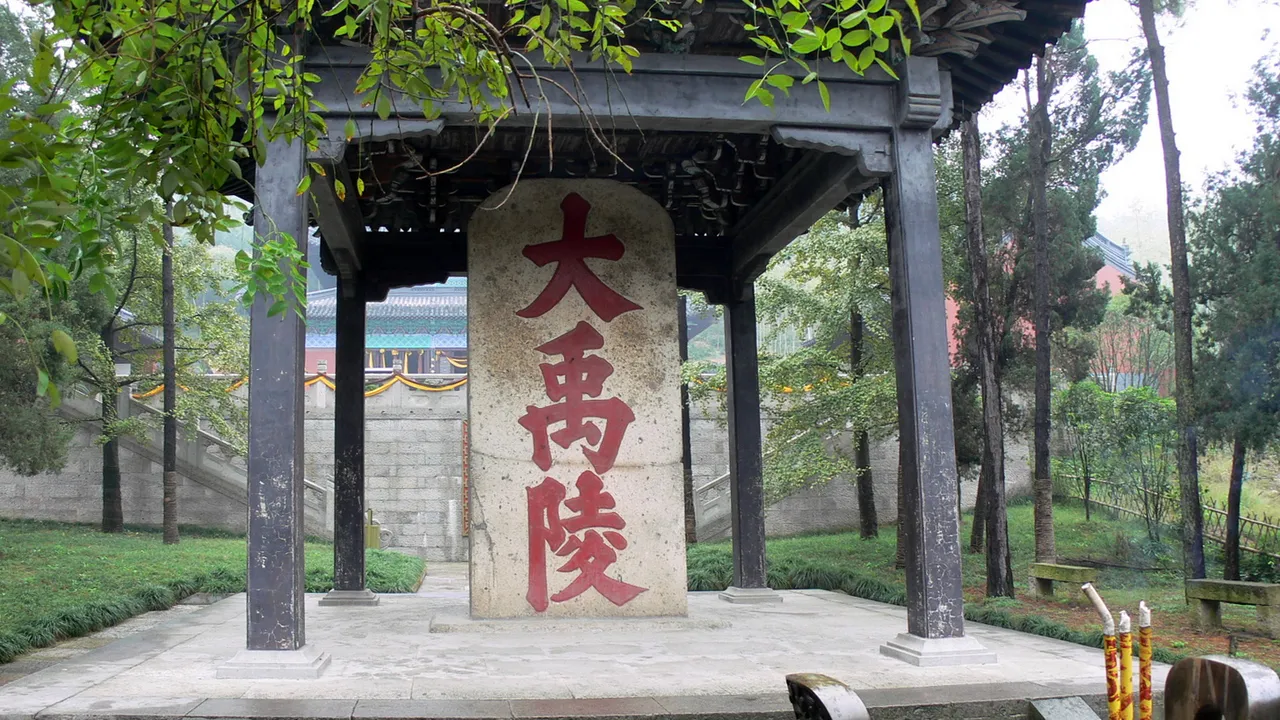
| 第1天 09:00 | Yu the Great's Mausoleum: Three Days Opening at the Altar |
| 第1天 15:00 | Ruoye Stream and a Suburban Dusk |
| 第2天 09:00 | Jinghu National Urban Wetland Park: The Avoiding Causeway and the Lone Isle |
| 第2天 13:00 | East Lake: Boats under the Quarry Cliffs |
| 第2天 16:00 | Hou Hill: The Mountain Cut in Half |
| 第3天 08:30 | Fuzhi Mountain: Glacier Stone Waves and Thousand-Year Terraces |
| 第3天 13:30 | Keyan: The Upside-Down Cloud Bone |
| 第3天 15:30 | Jianhu: The Painted Barge Crossing |
| 第3天 16:30 | Lu Town: The Fiction's Set and Parades |
The route, stop by stop
Yu the Great's Mausoleum: Three Days Opening at the Altar
Opening at Yu's mausoleum has logic: Mount Kuaiji is the ancestor of all Shaoxing landscape, and climbing here gives the next two days' lakes, cliffs and terraces a narrative start. The grounds run solemn and gentle, ten minutes each for the approach steles and temple.
The morning's core act is Incense Burner Peak: after several hundred steps, the summit temple clings to the cliff, looking back along the ridge where mountain meets city. Three hours round trip, at your own pace.
Ruoye Stream and a Suburban Dusk
After descending, pass Ruoye Stream, the little river off Kuaiji that ancient poets made their landmark, Li Bai and Wang Wei among its chroniclers. The greenway suits a sweat-cooling stroll, children fishing the shallows.
Evening returns to town for rest and a proper Shaoxing dinner, banking strength for two more days. Day one is the exertion peak, so sleep early.
Jinghu National Urban Wetland Park: The Avoiding Causeway and the Lone Isle
Day two shifts to water's rhythm. The wetland's core sight is the avoiding causeway across Kuicha Lake: a Ming stone dike crossing the water where boats once sheltered from storms, now a long bank shared by photographers and migrating birds. Walk it with water on both sides and wind pushing off the lake, an openness Shaoxing rarely offers.
The wetland is free, best lit at dawn and dusk. Birding seasons (winter) reward binoculars, with egrets and cormorants common. About an hour on foot.
East Lake: Boats under the Quarry Cliffs
The afternoon anchor is East Lake, a quarry since Han times with half a mountain cut into the water, cliffs plunging tens of meters, black-awning boats threading the flooded caverns with rock strata inches overhead, and the leg-rowing boatmen a Shaoxing monopoly.
Ashore, walk the clifftop path to look down into the boat caves, a wholly different read from looking up inside. The lake is compact, two unhurried hours.
Hou Hill: The Mountain Cut in Half
Before dusk reaches Hou Hill, quarry landforms sharing East Lake's origin but wilder in shape: the cloud and chessboard boulders hovering on the slope, remnant mountains left by the cut, unnatural as an alien set. Spring peach blossom across the lower hill is the annual high point.
The site is small, an hour end to end, compressible to twenty minutes at the overlook if the day fills.
Fuzhi Mountain: Glacier Stone Waves and Thousand-Year Terraces
Day three drives farthest, Fuzhi Mountain in Shangyu's Lingnan township, about eighty minutes away. The stone waves on the flank are a quaternary glacier's rock river, huge boulders running peak to foot, climbed hands-and-feet, while the thousand-year terraces below stack to the horizon, flooding into mirrors each spring.
The stone waves split into a basic and a challenge line, ordinary visitors taking the basic. The summit deck's full terrace panorama is the widest frame of the three days.
Keyan: The Upside-Down Cloud Bone
The afternoon returns toward Keqiao to Keyan, a third quarry and the most curated. The Cloud Bone is the icon: an inverted-cone monolith, wider at top than base, standing over thirty meters tall on flat ground, the residue of cutting since Sui and Tang. Buddhas, caverns and pools scatter the grounds.
Keyan, Jianhu and Lu town chain into one large scenic area on a combo ticket. Walk Keyan first, then take the painted barge across Jianhu, the visit splitting naturally in two.
Jianhu: The Painted Barge Crossing
Jianhu is Eastern Han water engineering, every poem's mirror-lake image flowing from this water. The painted barge leaves the Keyan wharf as towpaths and stone bridges slip backward, the surface handing back the whole sky, the loosest half hour of the three days.
The ancient towpath on the lake holds national heritage status, flagstones laid against the water where trackers once hauled boats. After landing, walk a stretch; seeing it from the water and standing on it are two different readings.
Lu Town: The Fiction's Set and Parades
Lu town sits across Jianhu, a quarter rebuilt from Lu Xun's fiction: Ah Q's temple, Kong Yiji's tavern, Xianglin's wife's riverside, each scene mapped to a spot with costumed parades on schedule. Taken as an open-air literature museum, the visit fully holds.
For the literature-indifferent it works as waterscape strolling too. As the grounds light up toward dusk, exit through the town and settle the three days' account on Jianhu's water.
| Getting around |
|
| Budget | Three days of tickets and boat fares total about RMB 250-350 pp, meals RMB 200-320, transport RMB 200-350. |
| Best time | Mar-May and Sep-Nov best: flooded spring terraces mirror the sky, autumn rice waves turn gold; in summer climb before noon, in winter the cliff waters grey out. |
FAQs
Which day tires most of the three?
Day one: the mausoleum plus peak carries the three days' greatest climb, thousands of steps round trip. Make the peak optional, weaker legs finishing the grounds and going home; day two recovers on flat ground, day three's Fuzhi is far but skippable at the waves, terraces alone sufficing. Keep the heavy-light-far order, never swap it.
How do East Lake and Keyan tickets and boats price?
East Lake prices entry and boats separately, boats by the vessel of three with morning queues shortest; Keyan, Jianhu and Lu town sell one combo, about RMB 100-130 including the lake barge on fixed sailings, miss one and wait for the next. The wetland and Fuzhi cost nothing, the three days' big free anchors.
Is Fuzhi worth an hour of mountain road?
For photographers and hikers, yes: stone waves plus terraces are a landform pairing unique around Shaoxing, best frames in flood season. Time-pressed casual visitors can cut it, giving day three to Keyan and Jianhu's half plus town quarters. The test: would you drive two hours of mountain road for one terrace panorama? If yes, go.
How much do buses and metro cover across the three days?
About sixty percent: East Lake and Keyan work by bus or metro plus taxi, the mausoleum has buses on thin schedules, the wetland and Hou Hill steadier by taxi, while Fuzhi is basically unreachable without a car, a half-day hire RMB 300-400. Put Fuzhi last with a full-day hire and patch the first two days with taxis, the best balance of cost and ease.