
Shaoxing's administrative map fans open: Yuecheng the pin, with Keqiao, Zhuji, Shengzhou and Xinchang unfolding in turn, each county with its own landscape and temperament. This line runs the fan southward: day one Anchang's cures and legal secretaries, day two Zhuji's Wuxie falls and Xishi's hometown, day three Shengzhou's Chongren gatehouses and Xinchang's Buddha and Nineteen Peaks.
This is the widest-spanning three-day line in Shaoxing, public transport covering barely sixty percent, so self-drive or hire strongly advised. Nightly lodging matters: night one at Anchang or Keqiao, night two at Zhuji or Shengzhou, night three at Xinchang or back in town. Each day eats its own fame: Anchang sausage, Xishi tofu, Shengzhou fried rice cakes and zhawei noodles.
Itinerary at a glance
| 第1天 09:30 | Anchang Ancient Town: A Day of Cures and Secretaries |
| 第1天 14:00 | Yangshan Stone City and the Keqiao Transfer |
| 第2天 09:00 | Wuxie: Five Falls and the Green Reservoir |
| 第2天 14:30 | Xishi's Hometown: Legend on the Huansha River |
| 第3天 08:30 | Chongren Old Town: Old Shengzhou inside the Gatehouses |
| 第3天 11:00 | The Xinchang Great Buddha: Jiangnan's Largest Stone Buddha |
| 第3天 16:00 | Xiayanbei Village and the Hanfei River: The Tea-Field Frame |
| 第3天 14:00 | The Nineteen Peaks: Danxia's Evening Lesson |
| 第3天 17:00 | Mount Tianmu and Banzhu Village: A Full Stop on the Tang Poetry Road |
The route, stop by stop
Anchang Ancient Town: A Day of Cures and Secretaries
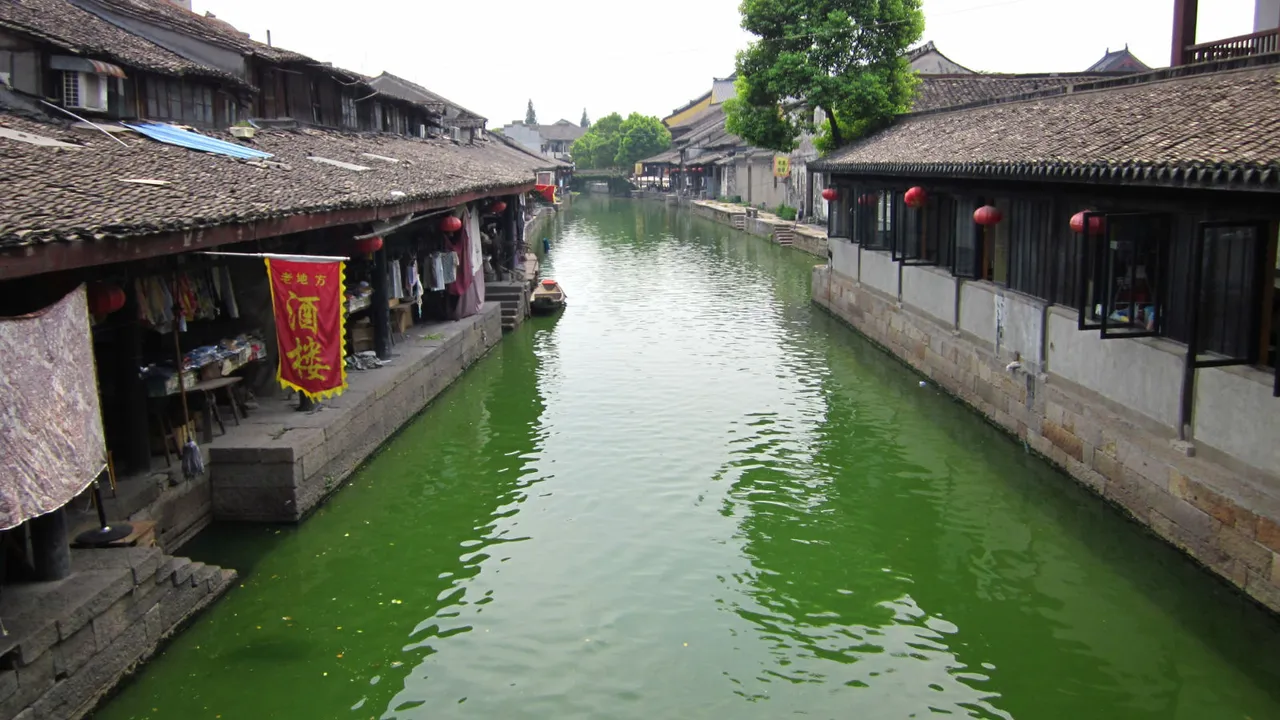
The countryside line opens at Anchang. Sausage and sauced duck hang under riverside eaves, pulled-sugar masters stretch and snip at the curb, and the legal-secretary museum tells how Ming-Qing Shaoxing clerks managed the empire's case files. Commercialization runs low, resident life high.
Lunch on sausage rice and sauced duck, then walk the river to the old wharf at the end. The twelfth month is the peak, ordinary days keep seventy percent of it.
Yangshan Stone City and the Keqiao Transfer
Afternoon passes Yangshan stone city, cliffs and pools left by ancient quarrying with grotto Buddhas set into the rock. Visitors thin here, and the warm-toned walls of a good afternoon make a quiet photo stop.
Evening sleeps in Keqiao with dinner around the old town, local dishes by the canal. Day one's total driving stays under two hours, banking legs for the next two.
Wuxie: Five Falls and the Green Reservoir
Day two runs southwest into Zhuji, about an hour by road. Wuxie's game is upstream falls-chasing: boat across the reservoir, then walk the gorge past five falls rising in height, fullest after rains. Three hours of trail, moderate effort.
The falls peak in June-July and autumn after typhoons; winter's trickle occasionally freezes into spectacle. Mountain oxygen and water sound make this the countryside line's most refreshing stretch.
Xishi's Hometown: Legend on the Huansha River
Afternoon returns to Zhuji town for Xishi's hometown, the memorial quarter along the Huansha river built around the legend, with Zhuluo hill, the washing stone and Xishi hall at the core. The legend's truth matters less than two thousand years of the water feeding the image of sinking fish.
Dinner must include Xishi tofu: a silky, salty-fresh tofu stew that heads every Zhuji banquet. Ciwu beaten noodles also live in town, one bowl making a proper dinner.
Chongren Old Town: Old Shengzhou inside the Gatehouses
Day three heads east into Shengzhou. Chongren is a free old town with intact Ming-Qing gatehouse clusters, the Yushan ancestral hall's wood and brick carving the cream. Unlike Anchang's bustle, Chongren sits as if time stopped, lanes full of elders and cats.
Town snacks belong to the Shengzhou system: fried rice cakes, zhawei noodles and steamed buns, the ancestral home of Shengzhou xiaolong in this area. Eat fried rice cake at the morning market, soft glutinous cake with pickled greens and bamboo shoots, a different school from Ningbo-Shaoxing cakes.
The Xinchang Great Buddha: Jiangnan's Largest Stone Buddha
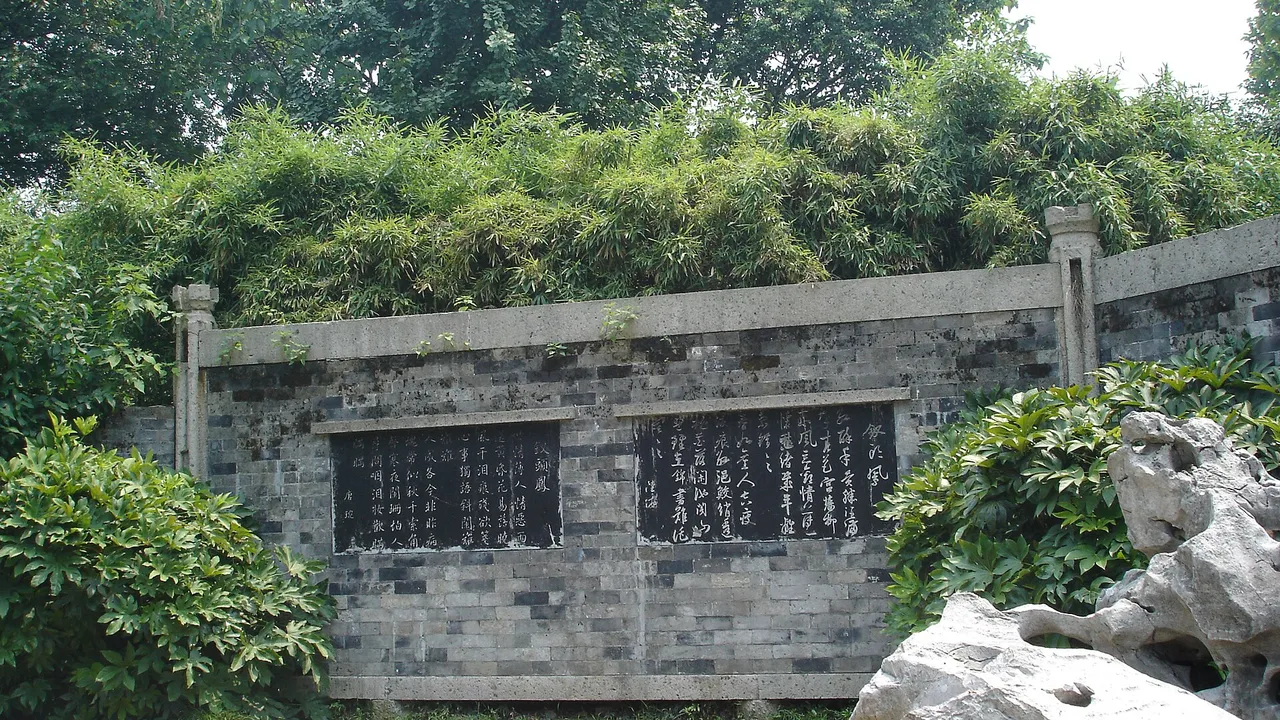
Before noon reach the Xinchang Great Buddha. The stone Maitreya, cut through thirty years of the Southern Dynasties, stands over ten meters, the largest rock-carved Buddha surviving in Jiangnan. The temple folds into the hills, the Southern Dynasties mini-Buddhas of Thousand Buddha cliff and the release pond forming a quiet visiting line.
Look up at the face inside the hall: the smile's angle shifts with your position, ancient masons' proportion magic. Two hours, with the vegetarian hall's noodle bowl as lunch.
Xiayanbei Village and the Hanfei River: The Tea-Field Frame
Facing the peaks, Xiayanbei village lifts the viewing deck to the terraced tea fields, nineteen Danxia summits ranked like a screen at the far end, ink-wash in fog and oil-painting in sun. The village is free, and farm-teahouse seats idle away an afternoon.
For those skipping the heights, the Hanfei river greenway reads the peaks from flat riverside ground at equal advantage; the acrophobic skip the glass walkway and suspension bridge entirely on this stress-free stretch.
The Nineteen Peaks: Danxia's Evening Lesson
Afternoon reaches the Nineteen Peaks, nineteen Danxia summits ranked like a screen, Zhejiang's densest Danxia cluster. The glass walkway and suspension bridge draw the crowds, while the acrophobic walk the Hanfei river greenway at the foot for an equally fine view.
The peaks' best light falls after four, the rock warming to red. With a tight day, the distant overlook alone suffices, leaving the mountain for next time.
Mount Tianmu and Banzhu Village: A Full Stop on the Tang Poetry Road
Close at Banzhu village below Mount Tianmu, the mountain of Li Bai's dream-journey poem, Banzhu a Tang post-road village where stone bridges and way pavilions of the Xie road survive. Skipping the climb, half an hour on the village's old post road and a look at the Sima regret bridge suffices to ground the Tang poetry road.
Evening takes the expressway back to Shaoxing or straight to Hangzhou, about ninety minutes. Three countryside days close on a post road and a sunset.
| Getting around |
|
| Budget | Three days of tickets total about RMB 200-300 pp, meals RMB 200-300, transport RMB 300-500 (mostly inter-county). |
| Best time | Apr-May and Sep-Oct best: Wuxie runs fullest after the rains and the Peaks color best in autumn; Anchang peaks in the twelfth lunar month. |
FAQs
Self-drive or hire on this line?
Experienced mountain drivers with a second driver go self-drive for the freedom, fuel and tolls around RMB 400-500 across three days. Otherwise hire: local drivers know the roads, the meal windows and which overlooks deserve stops. Budget solo travelers can hire only days one and three, running day two's Zhuji by rail plus taxi.
Can Wuxie and the Great Buddha share one day?
Not recommended: over two hours apart, Wuxie alone takes three, and rushing cheapens both. Follow the written split: falls with Xishi's hometown sleeping in Zhuji, Buddha with the Peaks sleeping in Xinchang. With only two days, cut Anchang and fold Chongren into day three's morning.
Does Anchang charge in the twelfth month, and how big is the gap to ordinary days?
No entry fee in the twelfth month, the festival town open free with only the secretary museum charging a few yuan. The gap is real: festival Anchang hangs heavy with cures, lanterns and village opera by night, while ordinary days keep seventy percent of the mood with seventy percent fewer visitors. Photographers take festival weekdays; quiet browsers and gift buyers take ordinary days, each window fair in its own way.
How do the three counties' snacks differ?
Anchang eats cures and pulled sugar, salt-fragrant; Zhuji eats Xishi tofu and Ciwu beaten noodles, prized for fresh-pounded chew; Shengzhou eats fried rice cakes, zhawei noodles and steamed buns, the cradle of the Shengzhou snack system behind all those Hangzhou street shops. Eating across the three maps Zhejiang's noodle and rice-cake territories in one trip.