
Shennongjia's culture runs on two axes: the legend of Shennong tasting a hundred herbs and the rites for the Yan Emperor, and the mountain livelihoods of the Ba forebears. This line walks each once: the votive tradition and an ancient tree at the Shennong Altar in the morning, Ba craftsmanship at Tiansheng Bridge in the afternoon, and finally Guanmenshan, a science park explaining why this forest keeps getting studied.
All three parks ring Muyu within an hour of total driving, the easiest legs of any culture day here. Showtimes spread across morning and afternoon, so photograph the schedule at each gate before plotting your route.
Itinerary at a glance
| 08:30 | Shennong Altar: Honoring the Yan Emperor and the Thousand-Year Fir |
| 10:30 | Guanmenshan: Shennongjia as a Science Park |
| 13:30 | Tiansheng Bridge: Craft in Action at the Ba Workshops |
| 16:00 | Muyu at Dusk: Fire Pits, Tea and Both Ends of the Day |
The route, stop by stop
Shennong Altar: Honoring the Yan Emperor and the Thousand-Year Fir
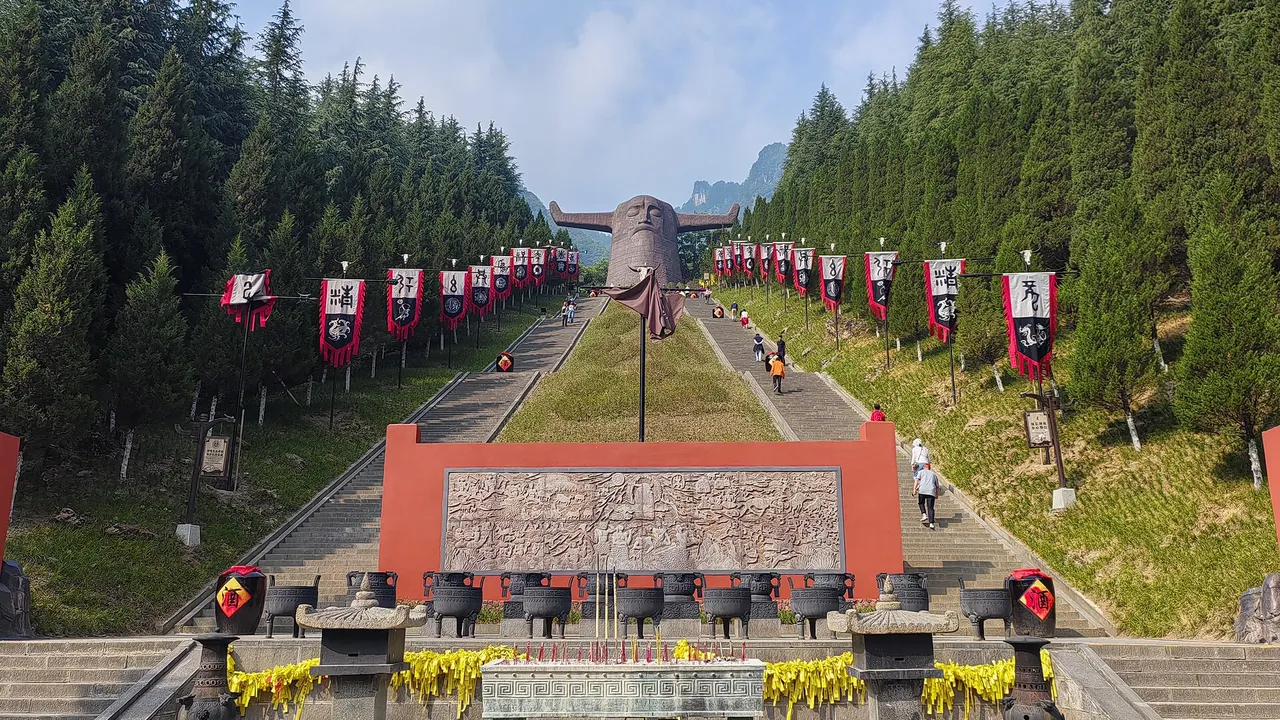
The Shennong Altar venerates the Yan Emperor Shennong, his great ox-headed figure rising against the hill above terraced votive platforms. Rite performances play here on schedule, drums, offerings and ritual protocol reviving an old ceremonial feel, one sitting worth ten readings.
Beside the statue grows the thousand-year fir king, past a millennium of age and five or six arms around, a living relic. Red silk knots fill the branches below, the local blessing custom carried to today. Old tree, rites and mountain in one place: this is where the name Shennong makes sense.
Guanmenshan: Shennongjia as a Science Park
Guanmenshan is a gorge-shaped science park: the geology hall explains how Shennongjia formed and what the Roof of Central China means on the map, while the biology hall spreads the forest's biodiversity across giant salamanders, golden monkeys and tens of thousands of specimens. One walk through the gorge reads like a short natural history of the region.
Two highlights inside: the giant panda house for the national treasure's daily routine, and the cliff-face apiary showing traditional Chinese-hive beekeeping, boxes nailed across a whole rock wall, a rare sight.
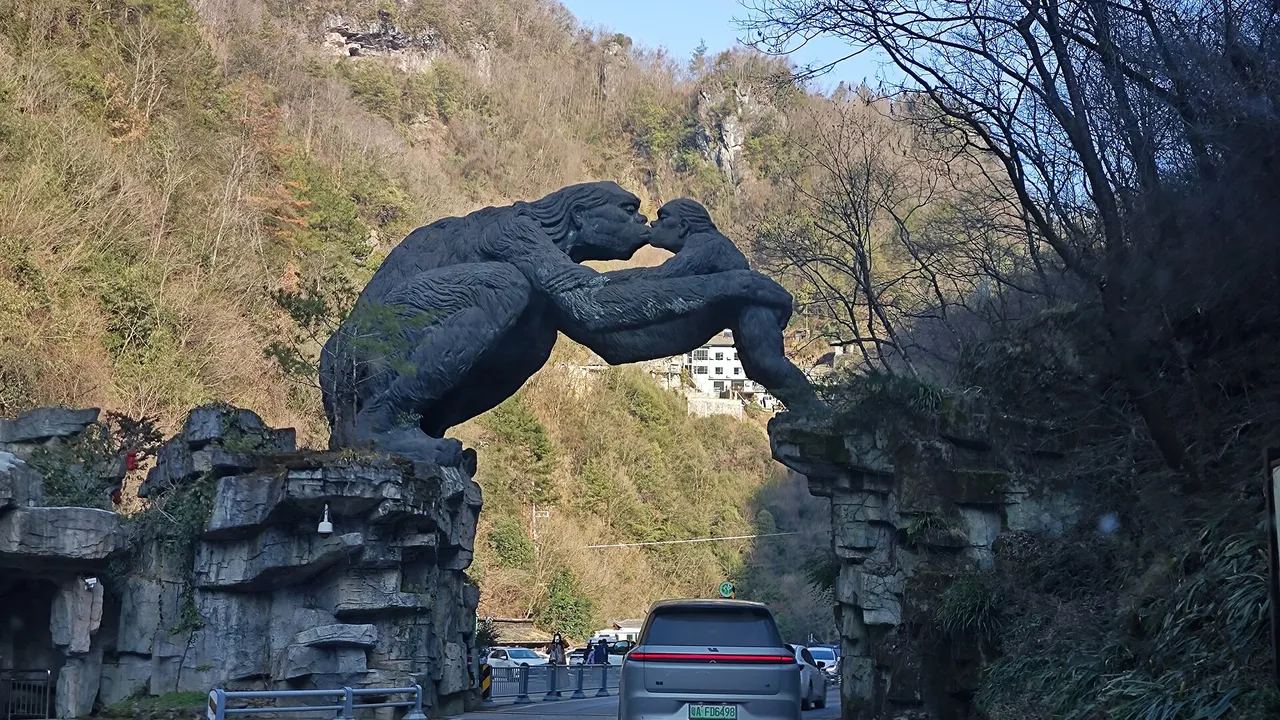
Tiansheng Bridge: Craft in Action at the Ba Workshops
Afternoon at Tiansheng Bridge completes the craft half of the culture line. The Ba workshops in the gorge revive the oil press, the brew house and the paper mill with masters working live: the muffled crack of the wooden ram driving oil, the steam of distilling spirits, the water-hiss of pulp meeting the screen, crafts you can hear.
Beyond the workshops, the bridge itself is a natural stone arch left by hillside collapse, a waterfall roaring beneath. Nature's marvel and human craft packed into one valley, a pairing you rarely meet elsewhere.
Muyu at Dusk: Fire Pits, Tea and Both Ends of the Day
The culture day's last stop is back in Muyu. Find a restaurant with a fire pit and dine around the coals: pork hanging from the beams, pot over the fire, and the house crowd trading Shennongjia legends, the wildman, Shennong's hundred herbs, the mountains' own rules, livelier prose than any exhibition wall.
Stroll the town afterward to digest. The specialty shops still glow, and the honey and medicinals seen at the workshops by day now invite a price comparison.
| Getting around |
|
| Budget | Entry for Shennong Altar, Tiansheng Bridge and Guanmenshan totals about RMB 180 pp (per posted rates), plus around RMB 100 for meals and transport. |
| Best time | Year-round; rites and craft demos cluster in morning and early afternoon, so check the day's schedule before entering. |
FAQs
How different are the culture and nature lines here?
Clearly: the culture line hugs Muyu with low altitude, gentle walking and short drives, while the nature line of Shennong Peak and Dajiuhu climbs high, drives far and tests the legs. With one day to spare, families pick culture and scenery hunters pick nature; with two days, take both.
Is the Guanmenshan panda a long-term exhibit?
Guanmenshan keeps a panda house on a long-term loan basis, but individuals and arrangements rotate; check the park's official account before departure for same-day status. Even if the panda sits out, the geology and biology halls alone earn the ticket.
How many rite performances run daily, and do they cost extra?
Usually two to three shows daily across morning and afternoon, more in peak season, per same-day posted times, generally included in admission with no surcharge. Arrive a quarter early for good seats; the show runs about twenty minutes, and the ritual props come in for a close look after.
What costs the most across the day?
The three tickets total about 180 yuan, the biggest item, followed by charter or taxi at roughly 300 for the day, marginally pricier than cabs split two ways but far easier. Meals run fifty to eighty a head, the fire-pit dinner a touch more. Overall, three to four hundred per person covers the day.