
Shennongjia's countryside holds its own against the marquee parks: the Xiangxi seeps its first water out of dense forest, Guanmenshan nails its hives across a cliff face, farmland and deer border the Dajiuhu wetland, and the Hongping road slices the gorge into a long scroll. Three days skip the Peak's staircases for timber yards, village lanes and lakeshores.
Lodging follows the flow: night one in Muyu, night two in Pingqian or Hongping, day three north to Songbai for the close. A charter works here, but so does the backpacker's mix of district buses and walking; the pace is yours to set.
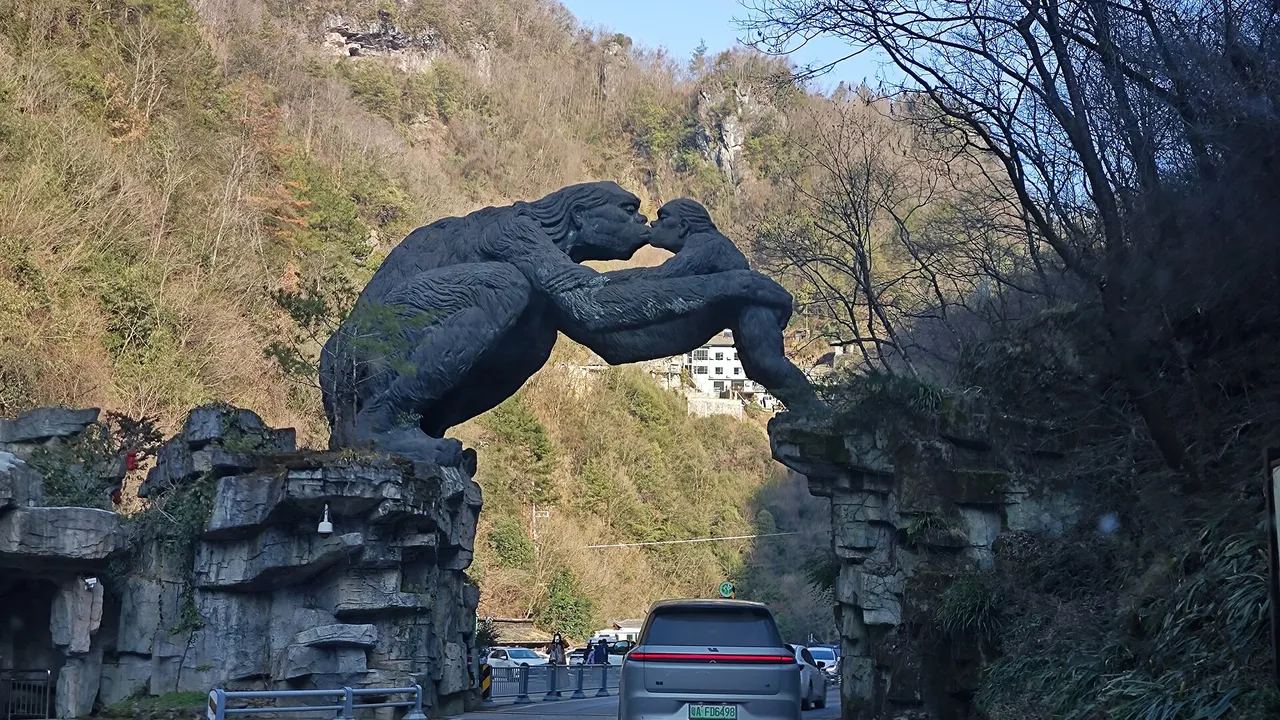
Itinerary at a glance
| 08:30 | Xiangxi Source: The Countryside Lesson Begins at the Spring |
| 10:30 | The Guanmenshan Apiary: A Beeyard Hung on a Cliff |
| 13:00 | Pingqian Old Town: An Afternoon at the Dajiuhu Gate |
| 15:30 | The Dajiuhu Farmland Belt: Deer, Rice Paddies and the Wetland's Edge |
| 06:00 | Dajiuhu at Dawn: The Country Line's Overtime |
| 11:00 | Hongping Gallery: Reading the Gorge Highway as Scenery |
| 13:30 | Tianmen Pass: Wind and Cloud at the Saddle |
| 15:30 | Shennong Tianchi: An Afternoon at a Highland Reservoir Lake |
| 17:30 | Songbai Old Street: The Timber Capital at Dusk |
| 09:00 | Muyu Market: Buying and Closing the Country Three |
The route, stop by stop
Xiangxi Source: The Countryside Lesson Begins at the Spring
Three country days open at a river's first breath. The source trail runs gentle under forest, water seeping from moss and crevice, clearer every step toward the spring. For a countryside line, this stop calibrates the tempo: slow walking, watching water, listening to woods.
Just over an hour round trip; on the way out, glance at the riverside vegetable plots and old houses, since the villages along the Xiangxi live off this very water.
The Guanmenshan Apiary: A Beeyard Hung on a Cliff
Guanmenshan's cliff apiary is a living specimen of traditional Chinese-hive beekeeping, a whole rock wall studded with wooden boxes, bees shuttling like loom threads. The old keeper's talk on splitting colonies and harvesting honey outclasses any display panel.
The gorge boardwalk follows the stream two kilometers; the geology and biology halls are optional, with the cliff honey and the gorge itself the real curriculum.
Pingqian Old Town: An Afternoon at the Dajiuhu Gate
The afternoon arrives at Pingqian, a tidy tourism town grown up to serve Dajiuhu, grey-tiled new streets spreading along the river. Skip the wetland for now, check in, and wander the riverside path and market.
Farmhouse kitchens and guesthouses cluster here; the pre-dinner gap belongs to watching locals wash greens at the river and kids walk home from school, small-town slack at its purest.
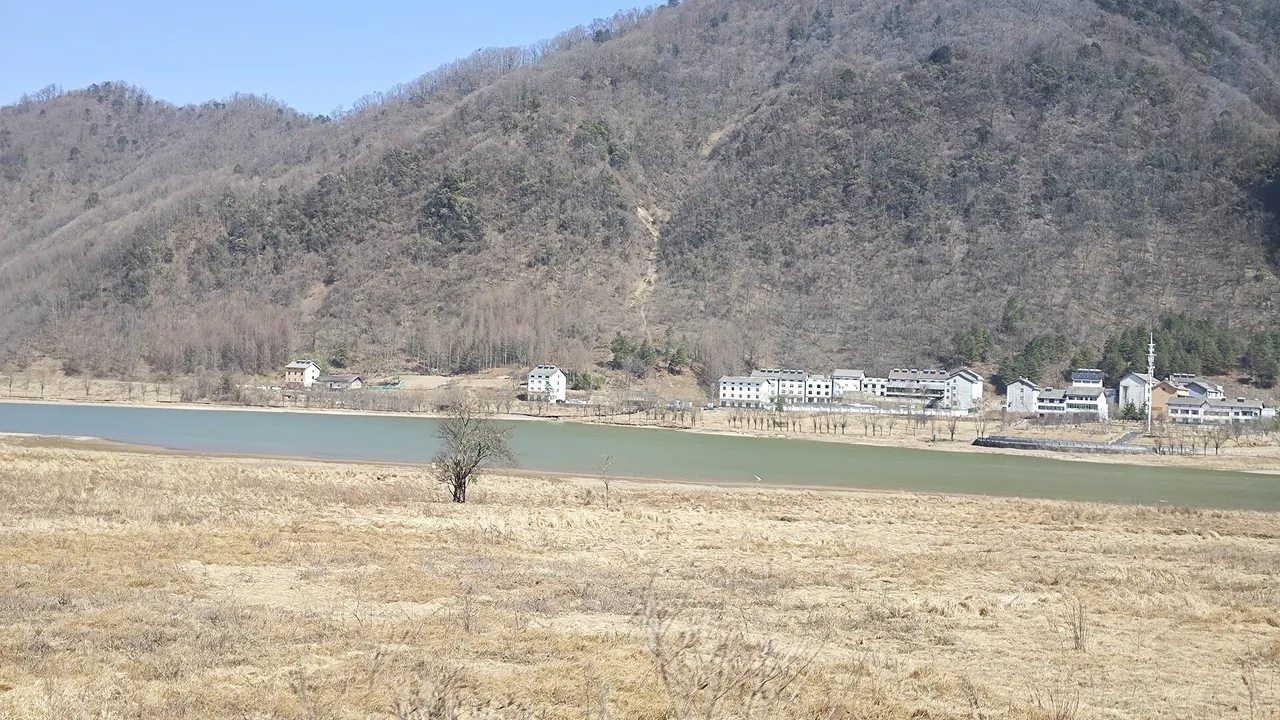
The Dajiuhu Farmland Belt: Deer, Rice Paddies and the Wetland's Edge
Ride the shuttle into the wetland's outskirts at dusk, this stop watching farmland rather than mist: sika deer pacing their paddock, rice paddies and meadow gilding in the sunset. Here the countryside line shifts its lens from park to farm.
Walk a stretch of the main boardwalk and turn back; the ten-to-twenty-minute ride out at sunset rolls past hay bales and timber fences like farm scenery on another continent.
Dajiuhu at Dawn: The Country Line's Overtime
Night two in Pingqian pays out before sunrise: thin mist on the water, deer in silhouette, mountains doubled in the still surface. Even skipping the full boardwalk circuit, half an hour lakeside repays the whole country line.
Breakfast in town by half past seven, check out, and roll toward Hongping.
Hongping Gallery: Reading the Gorge Highway as Scenery
The morning runs north to Hongping, where facing cliffs turn the highway into a natural scroll. The game here is slow: ask the driver to ease off, or stop at a pull-off and walk to the cliff base to watch the stream bend through the gorge.
Lunch in the gallery-line town, then onward north, Tianmen Pass straight ahead.
Tianmen Pass: Wind and Cloud at the Saddle
Tianmen Pass is the saddle viewpoint where the road crests, near 2,300 meters, with wind strong enough to claim hats. In fine weather cloud seas surge on both sides and ridgelines run to the sky's edge, the grandest vantage of the Hongping stretch.
No hiking required; stand at the saddle ten minutes and let the mountain wind riffle through two days of country memories.
Shennong Tianchi: An Afternoon at a Highland Reservoir Lake
Push north to Shennong Tianchi, a still lake ringed by forest, its shore path nearly flat, afternoon light raking the water: the trip's most idleness-friendly stop.
The full loop takes about an hour, with pavilions and boardwalks inviting barefoot sitting for a while.
Songbai Old Street: The Timber Capital at Dusk
Day three's dusk reaches Songbai, the district capital and former seat of the timber administration, its old street keeping Soviet-era buildings and grocers that carry the forest district's vintage. Dinner at a local kitchen runs truer and cheaper than any tourism strip.
Stroll the town path afterward and watch the after-work flow. Sleep in Songbai tonight or return to Muyu as the clock allows.
Muyu Market: Buying and Closing the Country Three
Should day three loop back to Muyu, the market makes the closing stop. The judgment built over three days at beeyards and lakeshores finally cashes in: honey threads, mushroom dryness, potato sizing. By now the buying is an inspection, not shopping.
Pack photos and mountain goods after breakfast, and the rural Shennongjia leaves with you.
| Getting around |
|
| Budget | Tickets total near RMB 300 (Dajiuhu and Guanmenshan lead), two nights of farmhouse and small-town lodging RMB 300-500, for a three-day budget near RMB 1000-1400 pp. |
| Best time | May-Jun and Sep-Oct are kindest; beeyards hum busiest in summer, and autumn puts lake and rice field in one frame. |
FAQs
Does skipping Shennong Peak miss Shennongjia's essence?
You miss summit views but not the forest's character. The Peak sells altitude and cloud seas; the country line sells woods, water and daily life, different cuts of one ecosystem. With limited legs or elders and kids aboard, this line lands closer to Shennongjia's everyday truth.
What lodging plan keeps three days simple?
The recommendation is one night Muyu, one Pingqian, one Songbai or back in Muyu: the first covers the source and apiary, the second locks in the mist, the third stays flexible. Phone-confirm every room a day ahead; mountain guesthouses fill fast in season, never gamble on walk-ins.
Is the line feasible with pets or strollers?
Strollers yes: every boardwalk except Tianmen Pass runs flat, and the Tianchi loop and the source push easily. Pets are not advised inside parks, the Dajiuhu wetland being protected ground that turns animals away; ask a guesthouse to mind them or keep to town activities.
Does this line work in winter?
Possible but discounted: parts of the Dajiuhu boardwalk close, Tianmen Pass ices over, and beeyards harvest nothing in winter. December to February, keep to the Muyu orbit and Songbai, swapping the ski resort in for the wetland. Winter buses thin out, making chartering near-mandatory.