
Read Shennongjia from a different angle: not the fearsome peaks but the people living among them. Muyu is the tourism hub, fast-paced and information-dense; Hongping lies in its gallery gorge, quiet enough to hear the stream; Songbai is the district capital, where Soviet-era blocks meet the wet market with built-in vintage. Three days move among three towns, parks as garnish.
The line suits two kinds of travelers: those recovering from the big ridges, and those curious what a forest-district town actually looks like. Every day here reserves half a day for the town itself.
Itinerary at a glance
| 08:30 | Muyu Streets: The Hub at Morning |
| 10:00 | Xiangxi Source: The Town's Back Garden |
| 13:30 | Guanmenshan: A Science Day in the Gorge |
| 09:00 | Shennong Altar and Tiansheng Bridge: The Culture Half-Day |
| 14:00 | Hongping Town: A Town Inside the Gallery Gorge |
| 09:00 | Tianyan: The Towns Line's Natural Highlight |
| 11:00 | Songbai: The Capital's Old Street and Museum |
| 14:00 | Shennong Tianchi: Still Water by the Capital |
| 17:30 | Back to Muyu: Closing the Three-Town Story |
The route, stop by stop
Muyu Streets: The Hub at Morning
Day one's lead is Muyu itself. Early on, the town wears two faces: the tourist current hurrying to morning buses, and locals buying vegetables and walking their rounds. Turn off the main street into the residential lanes behind, vegetable stalls, breakfast counters, quilts airing on balconies, the face guidebooks skip.
The morning's homework is orientation: the town is small, so walk the main street, the specialty street and the market once; the next two days' meals and purchases all happen on this map.
Xiangxi Source: The Town's Back Garden
Enter the source at ten with the fewest visitors. This trail is Muyu's own walking ground, and watching locals wash at the stream or rest in the pavilion carries more information than the scenery itself. The springwater bites cold even in June.
An hour round trip, then lunch back in town.
Guanmenshan: A Science Day in the Gorge
Spend the afternoon treating Guanmenshan as a museum cluster: the geology hall's formation models, the biology hall's specimen walls, the cliff apiary and the panda house. On the towns line this stop is charging, background loaded for two loose days ahead.
Two hours of gorge boardwalk, then back to Muyu, where the evening belongs to food stalls and the night market.
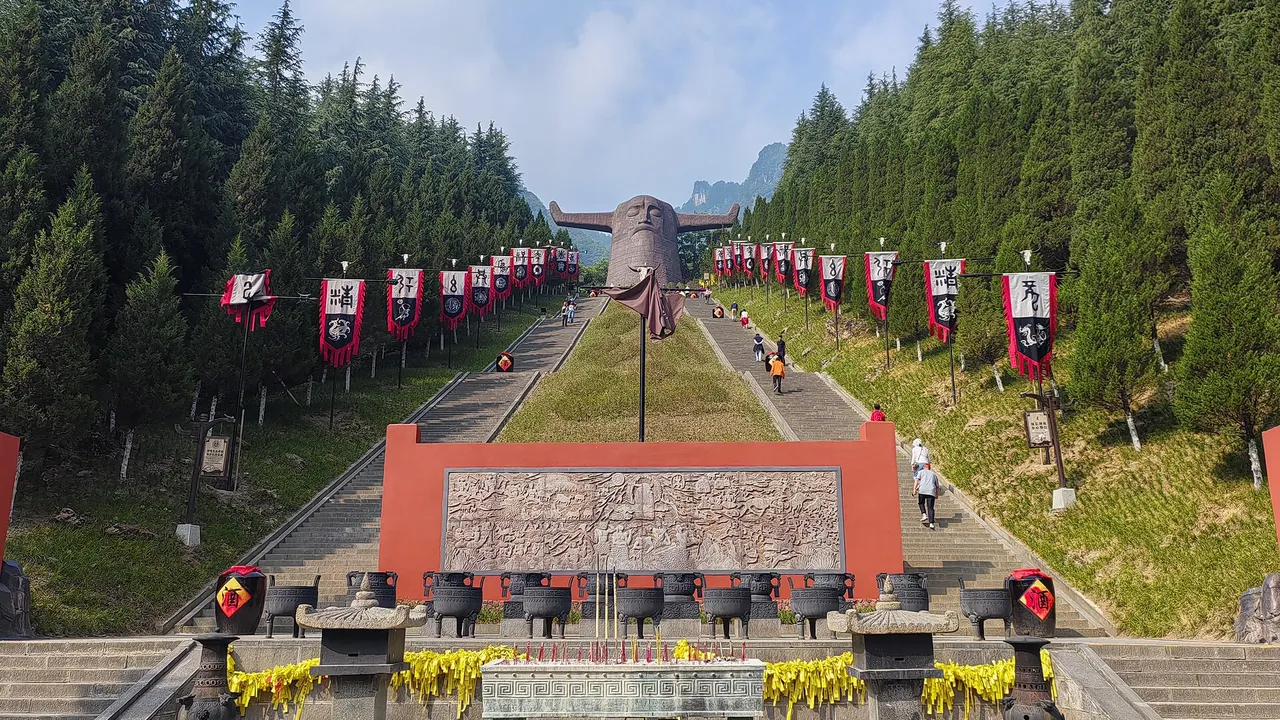
Shennong Altar and Tiansheng Bridge: The Culture Half-Day
Day two's morning clears both culture parks around Muyu in one go: first the Yan Emperor statue and fir king at the altar, then the falls and Ba workshops at the bridge, a quarter hour between them.
Workshop demos cluster in the morning, so keep the order.
Hongping Town: A Town Inside the Gallery Gorge
The afternoon reaches Hongping. The town is a twenty-minute walk end to end, but it sits dead center in the gallery gorge, cliff walls outside every window. Strolling, watching the stream and trading words with your guesthouse host are the towns line's standard moves.
Watch the gorge take its last light from a pull-off, eat potato rice and cured pork in town, and sleep a valley sleep.
Tianyan: The Towns Line's Natural Highlight
Day three's morning goes up to Tianyan, Swallow Cliff and the rainbow bridge being the itinerary's only true park moment. Ten minutes of cloud sea beneath the span puts an exclamation mark on three days of towns.
The loop takes an hour at 2,300 meters; the wind bites, carry a layer.
Songbai: The Capital's Old Street and Museum
Reach Songbai before noon. The old street's Soviet-era blocks and veteran grocers carry the forest district's memory, and the town museum tells the story of Shennongjia's development through specimens and period photos, speaking a different dialect from Muyu's tourism narrative.
An hour in the museum, a bowl of local noodles on the old street, then Shennong Tianchi for the afternoon.
Shennong Tianchi: Still Water by the Capital
The afternoon circles Shennong Tianchi, a highland mirror of water, the shore path an hour, the towns line's final half-hour ceded to idle sitting.
Sit in a lakeside pavilion until four, then return to Muyu or depart straight from Songbai.
Back to Muyu: Closing the Three-Town Story
The evening returns to Muyu for a proper closing dinner that compares the three towns' flavors: Muyu's pace, Hongping's hush, Songbai's patina. Shennongjia is not only fearsome peaks; it is also people living their days at twelve hundred meters.
Tomorrow holds two paths: back up the mountains to fill the gaps, or down the mountain carrying three towns' worth of memory.
| Getting around |
|
| Budget | Tickets total near RMB 400, lodging and meals RMB 800-1000 across three days, for a budget near RMB 1200-1600 pp. |
| Best time | Year-round; both towns cool in summer, while Songbai livens in winter. |
FAQs
How should days split between towns and big parks?
For trips of five-plus days, split three-two or four-three: let the big parks take three or four days and keep two or three for the towns to recover and digest. An all-towns trip stands on its own too, minus cloud seas and golden monkeys, purely a matter of taste.
Do the three towns differ much on lodging?
Clearly: Muyu offers the widest, most standardized choice; Hongping is a plain but quiet valley town; Songbai mixes guesthouses and hotels at the best value. The lodging-sensitive can sleep in Muyu every night and treat Hongping and Songbai as day trips.
How many nights suit each town?
Muyu carries two to three nights as the base; one night in Hongping buys the quiet sleep; Songbai takes one night or none depending on the old street and museum. The classic three-day configuration is one night each, Muyu, Hongping, Songbai, with no backtracking.
Any special winter notes for the towns line?
Winter flips the script: Songbai turns most lived-in, ski-season Muyu the busiest, Hongping the stillest. Three notes: mountain roads ice over, confirm chains with your charter; heating varies, ask about air-conditioning or floor heat when booking; Tianyan may close, keep a backup.