
Shenzhen keeps two kinds of sea: western Shenzhen Bay is the seam of city and wetland with Hong Kong's hills across, while the eastern Dapeng Peninsula is the seam of mountain and sand with water nearing the open sea. Three days cut east-west: urban shore, then Yantian beaches, then Dapeng, each with its own character.
Transport is the hinge: the west rides the metro entirely, the east has no rail, Dameisha is reachable by bus, and Dapeng rewards a taxi or chartered car. Overnight at Xichong or Jiaochangwei on day three and return after sunrise, and you unlock the full version of this line.
Itinerary at a glance
| Day 1 09:00 | Futian Mangrove Ecological Park: A Migrant-Bird Way Station in the City |
| Day 1 14:00 | Shenzhen Bay Park: Riding with Hong Kong's Hills in View |
| Day 1 19:00 | OCT Harbour: A Waterfront First Night |
| Day 2 09:30 | Dameisha Beach Park: The East's First Stretch of Sand |
| Day 2 14:30 | The Yantian Waterfront Boardwalk: A Path Hung on the Cliffs |
| Day 2 18:30 | Yantian Seafood Street: Eating What the Sea Brings |
| Day 3 09:30 | Dapeng Fortress: A Living Sample of Ming-Qing Coastal Defense |
| Day 3 13:30 | Jiaochangwei: The Seam of Guesthouses and Sand |
| Day 3 16:30 | Xichong Beach: The Coastline's Finale |
The route, stop by stop
Futian Mangrove Ecological Park: A Migrant-Bird Way Station in the City
The Futian Mangrove Ecological Park fringes the country's only national nature reserve set inside a city core; each winter over a hundred thousand migrants rest on these mudflats, with the black-faced spoonbill the star. Boardwalks push into the mangroves, where binoculars catch mudskippers and fiddler crabs at work.
Golden birding windows come mornings and dusks after low tide, densest November through March. The on-site nature education center runs a free exhibit, so read it before the boardwalk: birds you can name are birds worth watching.
Shenzhen Bay Park: Riding with Hong Kong's Hills in View
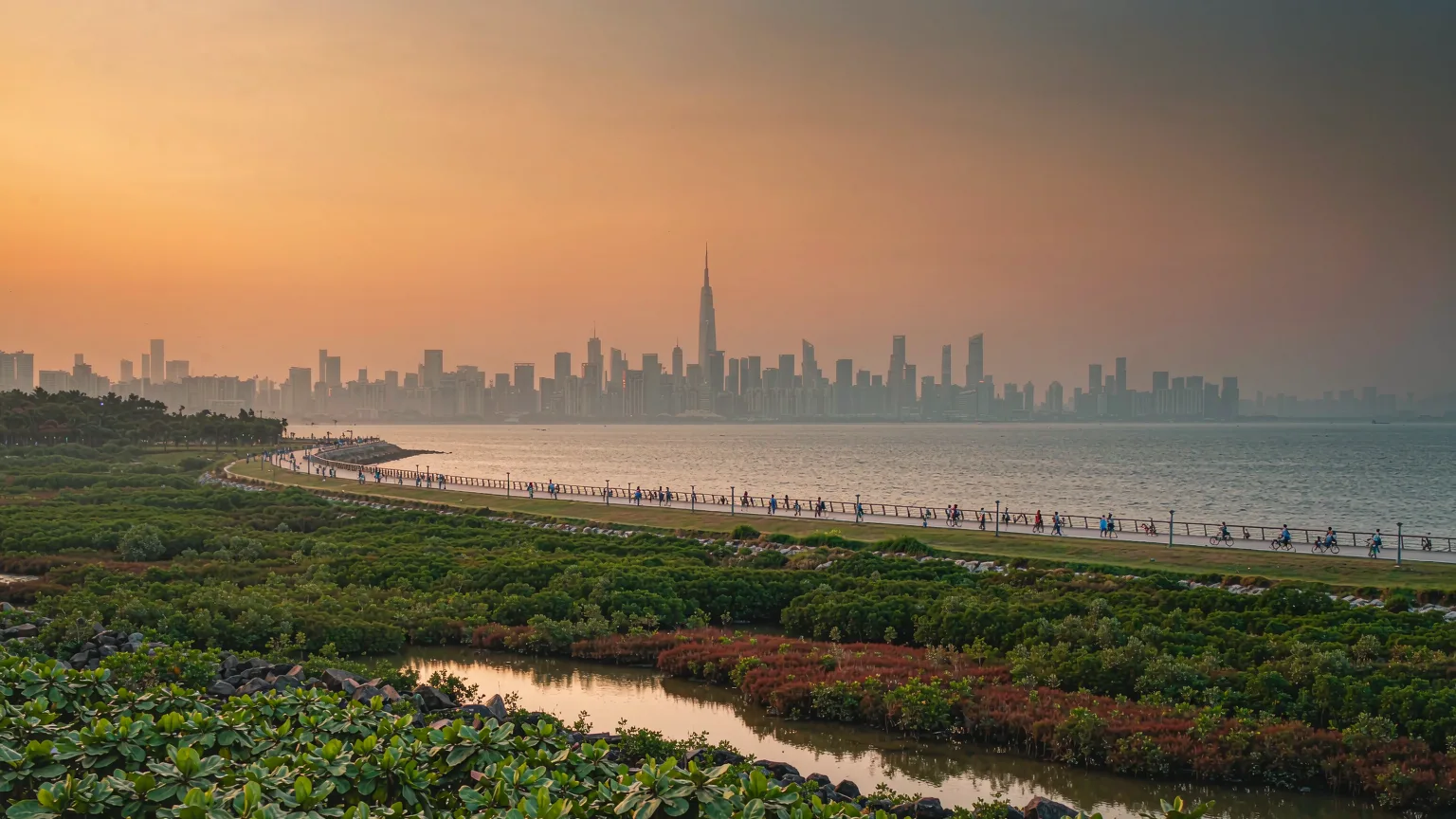
Afternoon light at Shenzhen Bay Park runs harsh until about four, then softens. Rent a bike from the mangrove end and ride toward the Shenzhen Bay Bridge, ten-odd kilometers of shoreline with Hong Kong's Yuen Long hills folded across the water, the sea mirror-flat at high tide.
Ride in half-hour pulses with ten-minute stops: the bridge-view park and the wedding park are two proper daydreaming points. At dusk the skyline reads in clean layers against the far hills, the bay's most photogenic hour.
OCT Harbour: A Waterfront First Night
If night one is in town, OCT Harbour is the on-the-way dinner stop: lagoon and lit bridges for a nightscape, Cantonese, coconut chicken and seafood rooms ringing the water, and the ticketed water show running to schedule with most of it visible from the bank.
Walk the lagoon after dinner and bank your legs for tomorrow. Taxis to Futian or Nanshan are easy; lodging all three nights downtown keeps transport costs lowest.
Dameisha Beach Park: The East's First Stretch of Sand
Dameisha is Shenzhen's best-known free beach, a crescent over a kilometer long, sand on the coarse side but broad, green hills behind, with the wish tower and boardwalks flanking. Come in the morning before the sun bites, easy for swimming and wave-chasing; weekends pack hard, weekdays breathe a full class easier.
Boardwalks outside the park run toward Xiaomeisha along the cliff line, wide open views for a stretch. Umbrellas, changing rooms and rinse stations are complete and clearly priced.
The Yantian Waterfront Boardwalk: A Path Hung on the Cliffs
The Yantian boardwalk runs from the Chung Ying Street end past Dameisha toward Xiaomeisha, Shenzhen's longest seafront path. The Dameisha-to-Beizaijiao stretch is the pick, the walkway rising and falling against coastal cliffs, reef and surf on one side, shaded green slope on the other, neither harsh nor tiring.
Evening is its best light, the sun sinking into the sea toward Hong Kong while lighthouse and pier turn to silhouettes. Multiple exits along the way let tired walkers bail to the bus line.
Yantian Seafood Street: Eating What the Sea Brings
Yantian Seafood Street sits on the coast near Dameisha, rows of tank stalls beside processing kitchens: pick your seafood, send it back to be cooked, pay by the kitchen's fee schedule. When the evening lights come on and steam meets wok breath, this is Shenzhen's most fishing-port meal.
Three anti-trap rules: check the tanks for liveliness and never take dead crab or shrimp; settle processing fees by method and weight before ordering; and pace yourself on the expensive items like lobster and geoduck, since locals mostly order shellfish and sea fish.
Dapeng Fortress: A Living Sample of Ming-Qing Coastal Defense
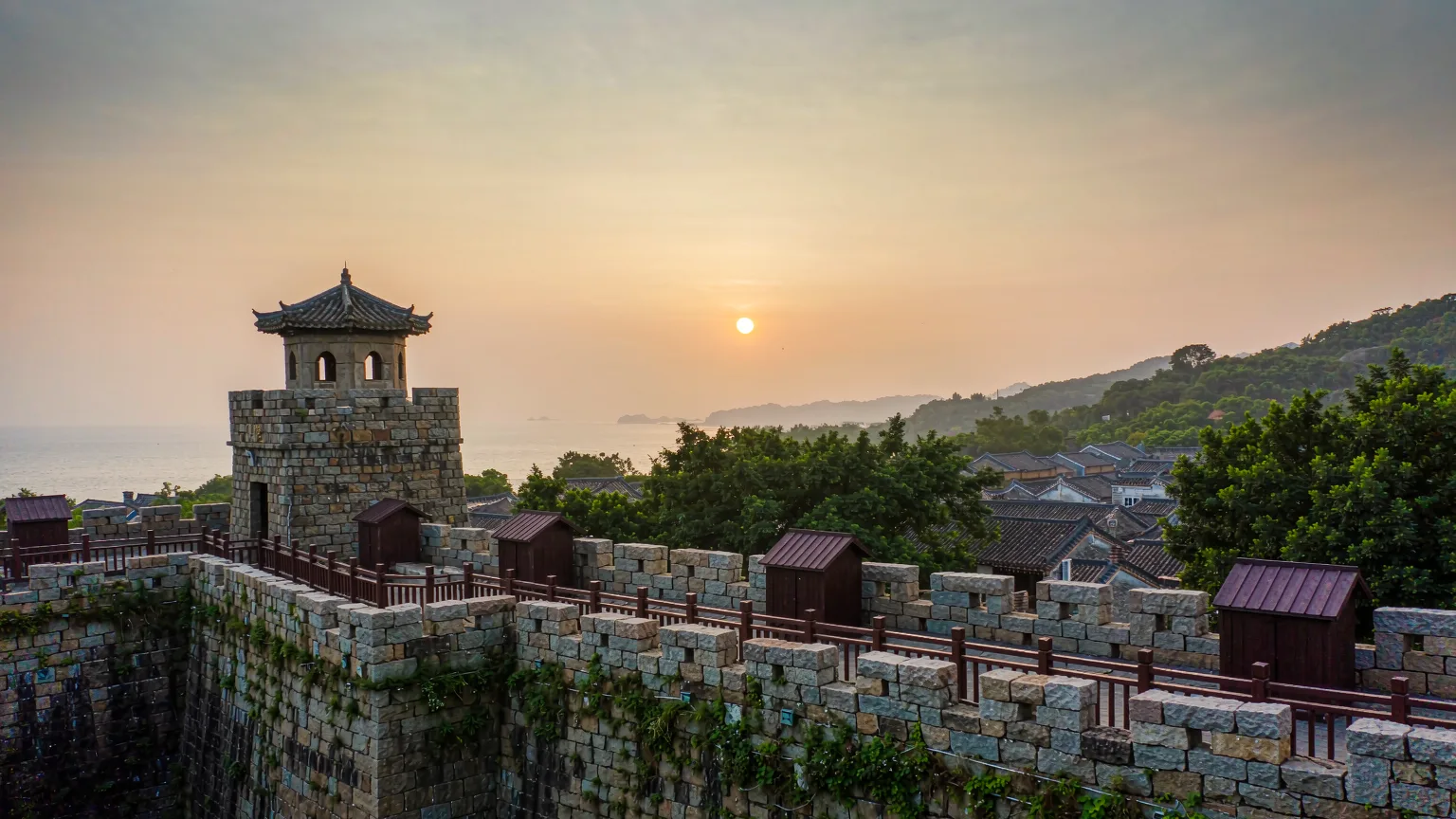
Dapeng Fortress was a Ming-dynasty coastal garrison raised against sea raiders, and Shenzhen's nickname Pengcheng traces here. Ming-Qing houses and gate layout survive intact, mansions like General Lai Enjue's residence stand with doors open, and the grey-brick lanes fill an hour or two without strain.
The fortress sits across one road from Jiaochangwei beach, so tour the town first and the sea second. The coastal-defense museum and clan halls reward stops, with clear signage that reads well even without a guide.
Jiaochangwei: The Seam of Guesthouses and Sand
Jiaochangwei is Shenzhen's densest guesthouse beach village, hundreds of family inns spreading from the shore inland, graffiti walls, swings and sea-view terraces as standard kit. The beach itself runs fine-sand and gentle, made for an afternoon of nothing, one rented umbrella funding half a day.
This is the night worth keeping in the three-day plan: sea-view rooms and courtyards, beach BBQ after dark and sunrise within walking distance. On a budget, browse without sleeping; the beachside cafes see the same sea.
Xichong Beach: The Coastline's Finale
Xichong is Shenzhen's longest beach, a five-kilometer arc with water quality near the city's top and the green ridge of Qiniang Mountain behind. After four the tour groups pull out, the sand widens again, and swimming, splashing and photography all hit their best window.
Xichong also doubles as a dark-sky spot; with little light pollution, clear nights show dense starfields. If you have booked a nearby guesthouse, stay past sunset: this sea gives the three days a finale with real weight.
| Getting around |
|
| Budget | RMB 600-1000 pp: entry fees run minimal, with eastern transfers and seafood meals the big spend; two mid-range nights about RMB 400-800. |
| Best time | October to April brings clear skies, blue water and migrant birds; in typhoon season, July and August, check weather before leaving and reroute immediately if beaches close. |
FAQs
Which day most deserves extra time?
Day three, the Dapeng Peninsula. The fortress takes ninety minutes, but dusk and dawn at Jiaochangwei and Xichong are the line's essence, and most people only see the daytime sand. Overnight at either beach for one sunrise, and the completeness of the three days changes at once.
Do the beaches need tickets or booking?
Dameisha Beach Park usually needs free online slot booking in peak season; Xichong charges admission with caps in season, booked ahead on official channels; Jiaochangwei's beach is free. Rules shift with the seasons, so confirm all of them on official accounts the night before rather than hitting closed gates.
Are the beaches boring in winter?
Not at all; winter is this line's hidden peak. Migrant season makes the mangroves' birding the year's best, the unscorching sun suits the boardwalks, and guesthouse prices halve. Swimming is off, but the boardwalks, the fortress and the seafood street ignore the calendar entirely.
What about typhoon or rainstorm days?
Typhoons cluster July to September; under warnings the beaches and boardwalks close and eastern hill roads may be controlled. Build day three as the swappable day: in bad weather, switch to indoor museums and malls, then return to the beach once warnings lift. Checking the day's weather alert before departure is this route's standing drill.