
Shenzhen grew squeezed between mountain and sea, half skyscraper, half coastal trail. Three days of nature are ordered by rising intensity: day one at city greenway stroll grade, day two a half-day climb plus botanical garden, day three the Dongxichong coastal crossing, the city's signature mountain-sea line.
The plan follows two rules: never rush, one or two anchors per day with slack for staring at views; and lock transport early, since downtown rides the metro end to end while the two eastern legs need taxis and buses. One pair of grippy hiking shoes carries all three days.

Itinerary at a glance
| Day 1 09:00 | Lianhuashan Park: A Gentle Start on the Central Green Axis |
| Day 1 14:00 | Futian Mangrove Ecological Park: A Nature Class on the Mudflats |
| Day 1 16:30 | Shenzhen Bay Park: A Coastal Ride into the Sunset |
| Day 2 08:30 | Wutong Mountain: A Half-Day up Shenzhen's Roof |
| Day 2 14:30 | Fairy Lake Botanical Garden: A Plant Kingdom on the Descent |
| Day 2 19:00 | Shenzhen Talent Park: A Second Digestion of Night Runs and Lights |
| Day 3 08:30 | The Dongxichong Coastal Trail: Shenzhen's Most Beautiful Hike |
| Day 3 14:00 | Xichong Beach: The Reward at Trail's End |
| Day 3 17:00 | Yangmeikeng: Closing Light on the Sea-Cliff Road |
The route, stop by stop
Lianhuashan Park: A Gentle Start on the Central Green Axis
Warm up on Lianhuashan's gentle slopes. The hilltop square surveys the full Shennan Avenue axis, skyline and distant ridgelines in one frame; reading the city's mountain-water layout first gives the next two days of walking a map in your head.
Descend by the southern greenway, where the kite lawn and lakeside grass suit post-breakfast digestion; the paths are flat throughout, intensity equal to one extended morning exercise.
Futian Mangrove Ecological Park: A Nature Class on the Mudflats
After lunch, slide to the mangroves on Shenzhen Bay's north shore. A key way station on the East Asian flyway, it hosts wintering flocks of black-faced spoonbills; boardwalks thread the woodland, and mudskippers and fiddler crabs work the flats, the densest nature-watching inside the city.
The free nature education center beside the park is worth reading before the boardwalk; a few named target species change the whole experience. No gradient anywhere, manageable for seniors and kids.
Shenzhen Bay Park: A Coastal Ride into the Sunset
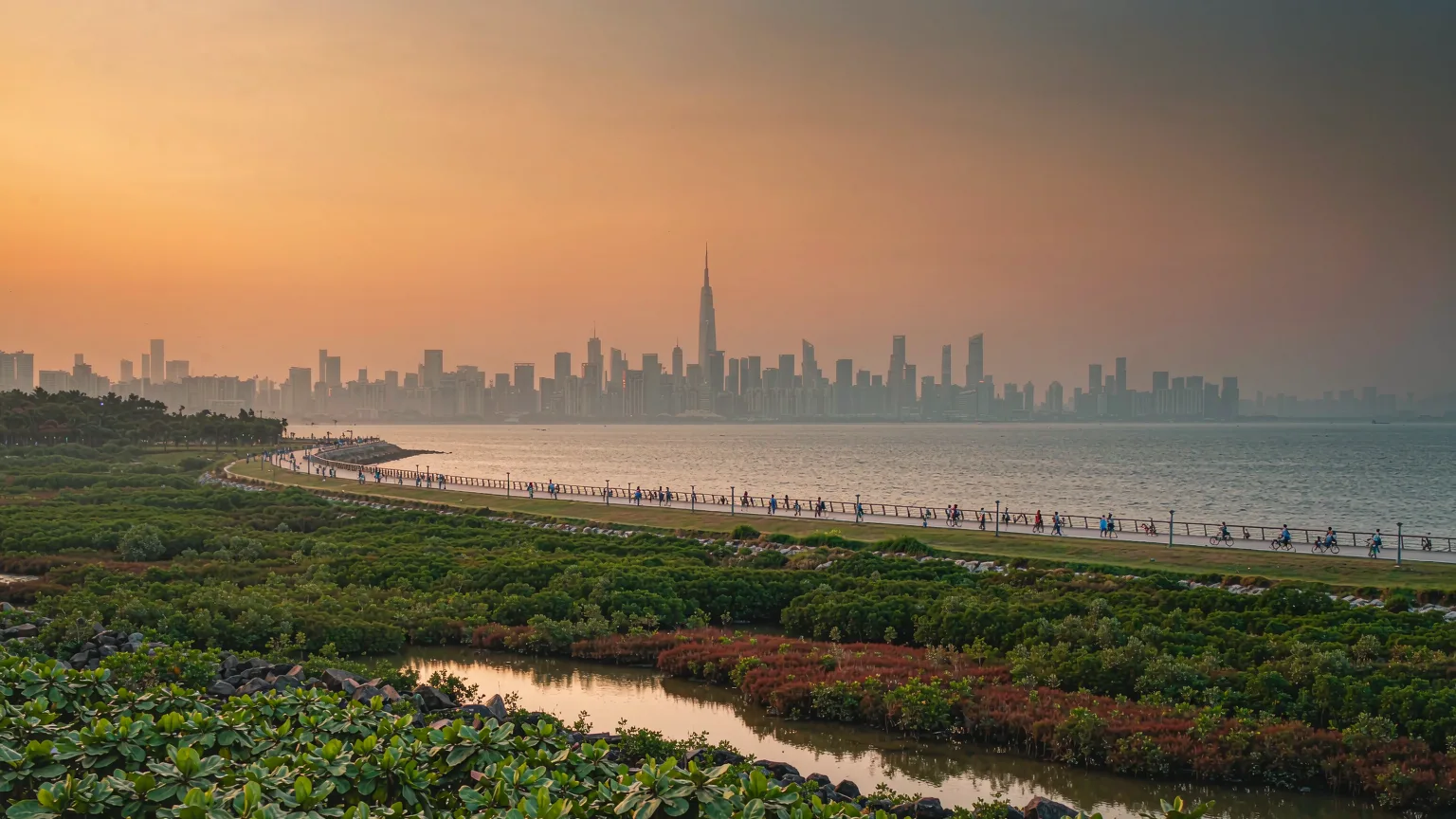
South of the mangroves lies Shenzhen Bay Park, connected by linked boardwalks within walking distance. Rent a bike and ride the shore toward the Shenzhen Bay Bridge as dusk warms Hong Kong's hills and the skyline at once, the easiest exercise of the three days.
An hour of riding suffices; after dark, watch the lights come on around the bridge-view park, then head back downtown to bank strength for tomorrow's climb.
Wutong Mountain: A Half-Day up Shenzhen's Roof
Wutong is Shenzhen's highest peak, the main summit near a thousand meters. Several trailheads offer routes, with Xiutong and Bitong the friendlier grades at three to four hours to the top; the summit lives in cloud, and on clear days you see both the city and Dapeng Bay's sea at once.
Start at dawn, uphill before ten to beat heat and crowds. Rest and refuel around the Haohan slope on top, descend by cableway or the same trail, and bring poles if your knees complain.
Fairy Lake Botanical Garden: A Plant Kingdom on the Descent
Coming off Wutong, the Fairy Lake Botanical Garden dovetails perfectly, among South China's finest. The cactus and succulent house, shade-plant zone and aquatic garden each hold their own, Hongfa Temple hums with incense, and the lakeside lawn is the city's picnic sanctuary.
The garden's paths rise gently; two hours covers the main glasshouses. After four, slanted light into the desert house gives succulents and cacti their most photogenic hour.
Shenzhen Talent Park: A Second Digestion of Night Runs and Lights
Give day two's evening to Talent Park, the Nanshan Houhai city park themed on talent, its loop track ringing the lake past two kilometers, night lighting merging with the Shenzhen Bay skyline across the water.
After a mountain morning, this is the low-intensity recovery slot: one slow lake lap or a seat through the light-show reflections. Free and open, with sea breeze pushing in, it is the loosest night of the three.
The Dongxichong Coastal Trail: Shenzhen's Most Beautiful Hike
The last day crosses from Dongchong village to Xichong along the coastal hill path, about six kilometers over several small heads, with reef flats, pebble coves and sea-view cliffs in rotation, hailed as Shenzhen's most beautiful hike at moderate intensity, two to four hours.
Some sections need hands, feet and wading, so wear grippy trail shoes and carry a daypack that frees both hands. Check the tide table, since a couple of low reef stretches flood at high tide, and wet rock in rain means rerouting outright.
Xichong Beach: The Reward at Trail's End
The trail ends at Xichong Beach: empty the sand from your shoes and go straight into the water or flat onto it. This five-kilometer arc ranks among Shenzhen's cleanest-water beaches, and the sea feels doubly cool after a hike.
Afternoon Xichong runs quiet with steady waves, and the rocky edges suit photos. Non-hiking companions can come straight from downtown to regroup; beachside tea seats and grills burn a whole afternoon easily.
Yangmeikeng: Closing Light on the Sea-Cliff Road
Before returning, swing by Yangmeikeng, the coastal greenway pinched between mountain and sea; rent a bike toward the Luzui headland at the road's end as the cliff line unrolls, a filming location for several movies, its evening light gilding the reef.
On empty legs, just sit and wait for the sunset. Yangmeikeng's seafood canteens and roast-chicken joints are the realistic dinner options; eat well, ride back, and the three days of nature close here.
| Getting around |
|
| Budget | RMB 500-900 pp: most sites are free or cheap, with day-three transport and meals the main spend; hiking gear, if bought, is extra. |
| Best time | October to April is ideal, cool for hiking and layered with migrant season; in summer start hikes at dawn and stop through midday heat. |
FAQs
Is the rising intensity reasonable? Can average fitness finish it?
Yes. Day one is flat walking, day two allows a mid-mountain turnaround, and day three's Dongxichong is the only real battle at two to four hours, moderate. Average legs can switch to a short Xichong-side leg or skip the hike for a Yangmeikeng bike ride without hurting the whole.
Do I need a guide for the Dongxichong crossing?
The main line is clear and mature; in normal weather no guide is needed, just follow people and markers. The real hazards are tide and weather, since forcing flooded reef sections is this trail's main accident source. First-timers should bring companions, and solo hikers should leave their plan with the hotel.
Can this route work with a five-year-old?
Yes, with day three's hike cut. The first two days are child-friendly throughout: Lianhuashan, the mangroves and the botanical garden all welcome kids, and Wutong becomes a cableway or mid-hill short route. Dongxichong's reefs and wading run too risky for small children, so swap in Xichong beach play plus a Yangmeikeng ride.
Do I need to buy dedicated hiking gear?
Only two essentials: grippy trail shoes and a daypack, same-day solvable at outdoor shops or online in the city. Poles and knee braces depend on your knees; quick-dry sportswear suffices, no technical shell required. Summer adds a sun hat and repellent, winter a windproof layer for the sea breeze.