
One day on Mount Tai is tight but fully workable: leave Red Gate at 6:30 am, reach Zhongtianmen in about four hours, then choose between continuing on foot and switching to the cableway, stand on Jade Emperor Peak by early afternoon, ride down, and still see Dai Temple at dusk. The whole scheme rests on one rule: skip the sleep-in and give the coolest air and emptiest steps to the morning.
Book the ticket online a day ahead, stock up on trekking poles and food below, since prices double with altitude. If rain is forecast, delay a day; the sea of clouds after a storm earns the wait, while slick stone on the Eighteen Bends never does.

Itinerary at a glance
| 06:30 | Red Gate: Starting Up the Classic Route at Yitianmen |
| 10:30 | Zhongtianmen: Where Legs Meet the Cableway |
| 13:00 | Nantianmen and Heaven Street: A Market in the Clouds |
| 15:00 | Jade Emperor Peak and Riguan Peak: Looking Back from the Top |
The route, stop by stop
Red Gate: Starting Up the Classic Route at Yitianmen
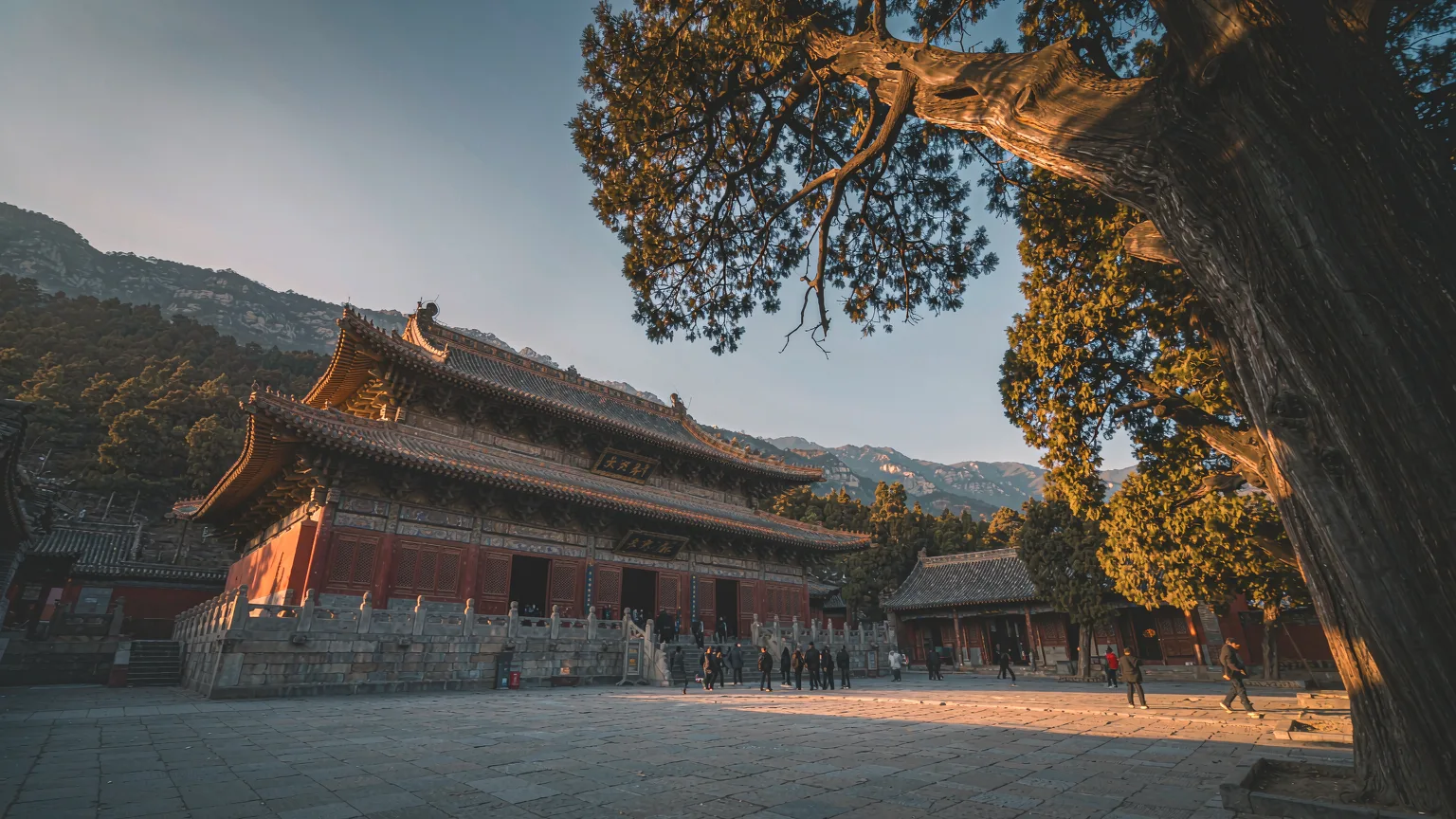
Red Gate is the oldest trailhead on Mount Tai, a stairway worn smooth by centuries of pilgrims: Yitianmen, the spot where Confucius looked up, Wanxian Tower and Doumu Palace, cypresses shading the way and inscriptions lining the slope. Leave at 6:30 am while the steps still carry the night's cool, keep an even rhythm, and you reach Zhongtianmen in a bit over two hours, ahead of the tour-group tide.
The stretch rewards slowness. Jingshi Valley, with its giant Northern Qi sutra carving, asks for a ten-minute detour downhill and gives the most expansive calligraphy on the mountain; the stream by Doumu Palace stays quiet. For average legs, spend attention on breathing and pacing, because everything you save here, the Eighteen Bends will collect.
Zhongtianmen: Where Legs Meet the Cableway
Zhongtianmen marks the midpoint and the first transfer point: keep walking, or board the cableway that lifts you to Nantianmen in about ten minutes. Walkers arriving here reflexively buy instant noodles to refuel, but the better play is food you carried up, twenty minutes of rest on the platform, eyes on the route below, then on.
Switching to the cableway here means skipping the stream scenery of Kuaihuo Sanli and Yunbu Bridge; staying on foot means the Eighteen Bends below Shengxianfang will claim more than half of what your legs have left. The rule is simple: if Dai Temple is still on the afternoon list, take the cableway; if the mountain owns the whole day, keep climbing.
Nantianmen and Heaven Street: A Market in the Clouds
The Eighteen Bends stack more than sixteen hundred steps and form the steepest stretch on the mountain, with Nantianmen hanging at the top of the stairway. Resist looking back mid-climb; wait for Shengxianfang, where the whole zigzag of your route snaps into one view and the triumph and the ache arrive together. Steps are narrow and peak-season traffic heavy, so keep right and leave the climbing line clear.
Past Nantianmen the grade flattens at once. Heaven Street lines the ridge with shops and guesthouses, and when mist floods up from the valley the whole lane seems to hover. The gilt Tang inscription and Bixia Temple sit along this stretch; walk it slowly, for this is the part of Mount Tai that most resembles a world above the sky.
Jade Emperor Peak and Riguan Peak: Looking Back from the Top
Jade Emperor Peak stands 1,545 meters high, its little temple the site of imperial sacrifices for centuries, and the stone marker before it is the literal crown of the mountain. The walk from Nantianmen takes barely twenty minutes, yet the time deserves spreading out: the Tang cliff inscriptions, the spot where Confucius surveyed the world below, and the Arched Rock each earn ten unhurried minutes.
Riguan Peak is the sunrise seat; if your plan becomes a night climb, its small hours will be packed with people wrapped in rented army coats. By day you can watch the cloud sea rolling up from the valleys. For the descent choose the Zhongtianmen or Taohuayu cableway, the latter quieter but with a longer ride back to town.
| Getting around |
|
| Budget | Mount Tai entry runs about RMB 115 and the Zhongtianmen cableway about RMB 100 one way; allow RMB 250-350 pp with meals and local transport. |
| Best time | Apr-Jun and Sep-Oct are steadiest; avoid a midday summer climb, and in winter the stone steps ice over, so bring traction gear. |
FAQs
Can Mount Tai really be done and descended in one day?
Yes, but only on a clock: leave Red Gate at 6:30, top out by 3:30 pm, and the Zhongtianmen cableway has you down by five. To add Dai Temple, cap the summit at an hour or take the cableway both ways, and keep buffer room for last shuttles and cableway closing.
Do I need to book Mount Tai tickets in advance? Any student discount?
Book online with real-name registration in peak season; on-site sales exist but holiday lines are long. Full-time students get a ticket discount with valid ID, though cableways stay full price. Choose your entrance when booking, Red Gate or Tianwai Village, since switching later may mean re-registering.
Should I climb on foot or ride the cableway up?
Depends on the goal. For the full sweep of inscriptions and old buildings, walking up from Red Gate is irreplaceable and takes about four hours; for summit views only, the Tianwai Village shuttle plus cableway reaches Nantianmen within two. For one day, splitting the walk and the ride balances legs against time best.
How should the plan change if I want the sunrise?
A one-day visit misses the sunrise unless you climb at night: set out from Red Gate around 9 pm, reach Riguan Peak by 4 am, eat breakfast on top, then descend. Bring a headlamp and warm layers, stay with companions, and cancel without hesitation in rain or high wind; safety outranks the view.