
The three-day logic refuses to turn Mount Tai into one assault: day one takes the classic Red Gate route up by daylight, absorbing every stele, temple and the Eighteen Bends, and sleeps on the summit; day two starts with sunrise, then descends to the western Taohuayu valley, where a creek and a cableway slow the pace; day three stays light, visiting the Sui-dynasty giant Buddha at Baifo Mountain and ending in a hot pool.
Effort allocation is the spine: heaviest on day one at eight hours, medium on day two, lightest on day three. Summit lodging books out days ahead in season; if you sleep in town, the day-two sunrise must be sacrificed, so decide before booking.
Itinerary at a glance
| 第一天 06:30 | Red Gate: The Daylight Climb from Yitianmen |
| 第一天 10:30 | Zhongtianmen: The Midpoint Pantry and Decision |
| 第一天 13:30 | The Eighteen Bends: Sixteen Hundred Steps of Steep |
| 第一天 15:00 | Nantianmen and Heaven Street: Into the Market Above the Clouds |
| 第一天 17:00 | Jade Emperor Peak and Riguan Peak: Sunset and Sunrise, Twice Paid |
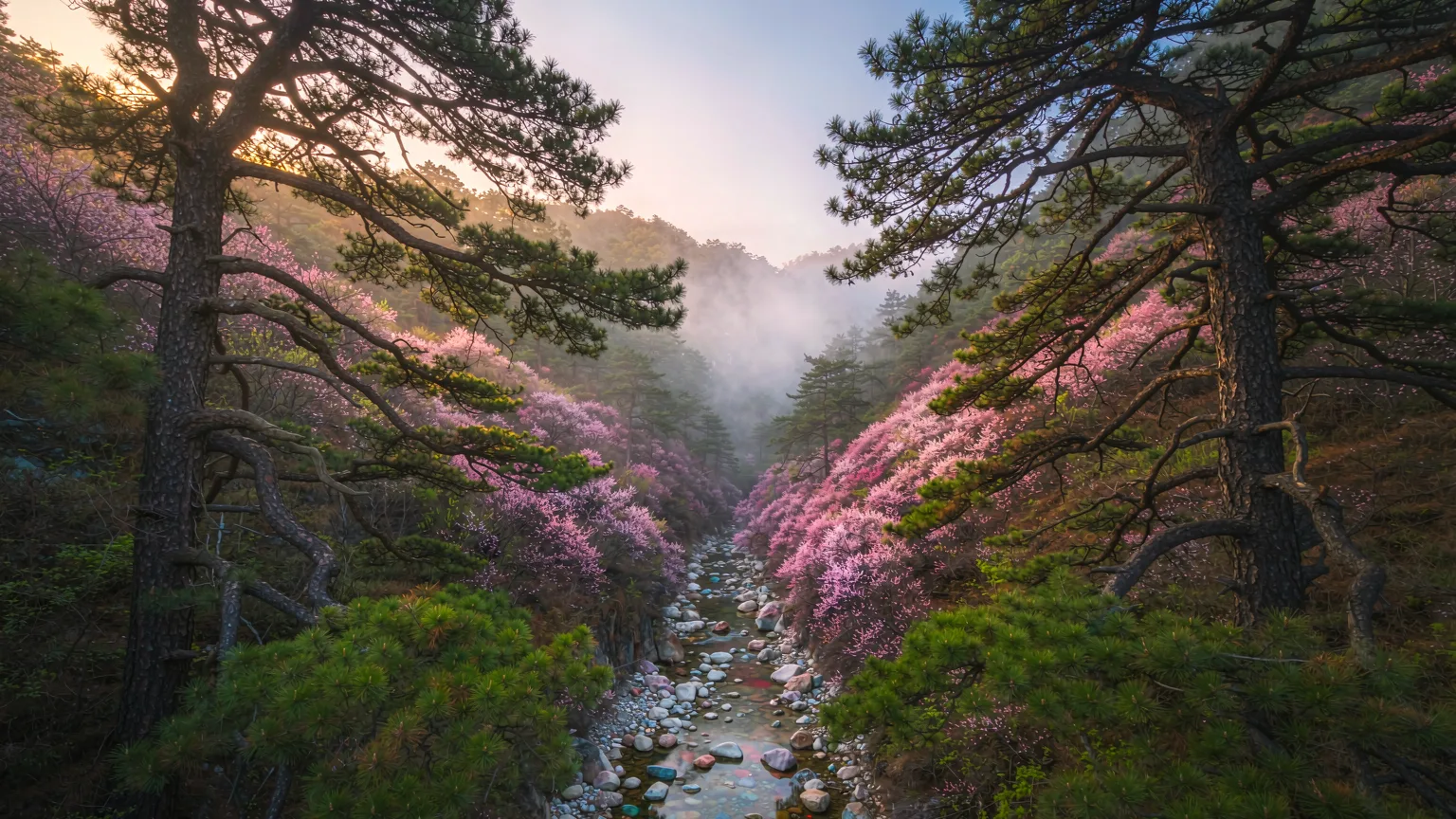
| 第二天 09:30 | Taohuayu's Caishixi: Slowing Down in Another Valley |
| 第二天 13:30 | Taohuayuan and the Taohuayu Cableway: The Quietest Way Down |
| 第三天 09:30 | Baifo Mountain: A Sui-Dynasty Buddha and Dongping's Quiet |
| 第三天 14:30 | Taishan Hot Spring Town: Closing in a Hot Pool |
The route, stop by stop
Red Gate: The Daylight Climb from Yitianmen
Day one walks the full Red Gate route, the only hard day of the three and the best paid. Starting at dawn, Yitianmen, Wanxian Tower and Doumu Palace pass in shade, the Jingshi Valley sutra carving earns its downhill detour, and the morning steps stay cool and thin of people at roughly three kilometers an hour.
Do not rush this stretch; the route's value is all en route. Read the inscriptions in order and you have walked a millennium of climbing history. Reach Zhongtianmen by early afternoon, lunch and restock there, and bank strength for the Eighteen Bends.
Zhongtianmen: The Midpoint Pantry and Decision
Zhongtianmen is the halfway platform and the trip's most important resupply. Eat a proper lunch here and check water, salt and knees: if fatigue already shows before the afternoon's Bends, strip your pack to the minimum and keep the next day's plan intact, no heroics needed.
The platform looks east down your coming valley and west to the cableway station. With normal legs, continue on foot as planned; the gentle steps of Kuaihuo Sanli are the whole route's most comfortable stretch, made for digesting lunch.
The Eighteen Bends: Sixteen Hundred Steps of Steep
From Duosong Pavilion the Eighteen Bends lurch upward, the steepest pitch on the mountain, steps climbing almost against your nose. The method is fixed: short strides, even cadence, a breathing reset every hundred steps, eyes on the three steps ahead rather than the top. Summer leaves this stretch bare to the sun, so afternoon passes demand full water.
At Shengxianfang, look back: the whole zigzag unrolls below, the finest single viewpoint on the route. The final surge takes twenty to thirty minutes, and at Nantianmen the wind dries your sweat for you.
Nantianmen and Heaven Street: Into the Market Above the Clouds
Through the Nantianmen gateway the grade vanishes, and Heaven Street spreads along the ridge, flagstones lined with shops, guesthouses and tea stands. When mist floods across from the northern valley the whole lane floats on cloud, the mountain's most photogenic hour and the moment your body most needs refueling.
Walk the street slowly: the Tang inscription spreads gilt across a full cliff face, and Bixia Temple's bronze tiles glow in the sun. Ease the pace, give the body a buffer, and bank strength for tonight's sunset and tomorrow's sunrise.
Jade Emperor Peak and Riguan Peak: Sunset and Sunrise, Twice Paid
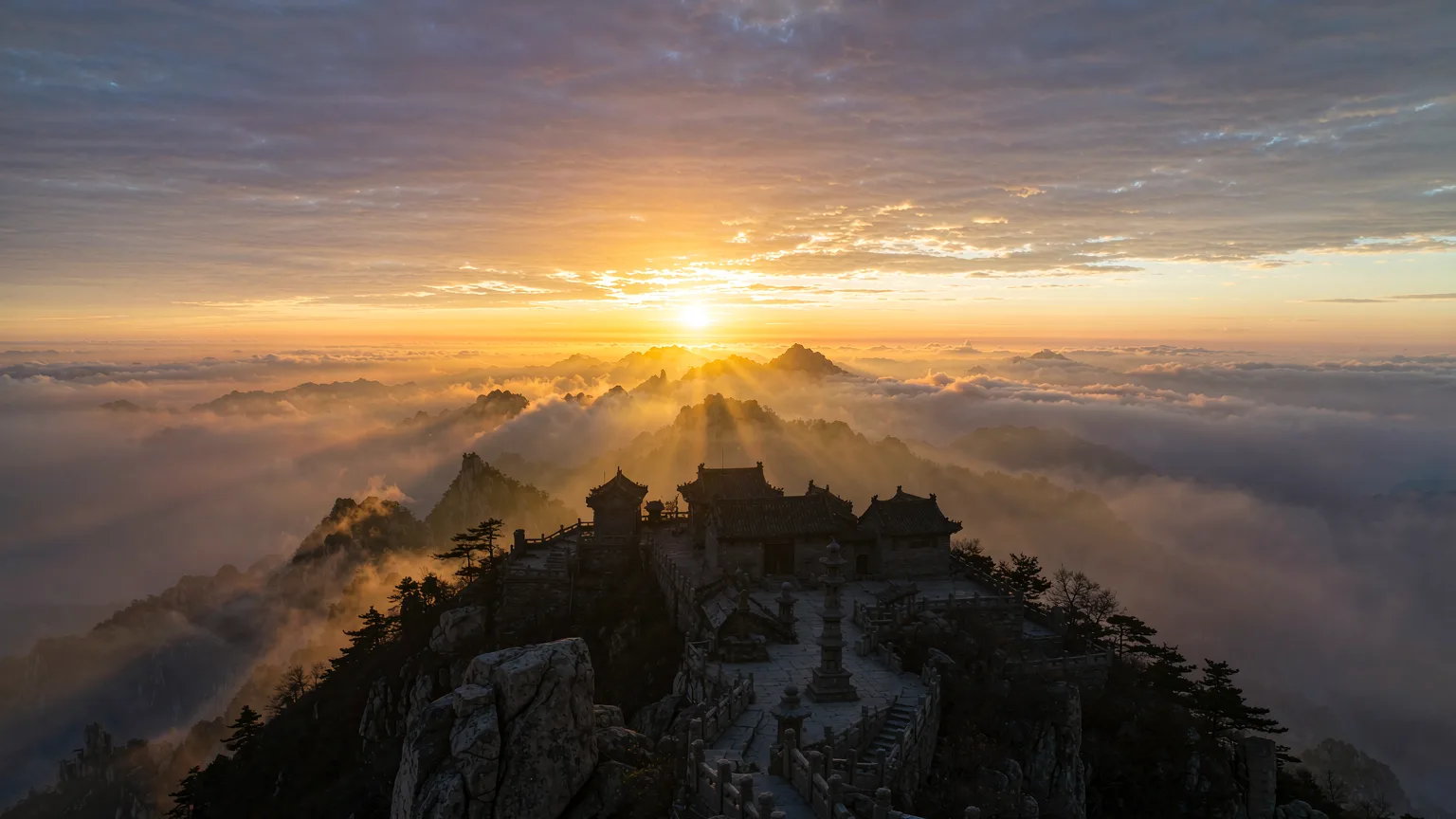
Head to Jade Emperor Peak for sunset first: the summit stone, Confucius's viewpoint and the Arched Rock line up as the sun sinks past the western ridge and burns the clouds orange. Dine early and sleep early at the guesthouse, then leave fifty minutes before the posted sunrise to feel your way to Riguan Peak for a spot.
The coldest hour precedes sunrise, and a rented army coat beats gritting through it. The few minutes when the sun leaps from the cloud sea are the trip's apex; afterward, breakfast at the guesthouse opens day two.
Taohuayu's Caishixi: Slowing Down in Another Valley
Day two skips the Red Gate backtrack: from the summit cableway, transfer to the western Taohuayu valley. Caishixi, the colored-stone creek, is its gem, patterned streambed rocks washed into distinct bands, loveliest in high water of spring and early summer, with a flat boardwalk that moves at yesterday's opposite effort level.
The valley's spring peach blossoms gave it the name Peach Blossom Valley. An hour or so of creekside walking passes wading platforms where soaking tired feet in the cold stream takes half the soreness of the climb away.
Taohuayuan and the Taohuayu Cableway: The Quietest Way Down
Follow the valley up to the Taohuayuan cableway, which links the gorge with the summit's western side at a fraction of the Zhongtianmen line's traffic. Three ways to ride: up from the valley then walk down, down from the summit, or both ways purely for views. Today's descenders take the second, cabins skimming the treetops with a vista entirely unlike the eastern line.
From the lower station, park shuttles run to the valley mouth. Finish this stretch by three pm, and the gorge's echoes and water sounds will have diluted two days of fatigue.
Baifo Mountain: A Sui-Dynasty Buddha and Dongping's Quiet
Day three drives to Baifo Mountain in Dongping county, about ninety minutes away. The hill is modest; the point is the Sui-era Buddha grotto, its main figure nearly seven meters tall, among the larger Sui sculptures in Shandong, the drapery and hand gestures especially serene in the chamber's soft light.
The trail is gentle, an hour round trip. Compared with the crowds of Mount Tai, visitors here are few, the right place to set down three days of fatigue and stare from the mid-slope platform before descending.
Taishan Hot Spring Town: Closing in a Hot Pool
The final stop hands three days of lactic acid back to hot water. The pools zone by temperature and purpose, and post-climb muscles feel twenty minutes at around forty degrees work immediately. Outdoor pools frame distant mountain silhouettes, the loosest image of the whole trip.
Bathe properly: neither hungry nor full, rehydrate before and after, cap each soak at twenty minutes, and rest between rounds. Wrap by early evening, return to town for a Tai'an dinner, and the three days close their loop.
| Getting around |
|
| Budget | Entry about RMB 115, two cableway legs about RMB 200, two nights RMB 200-600; the trip runs roughly RMB 600-1200 pp. |
| Best time | May-Jun and Sep-Oct are best; summit nights for sunrise demand warm layers, and cloud seas peak a day or two after rain. |
FAQs
What if three days of this exceeds my fitness?
Switch day one to the Tianwai Village shuttle plus cableway and spend the saved eight hours on the summit loop and sunrise, since Taohuayu and Baifo Mountain are already light. Adjusted this way, no day exceeds three hours of walking, well within ordinary fitness.
Summit lodging is pricey; can I sleep in town instead?
Yes, at the cost of the sunrise. The town-based alternative is a night climb: up from Red Gate in the evening, sunrise at the top, then continue by day, though night climbing spends a lot and clashes with this plan's gentle pacing. On a budget, cut the summit night and upgrade the hotel near the hot springs.
Does rain wreck this itinerary?
Light or heavy rain rules out the Eighteen Bends, as wet worn steps run dangerous, so slide day one back a day. The creek boardwalk also slicks after rain, while Baifo Mountain and the springs are unaffected. Check the three-day forecast and pin the climb to a clear-weather window; that decides the plan.
How do I best chain cableway and shuttle times?
Remember three nodes: the Zhongtianmen cableway runs to early evening in season, the Taohuayu line closes earlier and may halt in winter, and the park shuttles keep running a while after the cableways stop. Check each day's operating notice before setting out, and plan descents an hour before last rides, and you will never be stranded.