
Five days is the minimum for a complete Tai'an: day one climbs the mountain and sleeps up top for sunrise, day two descends into Dai Temple and Taohuayu, day three swaps flavors for Baifo Mountain and the old town plus the evening ceremony, day four takes the springs and shadow puppets, day five closes on the Old Street and night market. Mountain, temple, valley, town, shows and springs, nothing missing.
The pacing hinges on days two and four, whose job is recovery with deliberately low density. Day one spends the most legs, and day five stays open for drift and gap-filling, with room to extend any stop by half a day.
Itinerary at a glance
| 第一天 06:30 | Red Gate: The Main Feature Opens |
| 第一天 10:30 | Zhongtianmen: The Midway Reset |
| 第一天 14:00 | Nantianmen and Heaven Street: The First Night Above the Clouds |
| 第一天 17:00 | Jade Emperor Peak and Riguan Peak: Sunset, Small Hours, Sunrise |
| 第二天 09:00 | Dai Temple: The First Class after the Descent |
| 第二天 14:00 | Taohuayu's Caishixi: Unbinding the Legs by a Creek |
| 第三天 09:30 | Baifo Mountain: Driving the Day Eastward |
| 第三天 14:00 | Chunqiu Ancient Town: An Afternoon Patch of Street Life |
| 第三天 19:30 | The Fengshan Grand Ceremony: History Staged for the Night Sky |
| 第四天 09:30 | Taishan Hot Spring Town: A Recovery Morning |
| 第四天 16:00 | Taishan Shadow Puppetry: The Culture Course's Dessert |
| 第五天 10:00 | Tai'an Old Street: Gifts and Goodbye |
The route, stop by stop
Red Gate: The Main Feature Opens
The five days open with the real business: the climb. Setting out at dawn from Red Gate, Yitianmen, Wanxian Tower, Doumu Palace and Jingshi Valley unroll, and the cool quiet morning steps reward a three-kilometers-an-hour pace that actually reads the inscriptions and old buildings, the entire point of walking over riding.
The morning targets Zhongtianmen, the afternoon the Eighteen Bends. Strip the pack to minimum, carry ample water and food, and bring climbing gloves for the chain sections, far cheaper bought in town.
Zhongtianmen: The Midway Reset
Four hours lands you at the open platform of Zhongtianmen, restaurants and convenience stores clustered. Eat a full lunch, audit water and salt, retie laces and knee braces; the afternoon's Eighteen Bends are the day's steepest pitch and every small bodily complaint gets fixed at the halfway mark.
Looking up from here, Nantianmen hangs on the ridge, not far in a line yet more than a thousand meters above. Over an orange on the platform, settle the afternoon's rhythm: slow and steady, two hours to the top, racing no one.
Nantianmen and Heaven Street: The First Night Above the Clouds
Through Nantianmen around three, Heaven Street's shop lamps glow as mist floods from the north slope and the lane floats free. The gilt Tang inscription and Bixia Temple line the stretch, and at dusk Jade Emperor Peak serves a sunset worth standing motionless for as the sun drops past the western ridge.
The summit night is quiet enough to hear the wind change. Sleep early for the dawn: guesthouses sit fifteen minutes on foot from Riguan Peak, so leave fifty minutes before the posted sunrise and claim a spot in the dark.
Jade Emperor Peak and Riguan Peak: Sunset, Small Hours, Sunrise
Use the peak in two sittings: sunset at dusk, sunrise before dawn. The summit stone and the Arched Rock are the two best frames, sunset drawing thin crowds as the clouds redden, sunrise drawing everyone as the cloud sea boils, one landscape serving two entirely different audiences.
The minutes when the sun leaps from the horizon mark the trip's first emotional peak. Then breakfast, checkout, and day two's descent and city program begin.
Dai Temple: The First Class after the Descent
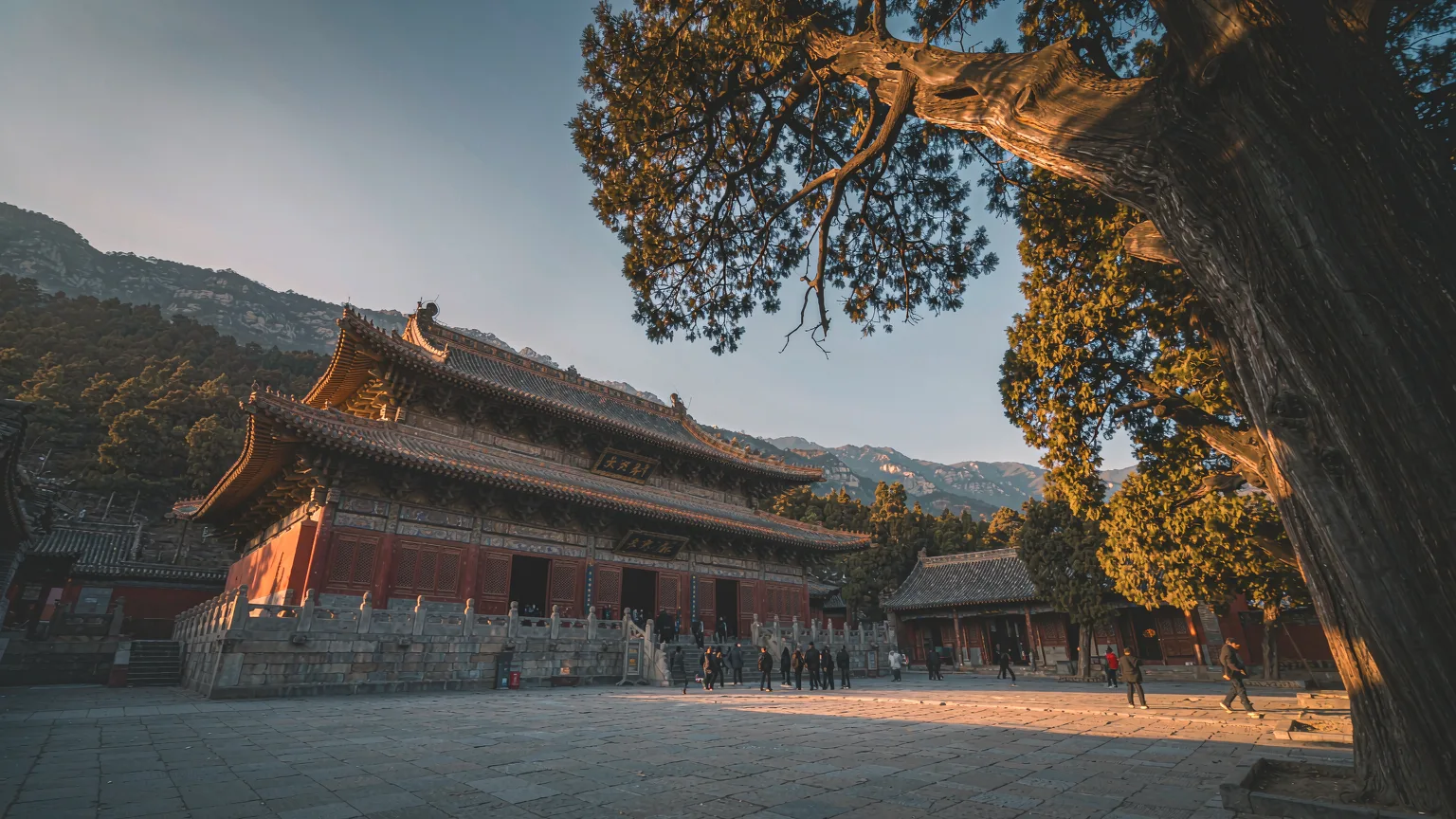
Descend in the morning, reach town by midday, and place Dai Temple in the afternoon. Seeing the temple after the real mountain doubles the understanding: emperors sacrificed to the god here before climbing, and the Song mural in Tiankuang Hall plus the axis of steles complete the institutional and literary story of the foremost of the five peaks.
If your legs still ache, slow down, with benches and colonnades along both sides. Split two hours into one of steles and one of mural and architecture, exactly the right density.
Taohuayu's Caishixi: Unbinding the Legs by a Creek
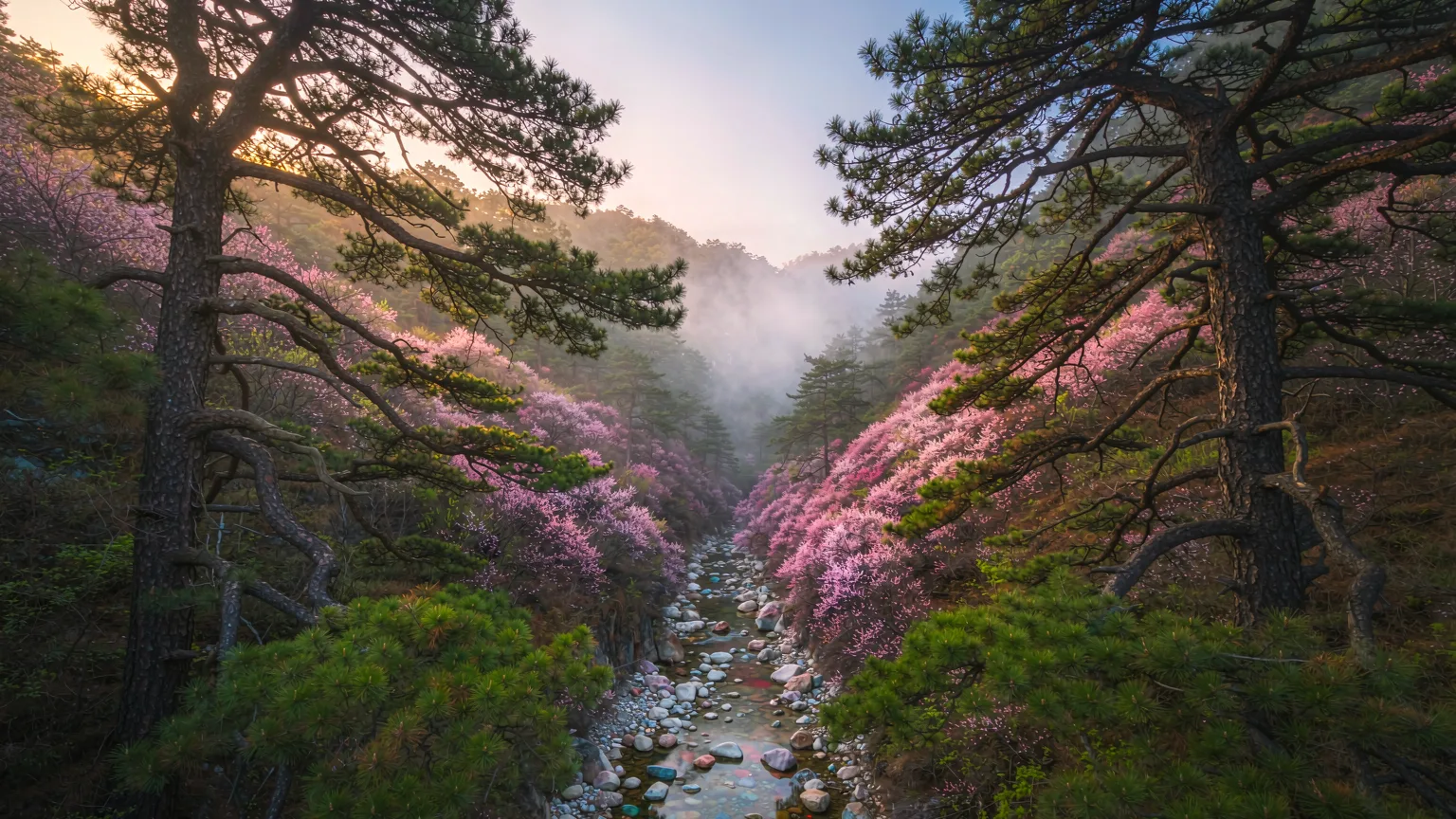
The afternoon shifts to western Taohuayu, where the creek's banded bedrock runs under a nearly step-free boardwalk, a gentle counterpoint to yesterday's thousand steps. At the wading platforms, soaking tired feet in the cold stream carries off most of the climb's soreness.
Spring blossom and summer shade each earn their visit, the whole line an hour-plus with zero difficulty. The stop's true function is active recovery, closing two mountain days on a soft creek so day three still has legs.
Baifo Mountain: Driving the Day Eastward
Day three heads toward Dongping, destination the Sui-era Buddha grotto of Baifo Mountain: a near-seven-meter figure standing serene in the chamber, drapery and gestures well preserved. The hill is low and the path gentle, an hour round trip, the other pole from Mount Tai's grandeur.
The day's theme is contrast: leave the crowded flagship sites for something quiet. Ten minutes on the mid-slope platform with Dongping's plain spreading below reads entirely differently from two days of cloud seas.
Chunqiu Ancient Town: An Afternoon Patch of Street Life
Return via Chunqiu Ancient Town, whose workshops and snack lanes suit the afternoon: the smithy ringing, the tofu shop steaming, scattered shows on the stage. The town is compact, two hours for the core, teahouse chairs waiting for tired feet.
Its job is lightness atop the heavy heritage program: five days of mountains, temples and shows need one place with nothing to prove. Dinner in town or back in the city for chicken, either works.
The Fengshan Grand Ceremony: History Staged for the Night Sky
Night three belongs to the Fengshan Ceremony. In the open-air landscape theater, the emperors' rites unfold through hundreds of performers and stage machinery, the mountain as backdrop and the stars as ceiling. Every stele read at Dai Temple comes alive in the show, knowledge and spectacle locking perfectly.
About eighty minutes, staged April to October. The ride back takes twenty-odd minutes, and replaying the three days in bed you find each stop was quietly laying the groundwork.
Taishan Hot Spring Town: A Recovery Morning
Day four is recovery, opening with the springs. Three days of muscle fatigue dissolves in hot water, pools zoned by temperature and purpose, outdoor baths facing mountain silhouettes; twenty minutes of warm soak after a climb outranks any massage.
Mornings run thin-crowded and clean-watered, the day's best window. Alternate soaking and resting, surface after two hours, eat a light lunch, and save the puppet show as the culture course's dessert.
Taishan Shadow Puppetry: The Culture Course's Dessert
The four o'clock puppet show is the lightest culture of the five days: fifty minutes of complete drama, one performer running the entire stage through the ten-in-one feat, clapper-talk rhythms in the singing, laughs that need no dialect.
Dai Temple gave the imperial voice, this gives the purely folk one; half and half across five days is what completes the structure. Linger at the backstage afterward, the donkey-hide figures rewarding closeness.
Tai'an Old Street: Gifts and Goodbye
Day five holds no hard schedule: wake naturally, reach the Old Street before noon, and close the gift list, crisp-pack and gift-box pancakes, current-crop walnuts, Nuer tea and a Shi Gandang ornament, all in clearly priced shops, honest next to scenic-gate rates.
Lunch on the street, then match the afternoon to your train: with slack, walk the river to the street's end for its daylight water views; pressed, head straight to the station. Five days of Tai'an end in pancake aroma, luggage heavier, shoulders lighter.
| Getting around |
|
| Budget | Tickets and cableways about RMB 400, shows RMB 200-400, four nights RMB 500-1500; the trip runs roughly RMB 1500-2500 pp. |
| Best time | May-Jun and Sep-Oct are best; book summit nights early, and in the rains watch for a clear climbing window. |
FAQs
Which day is hardest, and can it be adjusted?
Day one, about ten hours of climbing plus a summit night. Swap the Red Gate walk for the Tianwai Village shuttle plus cableway and the effort drops by roughly sixty percent, at the cost of the eastern route's inscriptions and old buildings; the other four days stay light, leaving plenty of slack.
Does the Fengshan Ceremony run in the off-season?
It usually stages April through October, dark or reduced in winter, so check official notices before travel. Off-season substitutes: puppetry plus indoor theater programs, or expand the night market and Old Street on day three, moving the show budget into a springs hotel upgrade.
What does five days roughly cost?
Tickets and cableways about RMB 400, the ceremony from RMB 168, springs plus puppetry about RMB 250, and four nights spanning hostels to summit doubles at a typical RMB 800-1200, with meals RMB 80-150 daily. RMB 1500-2500 per person is the sensible mid-range, rising two tenths on holidays.
Which stops can be dropped if needed?
Lowest priority: Baifo Mountain, the longest drive, and the ancient town, the lightest content, freeing most of a day. Puppetry versus the springs is also either-or, with the springs' recovery worth more to climbers. The untouchable core is the climb, Dai Temple, the sunrise and one night show; those four are the skeleton.