
Wuyishan's past splits into three non-overlapping stories: the Minyue raised two millennia ago the largest city south of the Yangtze at Chengcun; Zhu Xi lived nearly fifty years in Wufu, and Neo-Confucianism left for the court from here; and the Shanxi merchants with Xiamei's tea traders carried Wuyi tea down the Great Tea Road to Kyakhta. This route tells one story per day.
Stops scatter across the townships around the resort, public transport is weak, so chartering is the only dependable plan. The pace runs deliberately slow, two main sites a day, with tea and farmhouse meals kept, a culture line, not a checklist.
Itinerary at a glance
| 第1天 09:00 | Wuyishan Museum: The Master Index |
| 第1天 11:30 | Wuyi Palace: Rites, Academies and the Riverbank |
| 第2天 09:00 | Xiamei Village: Where the Great Tea Road Began |
| 第2天 14:30 | Yinshan Tea Lodge: From the Road to the Cup |
| 第2天 18:00 | Wuyishan Intangible Heritage Experience Hall: An Evening Addendum |
| 第3天 09:00 | Fujian Minyue King City Museum: A Great City of Two Millennia Ago |
| 第3天 13:00 | Wufu's Xingxing Old Street: The Lanes Zhu Xi Walked |
| 第3天 15:30 | The Ziyang Residence and Zhu's Granary: Footnotes in Place |
| 第3天 19:30 | Great Wuyi Intangible Heritage Contemporary Art Museum: Tradition, Now |
The route, stop by stop
Wuyishan Museum: The Master Index
Open the three days at the city museum, where geology, Minyue, Zhu Xi and tea form the frame in one visit. The reconstructed hanging coffins and Minyue finds are must-sees; hold a few keywords and the next two days will answer them in the field.
Ninety minutes close up; the museum sits in the city about twenty minutes from the resort, quietest at opening.
Wuyi Palace: Rites, Academies and the Riverbank
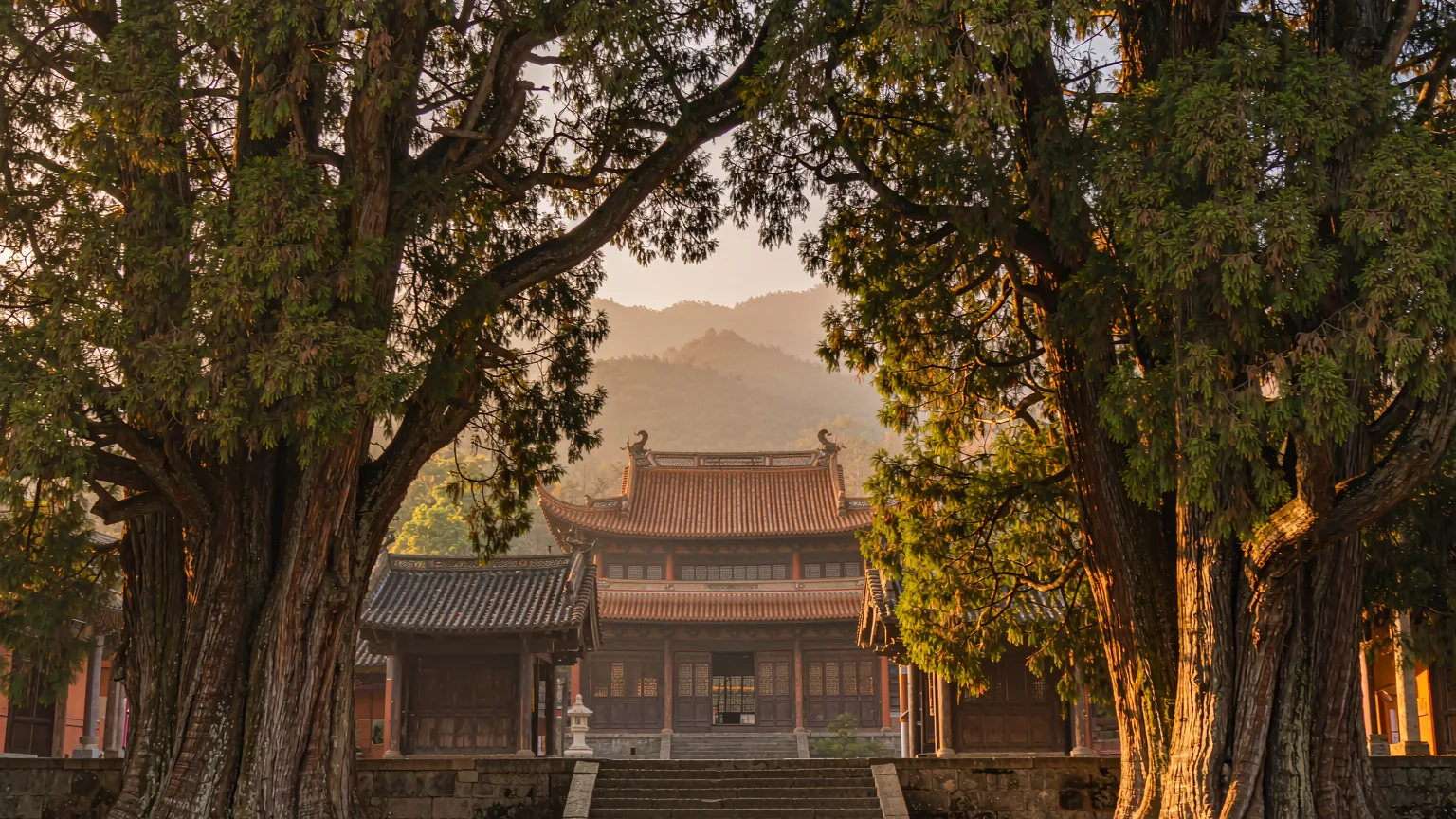
Wuyi Palace began as the cult site of the Wuyi Lord from Han times on, becoming the Chongyou Abbey in Song, where Zhu Xi, Lu You and Xin Qiji each held custodial posts. The halls are rebuilt, but the courtyard plan and the old camphors and pier by the bank keep the bones, with Song Street alongside.
Read the ritual layout, drink tea on Song Street, and settle why courts prized these mountains, the frame for the royal city and academies ahead.
Xiamei Village: Where the Great Tea Road Began
Xiamei is what Shanxi merchants and Wuyi tea traders built together: the Dang stream through the village, the Zou and Cheng compounds lining both banks, the Zou ancestral hall's brick-carved gate the summit. In Qing times tea boats massed daily here, loading north all the way to Kyakhta on the Russian border.
Two hours covers the village: halls, mansions, streamside galleries and old piers, interpretive panels stringing the road's story. Village teahouses pour the very kind of tea that once traveled it.
Yinshan Tea Lodge: From the Road to the Cup
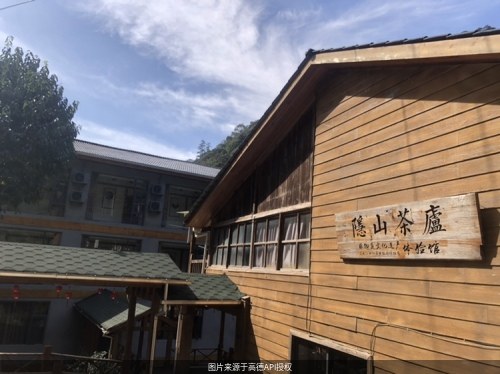
The afternoon lands the road's story into the cup. The heritage session starts from lapsang souchong, the pine smoke and longan-sweet soup, the divide between gongfu and zhengshan, then three pours compared. Why the tea of Xiamei sent merchants ten thousand li becomes self-evident by the last cup.
About ninety minutes, by reservation; hosts come from tea-making families, so ask freely, the densest stop of the trip.
Wuyishan Intangible Heritage Experience Hall: An Evening Addendum
The city-level heritage hall is the culture day's dessert: demonstrations of rock-tea making, tea-painting and local crafts with artisans working live, hands-on welcome. Flexible length, thirty minutes to an hour.
Hours follow the day's notice, evenings busiest, dinner right after, saving the legs for Wufu tomorrow.
Fujian Minyue King City Museum: A Great City of Two Millennia Ago
Day three rewinds two millennia. The Minyue royal city is the best-preserved Han city south of the Yangtze, walls nearly three kilometers around, palace and iron-workshop remains legible; the museum's eaves tiles, pottery and weapons are superbly shown, telling the kingdom's sixty-year arc.
Museum first, then walk the site: rammed-earth platforms swelling from the fields, and standing center of the palace district with the horizon all around, history lands physically.
Wufu's Xingxing Old Street: The Lanes Zhu Xi Walked
Wufu held Zhu Xi for nearly fifty years, and Xingxing Old Street keeps old houses and memorial gates along its flagstones, the Xingxing Academy where he taught. Residents still live here daily, drying shoots, making tea, chatting, culture and life under one roof.
An hour for the street, with the Wufu Folk Culture Museum's farming and Zhu-family-rites displays nearby; in July the lotus ponds outside bloom, so keep half an hour spare.
The Ziyang Residence and Zhu's Granary: Footnotes in Place
The Ziyang residence is Zhu Xi's home, the half-mu pond before it the very scene of his couplet on sky and clouds lingering in water, where the boy studied and grew. Steps away, Zhu's charitable granary embodies ancient folk relief, its famine-loan and harvest-deposit rules built into the system.
An hour for both, completing the Zhu map with street and academy; then ride back to the resort, the three culture days closed.
Great Wuyi Intangible Heritage Contemporary Art Museum: Tradition, Now
An evening bonus on return: the heritage contemporary art museum moves tea, bamboo, lacquer and ceramics into the language of current exhibition, crafts beside new media. After old villages and mansions, this stop answers whether those skills still live.
An hour, evening hours per the day's notice; dinner nearby after, handing three days of history to the present tense.
| Getting around |
|
| Budget | Tickets total about RMB 150-250, three chartered days RMB 1500-1800, plus meals and lodging, roughly RMB 1200-1800 pp. |
| Best time | Year-round; tea season wakes Xiamei and Wufu, July blooms Wufu's lotus, and summer asks for heat care. |
FAQs
How do I choose between three culture days and three mountain days?
By interest and weather: history lovers and climb-averse travelers take the culture line; first-timers owe themselves the mountains, the stream and Tianyou being the soul. Want both, stay five days, three for peaks then two compressed culture days folding in Xiamei and Wufu.
Which is more worth it, Xiamei or Wufu?
Different themes: Xiamei tells the trade road and vernacular architecture, Wufu tells Zhu Xi on his own ground. Architecture and commerce history favor Xiamei, Song history and academies favor Wufu; if only one fits, Wufu's living texture edges ahead.
Do tea sessions need booking, and which are good?
Yes, proper venues run by reservation, confirm by phone or online a day or two ahead. Judge on three points: whether teachers come from tea-making families, whether brewing is taught systematically, and whether fees offset purchases. Avoid free tastings that are purely sales funnels.
Does this line suit kids?
Partly: kids manage the museum and Xiamei's galleries and piers, and the Minyue site's open fields burn energy well; academies and display halls hold them less. Compress to two days, inserting one kid-pleaser daily, say the hands-on brewing at the tea lodge.